European Rail Passes:
The Complete Guide
Is an Interrail pass worth it, and what about the Swiss Travel Pass? This is the balanced, no-sales-pitch answer: how the passes actually work, where they shine, where ordinary tickets beat them, what reservations really cost country by country, and a decision guide for your specific trip.
Jump to section
Quick answers - the guide in 30 seconds
- Is a rail pass always cheaper?
- No - it wins on flexible, multi-journey trips and loses to advance tickets on short fixed ones.
- Do I need seat reservations?
- Only on some trains: French, Spanish and Italian high-speed, Eurostar, night and panoramic trains - the rest of Europe is mostly walk-on.
- Can I use it in Switzerland?
- Yes, almost everywhere without reservations - though all-Switzerland trips should also price the Swiss Travel Pass.
- Is Eurail the same as Interrail?
- Yes - since 9 September 2026 Eurail and Interrail are one brand, and everyone buys the same Interrail Pass.
- Can I just board any train?
- In Germany, Switzerland, Austria and the Benelux, essentially yes; where reservations are compulsory, book the seat first.
What is a European rail pass?
In short
- One pass, one price, trains across up to 33 countries
- One Interrail Pass for everyone since Eurail merged into Interrail in September 2026
- You buy travel days, not tickets - unlimited trains per travel day
- Not automatically cheaper than tickets - it buys freedom first
A European rail pass is a single product that replaces individual train tickets across most of the continent's national railways. Instead of booking Paris–Munich, Munich–Vienna and Vienna–Venice separately, you hold one pass and simply board (with reservations added on the minority of trains that require them). The flagship product - the Global Pass - covers 33 countries; One Country Passes exist for single-nation trips.
A rail pass is not primarily a discount - it is the freedom to decide at breakfast where you will sleep tonight.
That framing matters, because the honest answer to "is it worth it?" is: it depends on how you travel. Travellers who move often, decide late and cross borders extract enormous value; travellers making two fixed journeys usually do better with advance tickets. This guide exists to help you tell which one you are.
Eurail is now Interrail
In short
- Eurail merged into Interrail on 9 September 2026 - one brand worldwide
- Everyone now buys the same Interrail Pass, whatever their country of residence
- Existing Eurail passes stay valid; the network, app and rules are unchanged
Before
- Two names for one product, split by where you lived
- Interrail for residents of Europe
- Eurail for residents elsewhere in the world
- Same coverage, app and travel-day rules either way
Now
- One Interrail Pass for everyone, any nationality or residence
- Same network, Rail Planner app and travel-day rules
- Global Pass and One Country Passes as before
- Eurail passes bought before the change remain valid
If you have seen this trip called Eurail elsewhere, it is the same thing: since 9 September 2026 Eurail and Interrail are a single brand, and everyone travels on the same Interrail Pass. One home-country rule still applies if you live in a country the Interrail network covers: on the Global Pass you can generally make one outbound and one inbound journey within your country of residence, not other trips there.
How rail passes actually work
In short
- Travel days are calendar days with unlimited covered trains
- Flexi passes = X travel days in a window · Continuous = every day
- The pass lives in the Rail Planner app and works offline
- Activate within 11 months of purchase - reservations can come first
A travel day is one calendar day, midnight to midnight, with unlimited rides on covered trains. Flexible passes give a set number of travel days inside a window (for example 7 days in 1 month); you choose them as you go.
Continuous passes (15 or 22 days, or 1–3 months) make every day a travel day - no counting, just board. Usually better value if you move more days than not.
The pass lives in the official Rail Planner app: add your pass, load journeys, and the app generates the barcode inspectors scan. It works offline once trips are added. Paper versions survive for some passes, but mobile is the default.
You activate the pass when your trip starts - any time within 11 months of buying it - by setting the start date in the app. Reservations can be booked before activation, which is exactly the right order to do it.
Before boarding, add each train to your pass in the app so the day's ticket shows it. It takes seconds, and doing it before the doors close is the one habit that keeps inspections boring.
Passes come in first and second class, with discounted youth and senior tiers and free or reduced child places alongside an adult - the exact tiers and ages are on the official sites and can change.
Pass structures, tiers and conditions are set by Eurail B.V., the organisation behind Interrail, and do change - treat the official Interrail site as the authority on current products, and this guide as the map of how the system thinks.
Should you buy a rail pass?
Perfect for
Less suitable for
A pass is good for
- Multi-country trips with several long journeys
- Flexible travel - deciding routes and dates as you go
- Scenic detours that tickets would make expensive
- Countries where trains are walk-on (Switzerland, Germany, Austria, Benelux)
- Night-train itineraries that stack distance into sleep
Not ideal for
- A holiday in one city, or one country with 2–3 journeys
- Itineraries fixed months ahead in France, Spain or Italy - advance fares are fierce
- Very short trips where the pass price cannot amortise
- Travel built entirely around trains that charge quota reservations anyway
The pass wins when…
- You would buy 4+ full-price long-distance tickets
- Plans might change - passes shrug at rebooking
- Your route lives in walk-on countries
- You value spontaneity as a feature, not a risk
Tickets win when…
- You book far ahead on dynamic-fare corridors (a Paris → Lyon saver fare is hard to beat)
- The whole trip is 2–3 journeys
- Your trains need paid quota reservations regardless
- A single operator promotion covers your exact plan
The five-minute homework that settles it: sketch your likely journeys, price them as advance singles on the operators' sites, and compare the total (plus flexibility) against the pass (plus likely reservation fees). Our booking advice guide covers the ticket-side tactics.
Seat reservations: the part that surprises people
In short
- A pass covers the ride; some trains additionally require a reserved seat
- Walk-on half of Europe: Switzerland, Germany, Austria, Benelux
- Reservation half: France, Spain, Italy high-speed, Eurostar, night & panoramic trains
- Where quotas exist, book reservations early - they sell out before the train does
Why do some trains demand reservations and others not? It is a business-model split, not a technical one. Railways that sell capacity(France, Spain, Italy's high-speed networks) run all-reserved trains and admit pass holders through a limited, paid quota. Railways that sell frequency (Germany, Switzerland, Austria, the Benelux) let anyone board anything, and sell reservations only as optional comfort.
The practical consequence: your pass budget needs a reservation budget beside it on southern and western European high-speed corridors, and near-zero on the Germanic ones. Night trains and the great panoramic trains charge reservations everywhere.
Common trap: assuming "pass = board anything" in France or Spain. On a TGV or AVE the scarce item is the pass-holder reservation, not the seat - when the quota is gone, the train is full for you even if tickets remain on sale.
For the full train-by-train picture - which trains, typical costs, booking channels and workarounds - see the dedicated seat reservations guide.
Where passes shine - and where they need planning
In short
- Green = walk-on railways · Amber = some reservations · Red = reservations commonly required
- Route counts below are live from Railero's own guides
- Rules can change - verify per train when you book
| Country | Rail pass rating | Reservations | Railero guides |
|---|---|---|---|
| Switzerland | Rare - only panoramic trains | 10 route guides | |
| Germany | Rare - optional on ICE | 12 route guides | |
| Austria | Rare - optional on Railjet | 9 route guides | |
| Belgium | Only international high-speed | 6 route guides | |
| Netherlands | Only international high-speed | 5 route guides | |
| Italy | Yes on high-speed; never on regionals | 15 route guides | |
| Norway | Yes on long-distance (inexpensive) | 5 route guides | |
| France | Yes - TGV quotas apply | 10 route guides | |
| Spain | Yes - AVE/Avant quotas apply | 7 route guides |
France and Spain reward planning: their high-speed networks are superb with a pass, but only if the quota reservations are booked early - treat them as the legs you organise first.
Almost every train is walk-on: intercity, regional and most mountain approaches need nothing beyond the pass. The exceptions are the panoramic trains - Glacier and Bernina Express dome cars carry compulsory reservations - and the high mountain railways, which are discounted rather than free.
TGV INOUI requires paid pass-holder reservations from limited quotas - book them early or find trains "full" for passes while seats remain for tickets. OUIGO never accepts passes. Regional TER trains, by contrast, are reservation-free and generously covered.
Frecciarossa and other Trenitalia high-speed trains take passes with a paid reservation; Italo takes no passes at all. The regional network - Tuscany, the Cinque Terre line, everywhere local - is reservation-free and where a pass feels effortless.
AVE and Avant trains require paid reservations with pass-holder quotas - fine if booked ahead, frustrating if improvised. Avant reservations are cheaper than AVE ones, and the compact Andalusian network rewards a planned pass day.
ICE and IC trains have optional reservations - board any train with just the pass, add a cheap seat reservation only when you want certainty. One of the best countries in Europe to hold a pass, especially for spontaneous long-distance hops.
Railjet and the ÖBB network work like Germany: reservations optional, boarding free-form, coverage broad. Night-train hub Vienna adds Nightjet options - covered, but with compulsory berth reservations.
Belgium and the Netherlands are dense, frequent and reservation-free on domestic trains - the EuroCity Direct between Brussels and Amsterdam is even a supplement-free international ride. The asterisk is Eurostar: quota reservations required on both the London and continental routes.
Long-distance trains - Oslo to Bergen and Trondheim among them - require seat reservations, but they are inexpensive and easy to book. The scenery per travel day is unmatched, which makes Norway a quietly excellent pass destination.
Scenic trains, night trains and other exceptions
In short
- Panoramic and night trains: covered, but always with paid reservations
- A direct night train costs only one travel day (the departure date)
- All-Switzerland trips should also price the Swiss Travel Pass
Scenic & panoramic trains
The famous names - Glacier Express, Bernina Express - are covered as transport but charge compulsory panoramic-car reservations to everyone, pass included. Regular trains on the same lines are reservation-free; the view is negotiable, the fee on the famous carriages is not.
Night trains
Nightjets and other sleepers are covered, need a paid berth reservation, and - under current rules - cost only one travel day for a direct overnight (the departure date). A night train can effectively buy you a hotel night and a travel day in one.
High-speed trains
The split that defines Europe: walk-on high speed in Germany and Austria; compulsory quota reservations in France, Spain, Italy and on Eurostar. Where quotas exist, the reservation - not the pass - is the scarce resource.
Airport trains
Ordinary airport rail links (Schiphol, Geneva, Zurich among them) are part of the national networks and covered like any train. Dedicated premium airport expresses in some cities sit outside the pass - check the operator before assuming.
The Swiss Travel Pass
Switzerland's own pass covers trains plus buses, boats, city transport and museums, with bigger mountain discounts. All-Switzerland trip: compare it seriously against Interrail. Switzerland as one leg: the international passes win on flexibility.
Swiss Travel Pass
- Trains plus buses, boats and city transport
- Free entry to hundreds of museums
- Bigger mountain-railway discounts (some peaks free)
- Best when Switzerland is the whole trip
Interrail
- Covers Switzerland and 32 other countries
- Trains only - city transport and boats are extra
- Standard mountain discounts, panoramic reservations still paid
- Best when Switzerland is one chapter of a longer story
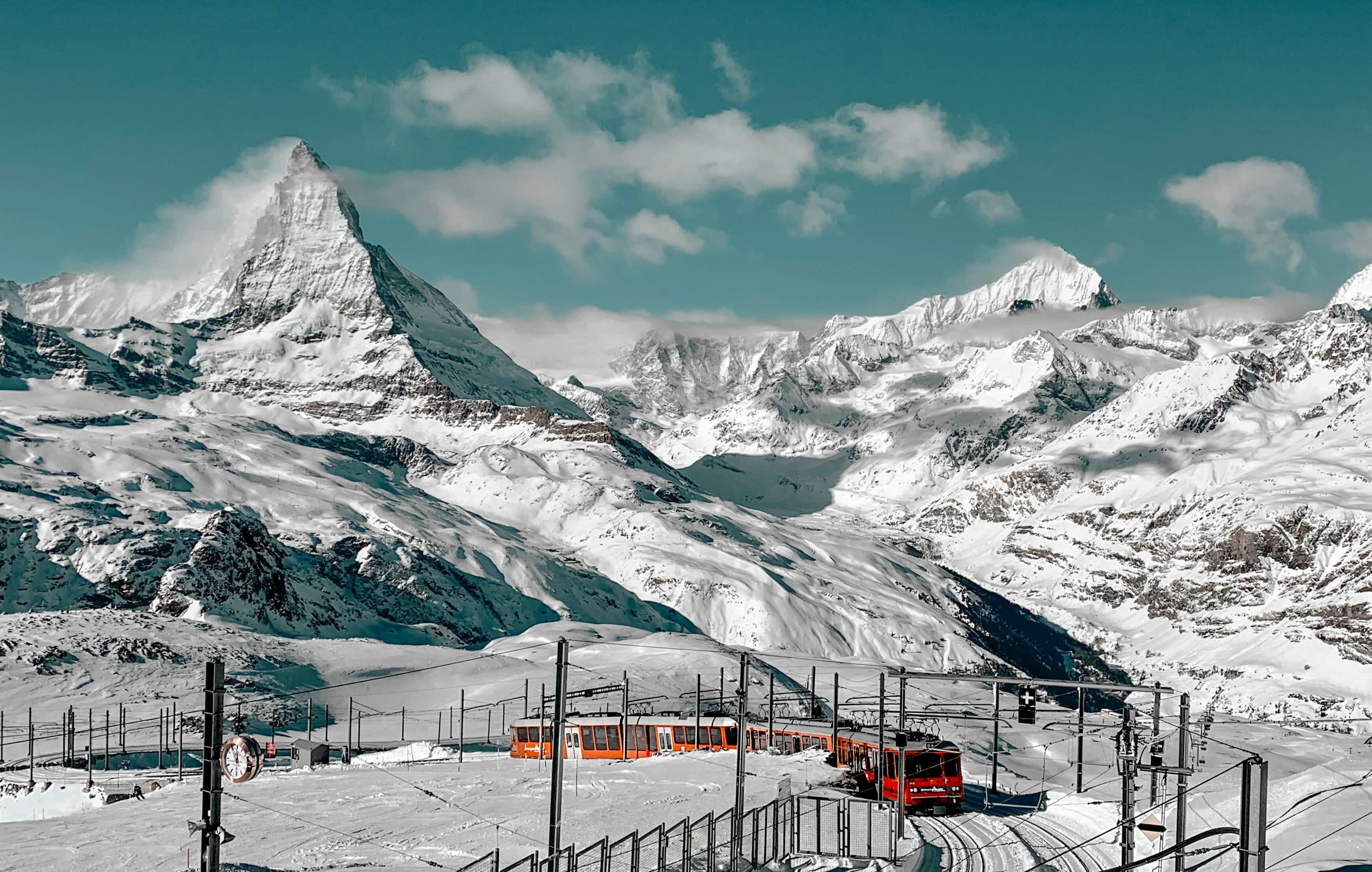
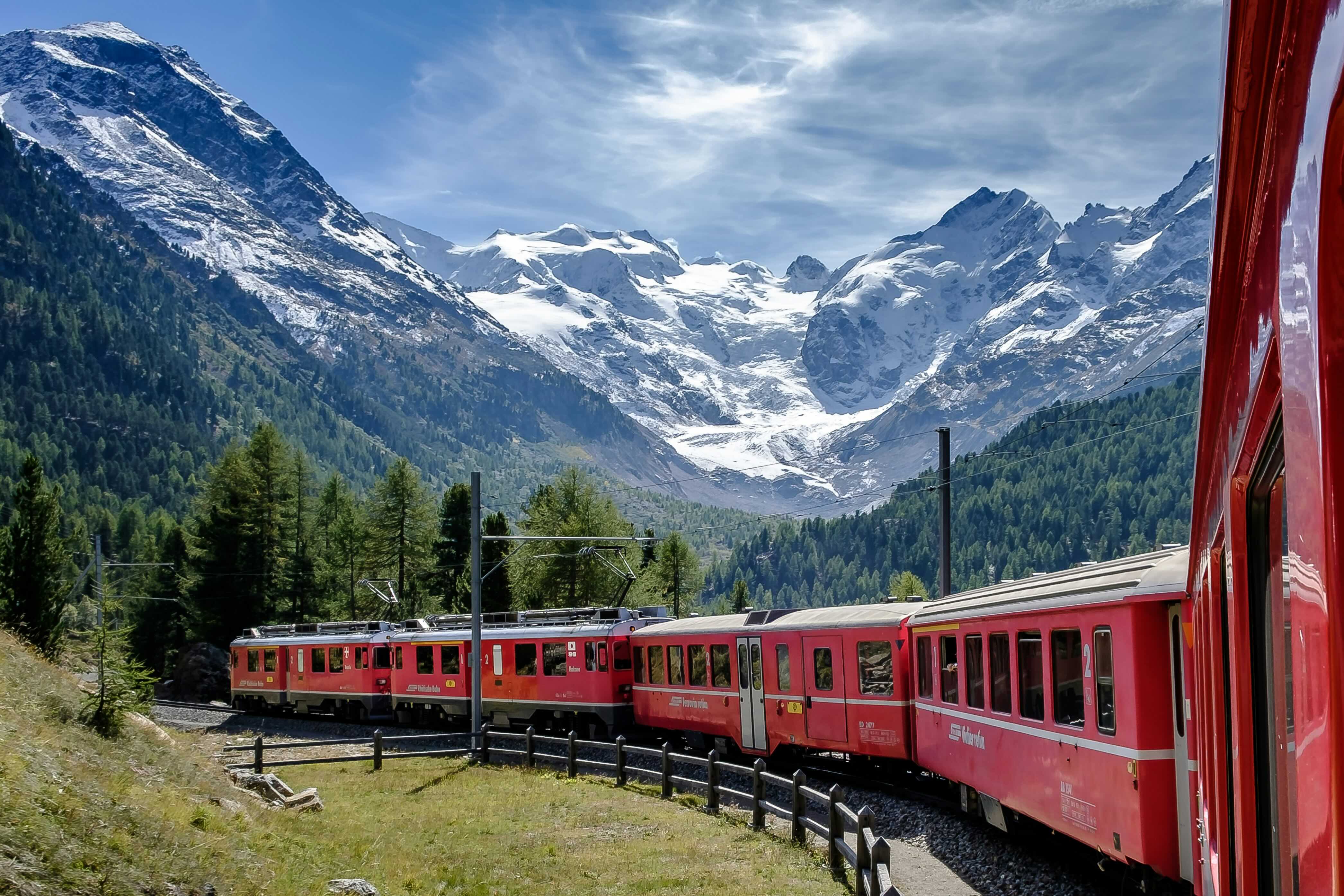
The panoramic pair are worth naming precisely: the Glacier Express and Bernina Express are covered as transport under all these passes, but their famous dome cars carry compulsory paid reservations for everyone. The same lines can be ridden reservation-free on regular trains.
Second class
- Meaningfully cheaper
- Comfortable across modern European fleets
- Same scenery, same speed, same network
- The default choice for most pass travellers
First class
- Wider seats, quieter coaches, more space for bags
- Easier unreserved seat-finding on busy summer trains
- Real value on long French/Spanish/Italian legs
- Comfort upgrade, not a coverage upgrade
Common rail pass mistakes
In short
- Most pass regrets come from six avoidable assumptions
- The theme: check the specific train, not the general rule
Buying a pass for a single return journey - two point-to-point tickets are almost always cheaper.
Not budgeting for reservations - a France–Spain–Italy itinerary can add meaningful reservation costs on top of the pass.
Assuming every train needs a reservation - in half of Europe you just board; check per train, not per continent.
Assuming every scenic railway is free - panoramic carriages and mountain railways carry supplements or discounts, not blanket coverage.
Activating the pass before the trip starts - reservations can be booked pre-activation; save your validity for travel.
Forgetting the Interrail home-country rule - if you live in a country the pass covers, it allows only one outbound and one inbound journey within your country of residence.
The two-minute decision guide
In short
- Four questions settle almost every pass decision
- Tiebreaker: price your three longest journeys as advance singles
Answer honestly, follow the arrows, and the pass question mostly answers itself.
Are you visiting more than one country?
A Global Pass is a serious candidate - keep going below.
One country only: will you make more than 3–4 train journeys?
Single country, only 2–3 journeys?
Buy point-to-point tickets - advance fares will almost certainly win.
Many journeys in one country: compare a One Country Pass against tickets, and in Switzerland compare the Swiss Travel Pass too.
Multi-country: is your route mostly France, Spain and Italy high-speed?
A pass can still work, but budget quota reservations - and price advance tickets first if dates are fixed.
Mostly walk-on countries (CH · DE · AT · Benelux · Nordics): a pass is at its strongest - flexibility costs nothing extra.
Will you travel on more days than you stay put?
Price the continuous pass - it may undercut the flexi version and removes all counting.
A flexi pass sized to your realistic travel days is the efficient buy.
Still torn? Price your three longest journeys as advance singles. If their total approaches the pass price, the pass - with its flexibility thrown in free - wins.
Frequently Asked Questions
- Is an Interrail pass worth it?
- It depends entirely on how you travel. A pass tends to win for multi-country trips, flexible itineraries decided as you go, and countries where reservations are rare (Switzerland, Germany, Austria, the Benelux). Point-to-point tickets tend to win for short trips with only two or three journeys, itineraries fixed far in advance in France, Spain or Italy where cheap advance fares exist, and single-city holidays. Price both options for your actual route before deciding - neither is automatically cheaper.
- Is Eurail the same as Interrail now?
- Yes. Eurail became part of Interrail on 9 September 2026, and Interrail is now the single pass brand for travellers worldwide. There is no longer a separate Eurail pass chosen by where you live: everyone buys the same Interrail Pass, with the same network, travel-day rules and Rail Planner app. Eurail passes bought before the change stay valid for their full period.
- Does it matter which country I live in?
- No. Since Eurail and Interrail merged on 9 September 2026, anyone can buy an Interrail Pass regardless of nationality or country of residence. One rule relates to your home country if you live in a country the Interrail network covers: on the Global Pass you can generally make one outbound and one inbound journey within your country of residence, each using a travel day, but not other trips there. If you live outside the network, it does not restrict you this way.
- How do travel days work?
- A travel day is a calendar day, midnight to midnight, on which you can ride as many covered trains as you like. Flexible passes give you a set number of travel days to use within a window (for example, 7 days within 1 month); continuous passes cover every day of their validity. You choose each travel day in the Rail Planner app as you go.
- How do mobile passes work?
- The pass lives in the official Rail Planner app: you add your pass, activate it when you are ready to start (any time within 11 months of purchase), pick travel days, and add each journey so the app generates the ticket inspectors scan. It works offline once your trips are loaded. Paper passes still exist for some products, but mobile is now the default.
- Do I need seat reservations with a rail pass?
- Sometimes - and this is the single most important thing to understand. In Switzerland, Germany, Austria and the Benelux most trains are walk-on and need nothing. In France, Spain and Italy the high-speed trains require paid pass-holder reservations, often from limited quotas. Night trains and premium scenic trains also carry reservation fees. Budget for reservations on those legs, and check each train before you travel.
- Can I use an Interrail pass on Eurostar?
- Yes, on both the London routes and the continental Paris–Brussels–Amsterdam services - but only with a paid pass-holder reservation from a limited quota per train, so book Eurostar reservations as early as you can. If the quota is sold out, an ordinary ticket is the fallback.
- Is Switzerland included - and is the Swiss Travel Pass better?
- Switzerland is fully included in Interrail, and almost no ordinary Swiss train needs a reservation. The Swiss Travel Pass is a separate Swiss product that additionally covers buses, lake boats, city transport, museum entry and gives larger mountain-railway discounts. If your whole trip is Switzerland, compare the Swiss Travel Pass seriously; if Switzerland is one leg of a European trip, an Interrail pass usually makes more sense.
- Is the Glacier Express included in a rail pass?
- The ride itself is covered - the Glacier Express runs on ordinary Swiss tracks - but its panoramic carriages carry a compulsory seat reservation that every passenger pays, pass or no pass, and it sells out in season. The same applies to the Bernina Express panoramic cars. Regular trains on the same lines need no reservation at all.
- Can I use a rail pass in Italy?
- Yes, with two rules: Trenitalia accepts passes everywhere, but its Frecciarossa and other high-speed trains need a paid pass-holder reservation, while regional trains need nothing at all. Italo, the private high-speed operator, does not accept passes full stop. Regional Italy - Tuscany, the Cinque Terre line, local networks - is where a pass is at its effortless best.
- How do night trains work with a pass?
- Night trains are covered, with two costs to understand: under the current rules a direct night train uses only one travel day (the departure date), and every night train requires a paid reservation for your berth or seat - couchettes and sleepers cost more than seats. Book night-train reservations well ahead; they are among the first to sell out.
- Can I travel every day with a pass?
- With a continuous pass, yes - every day of its validity is a travel day. With a flexible pass you are limited to your purchased number of travel days, so daily travel only works for a trip shorter than or equal to that number. If you plan to move most days, price the continuous version - it often costs less than the equivalent flexi days.
- Is first class worth it on a rail pass?
- First-class passes cost meaningfully more, and the value varies by country: in France, Spain and Italy first class buys wider seats and quieter carriages; in Switzerland the scenery is identical from both classes; on busy summer trains the real benefit is simply finding space without a reservation. Most pass travellers do fine in second class - choose first for comfort, not necessity.
- What is not covered by an Interrail pass?
- The recurring gaps: Italo in Italy and some other private operators; city transport (metros, trams, buses); most mountain railways above the ordinary network (discounted, not free); seat reservation fees wherever they apply; and buses or ferries except the specific ones listed in the pass conditions. When in doubt, check the operator in the Rail Planner app before assuming coverage.
A rail pass is the best product ever invented for a certain kind of trip - many countries, loose plans, the journey as part of the point - and an expensive shortcut for trips that never needed it. Now you know which is yours. Wherever the decision lands, every Railero route guide notes how passes and reservations work on that specific line.
Put the pass to work




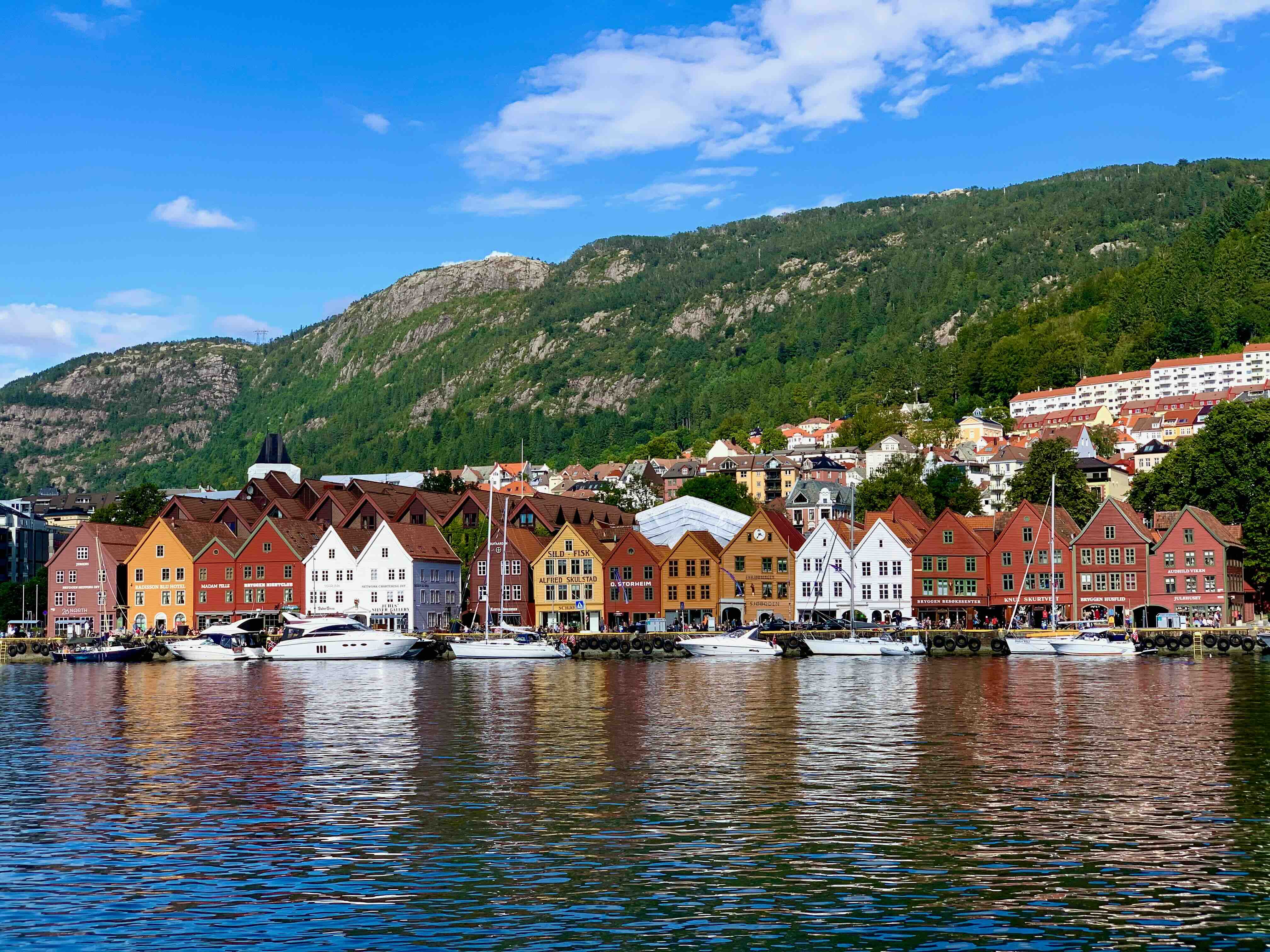
Which trains need a reservation, what they cost, and how to book them with a pass.
The ticket-side tactics - advance fares, operators and when booking early pays.