Bernina Express
Chur to Tirano
Four hours. From the oldest city in Switzerland to the northern Valtellina in Italy - crossing the Bernina Pass at 2,253 metres without a rack-and-pinion system, without a summit tunnel, entirely in the open air. The Bernina Express is a UNESCO World Heritage railway and the highest non-rack standard-gauge line in Europe.
The full Chur–Tirano journey is operated by the Rhätische Bahn (RhB) and consists of two distinct sections. The Albula line (Chur to St. Moritz/Samedan junction) climbs from 585 m through the Landwasser gorge, past the Landwasser Viaduct, and over the Albula watershed via a series of spiral tunnels and helical loops. The Bernina line (Pontresina to Tirano) then climbs again to the open-air Bernina Pass summit before descending through Italian-speaking Poschiavo and into Italy at Tirano. Together they form one of the great railway journeys in the world.
UNESCO status: The Rhaetian Railway in the Albula/Bernina Landscapes was inscribed as a UNESCO World Heritage Site in 2008. The designation covers both the Albula line from Thusis to St. Moritz and the Bernina line from Pontresina to Tirano - the entire route of the Bernina Express from Chur.
Ready to book the Bernina Express?
The panoramic reservation (CHF 14 per journey) is mandatory and cannot be added on board. It is not covered by Swiss Travel Pass or Interrail - book both the ticket and reservation together. In peak summer (July–August) panoramic coaches fill quickly; book 4–6 weeks ahead.
Railero may earn a small commission if you book via the link above, at no extra cost to you.
Chur & the Albula Line - UNESCO Starts Here
Chur, Graubünden, Switzerland · 46.852°N, 9.532°E
Chur is the capital of Graubünden and, at over 5,000 years of continuous settlement, the oldest city in Switzerland. The old town - a compact knot of medieval lanes behind the cathedral - is 10 minutes on foot from the Rhätische Bahn station. Most passengers travelling on the Bernina Express from Chur see little of it: the train departs south into the Rhine gorge almost immediately, following the Posterior Rhine valley through its limestone narrows.
The Albula line leaves the Rhine valley at Thusis and begins the climb into the mountains in earnest. The engineering becomes apparent almost immediately: the railway uses a series of spiral tunnels - curved bores drilled into the mountain so that the line can gain altitude within a short horizontal distance - and helical viaducts that loop back over themselves. Between Filisur and Bergün, the line gains 416 metres in just 12 kilometres of track using four spiral tunnels and several open viaducts.
The Landwasser Viaduct: six arches, 65 metres above the gorge, curving directly into the mountain. Built 1901–1902, still in daily use.
The Landwasser Viaduct - visible just beyond Filisur - is the most photographed structure on the Swiss railway network. The viaduct curves in a single arc of six limestone arches, 65 metres above the Landwasser gorge, and enters a tunnel portal directly at the end of the last arch. There is no straight section: the curve begins with the first arch and continues into the mountainside without pause. It was built between 1901 and 1902 and has been in continuous use since.
Bernina Express - Journey Facts
- OperatorRhätische Bahn (RhB) throughout
- ReservationCHF 14 mandatory - not included with any rail pass
- 2nd class fareFrom CHF 65 + CHF 14 reservation
- 1st class fareCHF 113 + CHF 14 reservation
- UNESCO statusRhaetian Railway in the Albula/Bernina Landscapes (2008)
- BorderSwitzerland → Italy (Schengen - no passport control)
- Frequency4 Bernina Express services daily in summer; regular RhB trains run more frequently
- LuggageLuggage forwarding (Gepäcktransport) available to hotels in Graubünden
Photographer's Seat Guide
Left side from Chur through Thusis frames the deep Anterior Rhine gorge (Ruinaulta - the 'Swiss Grand Canyon') and the first limestone walls of the Albula section. At the Landwasser Viaduct - watch for it after Filisur - left side gives the frontal view of the six arches curving into the cliff; have your camera ready as the train slows slightly. Through the spiral tunnels above Bergün, it is disorienting but left side delivers the emerging valley on each exit. At Ospizio Bernina, left side faces Lago Bianco - turquoise in summer, white in winter. The Morteratsch Glacier (visible between Morteratsch station and Pontresina) is on right side southbound. The Brusio circular viaduct is best from left side on the descent: lean toward the rear window as the train spirals to see the loop below.
Right side leaving Tirano has the Valtellina valley floor and the first Italian vine terraces. Through the Poschiavo valley, right side frames the deep-blue Lago di Poschiavo. Ascending to the Bernina Pass, right side faces the Morteratsch Glacier directly - one of the most dramatic close-range glacier views from any railway in Europe. The glacier tongue has retreated visibly since the 1980s and marker stakes show historical extents. Above Ospizio Bernina, right side gives the first views north into the Swiss interior. The Landwasser Viaduct from below appears on right side descending from Bergün - a different but equally strong perspective than the southbound view.
Ospizio Bernina - 2,253 Metres in the Open Air
Bernina Pass, Graubünden, Switzerland · 46.407°N, 10.020°E
Between Pontresina and the Bernina summit, the railway does something that has no parallel in Europe: it climbs to 2,253 metres above sea level on a standard-gauge adhesion railway - no rack-and-pinion, no cog mechanism, simply steel wheels on steel rails at a maximum gradient of 70‰ (7%). This is the highest point reached by any non-rack, standard-gauge railway in Europe.
Morteratsch station, a few kilometres below the pass, sits opposite the snout of the Morteratsch Glacier - one of the longest valley glaciers in the Alps. The glacier has retreated approximately 3 km since 1900 and around 300 metres since 2000; marker posts along the glacier trail show historical extents. On a clear day the ice tongue is visible directly from the carriage window between Morteratsch and Bernina Suot stations.
Ospizio Bernina: the watershed between the Rhine and the Inn, 2,253 metres up, no tunnel, no rack - just open mountain and Lago Bianco frozen white.
Ospizio Bernina station (2,253 m) sits beside Lago Bianco - a reservoir lake that straddles the watershed between the Rhine drainage (north, to the North Sea) and the Inn drainage (south, to the Adriatic via the Danube). The colour of the lake changes dramatically with season: milky turquoise in summer from glacial meltwater, a flat sheet of ice in winter. The station building operates as a mountain refuge (Ospizio means hospice or refuge in Italian - the pass was a historic transit point for travellers crossing between the Engadine and Valtellina).
South of the summit, the descent begins. At Alp Grüm (2,091 m) there is a brief scheduled stop: the station platform commands a panoramic view south across the Poschiavo valley all the way to the Italian border, with the railway visible far below as a series of switchbacks descending the valley wall. The drop from Alp Grüm to Poschiavo (1,014 m) is 1,077 metres in roughly 15 kilometres of track.
The Poschiavo Valley
Poschiavo (1,014 m) is Italian-speaking Switzerland - a canton of Graubünden that speaks Italian as its first language and feels architecturally and culturally closer to Lombardy than to the German-Swiss world. The town's main square (Piazza) is ringed by Italianate palazzi and the Bernina Express stops here for a few minutes. Worth a dedicated 2-hour visit: take a regular RhB service rather than the Express, and rejoin a later panoramic service onward.
Brusio & Tirano - Into Italy
Tirano, Lombardy, Italy · 46.215°N, 10.172°E
Between Brusio and Tirano the line crosses its most distinctive piece of engineering: the Brusio circular viaduct, a 360° spiral loop built in 1908 entirely to manage the steep descent into the valley floor without requiring a rack-and-pinion system. The train circles around itself, the rear carriages visible below the front ones as the loop completes. It is one of only two circular railway viaducts in the world built at ground level (the other is the Kehrviadukt at Wassen on the Gotthard line).
Tirano station (441 m) is the Italian terminus of the Bernina line. It is a standard-gauge Swiss station on Italian soil - the Rhätische Bahn operates into Italy here under a special concession that has existed since the line opened in 1910. The crossing from Switzerland into Italy takes place without any border formality (Schengen area), and the transition is marked mainly by the change in architecture: the valley opens, the buildings become more southern, and the vegetation shifts from alpine to sub-alpine.
The town of Tirano is best known for the Basilica of the Madonna di Tirano (1505), a Renaissance pilgrimage church at the northern edge of the town centre, and for being the start of the Valtellina wine road south. The Bernina Express bus service connects Tirano onward to Lugano in about 3 hours, crossing the Maloja Pass - a useful extension for those continuing through Switzerland rather than returning the same way.
From Tirano Station
When to Go
June–October: the Bernina section is at its most dramatic in early June when snow still covers the pass and the glacier is close to the line. Wildflowers on the Alp Grüm meadows peak in July. Lago Bianco is turquoise through summer.
January–February: Lago Bianco frozen white, the Morteratsch Glacier under deep snow, the Poschiavo valley below the snowline in green contrast - the visual contrast between the high pass and the valley is at its maximum. Snow depths can be extraordinary at the summit station.
July & August: panoramic coaches fill quickly - book 4–6 weeks ahead. Spring snow on the pass persists into June; the Bernina section is more reliable than the Albula section in heavy snowfall.
Along the Bernina Express
The Bernina Express passes through some of Switzerland's least-visited but most rewarding corners - Pontresina for glacier access, Poschiavo for Italian-Swiss culture, Tirano for a night in the Valtellina. All properties below are within walking distance of the railway.
Chur old town - 5-min walk to station
A historic townhouse inn in the heart of Chur's medieval old town. The right base if you want to explore Chur the evening before an early Bernina Express departure.
Pontresina, Engadine - on the Bernina line
A grand Belle Époque resort hotel in Pontresina, directly on the Bernina line - board the Bernina Express from the village station outside. The Morteratsch Glacier is a 40-minute walk from the front door.
Poschiavo, Swiss-Italian valley - on the Bernina line
A characterful family-run inn in Poschiavo's handsome Italianate centre. Poschiavo is worth a two-hour stop on its own - its Italian-speaking Swiss culture is unlike anywhere else on the route.
Tirano, Italy - near the terminus
A comfortable hotel in Tirano close to the station terminus. A practical overnight stop before continuing south into the Valtellina by train or road.
Hotel links open Booking.com. Railero may earn a commission on bookings at no extra cost to you.
Frequently Asked Questions
- Do I have to book the Bernina Express in advance?
- Yes. The Bernina Express requires a compulsory seat reservation in its panoramic coaches, which cannot be bought on board. In peak summer the panoramic cars sell out weeks ahead, so reserve your seat as early as possible alongside your ticket.
- Can I ride the Bernina Express route on regular trains instead?
- Yes, and many travellers do. The Rhaetian Railway runs ordinary regional trains along the same UNESCO line all day with no compulsory reservation, at a lower fare and with windows that open for photos. You simply forgo the dedicated panoramic dome.
- Is the Bernina Express covered by a Swiss Travel Pass, Interrail?
- The journey itself is covered by the Swiss Travel Pass, Interrail, but the compulsory panoramic reservation is a separate fee that no pass includes. Regional trains on the same route need no reservation, so passes go further on those.
- Which side of the train has the best views from Chur to Tirano?
- Heading south to Tirano, the left-hand side has the edge for the Landwasser Viaduct, Lago Bianco and the Brusio spiral, while the Morteratsch Glacier sits on the right. Northbound the sides reverse - one reason some travellers prefer the regular trains, where you can move between windows.
- When is the best time of year to ride the Bernina Express?
- The route runs year-round and rewards every season. Early summer pairs snow on the pass with green valleys below; high summer brings wildflowers and turquoise Lago Bianco; winter turns the lake and summit brilliant white. Book well ahead for July and August.
- Can I send my luggage ahead instead of carrying it?
- Yes. Swiss Railways offer a station-to-station luggage service across the region, so you can send bags ahead to your next hotel and travel the scenic line unencumbered. Arrange it a day or two before you travel.
- How do I continue on from Tirano, or get back?
- Tirano is the Italian terminus. From here a regional train runs down the Valtellina to Milan in around two and a half hours, or you can return the same spectacular way. In summer a Bernina Express connecting bus links Tirano to Lugano.
- Is the full Chur to Tirano route worth it, or just the Bernina section?
- The whole line is scenic, but the unmissable stretch is the Bernina section from Pontresina over the open-air pass to Tirano, with the glacier, Lago Bianco and the Brusio viaduct. If time is short, focus on that leg; with a full day, the complete Chur–Tirano run is one of the great alpine journeys.
Continue Your Journey
Routes that pair naturally with this one — for building your European itinerary.
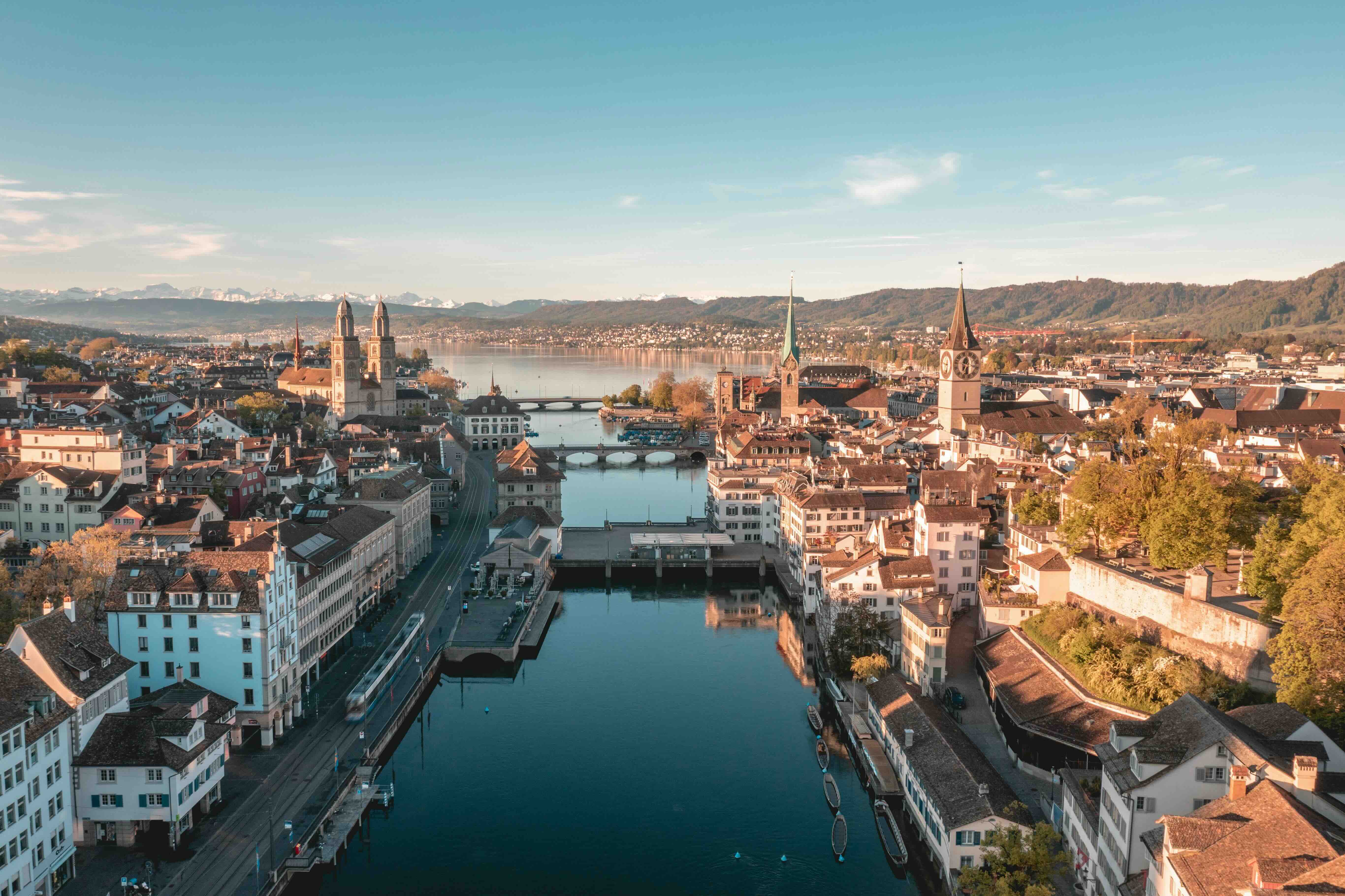
Milan → Zurich
~3h 20m · EuroCity (SBB/Trenitalia)
The fast way back: Milan to Zurich under the Gotthard
View RouteInterrail and the Swiss Travel Pass — when a pass beats point-to-point tickets and when it does not.
When reservation is mandatory, which side of the train has the views, and how to choose your class.
The Bernina Express is 144 kilometres of UNESCO-listed railway connecting the oldest city in Switzerland to the northern Valtellina - via the Landwasser Viaduct, the Morteratsch Glacier, the highest non-rack pass crossing in Europe, and the Brusio circular viaduct. A return or circular itinerary (Chur–Tirano by rail, Tirano–Lugano by Bernina Express bus, Lugano back to Chur by Gotthard or via Zurich) is one of the great day-long rail circuits in Switzerland.
Back to all routes