Glacier Express
Zermatt to St. Moritz
Seven hours and forty-five minutes. The Matterhorn at your back at departure; the Engadine valley ahead at arrival. In between: 291 bridges, 91 tunnels, and the Oberalp Pass at 2,033 metres - the highest point on any regular Swiss rail service. This is the Glacier Express, and it is not trying to be fast.
The Glacier Express has operated in its current form since 1930, connecting the ski resorts of the western Valais with the Graubünden Engadine. The route is operated by two separate mountain railways - Matterhorn Gotthard Bahn from Zermatt to Disentis, and Rhätische Bahn from Disentis through to St. Moritz. Through ticketing and panoramic reservations cover the entire journey seamlessly.
Important: A panoramic reservation fee (CHF 22 in 2nd class, CHF 22 in 1st class) is mandatory on all Glacier Express services and cannot be waived with a Swiss Travel Pass or Interrail. In July and August, panoramic cars sell out weeks in advance - book early.
Ready to book the Glacier Express?
The mandatory panoramic reservation (CHF 22) must be booked in advance - it cannot be added on the train and is not included with Swiss Travel Pass or Interrail. Book both the ticket and reservation together. In July and August, book 6–8 weeks ahead minimum.
Railero may earn a small commission if you book via the link above, at no extra cost to you.
Zermatt - Car-Free Start at 1,604 Metres
Zermatt, Valais, Switzerland · 46.020°N, 7.749°E
Zermatt is car-free. Not in the loosely enforced sense of a pedestrianised town centre, but genuinely, entirely car-free: private motor vehicles are banned from the village, and the only way in by road ends at Täsch, 5 km below, where a shuttle train runs every 20 minutes. The village is reached only by the Matterhorn Gotthard Bahn from Visp, or by helicopter.
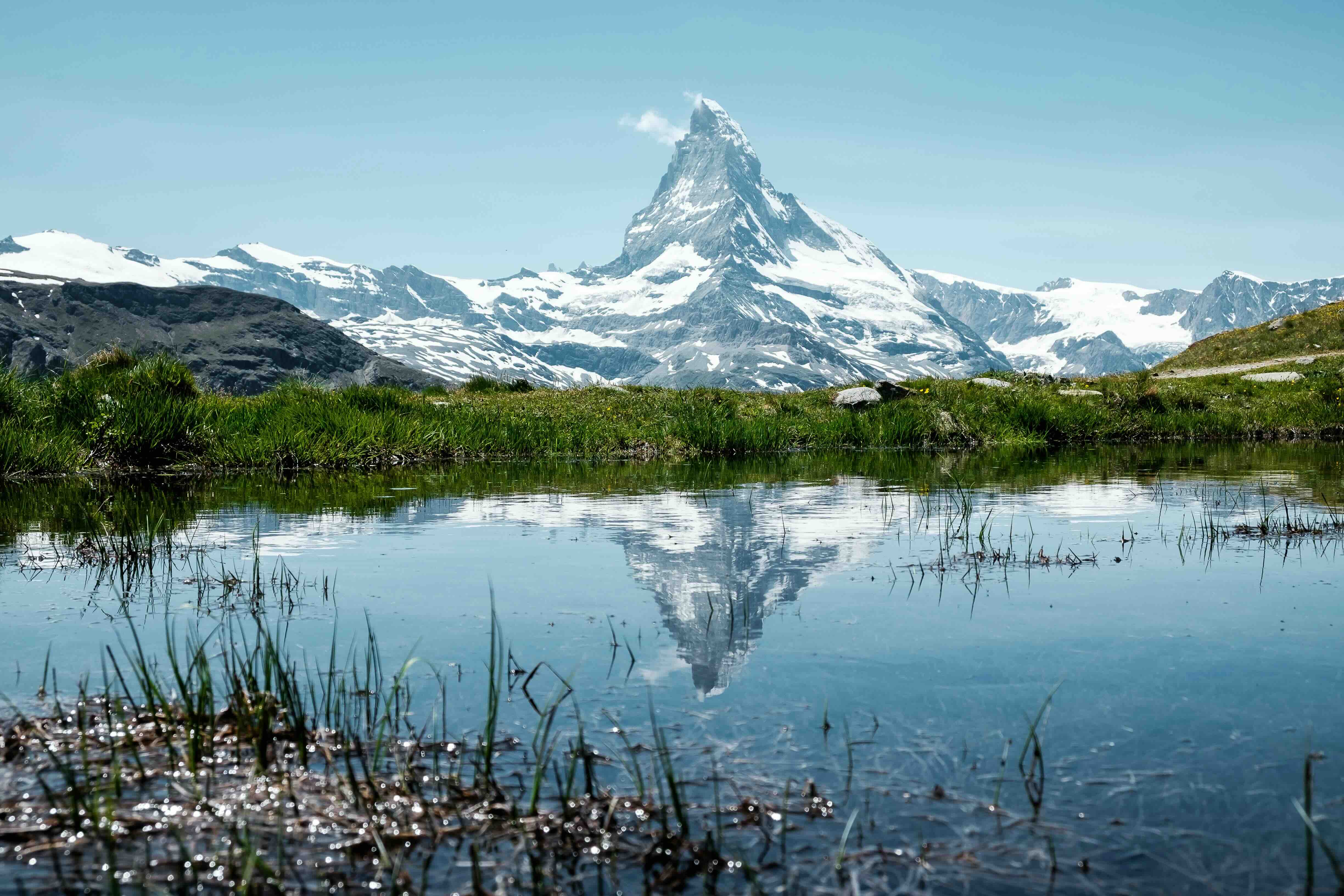
The Glacier Express departs from Zermatt station's two-platform terminus. On a clear morning, the Matterhorn - 4,478 metres, distinctly pyramidal - is visible to the south from the platform before the train pulls away heading north down the Matter Valley. The departure is unhurried: the train negotiates the valley floor at modest speed, passing through Stalden and St. Niklaus before reaching Visp in the Rhône valley, where a portion of services also pick up passengers from Brig.
The Matterhorn fills the rear window as Zermatt falls behind - a view you cannot replicate from any other mode of transport.
Glacier Express - Journey Facts
- OperatorsMatterhorn Gotthard Bahn (Zermatt–Disentis) · Rhätische Bahn (Disentis–St. Moritz)
- ReservationCHF 22 mandatory - cannot be skipped with any rail pass
- 2nd class fareFrom CHF 152 + CHF 22 reservation
- 1st class fareCHF 259 + CHF 22 reservation
- DiningFull at-seat meal service - reserve a meal window when booking
- Best seatRight side Zermatt → St. Moritz for the Matterhorn departure and Inn Valley
- Frequency2–3 departures daily in summer; reduced in winter
- LuggageLuggage forwarding (Gepäcktransport) available - send bags ahead to your hotel
Photographer's Seat Guide
Right side on departure frames the Matterhorn directly as the train pulls out - the pyramid fills the window for several minutes heading north down the Matter Valley. Between Visp and Brig, right side holds the upper Rhône valley and the first vine terraces. Through the Furka base tunnel there is nothing to see; the revelation comes immediately on emergence at Realp - you are already in the high Alps. Climbing to the Oberalp Pass, right side faces south into the Tavetsch valley. Approaching Disentis, the white towers of the Benedictine monastery appear above right side. From Chur to St. Moritz, right side catches the Landwasser Viaduct approach - six arches springing directly from a cliff face at 65 m above the gorge.
Left side leaving St. Moritz has the frozen Engadine lakes in winter and turquoise water in summer. Through the Albula section from St. Moritz to Chur, left side gives the Landwasser Viaduct from above and the spiral tunnels of the UNESCO Albula railway. Ascending toward the Oberalp Pass, left side frames the Sedrun valley and the high-alpine Tavetsch. Descending into the Rhône valley, left side delivers the Matterhorn at distance - growing larger as the train approaches Zermatt.
The Furka Tunnel & Oberalp Pass - 2,033 Metres
Andermatt & Sedrun, Uri & Graubünden · Switzerland
Between Brig and Andermatt, the Glacier Express passes through the Furka base tunnel - 15.4 kilometres of mountain bored in 1982 to allow year-round operation. Before 1982, the original Furka summit route over the pass at 2,436 metres was only open in summer; the tunnel opened the Glacier Express to winter operation. The original surface route is now operated as a heritage steam railway (Dampfbahn Furka Bergstrecke) in summer months.
Andermatt (1,444 m) is a brief stop - historically a strategic crossroads where the Gotthard, Furka, Susten, and Oberalp passes converge. The station platform is short and the stop usually no more than a few minutes. South of the village the ski resort of SkiArena Andermatt-Sedrun is visible on the surrounding slopes.
The Oberalp Pass at 2,033 metres: the highest point on any regular Swiss rail service - crossed in the open air, no tunnel, in all seasons.
The climb from Andermatt to the Oberalp summit is the most dramatic section of the entire journey. The train works its way up the Urseren Valley, passing through Hospental and climbing steadily to the pass. At the summit station - Oberalppass, 2,033 m - the landscape is genuinely alpine: snow patches through June, a frozen lake in winter (Lai da Oberalp), and rock faces above the treeline on all sides. This is the watershed between the Rhine drainage and the Rhône drainage: water on the west side of the pass flows eventually to the Mediterranean via Lake Geneva; water on the east side flows to the North Sea via the Rhine.
The descent east from the summit follows the Anterior Rhine (Vorderrhein) toward Disentis/Mustér (1,130 m), where the Benedictine monastery founded in 720 AD stands above the valley. The language switches here from German to Romansh - Disentis is Mustér in Romansh, one of the four official languages of Switzerland and spoken by around 35,000 people in Graubünden.
The Albula Section - UNESCO World Heritage
From Chur to St. Moritz, the Glacier Express follows the Rhätische Bahn's Albula line - a UNESCO World Heritage Site since 2008. The line climbs from 585 m at Chur to 1,815 m at Preda using four spiral tunnels and six helical loops, with the Landwasser Viaduct (65 m high, six arches, curving directly into a tunnel portal) as the most photographed structure on any Swiss railway.
St. Moritz - Arrival in the Engadine at 1,775 Metres
St. Moritz, Graubünden, Switzerland · 46.498°N, 9.835°E
St. Moritz station sits at 1,775 metres above sea level, at the foot of the valley that contains the Engadine lakes. The Glacier Express arrives at the terminus platform after nearly eight hours of Alpine transit - a journey that has crossed two cantons, three languages, and the watershed of Central Europe.
The town is compact and walkable from the station. St. Moritz-Dorf - the main village on the hillside - is a 10-minute walk uphill from the station; St. Moritz-Bad, on the lakeshore, is a 15-minute walk along the lake path. The frozen Lake St. Moritz (Lej da San Murezzan) is directly below the town centre in winter and a swimming lake in summer.
The town has hosted the Winter Olympics twice (1928 and 1948) and is the original destination for British winter sports tourists who came here in the late 19th century and, according to local legend, invented the bobsled and skeleton disciplines. The Cresta Run, the world's original bobsled track (built 1884–1885), still operates at nearby Celerina and is unique to St. Moritz.
From St. Moritz Station
When to Go
June–October: alpine meadows at full height, wildflowers on the Oberalp, the Engadine lakes clear and walkable. Clear mountain views most reliable in June before summer haze builds.
December–March: deep snow on all the high passes, the Engadine lakes frozen and white, the Matterhorn at its most imposing in winter light. The ski season brings peak crowds at both ends - book accommodation and reservations far ahead.
July & August are peak season - book panoramic seats 6–8 weeks ahead minimum. Excellence Class dome cars sell out months in advance.
Zermatt & St. Moritz Hotels
Both ends of the Glacier Express deserve an overnight stay. Zermatt for the Matterhorn at sunrise; St. Moritz for the Engadine light at dusk. Properties below are handpicked for proximity to the respective stations and the quality of their mountain settings.
Zermatt - centre, five-minute walk to the station
A grand 19th-century palace hotel at the foot of the Matterhorn. Departure morning views from the upper-floor rooms are among the finest in Swiss mountain hospitality.
Zermatt - rock-top, accessed by private funicular
Carved into a cliff above the village with a private rock-tunnel elevator. Floor-to-ceiling Matterhorn panoramas; ski-in access; one of the most architecturally unusual hotels in Switzerland.
St. Moritz - lakeside, five-minute walk from station
St. Moritz's original grand hotel, open since 1896. The palace that defined Engadine luxury - a fitting arrival point for a journey on the world's most famous scenic train.
St. Moritz - lakeside promenade
On the Engadine lake shore with views across to the mountains. A more contemporary complement to the traditional Engadine palace hotels.
Hotel links open Booking.com. Railero may earn a commission on bookings at no extra cost to you.
Frequently Asked Questions
- Do I need to book the Glacier Express in advance?
- Yes. The Glacier Express requires a compulsory seat reservation in its panoramic coaches, which cannot be added on board. Summer departures sell out weeks ahead, so reserve your seat together with your ticket as early as you can.
- Can I ride the Glacier Express route on regular trains without a reservation?
- Yes. The same scenery is covered by ordinary Matterhorn Gotthard Bahn and Rhaetian Railway trains with a few changes along the way, no compulsory reservation and a lower fare. You lose the panoramic dome and the through service, but keep the views.
- Is the Glacier Express covered by a Swiss Travel Pass, Interrail?
- The journey is covered by the Swiss Travel Pass, Interrail, but the compulsory panoramic reservation is a separate fee that no pass includes. On the regular trains along the route, no reservation is needed.
- Can I get meals on board the Glacier Express?
- Yes. The Glacier Express offers an at-seat meal service, and you reserve a dining slot when you book your seat. A trolley and snacks are also available, and the higher Excellence Class includes a full meal and bar as standard.
- Which side of the train has the best views?
- Travelling from Zermatt to St. Moritz, the right-hand side frames the Matterhorn at departure and much of the Rhône and Inn valley scenery, though highlights appear on both sides through the day. On the regular trains you can move between windows to catch them all.
- Is eight hours on the Glacier Express too long, or can I do part of it?
- You do not have to ride the whole line. Many people take a single scenic section - such as the UNESCO Albula stretch between Chur and St. Moritz, or the climb over the Oberalp Pass - rather than the full day. The complete run is the classic experience if you have the time.
- When is the best season for the Glacier Express?
- The train runs year-round. Summer brings green passes, wildflowers and glacier views; winter turns the Engadine lakes and high passes to snow and ice. Both are spectacular, and both sell out in peak months, so book far ahead.
- Can I send my luggage ahead on the Glacier Express?
- Yes. Swiss Railways run a station-to-station luggage service, so you can forward your bags to your destination hotel and travel the panoramic route hands-free. Arrange it a day or two before departure.
- What is the difference between the Glacier Express and the Bernina Express?
- Both are Swiss panoramic routes, but they run different lines. The Glacier Express links Zermatt and St. Moritz over the Oberalp Pass in around eight hours, with at-seat dining; the Bernina Express runs from Chur to Tirano in Italy over the open-air Bernina Pass, the highest such crossing in Europe, in about four hours. They meet in the Engadine - you can ride one to St. Moritz and continue on the other - and both use panoramic coaches that need a compulsory seat reservation. Services and timetables can change, so check what is running when you plan.
Continue Your Journey
Routes that pair naturally with this one — for building your European itinerary.
Bern → Zermatt
~2h 10m · BLS · Matterhorn Gotthard Bahn
Getting to Zermatt: the gateway from Bern
View Route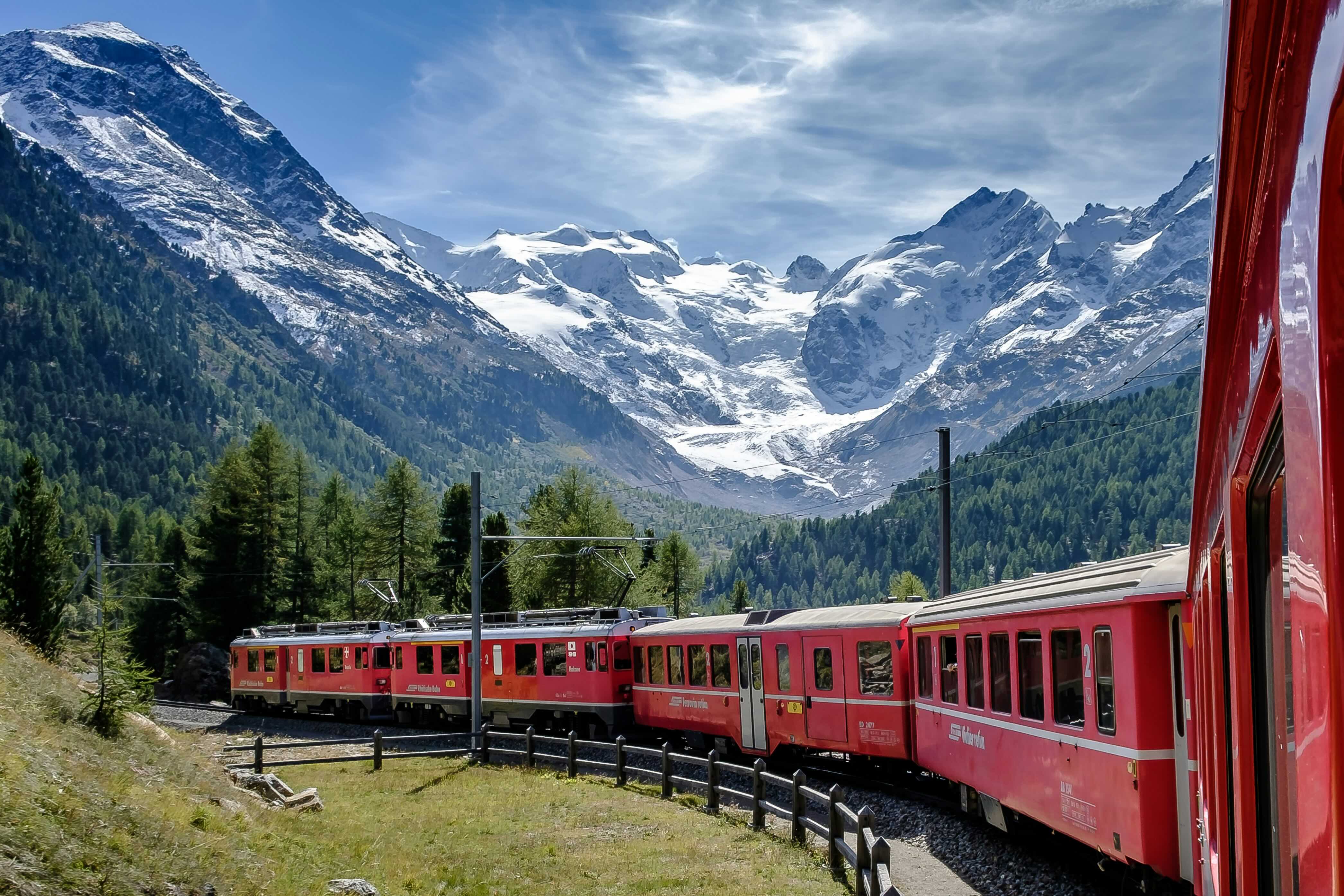
The Glacier Express is not the fastest route between Zermatt and St. Moritz - it is the route. Nearly eight hours through 291 bridges and 91 tunnels, over the Oberalp summit, across the UNESCO Albula railway, and into the Engadine. No comparable alpine transit exists anywhere in Europe.