Milan to Florence
The Fashion Capital to the Renaissance
This is one of Italy's flagship high-speed journeys: Milano Centrale to Firenze Santa Maria Novella in under two hours, racing down the spine of the AV network across the Po plain and through the Apennine tunnels - from Europe's fashion and business capital to a station that sits a ten-minute walk from the Duomo. No airport could dream of competing.
It is also the corridor where Italy's unique high-speed competition shows at its best: Trenitalia's Frecciarossa and NTV's Italo run rival trains on the same tracks all day long, which keeps departures frequent and advance fares honest. Business travellers treat it as a shuttle; everyone else treats it as the fastest possible route between aperitivo and Renaissance.
Why nobody flies Milan–Florence: There is no meaningful air route - Florence's small airport and the out-of-town transfers lose to a train that runs city centre to city centre in well under two hours, more than once an hour.
Ready to book Milan to Florence?
Both operators are all-reserved with dynamic fares - the cheapest seats go to the earliest bookers, and Friday and Sunday evenings sell out first. Compare Frecciarossa and Italo before you buy: same route, similar times, often different prices. Interrail passes work on Frecciarossa with a compulsory paid reservation; Italo does not accept passes, but its advance fares are the pragmatic fallback.
Railero may earn a small commission if you book via the link above, at no extra cost to you.
Milano Centrale - Departure from the Marble Cathedral of Railways
Milano Centrale, Italy · 45.486°N, 9.204°E
Milano Centrale needs no introduction to anyone who has stood under its 1931 vaults - a station built to overwhelm, all marble staircases and winged horses. Florence trains depart from the main trainshed, with Frecciarossa and Italo sharing the boards; ticket checks happen at the gate line before the platforms, so keep your barcode handy and allow a few minutes for the station's sheer size. Metro lines M2 and M3 arrive directly underneath.
Departures are constant by most countries' standards - more than one high-speed train an hour toward Florence through most of the day, split between the two operators. If you miss one, the next is rarely far behind; if you book one, the fare logic rewards commitment.
Milan–Florence - Journey Facts
- RouteMilano Centrale → Firenze SMN, via the Milan–Bologna–Florence AV lines
- OperatorsFrecciarossa (Trenitalia) and Italo (NTV) - true competitors
- Journey timeFrom about 1h 45m nonstop; around 2h with a Bologna stop
- FrequencyDepartures throughout the day - often more than one per hour combined
- ReservationsBuilt into every ticket - both operators are all-reserved
- DistanceAbout 306 km, at up to 300 km/h
Across the Po Plain - Food Country at 300 km/h
Reggio Emilia AV Mediopadana · 44.726°N, 10.656°E
South of Milan the AV line runs dead straight across the Po plain, shadowing the ancient Via Emilia through the greatest food region on earth: Piacenza, Parma, Reggio Emilia and Modena pass in quick succession - prosciutto, Parmigiano, balsamico and Lambrusco country, flattened into a 300 km/h blur of poplars and farmhouses.
The one architectural event of the plain is worth watching for: Reggio Emilia AV Mediopadana, Santiago Calatrava's station - a kilometre-long white wave of steel rising from the fields, served by a minority of trains and glimpsed by all the rest. It is northern Italy's answer to the question of what a high-speed station should look like.
The Via Emilia fed Italy for two thousand years; the AV line now crosses the whole larder in half an hour.
Bologna Centrale - The Underground Crossroads of Italian Rail
Bologna Centrale, Italy · 44.506°N, 11.344°E
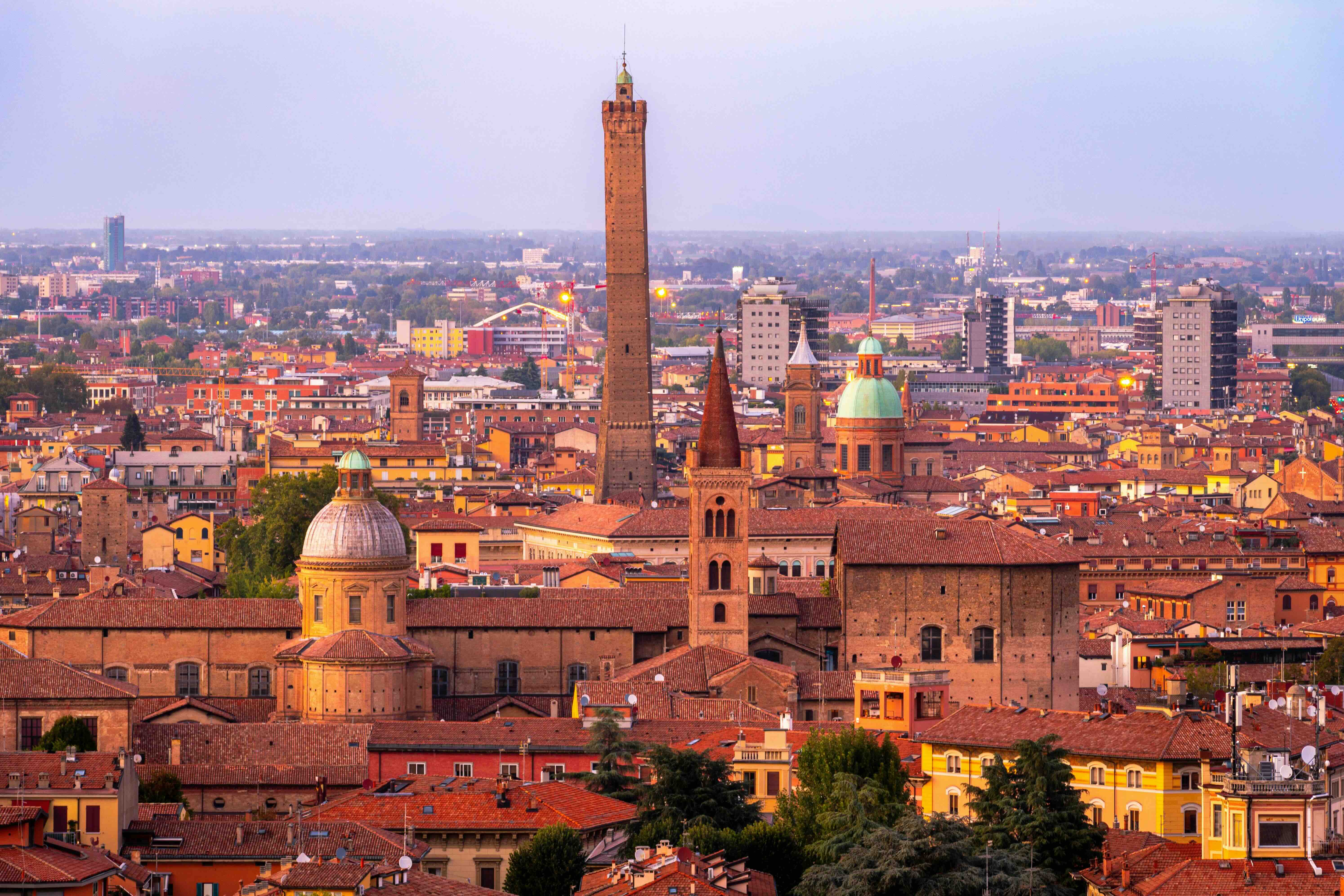
Most services pause at Bologna Centrale - and do it four storeys underground, in the cavernous AV station built beneath the old terminus. Bologna is where Italy's high-speed axes cross: Milan–Rome trains meet the Venice line here, which makes this stop the network's great interchange and Bologna itself an underrated break of journey (the food city's porticoed centre is minutes from the station).
Beyond Bologna the geography turns serious: the line dives into the Apennine crossing, a near-continuous sequence of tunnels punched through the mountains that separate Emilia from Tuscany. The old line took hours over these hills; the AV route does it in about twenty minutes of darkness, surfacing in the Arno basin with Florence ahead.
Worth Knowing
Firenze Santa Maria Novella - Arrival at the Renaissance's Front Door
Firenze Santa Maria Novella, Italy · 43.776°N, 11.248°E
Santa Maria Novella is that rare thing: a major terminus already inside the city you came to see. The rationalist 1930s station sits on the edge of the historic centre - roughly ten minutes on foot to the Duomo, fifteen to the Uffizi and the Ponte Vecchio, with the basilica that gives the station its name directly across the square. No transfer, no metro, no taxi required; most arrivals simply walk.
For everything further, the station is Florence's hub: trams from just outside serve the wider city, regional trains to Pisa, Lucca, Siena and the Tuscan towns leave from the same platforms, and onward high-speed services continue to Rome in about an hour and a half. Keep your luggage plan simple - the centre is cobbled and compact, and the station's left-luggage handles day-trip logistics.
From Firenze SMN
Frecciarossa or Italo - Italy's High-Speed Rivalry, Used Well
Two operators, one corridor: how to choose
Frecciarossa is the state flag-carrier's premium product: four classes (Executive, Business, Premium, Standard), the most departures, meals at-seat in the upper classes, and the corridor's widest choice of times. Italo is the private challenger: modern Alstom trains with four classes of its own (Club, Prima, Comfort, Smart), often sharper advance pricing, and a app-first booking experience. Speeds and journey times are effectively identical - they use the same tracks.
Practical differences that actually matter: Frecciarossa accepts Interrail (with a paid reservation); Italo does not. Italo's cheapest fares are frequently the corridor's lowest; Frecciarossa's frequency is unmatched at the day's edges. Luggage is a non-issue on both - carry aboard, rack it, no weigh-ins. The honest advice is unglamorous: check both, book the cheaper or better-timed train, and enjoy the fact that competition exists.
Frecciarossa vs Italo at a Glance
- Speed & timeIdentical - same tracks, ~1h 45m–2h
- DeparturesFrecciarossa runs more; Italo fills the gaps
- ClassesExecutive/Business/Premium/Standard vs Club/Prima/Comfort/Smart
- Rail passesFrecciarossa with paid reservation; Italo not accepted
- BookingDynamic fares on both - compare, then commit early
Rail Passes, Reservations and the All-Reserved Rule
How ticketing works on Italian high-speed rail
Italian high-speed trains are all-reserved without exception: every ticket names a train and a seat, and there is no boarding with an open ticket. That makes booking ahead the whole strategy - both operators' cheapest fare buckets (Super Economy, Low Cost) are non-refundable, sell first, and reward decisiveness; flexible fares cost more and forgive plan changes.
For pass holders the rule is equally clear: Interrail is valid on Frecciarossa only with a compulsory paid seat reservation, booked through Trenitalia or the pass operators' channels - arrange it before boarding, and early in summer, as pass-holder places are limited per train. Italo sits entirely outside the pass system; when Frecciarossa quotas are gone, an Italo advance fare is usually the cheapest legal seat on the corridor.
Quick Rules
Everyone: all-reserved - book a specific train, seat assigned, fares climb as seats sell.
Pass holders: Frecciarossa with a paid reservation booked in advance; Italo never accepts passes.
Luggage: carry aboard and rack it - no weigh-ins, no check-in, on either operator.
Beyond Florence - Rome, Pisa and the Venice Triangle
Florence as the hinge of an Italian rail itinerary
Florence is the natural pivot of Italian rail travel. Onward Frecciarossa and Italo services reach Rome in about an hour and a half - the famous 89-minute Direttissima leg - making Milan → Florence → Rome the country's definitive high-speed itinerary. In the other direction, Venice is a couple of hours away across the Apennines and the Veneto plain, closing the classic northern triangle.
Tuscany itself runs on regional trains from the same station: Pisa in about an hour, Lucca, Arezzo and the Chianti-edge towns all direct, no reservations needed and passes fully valid. Two or three nights in Florence with regional day trips, then a high-speed hop onward, is the itinerary this station was built for.
Milan to Florence is rarely the whole plan - it is the first move in Italy's great high-speed triangle.
Hotels in Florence
Florence is compact enough that anywhere in the centro storico works on foot from the station - stay near the Duomo for the postcard, or by the Arno for the evening light.
Florence - Piazza della Repubblica
The Rocco Forte grande dame on the Repubblica square, two minutes from the Duomo - polished Florentine luxury at the exact centre of the walkable city.
Florence - between the station and the Duomo
A stylish four-star in a Renaissance palazzo halfway between Santa Maria Novella and the cathedral - the practical upscale pick for rail arrivals.
Florence - between the Duomo and the Arno
A warm, family-run hotel in the medieval lanes near the Ponte Vecchio - genuine Florentine hospitality at fair rates, steps from everything.
Hotel links open Booking.com. Railero may earn a commission on bookings at no extra cost to you.
Frequently Asked Questions
- How long does the train from Milan to Florence take?
- Fastest nonstop services take around 1 hour 45 minutes; most trains, calling at Bologna, take about two hours. Both Frecciarossa and Italo cover the 306 km at up to 300 km/h. Exact times vary by service, so check current schedules when you book.
- Are there direct trains between Milan and Florence?
- Yes, constantly - Frecciarossa (Trenitalia) and Italo both run direct high-speed trains between Milano Centrale and Firenze Santa Maria Novella throughout the day, with more than one departure per hour combined at most times. No change of train is needed.
- Should I choose Frecciarossa or Italo?
- They are genuine competitors on the same route with similar speeds and journey times. Frecciarossa runs more departures and is the one that accepts rail passes; Italo often undercuts on advance fares and has modern, quiet trains. For most travellers the answer is simply whichever is cheaper or better-timed on the day - compare both before booking.
- Do I need a seat reservation on the Milan to Florence train?
- Reservations are built in - every Frecciarossa and Italo ticket is for a specific departure with an assigned seat, and you cannot board with an open ticket. Book ahead: both operators use dynamic pricing and the cheapest fares sell out first.
- Can I use an Interrail pass between Milan and Florence?
- On Frecciarossa yes - passes are accepted with a compulsory paid seat reservation, booked via Trenitalia or the pass operators' channels. Italo does not accept Interrail at all; if Frecciarossa's pass-holder quota is sold out, Italo's ordinary advance fares are the workaround.
- How much luggage can I take on the train?
- Both operators allow normal luggage free of charge - you carry bags aboard and use the racks at carriage ends and overhead. There are no weigh-ins or check-in; oversized items and bikes have their own rules, so check the operators' current conditions for anything unusual.
- Where does the train leave from in Milan?
- From Milano Centrale, the monumental 1931 terminus north-east of the centre - metro lines M2 and M3 stop underneath. High-speed departures show on the main boards; ticket checks happen at the platform gate line, so keep your barcode handy and allow a few minutes to walk the station's considerable length.
- How far is Firenze Santa Maria Novella from the centre of Florence?
- You are effectively already there - Santa Maria Novella is a terminus on the edge of the historic centre, roughly ten minutes on foot from the Duomo and fifteen from the Uffizi. Trams to the wider city leave from just outside, and regional trains to Pisa and the Tuscan towns depart from the same station.
Continue Your Journey
Routes that pair naturally with this one — for building your European itinerary.

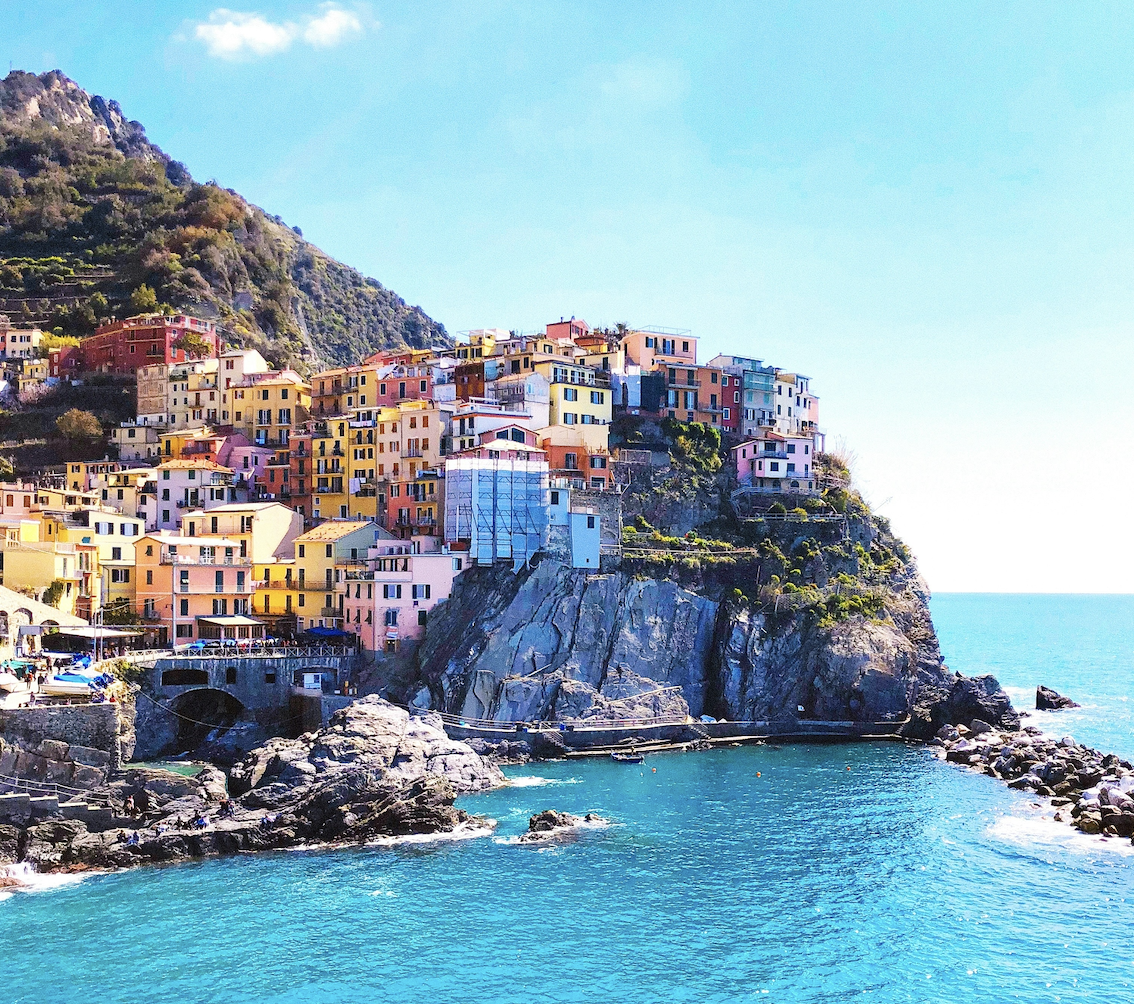
Florence → La Spezia
~2h 30m · Trenitalia Regionale
Continue to the Cinque Terre from Florence
View RouteInterrail and the Swiss Travel Pass — when a pass beats point-to-point tickets and when it does not.
When reservation is mandatory, which side of the train has the views, and how to choose your class.
Milan to Florence is Italian high-speed rail doing what it does best: under two hours between two utterly different Italies, with two operators competing to carry you and the Renaissance waiting a short walk from the platform. Compare Frecciarossa and Italo, book early for the fares, and treat Florence as a beginning - Rome is ninety minutes further, and Tuscany starts at the next platform over.