Milan to Rome by Train
Italy's Flagship High-Speed Railway
Milan to Rome is the spine of Italy's railway and one of the great high-speed corridors of Europe: from the business capital of the north to the eternal city in the south in under three hours, city centre to city centre, on trains that touch 300 km/h. Two operators - Frecciarossa and Italo - run it many times an hour, racing down through Emilia-Romagna, Bologna and Tuscany on a line built almost entirely for speed. It is the journey that made flying between Italy's two biggest cities all but pointless.
The appeal here is not scenery but sheer efficiency and comfort. You leave Milano Centrale and are in the heart of Rome, a short metro ride from the Colosseum, less than three hours later, having crossed half of Italy at speed. This guide is about making the most of that: choosing between Frecciarossa and Italo, deciding whether to take the nonstop or stop at Bologna and Florence, the classes and whether First is worth it, reservations and passes, and how to step off at Roma Termini into the whole of the south.
Why the train wins here: City centre to city centre in under three hours, against a flight that needs two out-of-town airports, security and their transfers - the train is comfortably quicker door to door, runs every few minutes, and drops you in the middle of Rome. On this corridor the train simply beats the plane.
Ready to book Milan to Rome?
Two operators run this line and both are all-reserved, so book ahead - fares are dynamic and the cheapest seats go first. Frecciarossa (Trenitalia) is the national flagship and accepts Interrail passes with a reservation; Italo is the private competitor, often keenly priced, but does not accept rail passes. The fastest trains run nonstop in under three hours; others call at Bologna and Florence. Both leave Milano Centrale for Roma Termini, city centre to city centre.
Railero may earn a small commission if you book via the link above, at no extra cost to you.
Departing Milano Centrale
Milano Centrale, Italy · 45.486°N, 9.204°E
The journey begins at Milano Centrale, the vast monumental station of 1931 that is one of the great railway cathedrals of Europe - a soaring hall of stone and steel, and the busiest long-distance hub in the north. Both Frecciarossa and Italo leave from here for Rome, from the long-distance platforms under the great trainshed. It is fully equipped and largely step-free, with lifts, shops and the operators' lounges upstairs, and the metro (M2 and M3) runs directly beneath it.
Boarding a high-speed train here is simple: there is no airport-style check-in, so arrive 15 to 20 minutes ahead, check the big departure boards for your platform (shown a little before departure), and find your coach - the platform displays and the train's coach numbers make it easy. One thing to confirm on your ticket: a few services use Milano Rogoredo on the southern edge of the city rather than Centrale, so check which Milan station you are leaving from before travel day.
Milan–Rome - Journey Facts
- RouteMilano Centrale → Roma Termini, down Italy's high-speed spine via Bologna and Florence
- OperatorsFrecciarossa (Trenitalia) and Italo (NTV) - both 300 km/h, both all-reserved
- Journey timeAround 2h 55m nonstop; roughly 3h 15m to 3h 30m with stops
- DistanceAbout 480 km at up to 300 km/h
- FrequencyMany trains an hour combined - one of Europe's busiest high-speed corridors
- ReservationsCompulsory on both - every ticket is for a specific train
Across the Po Valley to Bologna
Reggio Emilia AV · 44.726°N, 10.656°E
Out of Milan the train is quickly up to speed across the Pianura Padana, the great plain of the Po - the flat, fertile, intensively farmed heart of northern Italy, a land of maize and vines and Parmesan and prosciutto, stretching to the horizon on both sides. This is Emilia-Romagna, and the high-speed line runs dead straight across it, the countryside a green blur. Roughly halfway to Bologna the train passes Reggio Emilia AV, the striking wave-roofed Mediopadana station designed by Santiago Calatrava, standing alone out on the plain.
It is fast, easy travelling rather than dramatic scenery - the line was built for speed, and it shows - but there is a quiet pleasure in watching the productive Emilian countryside stream past. The cities of the Via Emilia lie strung out to the east, Parma and Modena among them, before the plain runs up to Bologna at the foot of the Apennines.
The Po plain has fed northern Italy for centuries; the high-speed line simply crosses it faster than anything before, Milan to Bologna in barely an hour.
Bologna and the Apennine Tunnels
Bologna Centrale · 44.506°N, 11.344°E
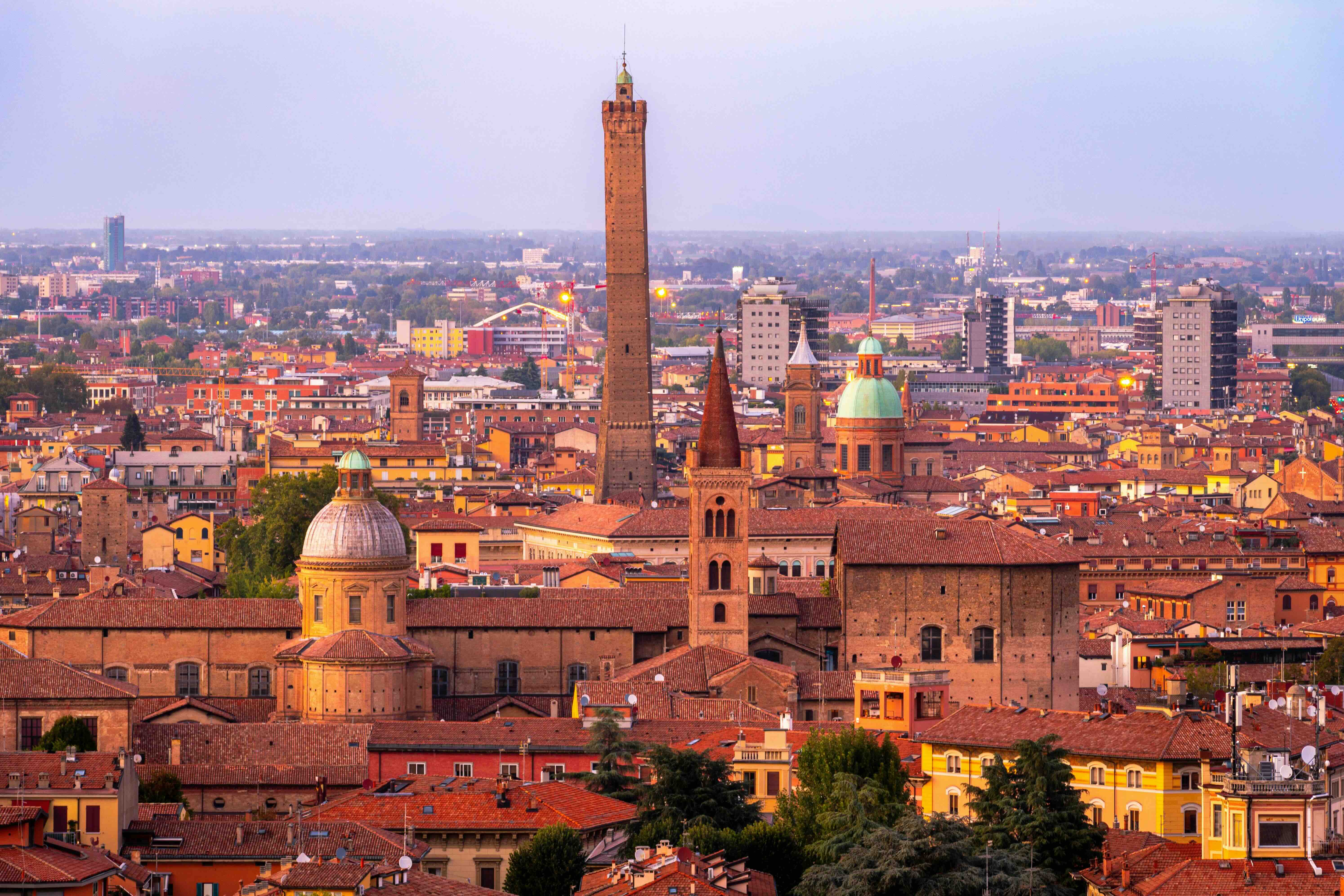
Bologna is the great rail crossroads of Italy - the point where the high-speed lines from Milan, Turin, Venice and the south all meet - and a magnificent city in its own right, red-brick and arcaded, home to the oldest university in the world. Its high-speed platforms sit deep underground beneath the historic Centrale station. Many Milan-Rome trains call here; it is one of the two natural places to break the journey if you want to.
South of Bologna the line does something remarkable: it burrows straight through the Apennines, the mountain spine of Italy, in a series of long base tunnels that carry the train under the range at speed. For most of the stretch between Bologna and Florence you are underground, so there is little to see - but it is worth knowing what is happening, because this tunnelled crossing is what turned a slow mountain journey into a 35-minute dash and made the whole Milan-Rome corridor possible.
Florence: Stay On Board, or Change?
Firenze Santa Maria Novella · 43.776°N, 11.248°E
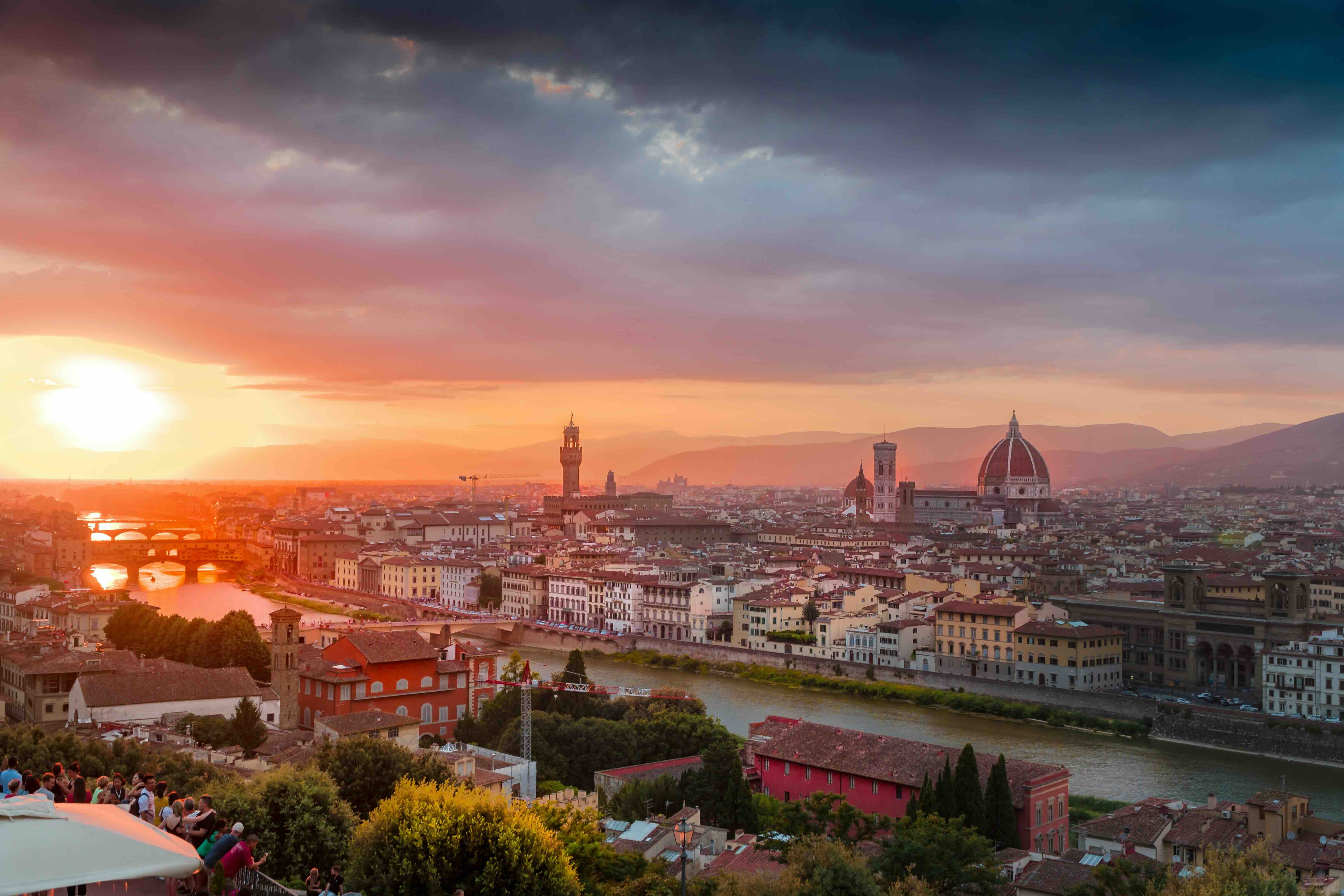
Emerging from the Apennines, the line reaches Florence, and here the journey offers a choice. Trains that call at Florence use Firenze Santa Maria Novella, a terminus in the centre of the city - which means the train pulls in, and then reverses out the way it entered, changing direction for the rest of the run to Rome (your seat now faces backward). The fastest nonstop trains avoid this by bypassing Florence altogether on the through line, which is part of how they save time.
So should you stay on the direct train or change? For most people, staying aboard is the easy answer: the nonstop and limited-stop trains are fast, frequent and simple, and this route's whole point is the direct high-speed run. Changing at Florence or Bologna genuinely makes sense in three cases - if you actually want to visit those cities and break the journey (both are superb), if a direct train is sold out and a combination is better timed or cheaper, or if you are piecing the trip together on a rail pass and want more flexibility. Otherwise, book a direct train and stay in your seat. Beyond Florence the countryside opens into the hills of Tuscany and Umbria for the final run south.
Direct, or Break the Journey?
Arriving at Roma Termini
Roma Termini, Italy · 41.901°N, 12.502°E
Roma Termini is Italy's largest station and the beating heart of its rail network - a huge, busy modern terminus with its famous cantilevered roof, fully equipped and largely step-free, with lifts, shops and services of every kind. It sits centrally, a little east of the ancient core, and it is the hub of the Rome metro, so the whole city is within easy reach the moment you step off the train.
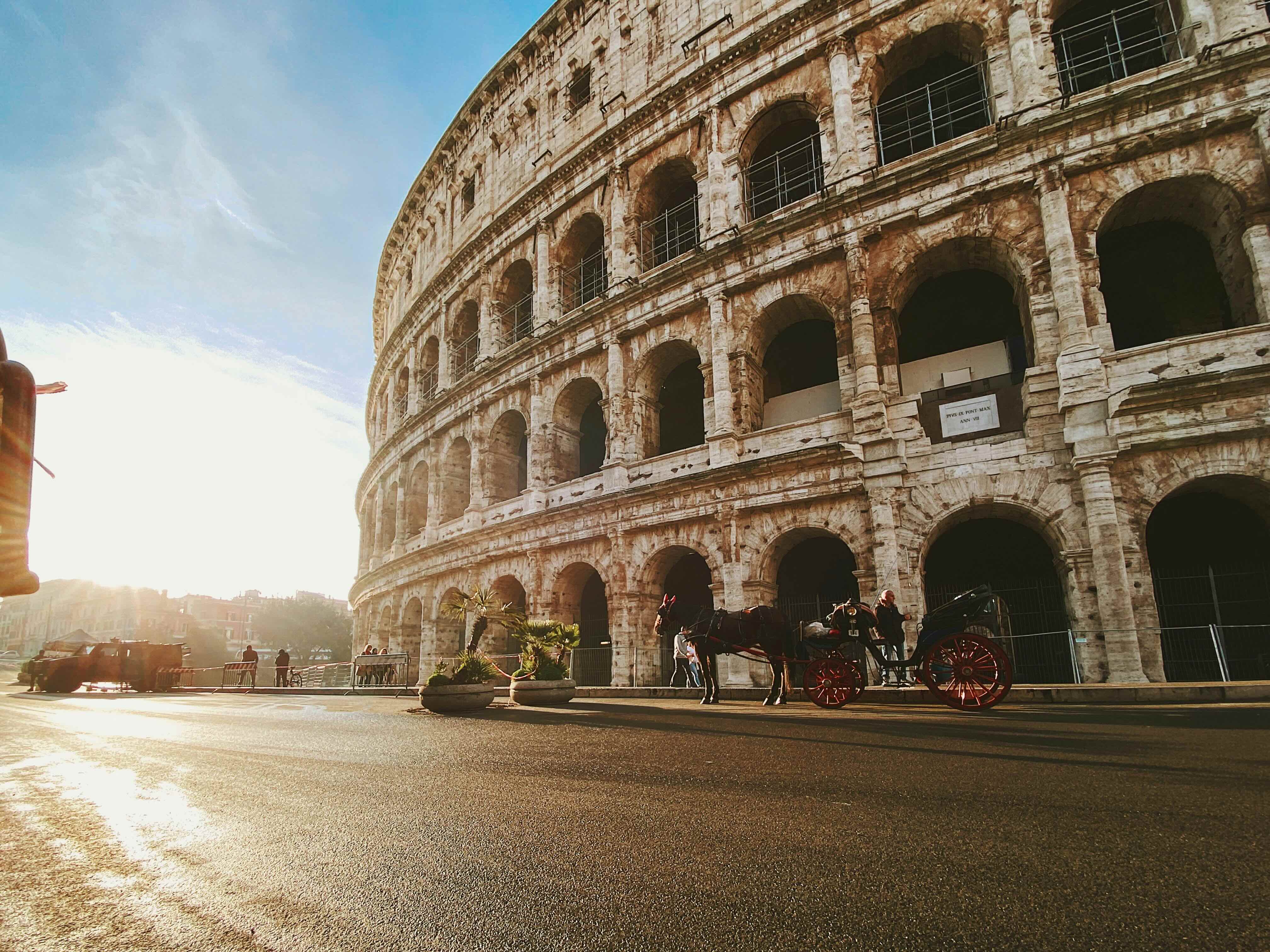
Metro lines A (orange) and B (blue) meet directly beneath the station. Line B reaches the Colosseum in a couple of stops, a few minutes away; line A serves the Spanish Steps (Spagna) and the Vatican (Ottaviano), each a short ride; and the Trevi Fountain is a walk of around 15 to 20 minutes, or a short hop by metro and foot. Buses and taxis wait outside, and the Leonardo Express runs direct from Termini to Fiumicino airport in about 32 minutes. Much of the historic centre is walkable once you are in it, but the metro from Termini gets you started.
From Roma Termini
Frecciarossa or Italo - and Which Class
Two operators, one high-speed line
Two operators compete head to head on this line, and both are excellent. Frecciarossa is Trenitalia's flagship: sleek 300 km/h trains with four classes - Standard, Premium, Business and Executive - a bistro car, wifi, and FRECCIALounge access at major stations for the premium classes. Italo is the private challenger (NTV): equally modern 300 km/h trains, also four classes - Smart, Comfort, Prima and Club Executive - with the Italo Bar, wifi, and its own station lounges. Journey times are the same because they share the line, so the choice comes down to timetable, price, class and one crucial detail for pass holders.
That detail: Frecciarossa accepts Interrail passes (with a compulsory paid reservation), while Italo does not accept rail passes at all. So pass holders should book Frecciarossa. For everyone else, Italo is often keenly priced and worth comparing directly. On class, Standard and Smart are perfectly comfortable for under three hours; the mid tiers - Business and Prima - are the sweet spot, buying wider 1+2 seating, more space and a quieter carriage, often for a modest premium booked early; and the top tiers, Executive and Club Executive, add lounge access and at-seat service. Neither operator is better in the abstract - compare both for your date and pick on price, class and pass.
Frecciarossa vs Italo
- OperatorFrecciarossa: Trenitalia (national) · Italo: NTV (private)
- ClassesFrecciarossa: Standard/Premium/Business/Executive · Italo: Smart/Comfort/Prima/Club
- ReservationsBoth compulsory - every ticket is for a specific train
- LoungesFrecciarossa: FRECCIALounge · Italo: Italo Lounge / Casa Italo
- Rail passesFrecciarossa: Interrail with reservation · Italo: not accepted
- Best forFrecciarossa: pass holders, through-tickets · Italo: often keen fares - compare both
Is the Journey Scenic?
An honest look at the window
It is honest to say that Milan to Rome is built for speed, not views. The line races across the flat Po plain of Emilia-Romagna, where the country is productive but level and open; then it spends most of the Bologna to Florence stretch underground, boring through the Apennines in long tunnels; and only after Florence does the landscape really open up, into the rolling hills, vineyards and cypresses of Tuscany and Umbria on the run down to Rome. That final third is pleasant, but it is a fast train, not a slow scenic one.
There is no strongly preferred side of the train for views - the plain looks much the same both ways and the tunnels have no view at all - so choose your seat for comfort rather than scenery. If seeing the countryside is the point of your trip, the classic Tuscan lines and regional trains are the ones to seek out; Milan to Rome is the fast, efficient way to cross Italy, and that speed and city-centre convenience are the real reasons to take it.
Onward Travel from Rome
Italy's principal long-distance hub
Rome is the principal long-distance rail hub of Italy - the meeting point of the high-speed spine running north to Milan and south to Naples, and the gateway to the whole of the south and the islands. From Roma Termini, where you arrive, fast Frecciarossa and Italo trains fan out across the country, and slower Intercity and regional trains reach the places the high-speed lines do not. Most fast trains leave from Termini, which makes onward travel simple, though the high-speed and international services all need a reservation.
Onward from Rome
- NaplesFrecciarossa and Italo south, around 1h 10m
- FlorenceBack north by high-speed, around 1h 30m
- VeniceFrecciarossa via Bologna and Padua, around 3h 45m
- MilanThe return up the spine, around 2h 55m nonstop
- BariFrecciarossa south-east across the peninsula, around 4h
- SicilyThe long way south: Frecce and Intercity to the Strait of Messina, then a ferry crossing - a full day
Reach Rome and the whole of Italy is a platform away: Naples and the south in an hour, Florence and Venice to the north, and the islands beyond.
Reservations, Passes, Luggage, Bikes and Access
The practical rules for the high-speed line
The reservation rule is simple and absolute: both Frecciarossa and Italo are all-reserved, so every ticket is for a specific train with an assigned seat, and you cannot board an earlier or later one on the same ticket. Book ahead - fares are dynamic and the cheapest seats sell first, with Friday evenings, Sundays and holidays filling earliest. For pass holders, Interrail is accepted on Frecciarossa with a compulsory paid reservation from a limited quota, so book it early; Italo does not accept passes at all, so pass travellers should stick to Frecciarossa (or slower Trenitalia Intercity trains). For the wider picture, see the rail passes and seat reservations guides linked below.
Luggage is generous on both - there is no strict weight limit, you carry your bags aboard and use the overhead shelves and the larger racks at the carriage ends, so bring what you can manage and keep valuables with you. Bicycles are the one real limitation: these high-speed trains generally carry only folded or dismantled bikes in a bag, as luggage, and do not take a full assembled bicycle - for that you would use a slower regional or Intercity train, so check the current policy before travelling with a bike.
On accessibility, both Milano Centrale and Roma Termini are large, staffed stations with lifts and step-free routes to the platforms, and Frecciarossa and Italo trains have accessible spaces and toilets. Trenitalia's Sala Blu and Italo's assistance service provide boarding help at major stations and should be booked in advance - do not assume every train and platform is equally straightforward. Accessibility depends on the specific train, platform and station, so arranging assistance ahead is the reliable approach.
Quick Tips
Compare both operators: Frecciarossa and Italo share the line - check both for your date on price, class and timetable.
Pass holders, take Frecciarossa: Interrail works on Frecciarossa (with a reservation) but not on Italo.
Book early for the fare: both are all-reserved with dynamic pricing - the same seat costs far less weeks out than on the day.
Hotels in Rome
Rome rewards staying near the historic centre or close to Termini - within reach of the Colosseum, the Trevi Fountain and the metro, with the whole city and its onward trains a short ride away.
Rome - near the Spanish Steps
A grand, discreet luxury hotel above the Spanish Steps with a celebrated rooftop and views over the city - one of Rome's finest addresses, in the heart of the historic centre.
Rome - Salario, near the centre
A stylish, sociable design hotel a short walk or metro ride from the centre and Termini, with a buzzing lobby and restaurants - characterful and good value for central Rome.
Rome - by Termini station
A dependable, well-run boutique hotel a short walk from Roma Termini - the easiest base for the trains, with the metro to the sights from the door and the centre within reach.
Hotel links open Booking.com. Railero may earn a commission on bookings at no extra cost to you.
Frequently Asked Questions
- How long is the train from Milan to Rome?
- The fastest nonstop Frecciarossa and Italo trains do it in around 2 hours 55 minutes, city centre to city centre. Trains that call at Bologna and Florence take roughly 3 hours 15 minutes to 3 hours 30 minutes. It is about 480 km down Italy's high-speed spine. Exact times vary by service, so check the current schedule when you book.
- Are there direct trains, and how often do they run?
- Yes - this is one of the busiest high-speed corridors in Europe. Frecciarossa (Trenitalia) and Italo both run direct from Milano Centrale to Roma Termini many times an hour at peak, with well over a hundred departures a day between them. No change is needed; the fastest trains run nonstop, others call at Bologna and Florence on the way.
- Should I choose Frecciarossa or Italo?
- Both are excellent, modern 300 km/h trains on the same line, so neither is universally better. Frecciarossa is Trenitalia's flagship, with four classes (Standard, Premium, Business, Executive), FRECCIALounge access for premium classes, and - importantly - it accepts Interrail passes. Italo is the private competitor, also with four classes (Smart, Comfort, Prima, Club Executive) and its own lounges, often keenly priced, but it does not accept rail passes. Choose on timetable, price, class and whether you are travelling on a pass.
- Do I need a seat reservation?
- Yes - both Frecciarossa and Italo are fully reserved. Every ticket is tied to a specific train with an assigned seat, and you cannot board an earlier or later train on the same ticket. Book ahead, as fares are dynamic and the cheapest seats sell first, with Friday evenings, Sunday and holidays filling earliest.
- Can I use an Interrail pass?
- On Frecciarossa yes, with a compulsory paid pass-holder reservation from a limited quota, so book it early. Italo does not accept Interrail passes at all, so pass holders should travel on Frecciarossa (or on slower Trenitalia Intercity trains). This is the main practical difference between the two operators for pass travellers.
- Should I stay on the direct train, or change at Florence or Bologna?
- For most people the direct train is the obvious choice - it is fast, frequent and simple, and the nonstop services are the quickest of all. Changing at Bologna or Florence mainly makes sense if you actually want to visit those cities and break the journey, if a direct train is sold out and a combination is cheaper or better timed, or if you are piecing the trip together with a pass. Note that trains calling at Florence reverse direction there, since Firenze SMN is a terminus, which adds a little time.
- How much luggage can I take, and can I bring a bicycle?
- Luggage is generous on both operators - there is no strict weight limit, you carry your bags aboard and use the overhead shelves and the larger racks at the carriage ends, so bring what you can manage and keep valuables close. Bicycles are more limited: these high-speed trains generally carry only folded or dismantled bikes in a bag, as luggage - a full bicycle is not normally accepted, so for that you would use a slower regional or Intercity train. Check the current policy before travelling with a bike.
- Is First Class worth it on Milan to Rome?
- For a trip of around three hours it can be a pleasant upgrade, but Standard (or Italo Smart) is perfectly comfortable and good value. The mid-tier - Frecciarossa Business or Italo Prima - is the sweet spot: wider 1+2 seating, more space and a quieter carriage, often for a modest premium when booked early. The top tiers (Executive, Club Executive) add lounge access and at-seat service for those who want the full experience. It is worth it if you value space and quiet, optional otherwise.
- Is the Milan to Rome train scenic?
- Not especially - it is built for speed, not views. The line races across the flat Po plain of Emilia-Romagna, then burrows through the Apennines between Bologna and Florence almost entirely in tunnel, before the more open Tuscan and Umbrian countryside on the run down to Rome. It is comfortable, fast travelling rather than a sightseeing ride, and there is no strongly preferred side for views. For scenery, this is not the reason to take the train; speed and city-centre convenience are.
- Which stations do the trains use, and how do I reach central Rome?
- Most trains run between Milano Centrale and Roma Termini, both central main stations, though some also call at Milano Rogoredo or Roma Tiburtina, so check your ticket. Roma Termini is Italy's largest station and the hub of the metro: lines A and B meet there, with the Colosseum a couple of stops away on line B, the Spanish Steps and Vatican reachable on line A, and the Leonardo Express to Fiumicino airport from the same station.
Not sure if you need to reserve a seat?
Check this journey in Railero’s Seat Reservation Checker.
Continue Your Journey
Routes that pair naturally with this one — for building your European itinerary.
Interrail and the Swiss Travel Pass — when a pass beats point-to-point tickets and when it does not.
When reservation is mandatory, which side of the train has the views, and how to choose your class.
Milan to Rome is Italy's flagship high-speed journey: under three hours from the business capital of the north to the eternal city, city centre to city centre, on Frecciarossa or Italo down a line built for speed. Compare the two operators, book early for the fare, take the nonstop unless you want to break the journey at Bologna or Florence - and step off at Termini into the whole of Rome and the south beyond.