
Paris to Lyon
France's Flagship High-Speed Line
This is where European high-speed rail began, and it is still the reference: Paris Gare de Lyon to Lyon Part-Dieu in about two hours, on the LGV Sud-Est that opened in 1981 and taught the continent what a fast train could do. Around thirty departures a day link the capital with France's second city and gastronomic capital - a frequency closer to a metro than a railway.
The corridor long ago beat the airlines - city centre to city centre, no airport on either end - and today it is the spine of the French network: from Lyon, connections fan out to the Alps, Provence and the Riviera. TGV INOUI provides the full-service trains; low-cost OUIGO doubles the frequency for flexible budgets. Both are all-reserved, which makes booking ahead the one rule of the route.
The corridor that killed the air shuttle: Paris–Lyon was the world's proof that high-speed rail beats short-haul flying - two hours seat to seat, against an air journey that loses before it starts once transfers and security are counted. The plane barely exists here anymore.
Ready to book Paris to Lyon?
TGV is all-reserved: every ticket carries an assigned seat on a specific departure, and dynamic fares mean the earliest bookers pay least - Friday and Sunday evenings sell out first. TGV INOUI is the full-service option (power, Wi-Fi, café car, generous luggage); OUIGO is the low-cost alternative with stricter luggage rules and no pass acceptance. Interrail works on INOUI with a paid quota-limited reservation - book it early.
Railero may earn a small commission if you book via the link above, at no extra cost to you.
Paris Gare de Lyon - Departure Beneath the Belle Époque Clock
Paris Gare de Lyon, France · 48.844°N, 2.373°E
Gare de Lyon is the grand southern gateway of Paris, its belle-époque clock tower presiding over the forecourt and Le Train Bleu - the most extravagant station restaurant in Europe, all gilt and frescoes above the platforms - worth an early arrival on its own. TGVs leave from the main halls; platforms are typically posted about twenty minutes before departure, so watch the boards with a coffee rather than guessing.
Getting there is the easy part: metro lines 1 and 14 and RER A and D all stop beneath the station, putting it fifteen minutes from almost anywhere central. There is no security screening and no check-in - ticket barcodes are scanned at the platform gates, and boarding takes minutes.
Paris–Lyon - Journey Facts
- RouteParis Gare de Lyon → Lyon Part-Dieu (some services to/via Perrache)
- OperatorsTGV INOUI (full service) and OUIGO (low cost)
- Journey timeAbout 2h direct - check current schedules
- FrequencyAround 30 trains daily - roughly half-hourly at peaks
- ReservationsCompulsory - TGV is an all-reserved system
- The lineLGV Sud-Est - France's first high-speed line, opened 1981
Past Melun onto the Line That Started Everything
The LGV Sud-Est begins · France's first high-speed line
The first quarter hour is ordinary railway - out through the south-eastern suburbs on the classic lines, past the confluence country where the Seine collects its tributaries near Melun. Then the train swings onto the LGV Sud-Est and the acceleration is something you feel in your back: within a couple of minutes the TGV is cruising at 300 km/h, and the world outside reorganises itself into foreground blur and slow-moving horizon.
It is worth knowing what you are riding. This line, opened in stages in 1981–83, was Europe's first purpose-built high-speed railway - the experiment that proved city pairs two hours apart by fast train no longer needed an air route. Every LGV in France, and most high-speed lines in Europe, descend from the success of exactly this stretch of track.
Everything Europe knows about high-speed rail was learned first on this line - and it still runs like the proof of concept it was.
Burgundy at 300 km/h - Le Creusot and the Empty Middle
Le Creusot-Montceau TGV · 46.766°N, 4.416°E
The middle hour is deep France: the Yonne valley, then the rolling pastureland of Burgundy - white Charolais cattle, hedgerows, distant church spires - scrolling past at a speed that turns farmland into cinema. The LGV deliberately avoids the towns, which is why the scenery stays so unspoiled and the stops so few.
Le Creusot-Montceau TGV, which a minority of trains serve, is the emblem of that choice: a high-speed station standing almost alone in the fields, built to bring the TGV era to Burgundy's old industrial heartland. Most services flash through without slowing - if yours stops, you are on one of the semi-fast runs, adding a handful of minutes to the journey.
Mâcon, the Beaujolais and the Approach to Lyon
Mâcon-Loché TGV · 46.280°N, 4.777°E
South of Le Creusot the landscape softens into wine country - the Mâconnais on the slopes to the west, the Saône glinting to the east, and, past the occasional stop at Mâcon-Loché TGV, the hills of the Beaujolais crowding the right-hand windows. It is the prettiest quarter of the journey, and the signal that Lyon is close.
The TGV leaves the high-speed line north of the city and threads down the Saône corridor into the urban approach. Watch for the river doubling alongside - Lyon sits at the meeting of Saône and Rhône, and the train arrives between them.
Worth Knowing
Lyon Part-Dieu - Arrival in the Gastronomic Capital
Lyon Part-Dieu, France · 45.761°N, 4.860°E
Most trains arrive at Lyon Part-Dieu, the tower-flanked hub of the business district on the Rhône's left bank - not the prettiest quarter of Lyon, but comfortably the best connected. Metro line B runs from directly beneath the station, trams T1 and T4 stop outside, and the Presqu'île - the peninsula heart of the city between the two rivers - is ten minutes away. Vieux Lyon's Renaissance lanes and the Fourvière basilica rise just beyond it.
A minority of services call instead (or additionally) at Lyon Perrache, at the southern end of the Presqu'île - closer to some hotels, less useful for connections. Unless you have a specific reason, Part-Dieu is the stop to choose: it is also where the TER regional network and onward TGVs concentrate, which matters for the next leg of most itineraries.
From Lyon Part-Dieu
INOUI or OUIGO, Reservations and Rail Passes
How France's all-reserved system works
TGV INOUI is the full-fat product: first and second class, power and Wi-Fi at every seat, a café-bar car, and luggage limited only by what you can carry and label. First class buys a 1+2 layout, wider seats and a quieter working atmosphere - often only modestly dearer when booked early. OUIGO is the low-cost twin: same speed, same route, stripped service, stricter size-limited luggage with paid extras, and rock-bottom fares for those who pack light and book ahead.
The reservation rule has no exceptions: every TGV seat is assigned at booking, and you cannot board with an open ticket. For Interrail pass holders that means a compulsory paid pass-holder reservation on INOUI, drawn from a limited quota per train - book through SNCF Connect or the pass channels as soon as plans firm up, especially for summer and holiday weekends. OUIGO does not accept passes at all; if quotas are exhausted, its cheap ordinary fares are the pragmatic fallback.
Quick Rules
Everyone: TGV is all-reserved - book a specific train, seat assigned automatically, fares rise as seats sell.
Pass holders: paid quota reservation on INOUI, booked early; OUIGO never accepts passes.
Luggage: carry-and-stow with labels on INOUI; size-checked and stricter on OUIGO.
Beyond Lyon - Provence, the Alps and the Riviera
Why this corridor is the spine of French rail
Lyon is where the French network opens out. Onward TGVs continue down the Rhône to Avignon and Aix-en-Provence, to Marseille, and along the coast toward Nice; many run through from Paris, so the same platforms serve your connection. Eastward, the TER network climbs into the Alps - Grenoble, Chambéry and Annecy are all direct - making Lyon the natural interchange between the capital and the mountains.
That geography is the quiet argument for breaking your journey here: a night in Lyon buys the bouchons, the Renaissance traboules of the old town and Fourvière's view over the rooftops, and costs your itinerary nothing - the onward trains leave from where you arrived. Paris to the Mediterranean with Lyon in the middle is France's classic rail itinerary for a reason.
Paris built the line, but Lyon is the hinge - everything south and east of here swings off this two-hour ride.
Hotels in Lyon
Sleep on the Presqu'île for the classic Lyon experience between the rivers, or beside Part-Dieu if you are catching an early onward TGV.
Lyon - Presqu'île, on the Rhône
The monumental 18th-century riverside hospital reborn as the city's showpiece hotel, its dome and courtyards facing the Rhône - Lyon's grandest address.
Lyon - Presqu'île, near Place des Terreaux
A cheerful silk-trade-themed boutique hotel in the heart of the peninsula, steps from the restaurants - the well-priced central pick.
Lyon - between Part-Dieu and the Rhône
Polished rooms and a serious spa on the smart side of the Rhône, an easy walk or one tram stop from Part-Dieu - practical luxury for rail travellers.
Hotel links open Booking.com. Railero may earn a commission on bookings at no extra cost to you.
Frequently Asked Questions
- How long does the train from Paris to Lyon take?
- About 2 hours on a direct TGV from Paris Gare de Lyon to Lyon Part-Dieu - nonstop services are slightly under that, trains with intermediate stops slightly over. Exact times vary by service, so check current schedules when you book.
- How many direct trains run between Paris and Lyon each day?
- This is one of the busiest high-speed corridors in Europe: SNCF lists around 30 trains a day, a mix of TGV INOUI and low-cost OUIGO services, running from early morning to late evening - roughly every half hour at peak times. Check the current timetable for exact departures.
- Do I need a seat reservation for the Paris to Lyon TGV?
- Yes - TGV is an all-reserved system. Every ticket is for a specific departure and includes an assigned seat; there is no boarding with an open ticket. Book ahead: fares are dynamic and the cheapest seats sell first, especially for Friday and Sunday evenings.
- Can I use an Interrail pass on the Paris to Lyon train?
- Yes, but with the standard French caveat: TGV INOUI requires a paid pass-holder seat reservation from a limited quota per train, booked via SNCF Connect or the pass operators' channels - reserve early in summer. OUIGO trains do not accept passes at all; their cheap point-to-point fares are the workaround if quotas are gone.
- How much luggage can I take on the TGV?
- SNCF asks that you keep luggage to what you can carry and stow yourself, with labelled bags - in practice two suitcases plus hand luggage travels without difficulty on TGV INOUI (OUIGO has stricter, size-limited rules with paid extras). Racks sit at carriage ends and above the seats; check current conditions for bikes and outsized items.
- Which Lyon station do trains arrive at?
- Most TGVs from Paris arrive at Lyon Part-Dieu, the business-district hub with the best onward connections; some continue or run to Lyon Perrache, closer to the peninsula's southern end. Part-Dieu is the safe default - metro line B, two tram lines and most TER regional services connect there.
- Is first class worth it on the Paris to Lyon TGV?
- For a two-hour hop, second class is comfortable - every INOUI seat has power and Wi-Fi. First class buys wider seats in a 1+2 layout, more workspace and a quieter carriage, and is often only modestly more when booked early - worth it for working travellers, optional for everyone else.
- Where does the train leave from in Paris?
- From Paris Gare de Lyon, on the right bank in the 12th arrondissement - metro lines 1 and 14 and RER A and D stop underneath, making it one of the best-connected stations in the city. TGVs depart from the main hall platforms; arrive with enough time to check the departure board, as platforms are posted around 20 minutes before departure.
Not sure if you need to reserve a seat?
Check this journey in Railero’s Seat Reservation Checker.
Continue Your Journey
Routes that pair naturally with this one — for building your European itinerary.
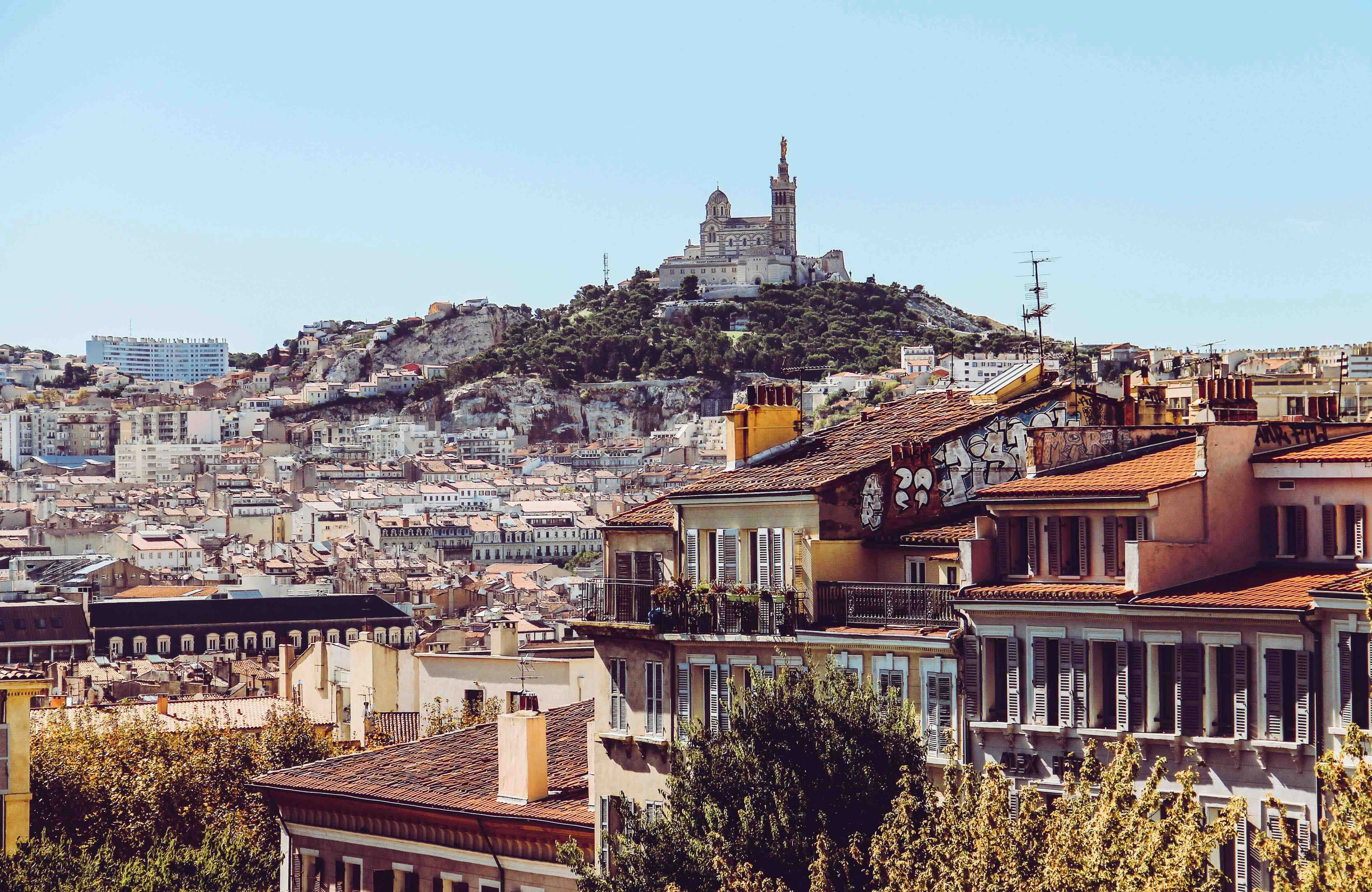
Lyon → Marseille
~1h 40m · TGV INOUI (SNCF)
Continue south to the Mediterranean: Lyon to Marseille
View Route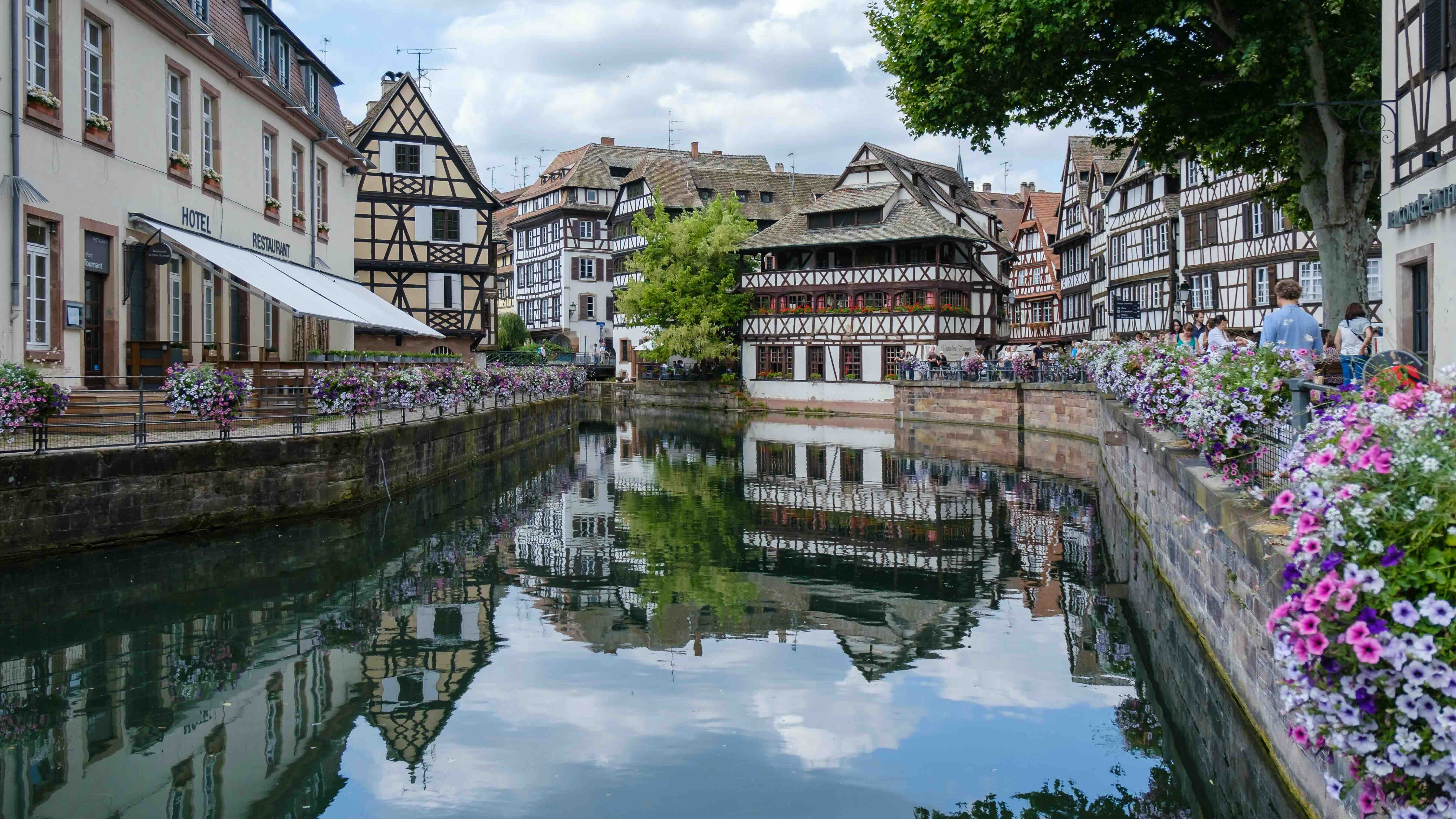
Paris → Strasbourg
~1h 50m · TGV INOUI (SNCF)
France's other flagship TGV: east to Strasbourg
View Route
Interrail and the Swiss Travel Pass — when a pass beats point-to-point tickets and when it does not.
When reservation is mandatory, which side of the train has the views, and how to choose your class.
Paris to Lyon is the two hours that changed European travel: the original TGV line, still running at metro frequency between the capital and the gastronomic capital, with the whole of southern France fanning out from the far end. Book early for the fares, sit on the right for the Beaujolais, and give serious thought to the stopover - the bouchons alone justify the break in the journey.