
Paris to Strasbourg
France's Easiest Gateway to Alsace
Paris to Strasbourg is one of France's most effortless high-speed city breaks: a direct TGV from Paris Gare de l'Est to the edge of Strasbourg's old town in under two hours, at up to 320 km/h down the LGV Est. The fastest trains do it in about 1 hour 45, and there are enough departures through the day to make it a genuine day trip - though Alsace has a habit of persuading people to stay.
It is also more than a journey to one city. Strasbourg sits on the Rhine at the meeting point of France and Germany, which makes this route the natural rail gateway east: the same trains you arrive on carry connections to Colmar and the Alsace wine villages, across the river to Karlsruhe, Stuttgart and Munich, and south toward Basel and Switzerland. Understanding Strasbourg as a hub, not just a destination, is what makes this the most useful Paris departure for anyone heading to the east.
Why the train wins here: Strasbourg's airport sits well outside the city and the flight barely exists as a serious option - the TGV runs centre to centre in under two hours, faster than flying once transfers are counted, and drops you a short walk from the cathedral.
Ready to book Paris to Strasbourg?
Every TGV on this line is all-reserved, so book ahead - fares are dynamic and the cheapest seats go first, with Friday and Sunday evenings and the Christmas-market weeks filling earliest. TGV INOUI is the full-service option from Gare de l'Est; OUIGO is the low-cost alternative with stricter luggage rules. Interrail passes work on TGV INOUI with a compulsory paid reservation from a limited quota; OUIGO does not accept passes.
Railero may earn a small commission if you book via the link above, at no extra cost to you.
Paris Gare de l'Est - the Eastern Terminus
Paris Gare de l'Est, France · 48.877°N, 2.359°E
The first thing to get right is the station. Trains to Strasbourg leave from Gare de l'Est - not Gare du Nord, where the Eurostars go, nor Gare de Lyon for the south. It is a relatively compact, calm terminus in the 10th arrondissement, a five-minute walk from Gare du Nord and served directly by Métro lines 4, 5 and 7, so it is easy to reach from anywhere central.
Boarding is simple and there is no airport-style check-in: arrive fifteen to twenty minutes ahead, watch the departure boards for your platform (which is typically shown shortly before departure rather than hours in advance), scan your ticket at the gates if present, and find your coach. One thing to double-check on your ticket: while TGV INOUI runs from Gare de l'Est, some OUIGO services use a different or suburban Paris station, so confirm where yours actually leaves from before travel day.
Paris–Strasbourg - Journey Facts
- RouteParis Gare de l'Est → Strasbourg-Ville, via the LGV Est
- OperatorsTGV INOUI (full service) and OUIGO (low cost); some ICE continue to Germany
- Journey timeAbout 1h 50m direct - from roughly 1h 45m on the fastest trains
- DistanceAround 490 km, at up to 320 km/h
- FrequencyMany trains daily, roughly hourly at peaks - timetable-dependent
- ReservationsCompulsory - every TGV is all-reserved
Across Champagne and Lorraine
Champagne-Ardenne TGV · 49.214°N, 3.994°E
Out of Paris the train is quickly onto the LGV Est and up to full speed across the plains east of the capital. The first stretch runs through Champagne - the vineyard country behind Reims and Épernay - where a minority of trains call at the isolated Champagne-Ardenne TGV station out in the fields. It is fast, open, gently rolling country rather than dramatic scenery; the appeal of this line is the speed and ease, not a window show.
Beyond Champagne the line crosses the Lorraine plateau, passing the equally rural Meuse and Lorraine TGV stations that a few services use. Which of these your train stops at, if any, decides only a few minutes either way - most run non-stop or with a single call. Then, ahead, the low blue wall of the Vosges appears, and the journey changes character for its final act.
For most of the way this is a fast train doing fast-train things - the reward is that Alsace arrives before you have finished your coffee.
Through the Vosges at Saverne
Saverne & the Alsace plain · 48.742°N, 7.362°E
The most memorable few minutes come near Saverne, where the line threads the gap through the Vosges mountains - the natural wall between Lorraine and Alsace - and drops onto the Alsace plain. This last section, completed in 2016, is what brought the Paris–Strasbourg time under two hours; before it, trains slowed onto the classic line here. Now the descent is quick, and suddenly the countryside is unmistakably Alsatian: half-timbered villages, hillside vineyards and the first church spires of the plain.
It is worth looking up for this stretch. After the flat run across Champagne and Lorraine, the crossing into Alsace is the one genuinely scenic passage of the trip, and it doubles as a geography lesson - you are crossing the old frontier country between France and Germany, with the Rhine and the German border just beyond Strasbourg.
Worth Knowing
Strasbourg-Ville - Arrival by the Old Town
Strasbourg-Ville, France · 48.585°N, 7.735°E
Strasbourg-Ville is one of the more striking arrivals in France: the handsome 1883 station was wrapped in a great curved glass shell in 2007, so you step out from under a dome of light onto the Place de la Gare on the western edge of the centre. The old town - the Grande Île, the cathedral and the canal-laced Petite France quarter - is a flat ten-to-fifteen-minute walk, or a couple of stops on the tram, whose network runs from the square and an underground station right beneath the forecourt.
The station is fully step-free and staffed, with the usual concourse facilities, and it is the hub for everything onward - TER regional trains into the rest of Alsace leave from the same platforms as the TGVs you arrive on. On the day-trip question: under two hours each way makes Strasbourg a very doable day out from Paris, and an early train buys a full day for the cathedral, a wander through Petite France and a proper Alsatian lunch. But be honest with yourself about Alsace - the wine villages, Colmar and the sheer charm of the region reward an overnight, and in the Christmas-market weeks the city is at its most magical and its most crowded, so book trains and beds well ahead if you come then.
From Strasbourg-Ville
Why Strasbourg Is a Gateway, Not Just a Destination
The junction to Alsace, the Rhine and Germany
Strasbourg's position on the Rhine makes it the most useful jumping-off point in eastern France, and the route from Paris doubles as the first leg of a much longer reach. The star connection is genuinely direct: some TGV INOUI and German ICE trains do not terminate at Strasbourg but continue across the Rhine to Karlsruhe, Stuttgart and on to Munich - so a single booked seat can take you from Paris deep into southern Germany without changing trains.
Closer to hand, the Alsace connections are what most travellers use. Frequent regional TER trains reach Colmar - the gateway to the wine route and its storybook villages - in around half an hour, with no reservation needed. South, the line continues toward Basel and the Swiss border, opening onward travel into Switzerland. A few connections need a change rather than a through train, so it is worth checking each one, but the principle holds: arrive in Strasbourg and much of the Rhine corridor is within easy reach.
Onward from Strasbourg
- Colmar & wine routeFrequent TER, ~30 min - reservation-free regional trains
- Karlsruhe / StuttgartDirect on the through TGV/ICE toward Germany
- MunichDirect on the Paris–Munich train via Stuttgart, no change
- Basel & SwitzerlandSouth down the Rhine - onward connections into Switzerland
- Wider GermanyFrankfurt and beyond usually via a change at Karlsruhe or Mannheim
Strasbourg is where France hands you to the Rhine. Arrive here and Alsace, southern Germany and Switzerland are all a short onward hop.
TGV INOUI or OUIGO - and Which Class
Two products on the same line: how to choose
Two kinds of TGV run this route. TGV INOUI is SNCF's full-service train: first and second class, a bar car, generous luggage, flexible fares and departures from Gare de l'Est. OUIGO is the low-cost brand - same high-speed line, much lower fares, but a single class, strict luggage rules (one cabin bag plus a small personal item, with extras paid for), no bar car, less flexibility, and sometimes a different Paris departure station. Neither is better in the abstract: OUIGO wins on price for light-packing, plan-ahead travellers, while INOUI wins on comfort, flexibility, luggage and convenience.
On TGV INOUI the class question is easy for a journey this short. Second class is perfectly comfortable for under two hours, with power at every seat; first class buys a 1+2 layout with wider seats, more space and a quieter carriage, often for only a modest premium when booked early - worth it if you are working or want to arrive fresh, optional otherwise. OUIGO is single-class, so there the choice is simply whether its fares and rules suit your trip.
TGV INOUI vs OUIGO
- ServiceINOUI: full service, bar car, 1st/2nd class · OUIGO: low-cost, single class
- LuggageINOUI: generous, no strict limit · OUIGO: size-limited, extras paid
- FlexibilityINOUI: exchangeable fares available · OUIGO: cheaper but stricter
- StationINOUI: Gare de l'Est · OUIGO: check your ticket, sometimes suburban
- Rail passesINOUI with paid reservation · OUIGO not accepted
Reservations, Passes, Luggage, Bikes and Access
The practical rules for a French high-speed trip
The reservation rule is absolute: TGV is all-reserved, so every ticket is for a specific train with an assigned seat and there is no boarding an earlier or later one on the same ticket. For pass holders, Interrail is accepted on TGV INOUI with a compulsory paid reservation drawn from a limited quota - book it as early as you can, because the quota sells out well before the train does, and OUIGO does not accept passes at all. The regional TER trains onward into Alsace are the easy exception: reservation-free and fully pass-covered. For the wider picture, see the rail passes and seat reservations guides linked below.
Everything else is low-stress. Luggage on TGV INOUI is unregulated in practice - bring what you can carry and use the racks, with no weigh-ins - while OUIGO applies its size-limited allowance. Bicycles need planning: folding bikes travel free in a bag on both, but a full bike needs a dedicated bike space that only some TGVs offer and that must be reserved, so check the operator's current policy before turning up with one. For step-free travel and platform help, SNCF's Assist'enGare service can be booked ahead at both Paris Gare de l'Est and Strasbourg-Ville, both of which are staffed and accessible.
Quick Tips
Book early: dynamic fares reward booking ahead - the same seat costs far less weeks out than on the day.
Right station: TGV INOUI leaves Gare de l'Est; confirm your OUIGO's Paris station, which can differ.
Look up at Saverne: the descent through the Vosges into Alsace is the one scenic stretch - worth the window.
Hotels in Strasbourg
Strasbourg is compact and walkable, so anywhere on or near the Grande Île puts you among the canals and cafés - with the station a flat ten-minute walk for onward trains into Alsace.
Strasbourg - by the Petite France quarter
A restored 16th-century half-timbered inn around a courtyard, steps from the cathedral and the canals - the most atmospheric address in the old town.
Strasbourg - between the station and the centre
A striking design hotel in the former royal stables, halfway between Strasbourg-Ville and the old town - a stylish, well-placed base for a rail arrival.
Strasbourg - on the Grande Île
A friendly, fairly priced hotel in a period building right in the heart of the old town, minutes from the cathedral - dependable value for a Strasbourg stay.
Hotel links open Booking.com. Railero may earn a commission on bookings at no extra cost to you.
Frequently Asked Questions
- How long is the train from Paris to Strasbourg?
- A direct TGV takes around 1 hour 50 minutes, with the fastest services doing it in about 1 hour 45. OUIGO and some services with extra stops take a little longer. Exact times vary by train, so check current schedules when you book.
- Is the Paris to Strasbourg train direct?
- Yes - the great majority of services run direct on the LGV Est high-speed line. Some trains call at intermediate TGV stations such as Champagne-Ardenne, Meuse or Lorraine, but you stay on the same train the whole way; no change is needed.
- Which Paris station do trains to Strasbourg leave from?
- Paris Gare de l'Est, in the 10th arrondissement - not Gare du Nord or Gare de Lyon. It is a relatively compact terminus on Métro lines 4, 5 and 7, a short walk from Gare du Nord. Most TGV INOUI trains use it; check your ticket, as some OUIGO services depart from a different or suburban Paris station.
- Is TGV INOUI or OUIGO better for this route?
- It depends on what you value. TGV INOUI is the full-service option - first and second class, a bar car, flexible fares and departures from Gare de l'Est. OUIGO is the low-cost alternative with lower fares but stricter luggage rules, a single class and less flexibility. Neither is universally better: choose on price, luggage and how much flexibility you need.
- Do I need to reserve a seat?
- Yes - every TGV, whether INOUI or OUIGO, is all-reserved. Your ticket is tied to a specific train with an assigned seat, and you cannot board an earlier or later train on the same ticket. Book ahead: fares are dynamic and the cheapest seats sell first.
- Can I use an Interrail pass?
- On TGV INOUI yes, with a compulsory paid pass-holder reservation from a limited quota - book it early, especially in summer and around the Christmas markets. OUIGO does not accept rail passes at all. The regional TER trains onward into Alsace (to Colmar and beyond) are reservation-free and pass-friendly.
- Is Strasbourg possible as a day trip from Paris?
- Comfortably - under two hours each way and frequent departures make it an easy day trip. Take an early train and you have a full day for the cathedral, the Petite France quarter and a long Alsatian lunch before an evening return. That said, Strasbourg and the surrounding Alsace villages reward an overnight stay if you can spare it.
- How early should I arrive at Gare de l'Est?
- For a domestic TGV there is no airport-style check-in, so 15–20 minutes is plenty to find your platform and board. Platform numbers are typically shown on the departure boards shortly before departure, so keep an eye on them rather than heading to a platform too early.
- Which station do trains arrive at in Strasbourg?
- Strasbourg-Ville, the city's main station under its striking glass shell, on the western edge of the centre. The cathedral and Grande Île old town are a 10–15 minute walk, and trams run from the station square (and the tram stop beneath it) across the city.
- Can I continue from Strasbourg to Germany or the rest of Alsace?
- Yes - Strasbourg is a genuine gateway. Some direct TGV INOUI and ICE trains continue beyond it into Germany to Karlsruhe, Stuttgart and on to Munich. Frequent regional TER trains reach Colmar and the Alsace wine towns in around half an hour, and there are onward connections toward Basel and Switzerland. Check whether your onward train is direct or needs a change.
Continue Your Journey
Routes that pair naturally with this one — for building your European itinerary.
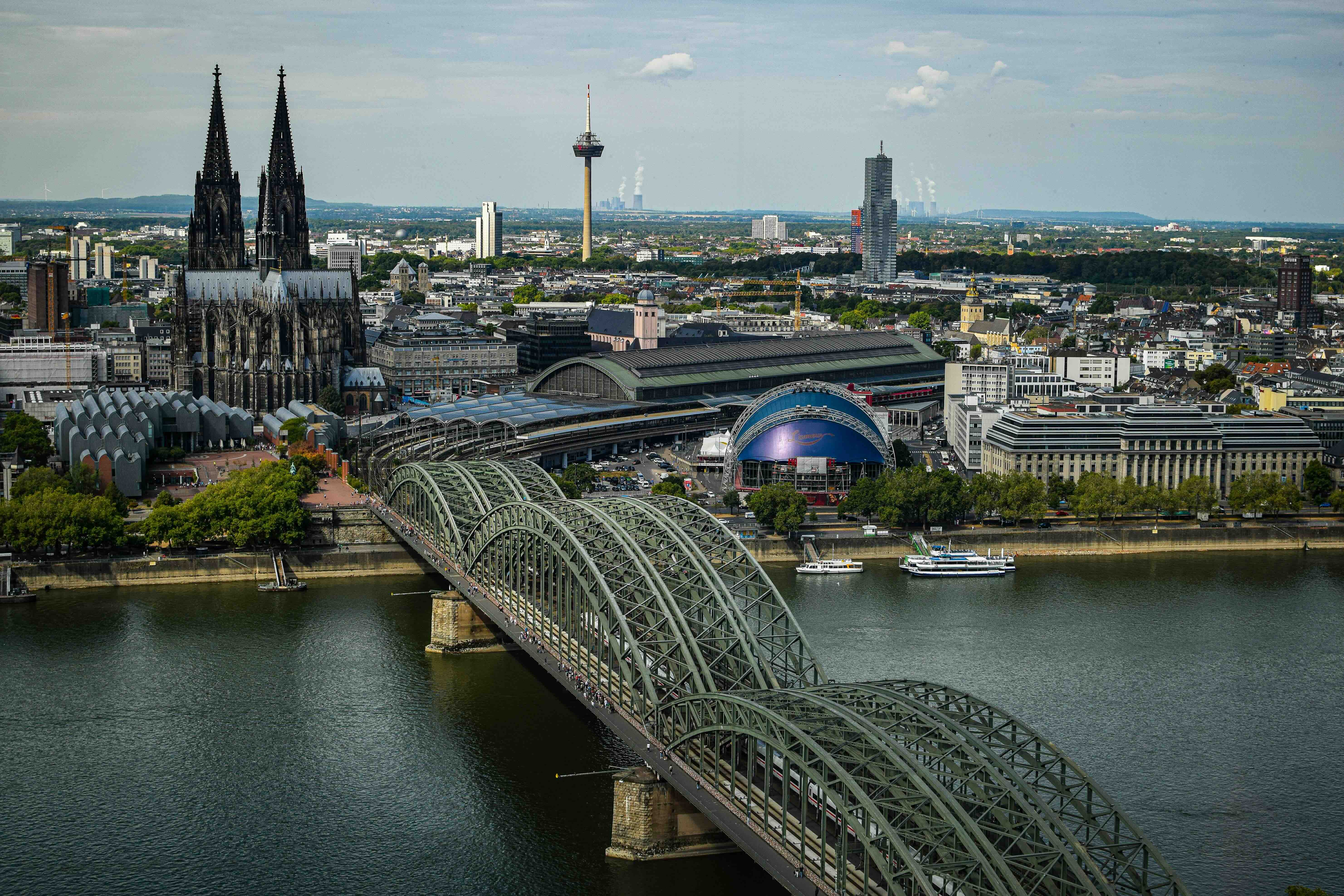
Brussels → Cologne
~1h 47m · ICE International (DB/SNCB)
Onward into Germany by ICE: Brussels to Cologne
View RouteInterrail and the Swiss Travel Pass — when a pass beats point-to-point tickets and when it does not.
When reservation is mandatory, which side of the train has the views, and how to choose your class.
Paris to Strasbourg is French high-speed rail at its most useful: under two hours from Gare de l'Est to the edge of one of Europe's loveliest old towns, and a gateway onward to Alsace, the Rhine and Germany. Compare TGV INOUI and OUIGO, book early for the fare, and decide honestly whether a day is enough - because Colmar, the wine route and the road into Germany all start from the platform you arrive at.