Geneva to Interlaken
The Western Gateway to the Jungfrau
This is the classic rail journey from western Switzerland to the Jungfrau region: around three hours from Geneva to Interlaken Ost, tracing the north shore of Lake Geneva to Lausanne, climbing through the Lavaux vineyards, crossing the language border at Fribourg, and finally running along Lake Thun with the Eiger, Mönch and Jungfrau growing in the windows. Direct InterCity trains run several times a day - and they start back at Geneva Airport, beneath the terminal.
It is also Switzerland working exactly as advertised: no reservations, no security lines, no luggage rules worth mentioning - walk up, board, and change (if your departure needs it) with a few unhurried minutes in Bern. For anyone landing at Geneva and heading for Lauterbrunnen, Grindelwald or the Jungfraujoch, this corridor is the whole answer, and the Swiss Travel Pass covers every kilometre of it.
Why the train beats the hire car: Interlaken's valleys ration cars anyway - Wengen and Mürren are car-free, and parking below them is scarce and paid. The train delivers you from the airport terminal to the mountain railways in one seated, scenic line, and the pass makes the connections free.
Ready to book Geneva to Interlaken?
Point-to-point tickets are sold by SBB with no reservation needed - supersaver fares tied to a specific train are cheaper, flexible day tickets cost more. But run the numbers on passes first: the Swiss Travel Pass covers this whole route plus the Lauterbrunnen and Grindelwald connections and discounts the mountain railways, and Interrail work the same way with no supplements. On a Jungfrau itinerary, a pass usually wins.
Railero may earn a small commission if you book via the link above, at no extra cost to you.
Geneva - From the Airport Terminal or Cornavin
Genève Cornavin, Switzerland · 46.210°N, 6.142°E
The journey properly begins before the city: Genève-Aéroport station sits directly beneath the airport terminal, and the direct Interlaken InterCity starts there - land, clear arrivals, ride one escalator down, and board. Seven minutes later the same train calls at Genève Cornavin, the main city-centre station, a short walk from the lakefront and the old town.
Boarding is Swiss-simple at either station: no gates, no check-in, no reservation - find the platform on the departure boards and take any seat. If your departure is not one of the direct trains, board anything toward Bern; the connection there is typically a few minutes across the platform, and Swiss punctuality makes it a genuinely relaxed change.
Geneva–Interlaken - Journey Facts
- RouteGenève-Aéroport / Cornavin → Interlaken Ost, via Lausanne, Bern and Spiez
- OperatorSBB InterCity (with BLS on the Bern–Interlaken leg)
- Journey timeAbout 3h from Cornavin - check current schedules
- FrequencyDirect trains several times daily; hourly options via a change in Bern
- ReservationsNot required - walk-up boarding, optional seats for busy days
- PassesSwiss Travel Pass 100%; Interrail fully valid, no supplements
Along Lake Geneva to Lausanne - and Up Through the Vines
Lausanne, Switzerland · 46.517°N, 6.629°E
The first forty minutes run along the north shore of Lake Geneva - vineyards on the left, water on the right, Mont Blanc occasionally showing off on the far side. Sit on the right for the lake; you will want the views. Lausanne, the Olympic capital stacked on its terraces above the water, is the first major stop and western Switzerland's junction city.
Beyond Lausanne comes a quietly spectacular stretch: the line climbs away from the lake through the Lavaux, the UNESCO-listed staircase of terraced vineyards that has been worked since Roman times. For a few minutes the train runs above the whole sweep of the lake - the scenic overture before the Alps take over the second half of the trip.
Lake on one side, a thousand years of vineyard terraces on the other - the Lavaux is the reason to sit on the right.
Fribourg - Crossing Switzerland's Invisible Border
Fribourg, Switzerland · 46.803°N, 7.151°E
Inland now, the train crosses the rolling farmland of the Fribourg canton to its capital - a medieval town folded dramatically into a bend of the Sarine river, its old bridges visible from the viaduct as you arrive. Fribourg sits exactly on the Röstigraben, Switzerland's French–German language border: announcements that began in French start arriving in German, and the station signs quietly agree.
It is a short, satisfying lesson in how this country works - four languages, one railway - delivered at 160 km/h between two coffees. Half an hour later the towers of Bern rise ahead.
Bern - The Capital and the Corridor's Hinge
Bern, Switzerland · 46.949°N, 7.439°E
Bern is the operational heart of this journey. Direct trains simply pause here and continue; everything else connects, usually across the platform and usually within minutes - this is the change to know about, and the easiest one in Switzerland. The UNESCO-listed old town, all arcades and fountains beneath the Zytglogge clock tower, begins five minutes from the platforms if you fancy breaking the trip.
Bern is also where this corridor meets the rest of the network: the Zurich main line, and the Lötschberg line south toward Visp and Zermatt. Leaving Bern, your train turns south for the Bernese Oberland, and within twenty minutes the scenery stops being pretty and starts being Alpine.
Worth Knowing
Thun and the Lake - The Alps Arrive in Full
Thun & the Lake Thun shore · 46.755°N, 7.630°E
At Thun - medieval castle above, paddle steamers below - the Bernese Alps finally fill the horizon: the white wall of the Eiger, Mönch and Jungfrau standing across the turquoise water. The line then hugs the lake to Spiez, prettily stacked around its bay, before turning east along the southern shore for the final run.
This last half hour is the postcard: tunnels punching through the headlands, the lake flashing between them, mountains doubling in the water. It is the same finale the Zurich route enjoys - the two gateways merge at Spiez - and it never feels shorter than it is.
From Thun onward the journey stops being a transfer and becomes the first excursion of your Oberland holiday.
Interlaken Ost - The Jungfrau Region Starts Here
Interlaken Ost, Switzerland · 46.690°N, 7.869°E
The train calls first at Interlaken West - closest to the hotel-lined Höheweg and the town centre - and terminates at Interlaken Ost, the mountain gateway. Get off at Ost if you are heading upward: the Berner Oberland-Bahn's green-and-yellow trains wait across the platform, and the Jungfrau valleys begin the moment they leave.
From Ost, frequent trains reach Lauterbrunnen - the waterfall valley, springboard for Wengen, Mürren and the Schilthorn - in about twenty minutes, and Grindelwald, beneath the Eiger's north face, in roughly half an hour; the train divides at Zweilütschinen, so board the clearly signed correct portion. Boats to the lake villages leave from behind the station, and the Harder Kulm funicular climbs to the viewpoint over the whole watery, mountainous tangle.
From Interlaken Ost
Swiss Travel Pass, Interrail and the Paperwork That Isn't
Why this is one of Europe's simplest big journeys
The Swiss Travel Pass is built for exactly this trip: 100% coverage from Geneva Airport to Interlaken Ost, 100% coverage onward to Lauterbrunnen and Grindelwald, free boats on the lakes, and a substantial discount on the mountain railways above (the Jungfraujoch itself is discounted, not free - budget accordingly). Interrail behave the same on the main line: fully valid, no supplements, no reservations, with the usual mountain-railway discounts instead of coverage - check current terms.
Buying point-to-point instead? SBB's supersaver fares discount specific departures, ordinary tickets keep you flexible, and children travel remarkably cheaply with the family cards. There is no security screening, no luggage limit, and no need to arrive early beyond finding your platform - though SBB's luggage-forwarding service is worth knowing if you would rather send suitcases ahead to a resort and ride unencumbered.
Quick Rules
Swiss Travel Pass: covers the whole route and the valley trains beyond; discounts the high mountain railways.
Interrail: fully valid, no reservations - mountain railways discounted rather than included.
No pass? supersaver fares reward booking a specific train; flexible fares cost more but never expire mid-plan.
Hotels in Interlaken
Interlaken works as both base and gateway - stay near the Höheweg for the classic resort experience, or near Ost station if you plan to be on the first train up the valleys each morning.
Interlaken - on the Höheweg
The 19th-century grande dame of the Alps, facing the Jungfrau across the Höheweg meadow - the definitive Interlaken address since the first English mountaineers.
Interlaken - between Ost station and the centre
One of the town's oldest houses, comfortably updated, a few minutes' walk from Interlaken Ost - the practical pick for early mountain trains.
Interlaken - by the Höhematte park
A famously well-run independent hostel in a converted villa with Jungfrau views from the garden - budget beds with a grand-hotel outlook.
Hotel links open Booking.com. Railero may earn a commission on bookings at no extra cost to you.
Frequently Asked Questions
- How long does the train from Geneva to Interlaken take?
- Around 3 hours from Genève Cornavin to Interlaken Ost - direct InterCity trains run several times a day, and other departures involve one easy change in Bern. From Geneva Airport add roughly ten minutes. Check current SBB schedules for exact times.
- Is there a direct train from Geneva Airport to Interlaken?
- Yes - the direct InterCity line starts at Genève-Aéroport, whose station sits directly beneath the terminal, and runs through Cornavin, Lausanne, Bern and Spiez to Interlaken Ost. When your timing does not match a direct train, any departure with a change in Bern works - connections are typically cross-platform and Swiss-punctual.
- Is the Swiss Travel Pass valid on the Geneva to Interlaken train?
- Fully - the entire route is ordinary SBB/BLS track, covered 100% by the Swiss Travel Pass with no supplements or reservations. The pass also covers the connecting trains beyond Interlaken to Lauterbrunnen and Grindelwald, and gives a discount on the mountain railways above them.
- Can I use an Interrail pass on this route?
- Yes - passes are fully valid on the whole route with no compulsory reservations, like Swiss domestic trains generally. The Wengernalp and Jungfrau mountain railways beyond Lauterbrunnen and Grindelwald are not covered, though pass holders typically get a discount - check current conditions.
- Do I need a seat reservation on the Geneva to Interlaken train?
- No - Swiss InterCity trains are walk-up services with no compulsory reservations; board with any valid ticket and sit where you like. Optional reservations exist for busy periods, but most travellers never need one on this route.
- How much luggage can I take, and is there security screening?
- There are no formal luggage limits and no security screening on Swiss domestic trains - bring what you can carry and use the racks. SBB also offers station-to-station luggage forwarding if you would rather send bags ahead to a resort; check current services and pricing with SBB.
- How do I continue from Interlaken to Lauterbrunnen?
- From Interlaken Ost, the Berner Oberland-Bahn runs frequent trains up the valley to Lauterbrunnen in about 20 minutes - typically twice an hour, often leaving from across the platform. From Lauterbrunnen, cable cars and the Wengernalp railway continue toward Wengen, Mürren and the Jungfraujoch.
- How do I continue from Interlaken to Grindelwald?
- Also from Interlaken Ost: Berner Oberland-Bahn trains reach Grindelwald in roughly half an hour (the train divides at Zweilütschinen - board the correct portion, which is clearly signed). From Grindelwald, gondolas and the railway continue toward First, Kleine Scheidegg and the Jungfraujoch.
Continue Your Journey
Routes that pair naturally with this one — for building your European itinerary.
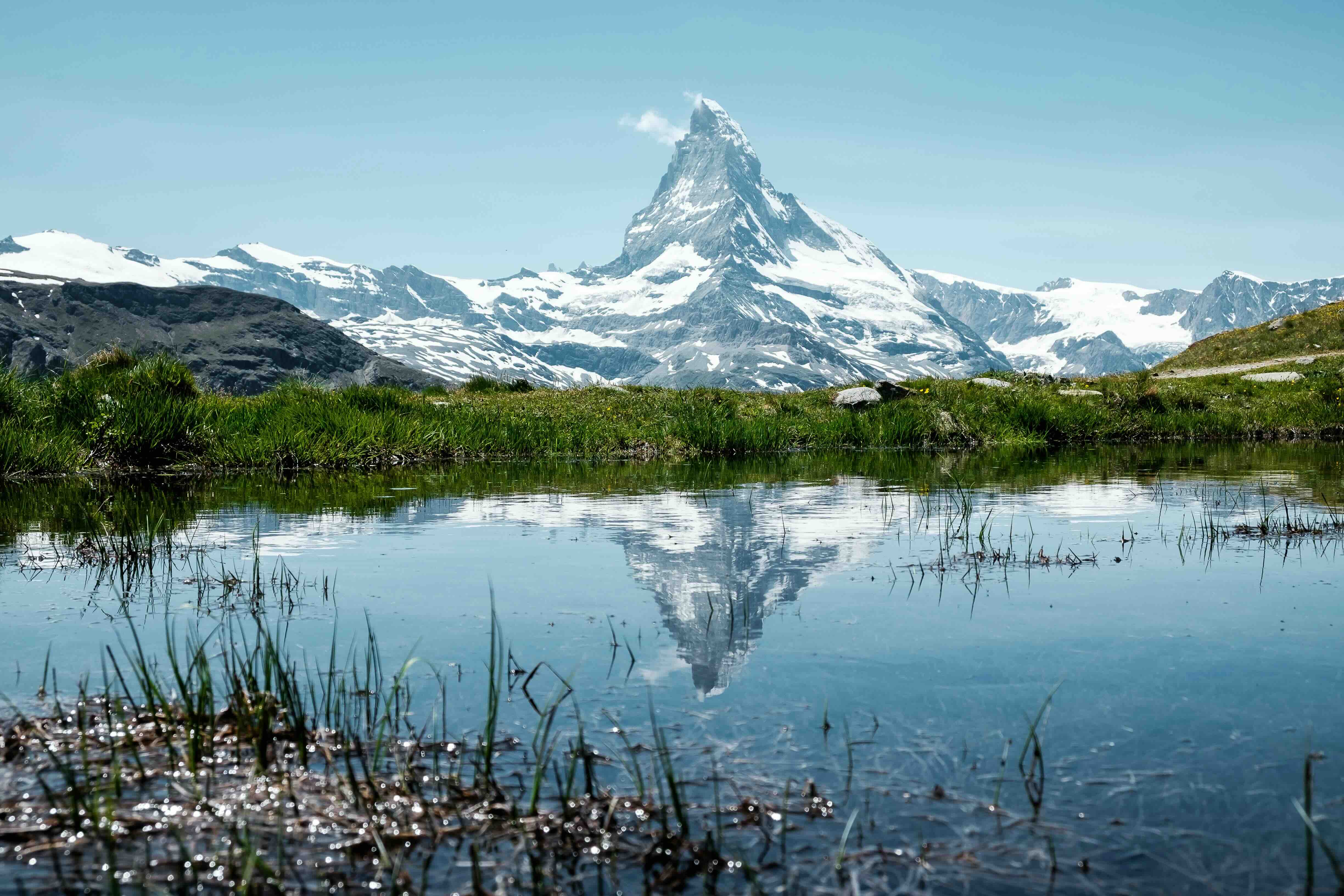
Bern → Zermatt
~2h 10m · BLS · Matterhorn Gotthard Bahn
The other Oberland classic: Bern to Zermatt
View Route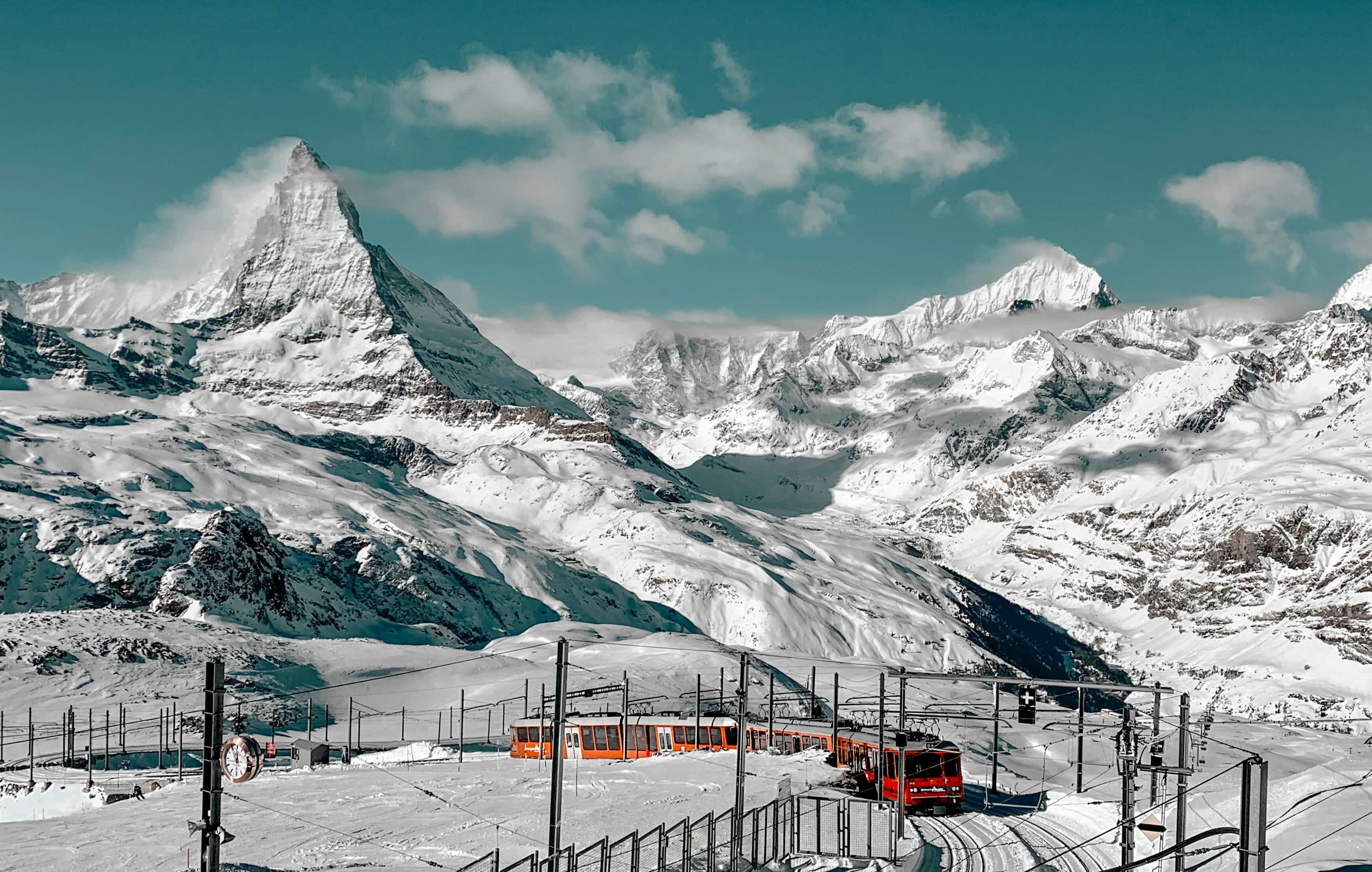
Interrail and the Swiss Travel Pass — when a pass beats point-to-point tickets and when it does not.
When reservation is mandatory, which side of the train has the views, and how to choose your class.
Geneva to Interlaken is the western build-up to the Jungfrau: lake, vineyards, capital and Alps in three unhurried hours, with the airport plugged directly into one end and the mountain railways waiting at the other. Sit on the right, let the pass do the paperwork, and save your planning energy for the only real decision - Lauterbrunnen first, or Grindelwald.