Vienna to Zagreb by Train
The Direct EuroCity Croatia
Vienna to Zagreb is a direct rail journey across three countries: around six and a half hours south from the Austrian capital, over the UNESCO-listed Semmering mountain railway to Graz, across Slovenia through Maribor and Celje, and over the border at Dobova to Zagreb, city centre to city centre with no change of train. It is the daily EuroCity Croatia, and it carries Railero's Central European network south into Croatia.
The through train here is worth knowing about, because it was restored for the 2026 timetable. The former Graz to Zagreb train was extended all the way to Vienna and renumbered, so there is once again a single direct EuroCity between the two capitals, the EC 79 south and the EC 78 north, marketed as the Croatia. It is a joint service of the Austrian, Slovenian and Croatian railways. This guide covers what matters: the one daily direct train and the times it runs, the Semmering crossing and the Slovenian leg, reservations and passes, how to book from Vienna, and how to reach the middle of Zagreb.
Railero's first route into Croatia: This train extends the Prague, Vienna and Budapest cluster south to Zagreb. Combine it with Prague to Vienna or Vienna to Budapest for a wider Central European trip, all by train and all city centre to city centre.
Ready to book Vienna to Zagreb?
The direct train is the daily EuroCity Croatia, the EC 79 leaving Wien Hauptbahnhof in the afternoon and reaching Zagreb Glavni kolodvor in the evening in around six and a half hours, a joint ÖBB, SŽ and HŽPP service via Graz, Maribor and Celje. For a journey from Vienna the simplest channel is ÖBB (oebb.at), which sells the whole run on one ticket. Booking opens up to six months ahead; book early for the cheapest advance fares. A seat reservation is optional, so a valid ticket is enough to board, and Interrail is accepted with no compulsory reservation.
Railero may earn a small commission if you book via the link above, at no extra cost to you.
Departing Wien Hauptbahnhof
Wien Hauptbahnhof, Austria · 48.185°N, 16.377°E
The journey begins at Wien Hauptbahnhof, Vienna's main station and the hub of Austrian and Central European rail travel, a large, modern, fully equipped station just south of the centre. It is easy to reach from anywhere in the city on the U1 metro line, the S-Bahn and the trams, and it is largely step-free with the usual shops, left luggage and services. The direct train to Zagreb, the EuroCity Croatia, is a single daily departure, so the one thing to get right is the time: in the current timetable it leaves in the afternoon, so check the departure boards and your ticket.
Boarding is relaxed, as it is across the region: there is no airport-style check-in, so arrive 10 to 15 minutes ahead, check the boards for your platform and coach, and step aboard. A seat reservation is optional on this train, so with a valid ticket or a rail pass you can simply take a seat. Then the train pulls out south, and within the hour it is climbing into the mountains on the Semmering.
Vienna–Zagreb - Journey Facts
- RouteWien Hauptbahnhof → Zagreb Glavni kolodvor, via Graz, Maribor and Celje
- TrainEuroCity Croatia (EC 79 southbound, EC 78 northbound)
- OperatorsJoint ÖBB, SŽ (Slovenske železnice) and HŽPP service
- Journey timeAround 6h 30m (close to 7h northbound) - check current schedules
- FrequencyOne direct train each way per day
- DistanceAbout 440 to 450 km across Austria, Slovenia and Croatia
- ReservationsOptional; a valid ticket is enough to board
Over the Semmering to Graz
The Semmering railway and Graz · 47.073°N, 15.416°E
The best of the scenery comes first. South of Vienna the line reaches the Semmering, the pioneering mountain railway opened in 1854 and now a UNESCO World Heritage Site, which climbs over the Alps between Gloggnitz and Mürzzuschlag on a chain of curving stone viaducts and tunnels, with long views down wooded valleys and up to the limestone peaks. It is one of the great historic railways of Europe, and taken by daylight it is the highlight of the whole trip. Beyond the summit the train drops down through Bruck an der Mur, an old junction town in the valley of the Mur.
The main Austrian stop is Graz, the capital of Styria and Austria's second city, a handsome university town with a red-roofed old centre, a wooded castle hill and an easy, southern feel. It is the point where this route once began, before the through train to Vienna was restored. From Graz the line runs on south through the vineyards of southern Styria toward the Slovenian border at Spielfeld.
The Semmering is the reason to travel this line by day: an 1854 mountain railway over the Alps, and one of the first anywhere in the world to be listed by UNESCO.
Across Slovenia: Maribor and Celje
Maribor, Celje and the Sava valley · 46.558°N, 15.647°E
At Spielfeld-Straß the train crosses from Austria into Slovenia. There is no drama to the border, since both countries are in the Schengen area, so there is normally no passport control and the train barely pauses. The first Slovenian city is Maribor, on the Drava at the foot of its wine hills, the country's second city and a relaxed, walkable place. From here the line turns south-west and runs down through the Slovenian interior.
The next city is Celje, with its medieval castle on a crag above the Savinja, before the line joins the Sava and follows the river through the wooded gorge around Zidani Most, the junction where the routes from Ljubljana and the coast come together. It is quietly attractive country, green hills and river valleys rather than high drama, an easy, restful stretch. The train then reaches Dobova, the last Slovenian station, and crosses the Sava plain into Croatia.
Worth Knowing
Arriving at Zagreb Glavni kolodvor
Zagreb Glavni kolodvor, Croatia · 45.804°N, 15.978°E
The train arrives at Zagreb Glavni kolodvor, the Croatian capital's grand main station, a long yellow 1892 building facing a run of formal parks. It sits right in the centre on the green ring known as the Lenuci Horseshoe, so you step off into the middle of the city rather than an airport on its edge. Trams run from the door and much of the centre is within walking distance, so getting into town could not be simpler.
Zagreb rewards arriving in the centre. Straight ahead across the parks is King Tomislav Square and, a little further, Ban Jelačić Square, the heart of the city; from there the Lower Town spreads out with its cafes, galleries and the green horseshoe of gardens, while a short walk or the little funicular climbs to the Upper Town, the old quarter of Gradec with St Mark's Church and its famous tiled roof, the cathedral and Dolac market. The station is also the hub of the Croatian network, with onward trains toward the coast and the rest of the country.
From Zagreb Glavni kolodvor
The Train: the EuroCity Croatia
Who runs it, and the restored 2026 service
The direct train is a single daily EuroCity in each direction, the EC 79 running south from Vienna and the EC 78 running north from Zagreb, and marketed as the Croatia. It is a joint service of the three national railways whose countries it crosses: ÖBB in Austria, Slovenske železnice (SŽ) in Slovenia and HŽPP, Croatian Railways, in Croatia. The through service was restored for the 2026 timetable by extending the former Graz to Zagreb train all the way to Vienna and renumbering it, so the two capitals are once again linked without a change.
It is a comfortable, conventional EuroCity with air-conditioned carriages and first and second class rather than a high-speed train, and it does not always carry a catering car, so it is worth bringing your own food and drink for the journey. Because it is a single daily pair, the departure time matters more than on a frequent corridor, and international timetables on this line can change during track maintenance, so it is best to check the current schedule for your date rather than trusting a fixed time.
The EuroCity Croatia at a glance
- TrainEuroCity Croatia - EC 79 southbound, EC 78 northbound
- OperatorsJoint ÖBB (Austria), SŽ (Slovenia) and HŽPP (Croatia)
- FrequencyOne direct train each way per day
- On boardAir-conditioned EuroCity carriages, first and second class; catering not always carried
- ReservationsOptional - a valid ticket is enough to board
- Rail passesInterrail accepted, no compulsory reservation
Reservations, Passes, Tickets and the Borders
The practical rules for the three-country run
Reservations are simple here: a seat reservation is optional on this EuroCity. You can board with any valid ticket and take an unreserved seat, though it is worth adding a reservation on busy summer weekends and holidays for a guaranteed seat. Interrail passes are accepted across all three countries with no compulsory reservation, which makes this an easy pass journey; an optional paid seat reservation is available if you want one. For the wider picture, see the rail passes and seat reservations guides linked below.
On tickets, for a journey starting in Vienna the simplest option is to book with ÖBB, which sells the whole international run on a single ticket, and the major rail-ticket retailers list the train too; from the Croatian end, Croatian Railways (HŽPP) sells it through its international ticket offices. There is no need to split the journey into separate national tickets. Booking opens up to six months ahead, and the cheapest advance fares are limited and sell out, so book early for the best price on a run this long; a flexible fare costs more but lets you change your plans. Luggage is easy: there is no airline-style check-in, you carry your bags aboard and use the racks, so bring what you can manage and keep valuables with you.
On the borders, Austria, Slovenia and Croatia are all in the Schengen area and the European Union, so ordinary internal border controls are generally absent and the train is not routinely checked. Temporary internal checks are possible, so carry the valid travel documents your nationality or status requires and keep them reachable. On accessibility, Wien Hauptbahnhof and Zagreb Glavni kolodvor are both large, staffed stations with step-free routes to the platforms, and boarding assistance is best booked in advance with the railway; access can vary by train and platform, so arranging help ahead is the reliable approach.
Quick Tips
Plan around the one train: there is a single direct EuroCity each way per day, so note the departure time and check the current schedule for your date.
Travel by day for the Semmering: the UNESCO mountain railway between Vienna and Graz is the scenic highlight, and it comes early in the trip.
Book early, reserve if busy: the cheapest advance fares sell out, and the optional reservation is worth adding on busy summer departures.
Hotels in Zagreb
Zagreb rewards staying central, in the Lower Town near Ban Jelačić Square and the green Lenuci Horseshoe, a short walk from Zagreb Glavni kolodvor and the old town above.
Zagreb - beside the main station
The city's grand 1925 railway hotel, built for Orient Express passengers and directly beside Zagreb Glavni kolodvor - the classic luxury address, a few minutes' walk from the train and the parks into town.
Zagreb - central Lower Town
Zagreb's oldest hotel, a small, well-run place tucked off Ilica in the heart of the Lower Town, walkable to Ban Jelačić Square, the market and the funicular up to the old town.
Zagreb - central, near the station
A comfortable, fairly priced modern hotel a short walk from the station and the centre - a practical, good-value base for the trains and the old town.
Hotel links open Booking.com in a new tab.
Frequently Asked Questions
- Is there a direct train from Vienna to Zagreb?
- Yes. A daily direct EuroCity train, the EC 79 southbound and EC 78 northbound, marketed as the Croatia, runs right through from Wien Hauptbahnhof to Zagreb Glavni kolodvor. The through service was restored for the 2026 timetable, extending the former Graz to Zagreb train all the way to Vienna, so no change of train is needed. Check current schedules when you book.
- How long does the train from Vienna to Zagreb take?
- Around six and a half hours for the direct EuroCity. In the current 2026 timetable the southbound EC 79 leaves Vienna in the afternoon and reaches Zagreb in the evening, roughly a six-and-a-half-hour run; the northbound EC 78 is a little longer at close to seven hours. It is about 440 to 450 km across Austria, Slovenia and Croatia, so treat the time as approximate and check the current timetable when you book.
- How often does the direct train run?
- There is one direct train each way per day. The EC 79 runs south from Vienna to Zagreb and the EC 78 runs north from Zagreb to Vienna, both daily. Because it is a single daily pair, it is worth planning around the departure time and checking current schedules, especially as international timetables can change during engineering works.
- Which station does the train leave from in Vienna?
- The direct train leaves from Wien Hauptbahnhof, Vienna's main station, which sits just south of the centre and is on the U1 metro line and the S-Bahn, so it is easy to reach from anywhere in the city.
- Which station does the train arrive at in Zagreb?
- The train arrives at Zagreb Glavni kolodvor, the city's main station, right in the centre on the green ring of parks known as the Lenuci Horseshoe. It is a short walk from Ban Jelačić Square and the old town, with trams outside the door, so there is no airport transfer at either end.
- Does the train go through Slovenia?
- Yes. The route crosses three countries: it runs south from Vienna through Austria over the Semmering and down to Graz, crosses into Slovenia near Spielfeld and calls at Maribor and Celje, then crosses into Croatia at Dobova and runs on to Zagreb. All three countries are in the Schengen area and the European Union.
- Do I need a seat reservation?
- No, a seat reservation is optional on this EuroCity. You can board with a valid ticket and take an unreserved seat. A reservation is worth adding on busy summer weekends and holidays for a guaranteed seat, but it is never required to travel.
- Can I use an Interrail pass?
- Yes. Interrail passes are accepted on the direct EuroCity across all three countries, with no compulsory reservation, so you can board and take any unreserved seat. An optional paid seat reservation is available if you want a guaranteed seat on a busy departure. See the rail passes and seat reservations guides linked below for the wider picture.
- Where do I book Vienna to Zagreb?
- For a journey starting in Vienna, the simplest channel is ÖBB (oebb.at), which sells the whole international journey on one ticket, and the major rail-ticket retailers list it too. Booking opens up to six months ahead, and the cheapest advance fares are limited and sell out, so book early for the best price; a flexible fare costs more but lets you take any train. Croatian Railways (HŽPP) sells the same journey from the Croatian end through its international ticket offices.
- Is the journey scenic, and is it better than flying?
- It is scenic in parts rather than throughout. The highlight is the UNESCO-listed Semmering mountain railway between Vienna and Graz early in the trip; after that it is a pleasant, steady run across Slovenia and into Croatia rather than a dramatic mountain line. Against flying, the train runs city centre to city centre with no airport transfers, check-in or security queues, and you can walk around, work or sleep on board, so for a direct trip between the two centres it is comfortable and competitive even though a flight is quicker in the air.
Not sure if you need to reserve a seat?
Check this journey in Railero’s Seat Reservation Checker.
Continue Your Journey
Routes that pair naturally with this one — for building your European itinerary.
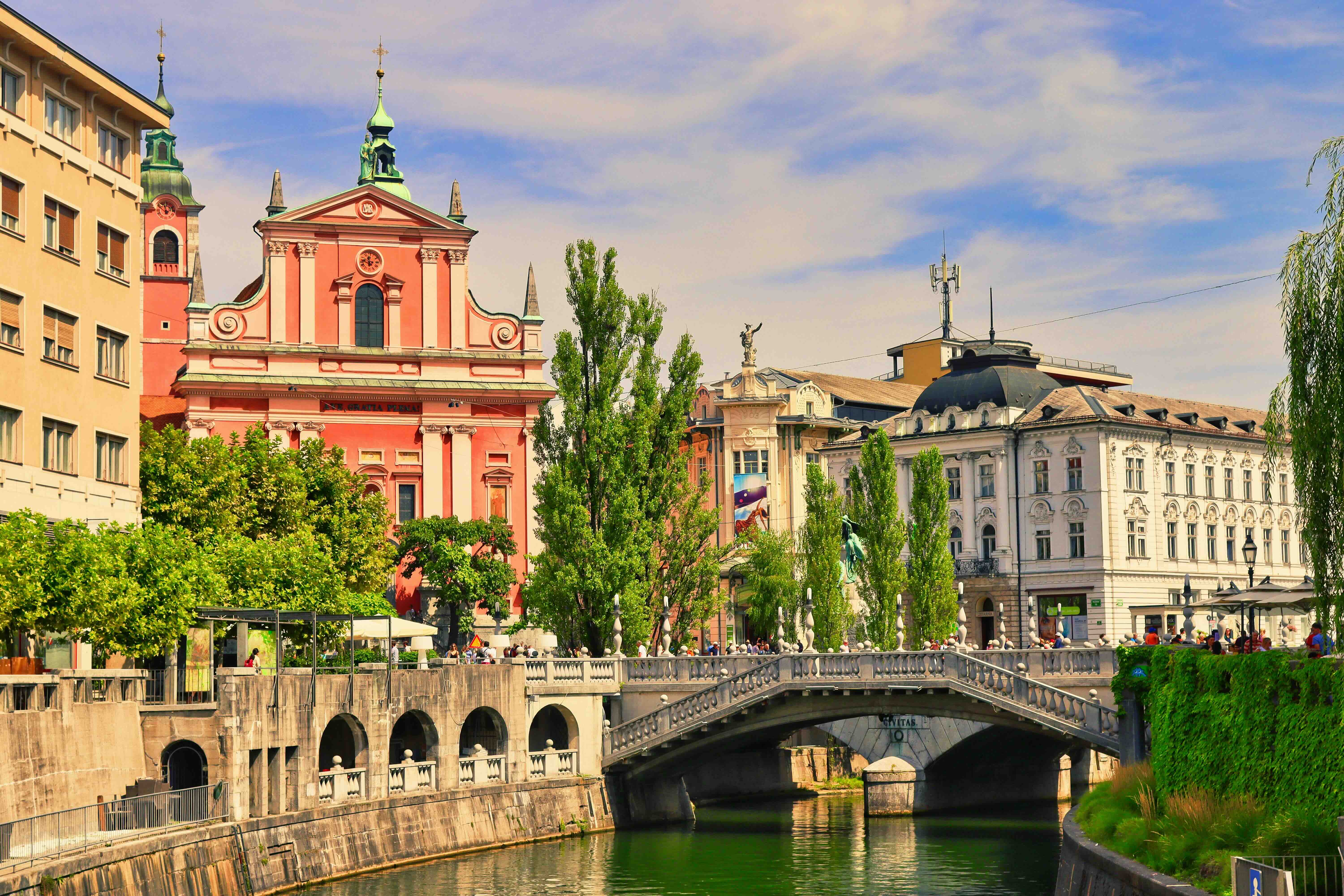
Vienna → Ljubljana
~6h · EuroCity (ÖBB · SŽ)
The sister route through Slovenia: Vienna to Ljubljana
View Route
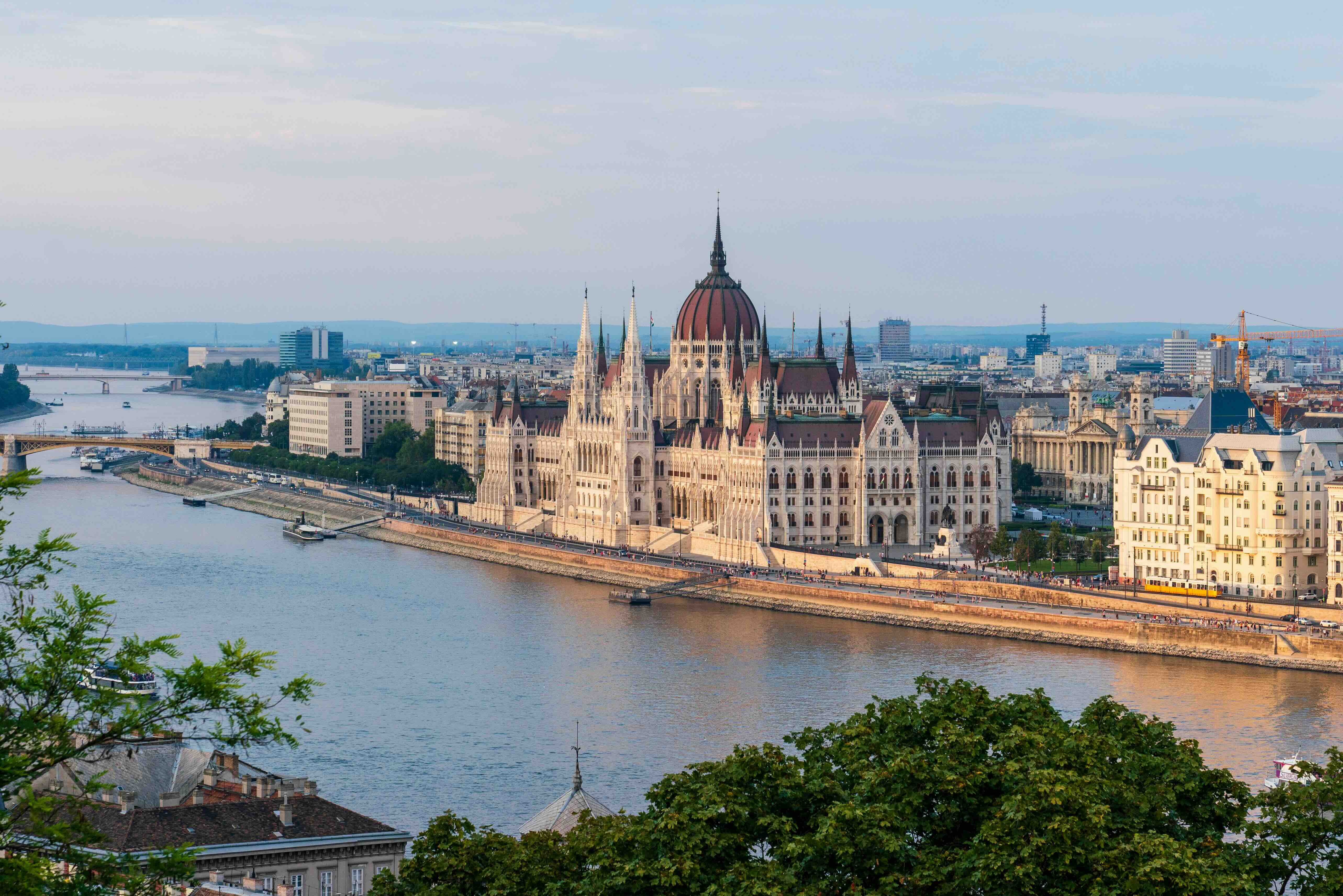
Vienna → Budapest
~2h 20m · ÖBB Railjet / RegioJet
The other Danube capital: Vienna to Budapest
View RouteInterrail and the Swiss Travel Pass — when a pass beats point-to-point tickets and when it does not.
When reservation is mandatory, which side of the train has the views, and how to choose your class.
Vienna to Zagreb is the easy way south into Croatia: around six and a half hours on a single daily direct EuroCity, over the UNESCO Semmering railway to Graz, across Slovenia through Maribor and Celje, and over the border to the heart of Zagreb, city centre to city centre. Note the one departure time, travel by day for the mountains, reserve a seat if it is busy, and treat it as the southern extension of the Prague, Vienna and Budapest network.
Back to all routes