Vienna to Salzburg by Train
Austria's Classic Westbound Journey
Vienna to Salzburg is Austria's classic run west: around 2 hours 25 minutes on the fastest direct trains, from the imperial capital across the open country of Lower Austria, along the Danube-side corridor through Linz, and on into the Alpine foothills at Salzburg. It is the spine of the Austrian network - the Westbahn - and one of the easiest and most rewarding long journeys in the country, shared by the sleek ÖBB Railjet and the double-deck trains of WESTbahn.
It is a journey with a clear sense of travel. You leave the grand, flat Danube basin around Vienna and end at the foot of the mountains, where the land begins to fold and rise toward the Alps. Salzburg itself is not so much the end of the line as a hinge: from its Hauptbahnhof, fast trains run on to Munich and Innsbruck, and the lakes and peaks of the Salzkammergut open up to the south. This guide covers the whole run - which Vienna station your train leaves from, the difference between ÖBB and WESTbahn, seats, passes, luggage, bikes and access, and what to do when you arrive.
The one thing to check before you travel: Vienna has two main stations on this route, and they are not the same place. ÖBB Railjet trains generally leave from Wien Hauptbahnhof; most WESTbahn trains leave from Wien Westbahnhof, west of the centre. Look at the station printed on your ticket before travel day.
Ready to book Vienna to Salzburg?
Two operators run this line, both direct and both frequent. ÖBB Railjet leaves from Wien Hauptbahnhof with Economy, First and Business classes and optional seat reservations; WESTbahn mostly leaves from Wien Westbahnhof with open seating and no reservation needed. Interrail passes are accepted on both, with no compulsory reservation - one of the simplest pass journeys in Europe. Book ahead for the best advance fares, and check which Vienna station is on your ticket.
Railero may earn a small commission if you book via the link above, at no extra cost to you.
Leaving Vienna - and Which Station
Wien Hauptbahnhof / Wien Westbahnhof · 48.185°N, 16.378°E
The single most useful thing to know about this route is that Vienna has two main stations on it, and your train uses one or the other depending on the operator. Wien Hauptbahnhof is the city's principal long-distance station, opened in 2015 south of the centre, and it is where ÖBB Railjet services to Salzburg generally start. Wien Westbahnhof is the older station west of the centre, the historic head of the Westbahn line, and it is where most WESTbahn trains to Salzburg begin - although some WESTbahn services also call at Wien Hauptbahnhof and other city stations along the way.
The practical point is simple: check the station printed on your ticket before you set off, because the two stations are a genuine journey apart, not a same-platform transfer. Both are well connected to Vienna's public transport - Wien Hauptbahnhof sits on U-Bahn line U1 and many trams and S-Bahn lines, and Wien Westbahnhof is on U3 and U6 - so reaching either is easy, but allow time if you find yourself at the wrong one. Boarding is relaxed either way: there is no airport-style check-in, so arriving 15 to 20 minutes ahead is plenty to find your platform and coach.
Vienna–Salzburg - Journey Facts
- RouteVienna → Salzburg Hauptbahnhof, across Austria on the Westbahn corridor
- OperatorsÖBB Railjet / RJX (full service) and WESTbahn (double-deck)
- Journey timeAround 2h 25m on the fastest direct trains; roughly 2h 30m on many services
- DistanceAbout 312 km west across Austria
- FrequencyFrequent direct trains through the day - timetable-dependent
- ReservationsOptional on ÖBB Railjet; open seating on WESTbahn
Across Lower Austria to St Pölten
St Pölten · 48.208°N, 15.624°E
Out of Vienna the fast trains take the modern high-speed line, dropping into the long Wienerwald tunnel and emerging in the Tullnerfeld, the wide farmland north-west of the city. Within about 25 minutes they reach St Pölten, the capital of Lower Austria and the first main stop - a compact provincial city that most Salzburg services pause at briefly before pressing on. The pace here is quiet and quick: this is the new, straightened alignment built for speed, and the landscape slides past at up to 230 km/h.
Beyond St Pölten the line runs on across open, gently rolling Lower Austria - fields, market towns and church spires, with the low hills of the Alpine foreland building away to the south. WESTbahn trains call at Amstetten and other towns along here; the fast Railjets run straight through. It is not dramatic scenery so much as a calm, spacious prelude, the country steadily opening out as you head west toward the Danube and Upper Austria.
This is the everyday spine of Austria - the line that has carried travellers west from Vienna since the age of the emperors, now covered before you have finished your coffee.
Linz, the Danube and Upper Austria
Linz - on the Danube · 48.290°N, 14.292°E
Roughly the midpoint of the run is Linz, the capital of Upper Austria and the country's third-largest city, set on the Danube where the river swings through its broad valley. Almost every fast train stops here, and the corridor draws close to the great river on the approach - Linz is a working industrial and cultural city, home to the Ars Electronica centre and a lively riverside, and a worthwhile stop or interchange in its own right. From its Hauptbahnhof there are connections south into the Alps and north toward the Czech border.
West of Linz the line continues through Wels, an old Roman town and a busy junction, and on across the flat, fertile country of Upper Austria. WESTbahn services call at Wels, Attnang-Puchheim and Vöcklabruck along here - Attnang-Puchheim in particular is the junction for the Salzkammergut lakes and for Hallstatt. The fast Railjets keep going, but the geography is telling you something: the land is beginning to lift, and the first real hills of the Alpine foreland are closing in ahead.
The Approach to Salzburg and the Alps
West of Wels, into the foothills · 48.167°N, 14.025°E
The last stretch is the one that changes the mood. As the train runs west of Attnang-Puchheim the flat farmland gives way to rising, wooded country, and on a clear day the wall of the Alps builds along the southern horizon - the Salzkammergut peaks and, closer in, the mountains that ring Salzburg itself. The line curves toward the Salzach valley, and the sense of arriving somewhere scenic, at the edge of the high country, grows with every few minutes.
Then Salzburg Hauptbahnhof slides alongside and the journey is done. You have crossed most of Austria, from the flat Danube basin of the capital to the foot of the mountains, and the difference is written on the landscape outside the window. For the best of the approaching view the southern side of the train - on your left travelling west - tends to face the mountains, though scenery, direction and weather all vary by service, so treat it as a preference rather than a promise.
Worth Knowing
ÖBB Railjet or WESTbahn - How to Choose
Two operators on the same line
This is one of the few major European routes with real head-to-head competition, and both options are good. ÖBB Railjet (and the faster RJX) is the national operator's flagship: modern, quiet, with Economy, First and Business classes, a dining car, wifi and quiet zones, running from Wien Hauptbahnhof. WESTbahn is the independent challenger, running distinctive double-deck trains mostly from Wien Westbahnhof, with open seating, onboard WESTcafés, power and wifi, and a simple, friendly feel. Journey times are close - both take roughly 2h 25m to 2h 30m direct - so the choice is less about speed than about where you start and what you value.
ÖBB Railjet may suit you if you are connecting through Wien Hauptbahnhof, travelling on an ÖBB through-ticket, continuing onward within the ÖBB network, or want a reserved seat and a proper dining car. WESTbahn may suit you if you are closer to Wien Westbahnhof, like its double-deck layout and cafés, or simply find its departure lands best for your day. Crucially for many readers, Interrail passes are accepted on both, with no compulsory reservation on either - so a pass holder can take whichever train comes next. Neither is universally better; pick on your Vienna station, your pass, and your timetable.
ÖBB Railjet vs WESTbahn
- Vienna stationÖBB: Wien Hauptbahnhof · WESTbahn: mostly Wien Westbahnhof - check your ticket
- Journey timeBoth around 2h 25m to 2h 30m direct
- ClassesÖBB: Economy / First / Business · WESTbahn: open seating, comfort and first tiers
- ReservationsÖBB: optional, worth it at busy times · WESTbahn: none needed, sit anywhere
- OnboardÖBB: dining car, quiet zones · WESTbahn: double-deck, WESTcafés
- Rail passesInterrail accepted on both, no reservation required
Arriving at Salzburg Hauptbahnhof
Salzburg Hauptbahnhof, Austria · 47.813°N, 13.045°E
Salzburg Hauptbahnhof is the city's main station, handsomely rebuilt behind its historic iron trainshed, and it sits north-east of the historic centre rather than right in it. It is a comfortable arrival - staffed, step-free, with lifts to the platforms, shops and left-luggage - and it is the hub for connections across Austria and into neighbouring Germany. The Old Town is close but not on the doorstep, so it is worth knowing your options for the last stretch into the centre.
On foot, the Mirabell Gardens are about a 10 to 15 minute walk, and the heart of the Old Town around Getreidegasse - Mozart's birthplace - is roughly 1.6 km, about a 20 minute walk down Rainerstrasse and through the gardens, a pleasant route that takes in the Mirabell parterres on the way. If you would rather not walk, the city's trolleybuses (Obus) stop right outside: lines such as 1, 2 and 3 run into the centre and toward Mirabellplatz and the river in a few minutes. The Salzach river, which divides the newer town from the Old Town beneath the fortress, is a short way south of the station.
From Salzburg Hauptbahnhof
Onward Travel from Salzburg
A hub for the Alps, the lakes and Bavaria
Salzburg is far more than the end of the line - it is one of the best-placed hubs in the eastern Alps, and much of what makes the region reachable passes through its Hauptbahnhof. Some connections are fast, frequent and direct; others, especially into the Salzkammergut lakes, need a regional train and sometimes a bus or ferry, so it is worth checking each before you set out. The table below is a practical starting point rather than a promise of a direct train to every destination.
Onward from Salzburg
- MunichFast Railjet and EuroCity, around 1h 30m direct
- InnsbruckRailjet through the mountains, roughly 2 hours
- Zell am SeeRegional trains up the Salzach, around 1h 30m
- HallstattRegional train (often changing at Attnang-Puchheim) plus a ferry, or a bus routing - allow a morning
- BerchtesgadenCross-border bus (line 840) from the station, around 45 min to 1 hour
- Salzkammergut lakesSt Gilgen on the Wolfgangsee by bus 150; Attersee and Fuschlsee by bus or via Attnang-Puchheim
- GrazSouth across the Alps with a change - a longer half-day journey
- Back to ViennaThe same frequent Railjet and WESTbahn service in reverse
For Hallstatt in particular, do not expect a Vienna-style intercity train from the city centre: the usual routing is a regional service, commonly changing at Attnang-Puchheim, to Hallstatt station on the eastern shore, followed by the short ferry across the lake to the village - scenic, but a project of a couple of hours each way. A seasonal Postbus alternative also runs. Either way, treat Hallstatt as a full day out from Salzburg rather than a quick hop.
Reservations, Passes, Luggage, Bikes and Access
The practical rules for the Vienna–Salzburg line
Reservations are relaxed on this route. On ÖBB Railjet a seat reservation is optional - never required to travel, but worth adding on busy summer weekends and around holidays for peace of mind. WESTbahn uses open seating, so you simply board and sit where you like. For pass holders it could hardly be simpler: Interrail is accepted on both ÖBB Railjet and WESTbahn, with no compulsory reservation on either, so you can take whichever train comes next. For the wider picture, see the rail passes and seat reservations guides linked below.
Luggage is easy: there is no strict weight limit for normal bags on either operator - you carry them aboard yourself and use the overhead shelves and the larger racks near the doors. Board a few minutes early on busy departures to find space, keep valuables with you, and try not to block the aisles or doorways. Bikes need a little more planning and the rules differ by operator: ÖBB Railjet carries full bicycles in a small number of dedicated spaces (around six per train) that need a bike ticket and a reservation, while WESTbahn carries them with a bike ticket - cheaper booked in advance than paid on board - in limited spaces. A folded or bagged bike counts as luggage on both.
On accessibility, both stations are modern and step-free with lifts to the platforms, and both operators run largely level-access trains - WESTbahn's double-deckers are low-floor with wide doors, and ÖBB Railjet has accessible spaces and toilets. Even so, do not assume every train and platform is equally straightforward: for guaranteed boarding help, ÖBB's mobility service should be booked in advance (typically several hours ahead for domestic journeys, more for the busiest stations), and WESTbahn can arrange assistance too. Accessibility depends on the specific train, platform and station, so arranging help ahead is the reliable approach.
Quick Tips
Check your Vienna station: ÖBB Railjet leaves Wien Hauptbahnhof; most WESTbahn trains leave Wien Westbahnhof - confirm before you travel.
Passes just work: Interrail is valid on both operators with no reservation - take whichever train is next.
Book access ahead: for guaranteed boarding assistance, arrange ÖBB's mobility service (or WESTbahn help) in advance.
Hotels in Salzburg
Salzburg rewards staying near the Old Town or the Mirabell side of the Salzach - close to the baroque centre, the fortress and the river, and an easy walk or short Obus ride from the Hauptbahnhof.
Salzburg - on the Salzach, by the Old Town
The city's grand riverside institution, on the Salzach with views across to the Old Town and the fortress - Salzburg's classic luxury address, walkable to everything central.
Salzburg - by the Mirabell Gardens
A polished, well-run classic hotel opposite the Mirabell Gardens and the Mozarteum, a few minutes' walk from the station and across the river from the Old Town - central and convenient.
Salzburg - near the station and gardens
A dependable, fairly priced hotel between the Hauptbahnhof and the Mirabell Gardens - a short walk to the trains and an easy stroll into the Old Town, good value in a central spot.
Hotel links open Booking.com. Railero may earn a commission on bookings at no extra cost to you.
Frequently Asked Questions
- How long is the train from Vienna to Salzburg?
- The fastest direct trains take around 2 hours 25 minutes; most fast services run between roughly 2h 25m and 2h 30m, and trains that call at more intermediate stops take a little longer. It is about 312 km by rail across Austria. Exact times vary by operator and service, so check the current schedule when you book.
- Are Vienna to Salzburg trains direct?
- Yes - both ÖBB and WESTbahn run frequent direct trains the whole way, with no change needed in either direction. Fast ÖBB Railjet services call at only St Pölten and Linz (some add Wels or Attnang-Puchheim), while WESTbahn trains stop at a few more towns along the line.
- Which Vienna station do Salzburg trains leave from?
- It depends on the operator, so check the station printed on your ticket. ÖBB Railjet services generally use Wien Hauptbahnhof, Vienna's main long-distance station. Most WESTbahn trains use Wien Westbahnhof, a separate station west of the centre, though some WESTbahn services also call at Wien Hauptbahnhof and other city stations. Wien Hauptbahnhof and Wien Westbahnhof are not the same place - allow time if you need to travel between them.
- Is ÖBB or WESTbahn better for Vienna to Salzburg?
- Neither is universally better - it depends on your trip. ÖBB Railjet suits travellers connecting through Wien Hauptbahnhof, using ÖBB through-tickets, or continuing on the ÖBB network, with Economy, First and Business classes and a dining car. WESTbahn suits travellers closer to Wien Westbahnhof who like its onboard layout and cafés, with open seating and no reservation needed. Both are direct, both are comfortable, and both accept Interrail.
- Do I need a seat reservation from Vienna to Salzburg?
- No, reservations are not compulsory on either operator. On ÖBB Railjet a seat reservation is optional and can be worth it at busy times such as summer weekends and holidays. WESTbahn uses open seating, so you simply sit where you like. Booking a reservation on the fast trains buys peace of mind but is never required to travel.
- Can I use an Interrail pass?
- Yes - Interrail passes are accepted on both ÖBB Railjet and WESTbahn on this route, and no reservation is required on the regular trains. That makes Vienna to Salzburg one of the simplest pass journeys in Europe: activate a travel day, board either operator's direct train, and go. An optional paid seat reservation is available on ÖBB if you want a guaranteed seat.
- How much luggage can I take?
- There is no strict weight limit for normal luggage on either ÖBB or WESTbahn - you carry your bags aboard yourself and use the overhead shelves and the larger racks near the doors. Board a few minutes early on busy departures to find space, keep valuables with you, and avoid blocking the aisles and doorways.
- Can I take a bicycle?
- Yes, but the rules differ by operator and spaces are limited. ÖBB Railjet carries bikes in a small number of dedicated spaces (around six per train) that need a bike ticket and a reservation. WESTbahn carries bikes with a bike ticket, cheaper booked in advance than paid on board, in limited spaces. A folded or dismantled bicycle in a bag is treated as luggage on both. Check each operator's current bike policy before you travel.
- Is Salzburg Hauptbahnhof close to the Old Town?
- It is close but not right beside it. Salzburg Hauptbahnhof sits north-east of the historic centre - the Mirabell Gardens are about a 10 to 15 minute walk, and the Old Town around Getreidegasse is roughly 1.6 km, about a 20 minute walk down Rainerstrasse and through the gardens. Frequent city trolleybuses (lines 1, 2 and 3 among others) run from outside the station into the centre in a few minutes.
- Can I continue from Salzburg to Munich, Innsbruck or Hallstatt?
- Yes, Salzburg is a strong onward hub. Fast Railjet and EuroCity trains reach Munich in around 1h 30m and Innsbruck in roughly 2 hours. Hallstatt is more involved: it normally means a regional train, often changing at Attnang-Puchheim, to Hallstatt station on the far side of the lake and then a short ferry across, or an alternative bus routing - allow the best part of a morning. Zell am See, Berchtesgaden (by bus) and the Salzkammergut lakes are also easy day trips.
Continue Your Journey
Routes that pair naturally with this one — for building your European itinerary.
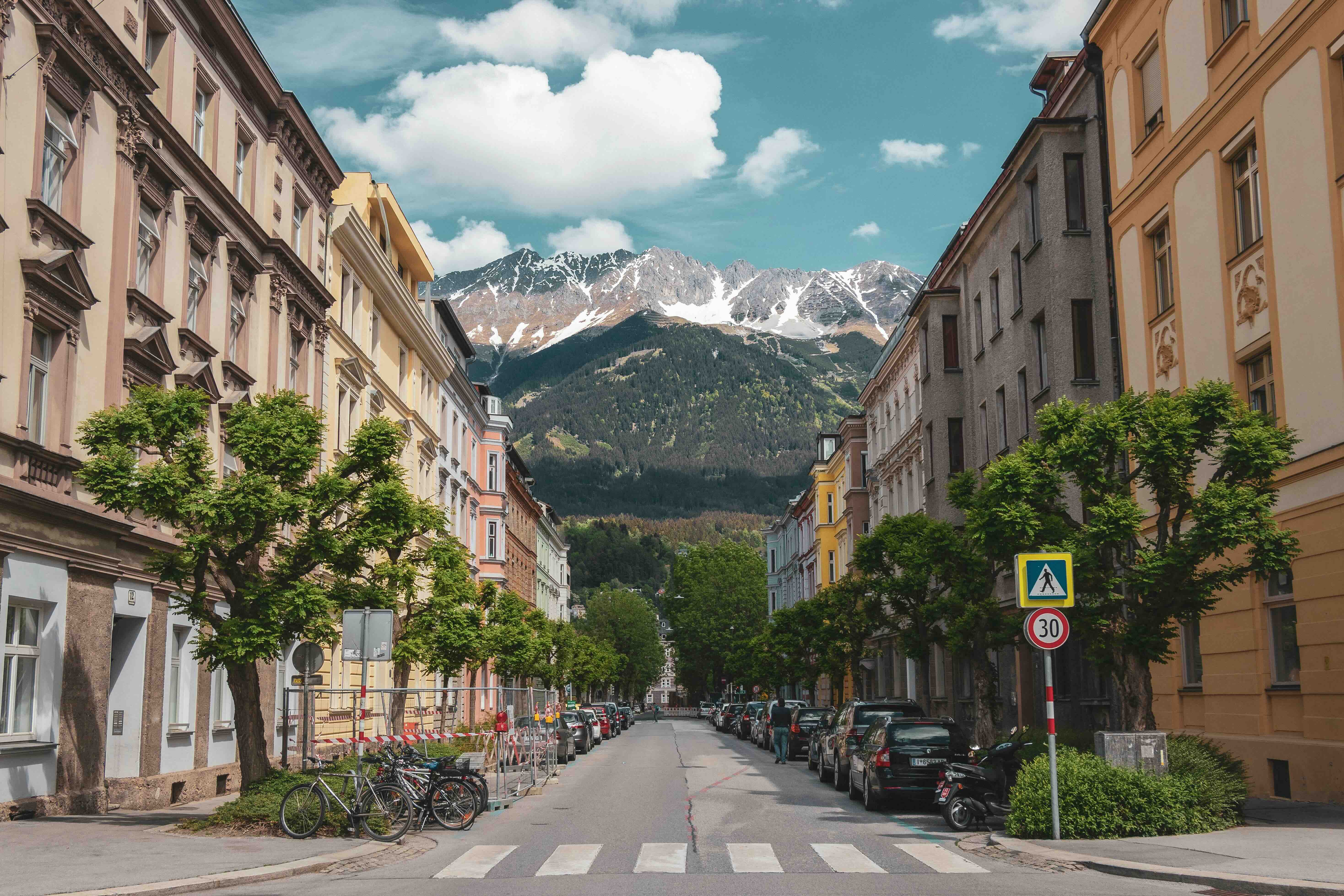
Salzburg → Innsbruck
~2h - 3h · ÖBB Railjet / WESTbahn
Continue west across the Alps: Salzburg to Innsbruck
View Route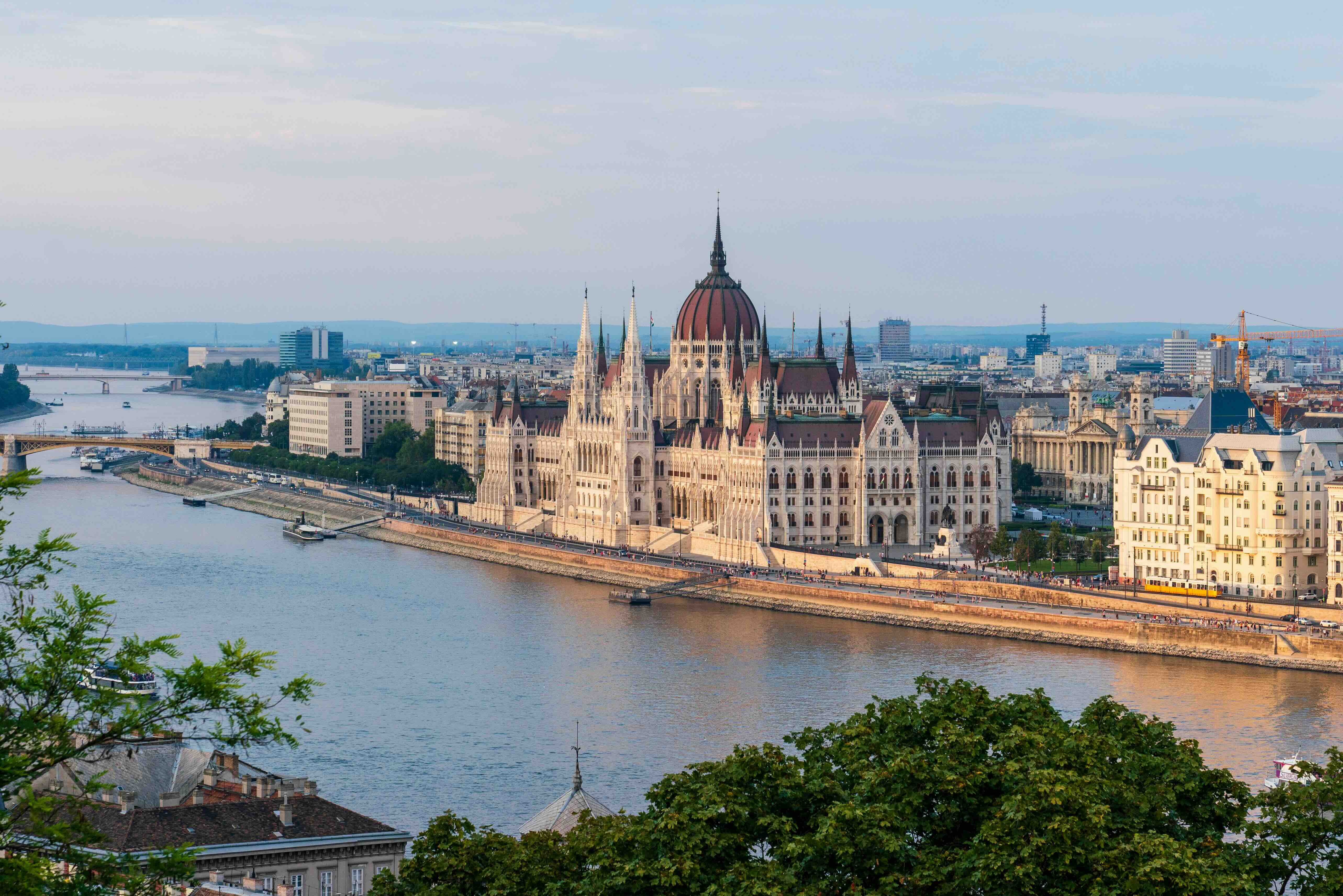
Vienna → Budapest
~2h 20m · ÖBB Railjet / RegioJet
The other Vienna Railjet route: east to Budapest
View Route
Interrail and the Swiss Travel Pass — when a pass beats point-to-point tickets and when it does not.
When reservation is mandatory, which side of the train has the views, and how to choose your class.
Vienna to Salzburg is the easy, essential Austrian journey: around two and a half hours west from the imperial capital to the foot of the Alps, on trains that come often and rarely need reserving. Choose ÖBB Railjet or WESTbahn on your Vienna station and your ticket, remember that a rail pass works on both, and treat Salzburg as a beginning - Munich, Innsbruck, the lakes and the mountains all leave from where you arrive.
Back to all routes