Salzburg to Innsbruck by Train
The Classic Journey Across the Austrian Alps
Salzburg to Innsbruck is one of Austria's great Alpine rail journeys: from the baroque city of Mozart, up the Salzach valley and across the mountains of Tyrol to Innsbruck, cradled beneath the wall of the Nordkette. There are two ways to make it - a fast express in around two hours that slips briefly through Germany, or the slower, all-Austrian scenic route over the Giselabahn past the lake at Zell am See and the ski town of Kitzbühel. This guide is really about the second: the classic mountain crossing, where the journey is the point.
It is a journey that feels like entering the high country. You leave the flat basin of Salzburg, follow the green Salzach south into deepening valleys, and by the time the train reaches Zell am See the peaks are all around - lakes, forests, ski villages, castles on their crags, and snow on the tops for much of the year. Then the Inn valley opens west and carries you into Innsbruck, the Tyrolean capital and one of the great alpine railway hubs of Europe. This guide covers both routes honestly - which is faster, which is more beautiful - along with seats, passes, luggage, bikes, the best of the scenery, and how to reach the Old Town when you arrive.
Two routes, one journey: The fastest trains (ÖBB Railjet and WESTbahn) reach Innsbruck in around two hours via German territory - the Deutsches Eck through Rosenheim and Kufstein. The scenic all-Austrian route over the Giselabahn, via Bischofshofen, Zell am See and Kitzbühel, is slower and often needs a change, but it is the classic Alpine crossing this guide follows.
Ready to book Salzburg to Innsbruck?
Decide first which journey you want. The fast Railjet and WESTbahn services run direct via the Deutsches Eck through Germany in around two hours, roughly hourly, with optional reservations. The scenic all-Austrian route over the Giselabahn - via Bischofshofen, Zell am See and Kitzbühel - is slower and mostly regional, often with a change, but it is the Alpine journey worth taking for its own sake. Interrail is accepted on both, with no compulsory reservation on the regular trains. Book the fast trains ahead for the best fare and a reserved seat.
Railero may earn a small commission if you book via the link above, at no extra cost to you.
Leaving Salzburg into the Salzach Valley
Salzburg Hauptbahnhof, Austria · 47.813°N, 13.045°E
The journey begins at Salzburg Hauptbahnhof, the handsomely rebuilt main station a short walk or trolleybus ride north of the baroque old town. It is a comfortable, fully equipped station and a hub for trains across Austria and into Germany, so the first thing to settle is which journey you are taking. The fast Railjet and WESTbahn trains turn west here toward the German border; the scenic Giselabahn heads south, up the Salzach valley into the mountains. This guide follows the scenic route, but both start from the same platforms, so check your train.
Boarding is relaxed - there is no airport-style check-in, so arrive 15 to 20 minutes ahead, watch the boards for your platform and find your coach. Taking the scenic line, the train pulls out south and almost at once the country begins to close in: the flat basin of Salzburg gives way to wooded hills, the green Salzach river appears alongside, and the Alps rise ahead. Within half an hour you are in a different world.
Salzburg–Innsbruck - Journey Facts
- Fast routeRailjet / WESTbahn via the Deutsches Eck (through Germany) - around 2h, direct
- Scenic routeThe Giselabahn via Bischofshofen, Zell am See and Kitzbühel - slower, often a change
- OperatorsÖBB Railjet and WESTbahn (fast); ÖBB regional trains (scenic)
- Journey timeAbout 1h 50m to 2h fast; closer to 3h on the scenic route
- ReservationsOptional on the fast trains; none on the regional trains
- Best viewsThe scenic all-Austrian route - by daylight, watching both sides
Up the Salzach Valley to Bischofshofen
Bischofshofen · 47.418°N, 13.220°E
The first stage follows the Salzach south, and it is lovely from the start. The line runs with the river through Hallein - the old salt town that gave Salzburg its name and its wealth - and into the narrowing valley beyond, where the Salzach cuts through a gorge and the walls of rock close in on both sides. This is the edge of the Tennengebirge and the Berchtesgaden Alps, limestone country of steep forests and bare summits, and the train threads it on ledges and through short tunnels beside the rushing green water.
Bischofshofen, in a broad basin where several valleys meet, is the junction where the scenic route turns decisively west toward Tyrol. It is a name ski-jumping fans know from the Four Hills Tournament, ringed by mountains, and the point where the journey commits to crossing the Alps rather than continuing south over the Tauern. From here the line climbs gently away from the Salzach and heads for the lake country around Zell am See.
The Salzach has carried salt and travellers out of these mountains for a thousand years; the railway simply follows the river into the heart of the Alps.
Zell am See and the Kitzbühel Alps
Zell am See · 47.323°N, 12.796°E
The scenic heart of the journey is the stretch through Zell am See. The town sits on the shore of its own lake, the Zeller See, a sheet of clear water ringed by mountains with the glaciers of the Kitzsteinhorn and the Hohe Tauern rising behind - and the railway runs right along the waterside, giving one of the finest views of the whole trip. In summer the lake is deep blue and busy with boats; in winter it freezes at the edges and the peaks are white to the shoreline. It is a place many travellers break the journey for a day.
West of the lake the line climbs into the Kitzbühel Alps and runs on through Kitzbühel itself, the storied ski resort, its medieval old town set among some of the most famous pistes in the world. This is high, open Alpine country - meadows and larch forest in summer, deep snow and skiers in winter - with the mountains close on every side. Then the line begins its long descent toward the Inn valley and Wörgl.
Which Side for the Views
The scenic route winds through valleys and crosses the Salzach and other rivers many times, so the best views swap from side to side and no single seat holds the scenery the whole way. Highlights to watch for: the Salzach gorge below Hallein; the lake at Zell am See, where the line runs right along the water; the Kitzbühel Alps around Kitzbühel; and the broad Inn valley opening out on the approach to Innsbruck, with the Nordkette wall ahead. A window seat and daylight matter more than which side - travel by day and be ready to switch your gaze. On the fast route via Germany, the Inn valley stretch from Kufstein to Innsbruck is the scenic part.
Wörgl and the Inn Valley
Wörgl · 47.489°N, 12.075°E
At Wörgl the scenic line comes down out of the Kitzbühel Alps and joins the main Inn valley railway - the busy corridor that carries the fast trains between Munich, Kufstein and Innsbruck. It is a workaday junction town, but it marks a change in the journey: from here the two routes run together, west up the broad, flat-bottomed valley of the River Inn with steep mountains rising on both sides, the classic Tyrolean landscape of green valley floor and rock walls above.
The Inn valley run into Innsbruck is fast and handsome - villages, churches with onion domes, castles on the heights, and the peaks of the Karwendel to the north growing ever closer. The mountains draw in as the valley narrows toward the city, and then the Nordkette rears up directly ahead, a near-vertical wall of grey rock above the rooftops, and the train slows into Innsbruck.
Worth Knowing
Arriving at Innsbruck Hauptbahnhof
Innsbruck Hauptbahnhof, Austria · 47.263°N, 11.401°E
Innsbruck Hauptbahnhof is a modern, fully rebuilt station - bright, step-free and well equipped - and the moment you step out the setting announces itself: the Nordkette rises almost sheer above the city to the north, and the Bergisel ski jump stands on its hill to the south. It is one of the great alpine rail hubs, with hundreds of trains a day passing through toward Germany, Italy and Switzerland, yet the city itself is compact and the centre is close.
The Old Town (Altstadt) and its famous Golden Roof (Goldenes Dachl) are about a 10 to 15 minute walk from the station, straight along Salurner Strasse and the grand shopping street of Maria-Theresien-Strasse. Trams and buses run from outside the station if you would rather ride, and the River Inn - which gives the city its name - runs just beyond the Old Town. For the mountains, the Hungerburgbahn funicular climbs from near the centre to the Nordkette cable cars, carrying you from the city up toward 2,000 m in well under an hour. Innsbruck airport is a short bus ride west of the centre.
From Innsbruck Hauptbahnhof
Fast Route or Scenic Route - How to Choose
Two ways across the mountains
The core decision on this journey is not really which operator but which route. The fast way is the Deutsches Eck: ÖBB Railjet and WESTbahn run west from Salzburg, dip briefly through German territory via Rosenheim and Kufstein, and come up the Inn valley to Innsbruck in around two hours, direct and roughly hourly. Both are comfortable modern trains - Railjet with Economy, First and Business classes and a dining car, WESTbahn with its double-deck carriages and cafes - and reservations on both are optional. This is the choice if you simply want to get to Innsbruck quickly and directly.
The scenic way is the all-Austrian Giselabahn, via Bischofshofen, Zell am See and Kitzbühel. It is slower - closer to three hours - and mostly regional, so it often means a change (commonly at Wörgl or Zell am See) and a little more planning. In return you get the classic crossing of the Austrian Alps: the Salzach gorge, the lake at Zell am See, the Kitzbühel Alps and the Inn valley, all in Austria and all worth the extra time. Neither route is better in the abstract - the fast one wins on speed and simplicity, the scenic one on beauty. For a rail pass holder with time, the Giselabahn is a highlight in its own right.
Fast route vs scenic route
- Fast (Deutsches Eck)Railjet / WESTbahn via Germany - direct, ~2h, roughly hourly
- Scenic (Giselabahn)ÖBB regional via Zell am See - ~3h, often a change
- SceneryFast: Inn valley from Kufstein · Scenic: the full Alpine crossing
- ReservationsFast: optional · Scenic: none on the regional trains
- Best forFast: getting there · Scenic: the journey itself
- Rail passesInterrail accepted on both, no reservation required
The Scenery: Rivers, Lakes and Peaks
What to watch for from the window
On the scenic route the landscape is the whole point, and it changes constantly. Out of Salzburg the line follows the green Salzach through the gorge below Hallein, steep forest rising on either side. It opens into the broad basin at Bischofshofen, then climbs into lake and mountain country: the great set-piece is Zell am See, where the train runs along the shore of the lake with the glaciers of the Hohe Tauern behind. Beyond it the Kitzbühel Alps bring high meadows, larch woods and the famous ski slopes, before the long descent to the Inn valley and the run in beneath the Nordkette.
The seasons transform it. In summer the valleys are green and the lakes deep blue, with wildflowers on the high meadows; in autumn the larch turns gold; and in winter this is deep snow country, the peaks white to the valley floor and the ski resorts - Zell am See, Kitzbühel, and St Anton further west - in full swing. It is genuinely beautiful rather than merely pleasant, but it is honest to say the views come and go with the valleys and tunnels, and swap from side to side, so the reward goes to those who travel by daylight and keep looking. There is no single "best side" that holds the scenery throughout.
Onward Travel from Innsbruck
The crossroads of the Eastern Alps
Innsbruck is one of the major alpine railway hubs of Europe - the crossroads where the Inn valley line from Germany meets the Brenner line to Italy and the Arlberg line to Switzerland, with hundreds of trains a day passing through. Arriving here puts a great deal within easy reach: north to Bavaria, west to the Arlberg and Switzerland, and south over the Brenner Pass into Italy. Some connections are fast and frequent; others, especially the international ones, are worth checking for reservations. The table below is a practical starting point.
Onward from Innsbruck
- MunichRailjet and EuroCity north via Kufstein, around 1h 45m
- ZurichRailjet west over the Arlberg, around 3h 30m
- St Anton am ArlbergRailjet west on the Arlberg line, around 1h 15m
- KitzbühelBack east on the scenic Giselabahn, around 1h
- Brenner PassThe line south to Italy climbs over the Brenner - the classic Alpine crossing
- Bolzano (Bozen)EuroCity south over the Brenner, around 2h
- VeronaEuroCity over the Brenner, around 3h 30m to 4h
- VeniceSouth via Bolzano and Verona, around 4h 45m or more
From Innsbruck the Alps open in every direction: Munich to the north, Zurich to the west, and Italy over the Brenner to the south.
Reservations, Passes, Luggage, Bikes and Access
The practical rules for the Alpine crossing
Reservations are relaxed on this route. On ÖBB Railjet and WESTbahn a seat reservation is optional - worth adding on busy summer weekends, holidays and through the ski season, but never required to travel. The regional trains on the scenic Giselabahn do not take reservations at all. For pass holders it is straightforward: Interrail is accepted on both the fast and the scenic services, with no compulsory reservation on the regular trains, which makes the Giselabahn an easy and rewarding pass journey. For the wider picture, see the rail passes and seat reservations guides linked below.
Luggage is easy: there is no strict weight limit on either the long-distance or the regional trains - you carry your bags aboard and use the overhead shelves and the racks near the doors - so board a few minutes early on busy departures, especially in ski season. Bikes are well catered for and the scenic route is popular with cyclists: a bike needs a bike ticket and, on ÖBB long-distance trains, a bike reservation, while the regional trains carry bikes in limited first-come spaces; a folded or bagged bike travels as luggage. Spaces fill in summer, so book ahead where you can.
On accessibility, both Salzburg Hauptbahnhof and Innsbruck Hauptbahnhof are modern, step-free stations with lifts to the platforms, and the fast Railjet and WESTbahn trains have accessible spaces and toilets. The smaller stations on the scenic route vary, and regional trains differ, so do not assume every stop and platform is equally straightforward. For guaranteed boarding help, ÖBB's mobility service should be booked in advance; accessibility depends on the specific train, platform and station, so arranging assistance ahead is the reliable approach.
Quick Tips
Choose your route first: the fast Railjet/WESTbahn via Germany for speed, or the scenic Giselabahn via Zell am See for the journey.
Travel by daylight: the scenery is the reward on the scenic route - take a daytime train and keep looking both ways.
Passes work on both: Interrail is valid across the route with no compulsory reservation on the regular trains.
Hotels in Innsbruck
Innsbruck rewards staying in or near the Old Town - close to the Golden Roof, the River Inn and the foot of the Nordkette, an easy walk from the Hauptbahnhof.
Innsbruck - opposite the station
The city's grand traditional hotel, directly opposite Innsbruck Hauptbahnhof and a short walk from the Old Town - a classic address, handy for the trains and the centre alike.
Innsbruck - by the River Inn and Old Town
A polished, well-run hotel on the edge of the Old Town beside the River Inn, with a spa and views to the Nordkette - central and quiet, walkable to everything and to the Hungerburgbahn.
Innsbruck - between the station and centre
A friendly, fairly priced design hotel a short walk from both the station and the Old Town - characterful and good value, a comfortable base for the city and the mountains.
Hotel links open Booking.com. Railero may earn a commission on bookings at no extra cost to you.
Frequently Asked Questions
- How long is the train from Salzburg to Innsbruck?
- It depends on the route. The fastest direct trains - ÖBB Railjet and WESTbahn, which run via German territory through Rosenheim and Kufstein - take around 1 hour 50 minutes to just over 2 hours. The scenic all-Austrian route via Bischofshofen, Zell am See and Kitzbühel is slower, typically closer to 3 hours and often on regional trains with a change. Exact times vary by service, so check the current schedule when you book.
- Are there direct trains from Salzburg to Innsbruck?
- Yes on the fast route: ÖBB Railjet and WESTbahn run direct roughly every hour via the Deutsches Eck through Germany, with no change needed. The scenic route across the Austrian Alps via Zell am See and Kitzbühel is served mostly by regional trains and often needs a change, commonly at Wörgl or Zell am See, so it takes more planning as well as more time.
- Which route should I choose - fast or scenic?
- If you just want to get there, the fast Railjet or WESTbahn via the Deutsches Eck is the obvious choice: direct, roughly hourly, and around two hours. If the journey is the point, the scenic all-Austrian route via Bischofshofen, Zell am See and Kitzbühel is one of the great Alpine rail journeys, following the Salzach valley and crossing the Kitzbühel Alps - it takes longer and usually involves regional trains, but the views are the reward.
- Is the Salzburg to Innsbruck train scenic?
- The scenic route certainly is - it runs along the Salzach valley through the Alps, past the lake at Zell am See and through the Kitzbühel Alps, with mountains, rivers, forests and villages much of the way, and the Inn valley opening up on the approach to Innsbruck. The fast route via Germany is pleasant too, especially the Inn valley stretch from Kufstein, but it is a working express rather than a scenic ride. For the mountains, take the Austrian route by daylight.
- Which side of the train has the best views?
- On the scenic Giselabahn there is no single side that has the views throughout - the line twists through valleys and crosses the Salzach and other rivers repeatedly, so the best scenery swaps from side to side. The lake at Zell am See and the Kitzbühel Alps are highlights to watch for. It is better to be ready to look both ways and to travel in daylight than to fix on one seat; on the busy sections a window seat matters more than which side.
- Do I need a seat reservation?
- Reservations are not compulsory. On ÖBB Railjet and WESTbahn a seat reservation is optional - worth adding on busy summer weekends, holidays and during the ski season, but never required to travel. The regional trains on the scenic route do not take reservations at all; you simply board and find a seat, so aim to board early in peak periods.
- Can I use an Interrail pass?
- Yes - Interrail is accepted across this route, on both the fast Railjet/WESTbahn services and the regional trains on the scenic line, with no compulsory reservation on the regular trains. That makes the scenic route an easy and rewarding pass journey: hop between regional trains along the Giselabahn with an optional reservation only where you want a guaranteed seat.
- Can I take luggage?
- Yes - there is no strict weight limit for normal luggage on either the long-distance or the regional trains. You carry your bags aboard yourself and use the overhead shelves and the larger racks near the doors. Board a few minutes early on busy departures, especially in ski season, to find space, and keep valuables with you.
- Can I take a bicycle?
- Yes, and the scenic route is popular with cyclists. Bikes travel in marked spaces with a bike ticket; on ÖBB long-distance trains a bike reservation is also required, while the regional trains on the scenic line carry bikes in limited spaces, usually without reservation but first-come. A folded or bagged bike travels as luggage. Spaces are limited and fill up in summer, so check the current policy and book ahead where you can.
- How do I get from Innsbruck Hauptbahnhof to the Old Town?
- It is close. Innsbruck Hauptbahnhof is about a 10 to 15 minute walk from the Old Town (Altstadt) and the Golden Roof, straight along Salurner Strasse and Maria-Theresien-Strasse. Trams and buses run from outside the station into the centre, and the city is compact enough to explore on foot once you are there. The River Inn runs just beyond the Old Town.
- Can I continue from Innsbruck into Italy, Switzerland or Germany?
- Yes - Innsbruck is one of the great alpine rail hubs. Trains run north to Munich in under two hours, west to St Anton, Zurich and beyond on the Arlberg line, and south over the Brenner Pass to Bolzano, Verona and on toward Venice. It is the crossroads of the Eastern Alps, so from here you can carry on into three countries, though it is worth checking whether an onward international train needs a reservation.
Continue Your Journey
Routes that pair naturally with this one — for building your European itinerary.
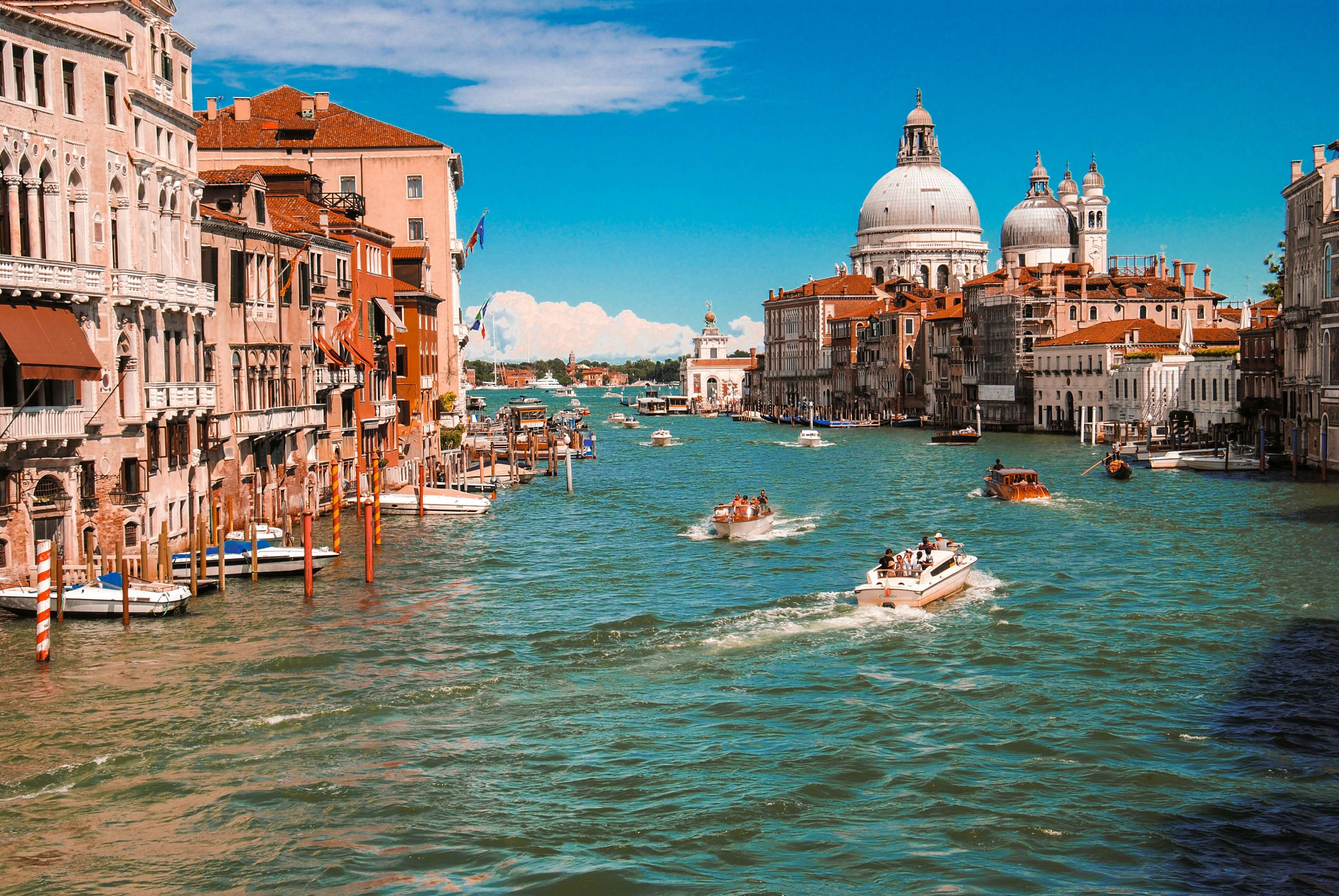
Munich → Venice
~6h 00m · Brenner Corridor
Continue over the Brenner to Venice via Innsbruck
View RouteInterrail and the Swiss Travel Pass — when a pass beats point-to-point tickets and when it does not.
When reservation is mandatory, which side of the train has the views, and how to choose your class.
Salzburg to Innsbruck is the classic crossing of the Austrian Alps: two hours the fast way via Germany, or a slower, finer journey over the Giselabahn past Zell am See and Kitzbühel with the mountains all around. Choose speed or scenery on your day and your mood, remember a rail pass works on both, and travel the scenic route by daylight - then arrive in Innsbruck beneath the Nordkette, at the crossroads of the Alps.
Back to all routes