Munich to Venice
The Brenner Pass Alpine Express
Six hours. Three countries. The entire arc from Bavarian beer halls to Venetian canals, done without a single security queue or boarding gate. This is the Brenner Corridor - one of the oldest trade routes across the Alps, now followed by steel and speed.
The Brenner railway has connected the Inn Valley to the Adige since 1867 - the first Alpine rail crossing to breach 1,000 metres. For over 150 years, travellers have taken this same journey: south from Munich through Bavaria, into the narrows of the Inn Valley, over the Brenner watershed at 1,370 metres, and down through the South Tyrol into Italy. The landscape changes three times; the light changes entirely.
The luxury case: This is one of the great transcontinental rail journeys in Europe. Departure from central Munich; the Inn Valley through Austrian Tyrol; the Brenner summit; South Tyrol's vineyards and Dolomite towers; and arrival directly on the Venetian islands. No comparable flight itinerary offers this.
Ready to book Munich → Venice?
Check live fares for the Brenner Corridor - a mix of direct EC services and railjet connections via Innsbruck. Book early for the best compartment seats through the Alpine section.
Railero may earn a small commission if you book via the link above, at no extra cost to you.
München Hauptbahnhof - Bavaria's Grand Gateway
Munich, Germany · 48.140°N, 11.558°E
Munich Hauptbahnhof is one of Germany's busiest stations - a sprawling structure beneath Bayerstraße that has been rebuilt, expanded, and patched into its current form over more than a century. It lacks the architectural bravura of Berlin Hbf or Vienna Westbahnhof, but it compensates with efficiency: 450,000 passengers daily, 32 platforms, and direct connections south to Austria that have run continuously since the 1860s.
The journey south begins through Munich's suburbs - the city sprawls into market gardens and light industry before the Bavarian countryside reasserts itself. Within 30 minutes of departure, the first Alpine foothills appear ahead: low, rounded summits draped in dark spruce, with Bavarian farmhouses and onion-domed churches in the valleys. The light is distinctly different from northern Germany - clearer, more saturated, the sky closer to the mountains.
Munich to Venice is one of the great transcontinental rail journeys - a six-hour arc from Bavarian beer halls to Venetian canals.
Brenner Corridor - journey facts
- CountriesGermany → Austria → Italy (3 in 6 hours)
- OperatorsDB / ÖBB / Trenitalia (through ticketing available)
- Best seatLeft side southbound for Inn Valley views, right side for Brenner descent
- DiningBistro car available on most services; Italian dining car from Verona
- BorderSchengen - no passport control at any crossing
Innsbruck & the Brenner Pass
Innsbruck, Austria · 47.263°N, 11.401°E
Innsbruck Hauptbahnhof sits at the floor of the Inn Valley at 574 metres, surrounded on all sides by the Karwendel and Tux Alps. The city is immediately, viscerally dramatic: step out of the station and the Nordkette mountain chain - its upper slopes often snow-covered - rises directly above the rooftops. Most services stop here for five to eight minutes, long enough to notice the altitude and the quality of the air.
South of Innsbruck the line begins to climb. The Brenner Pass at 1,370 metres is the lowest Alpine crossing available to rail, which is part of why it has been used as a transit corridor since Roman times. The gradient is manageable but persistent - the train works its way up through the Wipptal, a narrow gorge where the motorway and railway compete for the same valley floor, past ski resorts and old mining villages.
The Brenner Pass at 1,370 metres: the lowest crossing in the Alps, used without interruption since the Roman legions marched south to Italy.
At the summit - marked by a small station and a ski resort - the watershed divides the waters of Europe. Everything north drains to the North Sea; everything south to the Adriatic. The train descends into the Adige Valley and Italy begins: the station signage switches to Italian, the architecture shifts from Tyrolean to Italianate, and the landscape opens into the wide, terraced vine-country of South Tyrol. Bolzano - the bilingual capital of this former Austrian territory - sits in a bowl of rock faces and vineyard terraces at 262 metres. The Dolomites appear to the east: pale, serrated, unlike any other mountains in Europe.
The South Tyrol window
Between Bolzano and Verona - roughly 90 minutes - the train passes through the Adige Valley wine country: Pinot Grigio, Gewürztraminer, and Lagrein vineyards terraced on the valley walls. Beyond Rovereto the Dolomites give way to Lake Garda, briefly visible to the west before the line turns south through the Po Plain to Verona.
Venezia Santa Lucia - Arrival on the Grand Canal
Venice, Italy · 45.441°N, 12.321°E
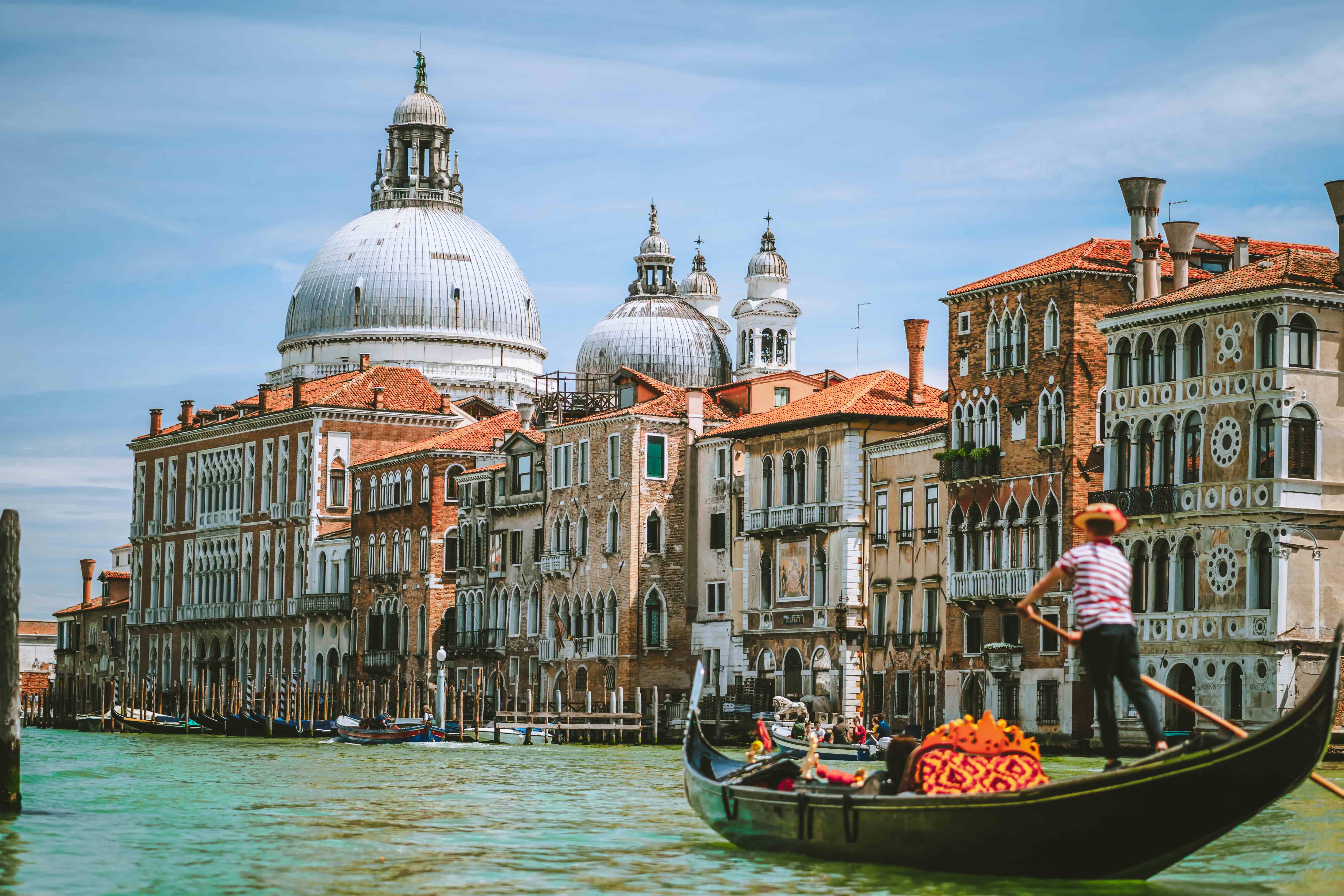
The approach to Venice across the Ponte della Libertà is a moment that rail travel holds exclusive rights to. The lagoon appears on both sides of the train simultaneously as the four-kilometre causeway crosses the shallow water, and the city - a skyline of campanile, domes, and terracotta - materialises ahead from nothing. It is one of the great theatrical arrivals in European travel.
Venezia Santa Lucia is the terminus. The train ends here, the buffers twenty metres from the Grand Canal, and you step from the carriage into an air that smells of salt water and canal. The station's neoclassical facade opens directly onto the water - within thirty seconds of leaving your seat you can be watching gondolas and vaporetti from the station steps.
This is the crucial distinction between arriving by train and arriving by plane. Venice Marco Polo airport sits 12 kilometres north-east across the lagoon - a water taxi costs €45–€120, a shared ACTV bus ferry takes 45–75 minutes. The train arrives on the islands. You are already there.
From Venezia Santa Lucia
Venice Canal Hotels
Arriving by train means stepping directly onto the islands. Every property below is reachable by vaporetto or water taxi from Santa Lucia station - no mainland stay, no missed mornings on the canals.
Santa Croce, Venice - canalside
A 16th-century private palazzo with a secret garden and private water entrance on the Grand Canal. Just 18 rooms - intimate by Venetian palace standards.
San Polo, Venice - Grand Canal
Six historic Venetian buildings combined into one extraordinary property. Private boat service from Santa Lucia station on arrival.
Cannaregio, Venice - Grand Canal
An 18th-century palace overlooking the Ca' d'Oro. Frescoed ceilings, Grand Canal panoramas, and Michelin-listed dining.
San Marco, Venice
A romantic hideaway in the heart of San Marco with Moorish-influenced interiors and a private courtyard garden.
Hotel links open Booking.com. Railero may earn a commission on bookings at no extra cost to you.
Frequently Asked Questions
- Is there a direct train from Munich to Venice?
- Yes. Direct DB-ÖBB EuroCity trains run right through from Munich to Venezia Santa Lucia over the Brenner Pass, with no change required. There are also railjet and connecting services via Innsbruck and Verona if the direct timings do not suit.
- Should I get off at Venezia Santa Lucia or Venezia Mestre?
- Stay on to Venezia Santa Lucia, the terminus on the islands, where the station steps lead straight down to the Grand Canal and the vaporetti. Venezia Mestre is on the mainland and means a further train or bus across the causeway - only useful if your hotel is in Mestre.
- Which side of the train has the best Alpine views?
- Heading south, the left-hand side has the best of the Inn Valley and the climb to the Brenner, while the right-hand side comes into its own for the descent through South Tyrol's vineyards toward Bolzano and the Dolomites. Both sides get the lagoon crossing into Venice.
- Do I need to reserve seats on the Munich to Venice EuroCity?
- A seat reservation is strongly recommended and can be compulsory on these cross-border EuroCity trains, particularly in summer when they are busy. Reserve together with your ticket to be sure of a seat through the scenic Alpine section.
- Is the Munich to Venice train covered by Interrail?
- Yes, the EuroCity service is covered by Interrail across all three countries. Budget for a seat reservation fee on top of your pass, as reservations may be required on the direct trains.
- Is there a dining car on the Munich to Venice train?
- Yes. The EuroCity trains carry a restaurant or bistro car for the whole journey, with the catering taking on an Italian flavour as the train works its way south from Verona. A bar trolley also passes through the carriages.
- What are the most scenic parts of the Munich to Venice route?
- The journey has three great acts: the narrowing Inn Valley up to the Brenner watershed, the terraced vineyards and Dolomite towers of South Tyrol, and the final causeway across the lagoon into Venice - one of the most dramatic arrivals in European rail travel.
- Is there a night train from Munich to Venice?
- Overnight services on this corridor come and go - ÖBB Nightjet has at times run sleeper trains between Munich and northern Italy - so it is worth checking the current Nightjet network when you plan. For most travellers the daytime EuroCity over the Brenner remains the reliable option, and it is the one that delivers the Alpine scenery through the window. Rail timetables change from year to year, so confirm what is running for your dates.
Continue Your Journey
Routes that pair naturally with this one — for building your European itinerary.
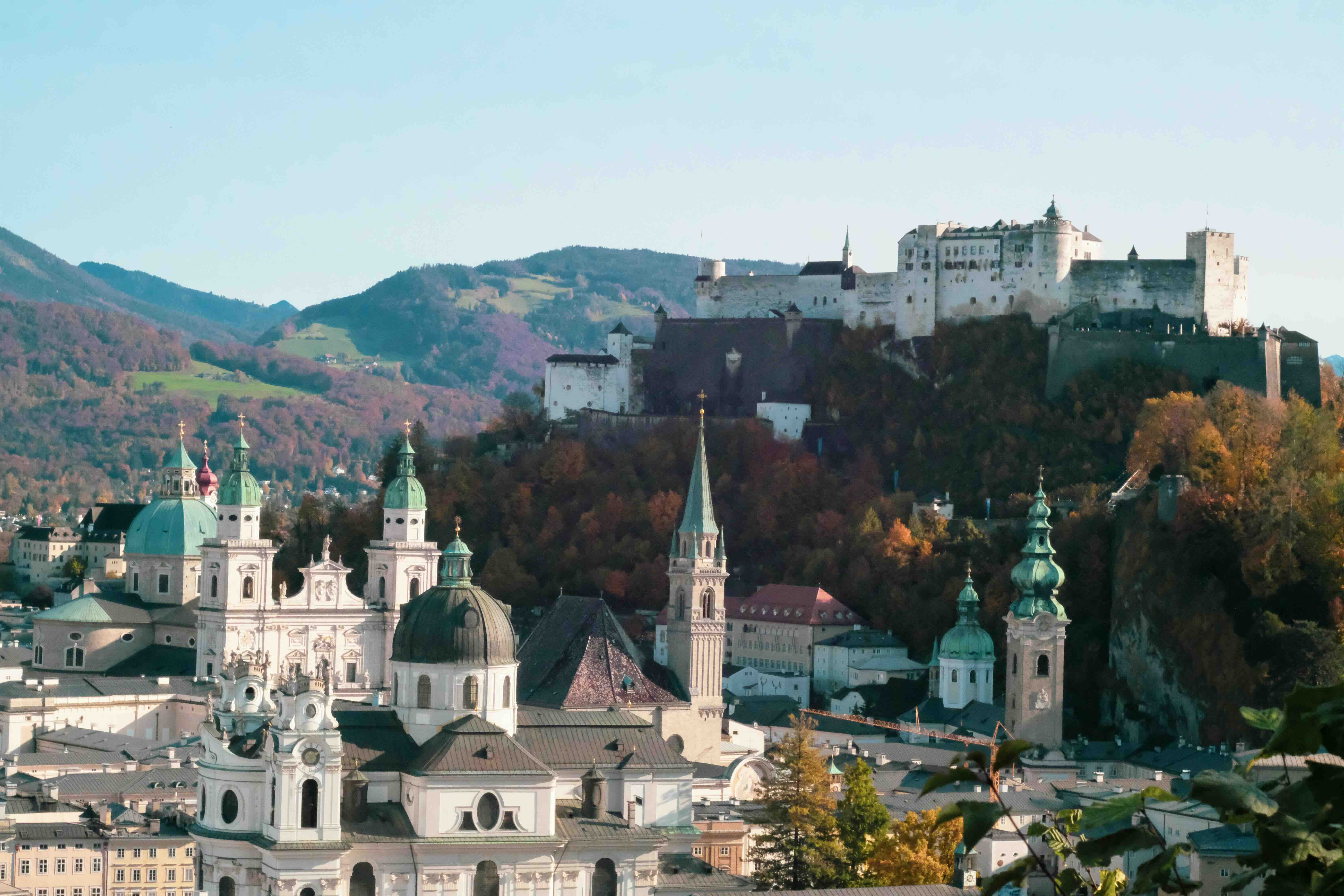
Munich → Salzburg
~1h 30m · Railjet / EuroCity (ÖBB · DB)
Start smaller: Munich to Salzburg in 90 minutes
View Route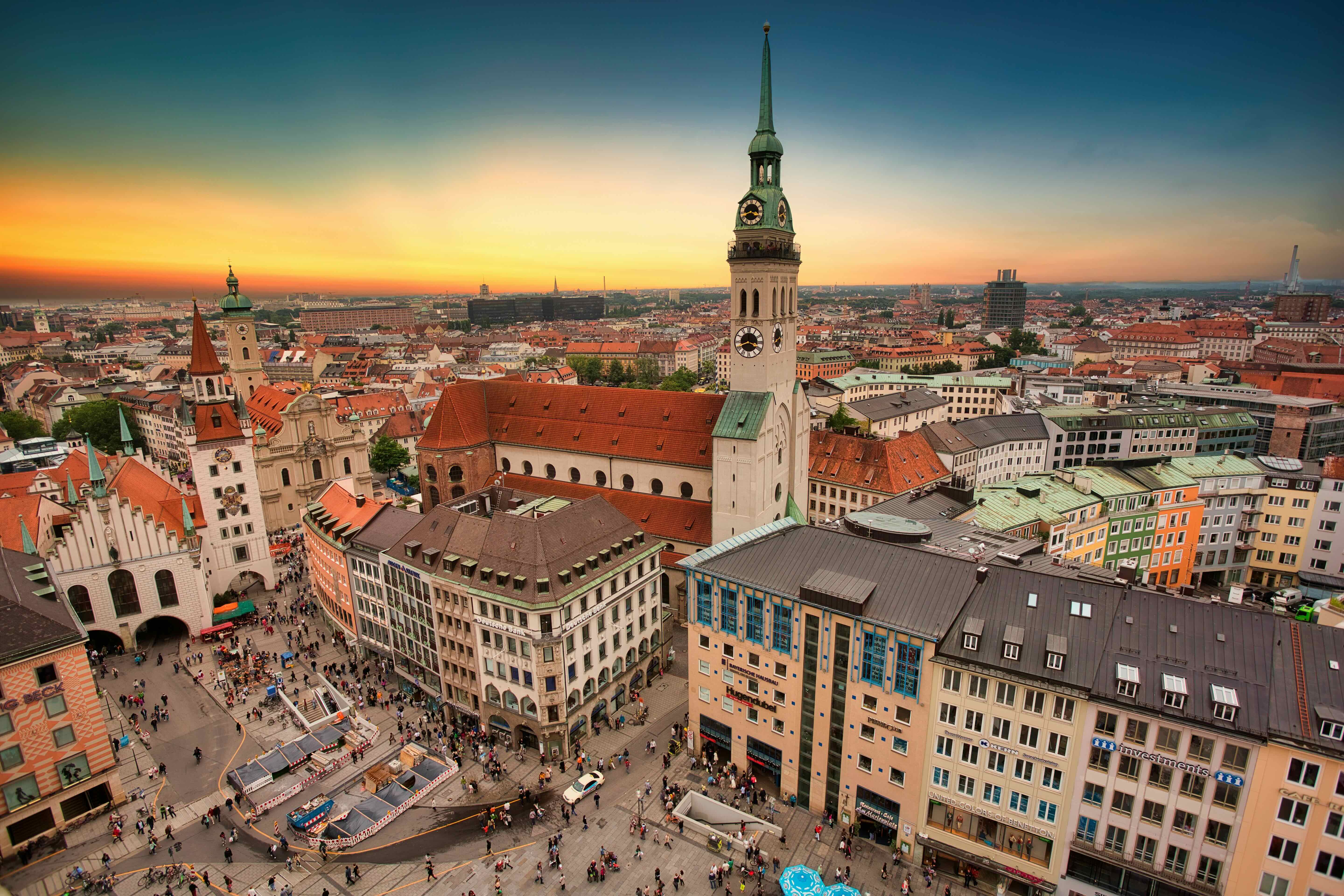
Interrail and the Swiss Travel Pass — when a pass beats point-to-point tickets and when it does not.
When reservation is mandatory, which side of the train has the views, and how to choose your class.
Munich to Venice via the Brenner Pass is one of the most complete journeys in European rail travel - Bavaria, the Tyrolean Alps, South Tyrol's wine country, Verona, and arrival directly on the Venetian islands. No airport replicates the approach across the lagoon.
Back to all routes