Vienna to Bratislava by Train
Two Capitals, One Easy Hour
Vienna and Bratislava are the two closest capital cities in Europe, and the train between them is about as easy as international travel gets: a direct regional express from Wien Hauptbahnhof to Bratislava in around an hour, running through the day, with no reservation to make and nothing to book in advance. You turn up, buy a ticket and hop on the next train. It feels less like an international journey than a suburban hop that happens to cross a border - which is exactly why Bratislava is one of the best day trips in central Europe.
The one thing genuinely worth understanding before you go is that there are two direct routes, run by the Austrian and Slovak railways, and they reach different Bratislava stations. That single fact - which train, which station - is what this guide is really for. Beyond it, the journey needs little explanation: it is flat, quick and border-free, so this is a short, practical guide to travelling smart rather than a long read. We cover the two routes, which Bratislava station suits the Old Town, tickets including the handy Bratislava-Ticket, passes, and how to make it an easy day trip.
Turn up and go - no booking needed: These are flexible regional trains, so there are no seat reservations and nothing to reserve in advance. Two hourly routes from Wien Hauptbahnhof - one to Bratislava hlavná stanica (the main station, best for the Old Town), one to Bratislava-Petržalka - mean a train roughly every half hour. Just buy a ticket and board.
Ready to travel Vienna to Bratislava?
This is the rare international journey you barely need to plan. Two direct regional express (REX) routes run from Wien Hauptbahnhof, each roughly hourly: one via Marchegg to Bratislava hlavná stanica in around 56 minutes, the other via Kittsee to Bratislava-Petržalka in around 59 minutes. There are no seat reservations and nothing to book ahead - just buy a ticket and take the next train. ÖBB's cross-border Bratislava-Ticket covers the trip and Bratislava's city transport; Interrail is accepted with no reservation. Check the current fare when you buy.
Railero may earn a small commission if you book via the link above, at no extra cost to you.
Leaving Wien Hauptbahnhof
Wien Hauptbahnhof, Austria · 48.185°N, 16.378°E
Both direct routes leave from Wien Hauptbahnhof, Vienna's main long-distance station south of the centre, opened in 2015 and one of the best-connected hubs in central Europe. The U-Bahn line U1, many trams and the S-Bahn all serve it, so it is quick to reach from anywhere in the city. Because these are ordinary regional trains, boarding could not be simpler: there is no airport-style check-in and no reservation, so arriving 10 to 15 minutes ahead is plenty - just check the departure boards for the next Bratislava train and its platform, and step aboard.
The only decision to make before you go is which Bratislava station you want, because the two routes end in different places. It is worth glancing at the boards for the destination - Bratislava hlavná stanica or Bratislava-Petržalka - so you take the train that suits where you are heading. For most visitors that means a train to hlavná stanica, the main station nearest the Old Town.
Vienna–Bratislava - Journey Facts
- RouteWien Hauptbahnhof → Bratislava, across the Marchfeld plain of eastern Austria
- OperatorsÖBB and ZSSK - regional express (REX) trains, run jointly
- Journey timeAround 56 min to hlavná stanica; around 59 min to Petržalka
- FrequencyEach route roughly hourly - about twice an hour combined
- ReservationsNone - flexible regional trains, turn up and go
- DistanceAbout 65 km between the two capitals
Across the Marchfeld to the Border
Marchegg and the River March · 48.278°N, 16.911°E
The principal route heads north-east out of Vienna and quickly leaves the city behind for the Marchfeld, the broad, flat farmland east of the capital between the Danube and the River March. It is level, open country - big fields, wind turbines, the occasional village - and the train crosses it briskly. This Marchegg line is the faster of the two routes into Bratislava, reaching the main station in a little under an hour.
The frontier comes at Marchegg, where the line crosses the River March (the Morava) that marks the border between Austria and Slovakia. There is no drama to the crossing: both countries are in the Schengen area, so there is normally no passport control and the train runs straight through - the clearest sign you have crossed is the switch in the language on the signs. Within minutes the outskirts of Bratislava appear and the train draws in. (The other route reaches the border further south, via Bruck an der Leitha and Kittsee, on its way to Petržalka.)
Vienna and Bratislava are barely an hour apart - closer than many capitals are to their own airports - and the train slips between them across the plain almost before you have settled in.
Arriving in Bratislava
Bratislava hlavná stanica, Slovakia · 48.159°N, 17.107°E
The main route arrives at Bratislava hlavná stanica - literally "main station" - the city's principal station, just north of the historic centre. It is a functional rather than grand station, fully usable with the basics you need, and the important thing is its location: it is north of the Old Town, on the same side of the Danube as the historic centre, with local public transport providing an easy connection into the middle of the city.
Bratislava is a compact, walkable capital, and from hlavná stanica the good things are quickly reached: the pedestrianised Old Town with its cafes and squares, the hilltop Bratislava Castle above the river, and the Danube embankment. Trams, trolleybuses and buses fan out from near the station across the city, and taxis wait outside. It is the kind of place you can see a great deal of on foot in a day, which is much of its appeal from Vienna.
From Bratislava hlavná stanica
Two Routes, and Which Bratislava Station
The one thing worth understanding
Here is the detail that makes this guide worth reading. There are two direct regional routes from Wien Hauptbahnhof, each running roughly hourly, and they reach different Bratislava stations. The first runs via Marchegg to Bratislava hlavná stanica (the main station) in around 56 minutes; the second runs via Bruck an der Leitha and Kittsee to Bratislava-Petržalka in around 59 minutes. Journey times are almost identical, so the real difference is the station you arrive at.
For most visitors, hlavná stanica is the one to aim for: it is on the Old Town side of the Danube, a short walk or tram ride from the centre. Bratislava-Petržalka sits south of the river in a large residential district and is generally less handy for the historic centre, though it can suit that area or an onward connection. Because both run about hourly, taken together they give a train roughly every half hour - but they are separate hourly services rather than a single half-hourly one, so if you specifically want hlavná stanica, check that the next departure is the Marchegg train.
The two routes compared
- Via MarcheggTo Bratislava hlavná stanica (main station) - best for the Old Town, ~56 min
- Via KittseeTo Bratislava-Petržalka - south of the Danube, ~59 min
- FromBoth leave from Wien Hauptbahnhof
- FrequencyEach roughly hourly - about twice an hour between them
- Default choiceBratislava hlavná stanica, unless Petržalka suits you better
Tickets, Passes and the Day Trip
The easy, flexible way to go
Tickets are refreshingly simple. Because these are flexible regional trains, there are no reservations and nothing to book ahead - buy a standard point-to-point ticket at the station or online and take the next train. The one product worth knowing about is ÖBB's cross-border Bratislava-Ticket: it covers the train from Vienna to Bratislava and back on the regional services to either station, and it also acts as a day ticket for Bratislava's buses and trams on the first day of travel, with the return valid the same day or within a few days. It is often the best-value and most convenient option for a visit, but fares change, so check the current price and conditions with ÖBB when you buy.
Interrail passes are accepted on the regional trains with no reservation needed - you can simply board and show your pass. On such a short, inexpensive journey, though, a cross-border ticket or the Bratislava-Ticket is often cheaper than using a whole pass travel day, so it is usually only worth spending a pass day if you are travelling anyway. The seat reservations and rail passes guides linked below cover how this compares with long-distance trains.
All of this makes Bratislava an outstanding day trip from Vienna. The journey is about an hour each way, trains run through the day, and hlavná stanica is a short walk or tram from the Old Town, so you can be exploring within the hour and travel back on whichever train suits - no fixed return to worry about. If you are out late, just check the last practical evening service before you set off rather than relying on a timetable that can change. Bratislava is also a rail hub in its own right, with onward trains across Slovakia and direct services to Budapest and Prague, though those are separate journeys Railero covers elsewhere.
The Border, Luggage, Bikes and Access
The few practical things to know
On the border, both Austria and Slovakia are in the Schengen area, so there is normally no systematic passport control and the train does not stop at the frontier for checks. Occasional spot ID checks can happen, so carry a valid passport or national ID card and keep it reachable, but there is no routine border formality to plan around. Luggage is easy too: there is no strict weight limit on these regional trains, you carry your bags aboard and use the racks and open areas, so bring what you can manage and keep valuables with you.
Bicycles are carried, with designated bike spaces on the trains, though a bike ticket may be required and the number of spaces is limited, so check the current rules before turning up with one; a folded or bagged bike travels as luggage. On accessibility, Wien Hauptbahnhof is a modern, fully step-free station, while Bratislava hlavná stanica is older and more basic, so access can vary by train and platform - for guaranteed boarding help, ÖBB's mobility service and ZSSK's station assistance should be arranged in advance rather than assumed. For any date-specific engineering works or timetable changes, ÖBB's and ZSSK's journey planners have the current picture.
Quick Tips
Aim for hlavná stanica: the Marchegg route's station is nearest the Old Town - check the next departure is that train if the station matters to you.
Consider the Bratislava-Ticket: ÖBB's cross-border ticket covers the return trip and Bratislava's city transport - often the handiest option, but check the current fare.
No need to book: these are flexible regional trains with no reservations, so travel out and back on whichever trains suit your day.
Hotels in Bratislava
Bratislava rewards staying in or beside the compact Old Town - within walking distance of the main square, the castle and the Danube, and a short walk or tram ride from hlavná stanica.
Bratislava - on the Danube
A polished riverside luxury hotel on the Danube embankment a short walk from the Old Town, with a spa and river views - Bratislava's leading grand address, easily reached from hlavná stanica.
Bratislava - beside the Old Town
An elegant, well-run boutique hotel just outside the Old Town, warm and classic in style and within easy walking distance of the main square and the river - a characterful central base.
Bratislava - near the centre
A stylish, fairly priced design hotel with its own brewery-restaurant, a short walk from the centre and convenient for the station - dependable value in a walkable city.
Hotel links open Booking.com. Railero may earn a commission on bookings at no extra cost to you.
Frequently Asked Questions
- Is there a direct train from Vienna to Bratislava?
- Yes - in fact there are two direct regional express (REX) routes, both from Wien Hauptbahnhof and both taking about an hour. One runs via Marchegg to Bratislava hlavná stanica (the main station), the other via Bruck an der Leitha and Kittsee to Bratislava-Petržalka. Each runs roughly hourly, so between them there is a train about twice an hour. No change of train is needed.
- How long does Vienna to Bratislava take by train?
- About an hour. The Marchegg route to Bratislava hlavná stanica takes around 56 minutes, and the Kittsee route to Bratislava-Petržalka takes around 59 minutes. Exact times vary by service, so check the current schedule when you travel.
- Which Vienna station do trains to Bratislava leave from?
- Both direct REX routes leave from Wien Hauptbahnhof, Vienna's main station south of the centre, which is on the U1 U-Bahn line and well served by trams and the S-Bahn. It is the simplest station to use from anywhere in central Vienna.
- Which Bratislava station should I use - hlavná stanica or Petržalka?
- For most visitors, Bratislava hlavná stanica (the main station, reached by the Marchegg route) is the better choice: it is on the same side of the Danube as the historic centre, just north of the Old Town, with local public transport providing an easy connection into the middle of the city. Bratislava-Petržalka (reached by the Kittsee route) sits south of the river and is generally less convenient for the Old Town, though it can suit that district. If in doubt, take a train to hlavná stanica.
- How often do trains run?
- Very frequently. Each of the two routes runs roughly hourly through the day, so combined there is a train about every half hour - though the two do not leave at even 30 minute spacing, and each individual route is hourly. It is turn-up-and-go travel rather than something you plan around a single departure.
- Do I need to book Vienna to Bratislava in advance, or reserve a seat?
- No. These are flexible regional trains, so there are no seat reservations and nothing to book ahead - you simply buy a ticket and board the next train. Advance booking is not needed and a specific train is not tied to your ticket, which is part of what makes this journey so easy. See our seat reservations guide for how this differs from long-distance trains.
- Is there a special Vienna to Bratislava ticket?
- Yes. ÖBB sells a cross-border Bratislava-Ticket covering the train from Vienna to Bratislava and back, valid on the regional trains to either Bratislava station. It also acts as a day ticket for Bratislava's buses and trams on the first day of validity, and the return can be used the same day or within a few days. Fares change, so check the current price and conditions with ÖBB when you buy; ordinary point-to-point tickets are also available.
- Can I use an Interrail pass?
- Yes, the regional trains are covered by Interrail with no reservation needed - you can just board and show your pass. That said, on such a short and inexpensive journey a cross-border regional ticket or the Bratislava-Ticket is often cheaper than spending a whole pass travel day, so it is usually only worth using a pass if you are travelling on that day anyway. See our rail passes guide.
- Can I visit Bratislava as a day trip from Vienna?
- Easily - it is one of the best day trips in central Europe. The journey is only about an hour each way, trains run through the day, and Bratislava hlavná stanica is a short walk or tram ride from the compact Old Town, so you can be exploring within the hour. Buy a flexible or return ticket and travel back on whichever train suits; check the last practical evening service before you go rather than relying on a fixed time.
- Is there passport control between Austria and Slovakia?
- Normally no. Both countries are in the Schengen area, so the train does not stop for routine passport checks at the border near Marchegg. Occasional spot ID checks can happen, so carry a valid passport or national ID card and keep it reachable, but there is no routine border formality.
- Can I take luggage or a bicycle?
- Luggage is easy: there is no strict weight limit on these regional trains, you carry your bags aboard and use the racks and open areas, so bring what you can manage. Bicycles are carried too, with designated bike spaces on the trains, though a bike ticket may be required and spaces are limited - check the current bike rules before travelling.
Not sure if you need to reserve a seat?
Check this journey in Railero’s Seat Reservation Checker.
Continue Your Journey
Routes that pair naturally with this one — for building your European itinerary.
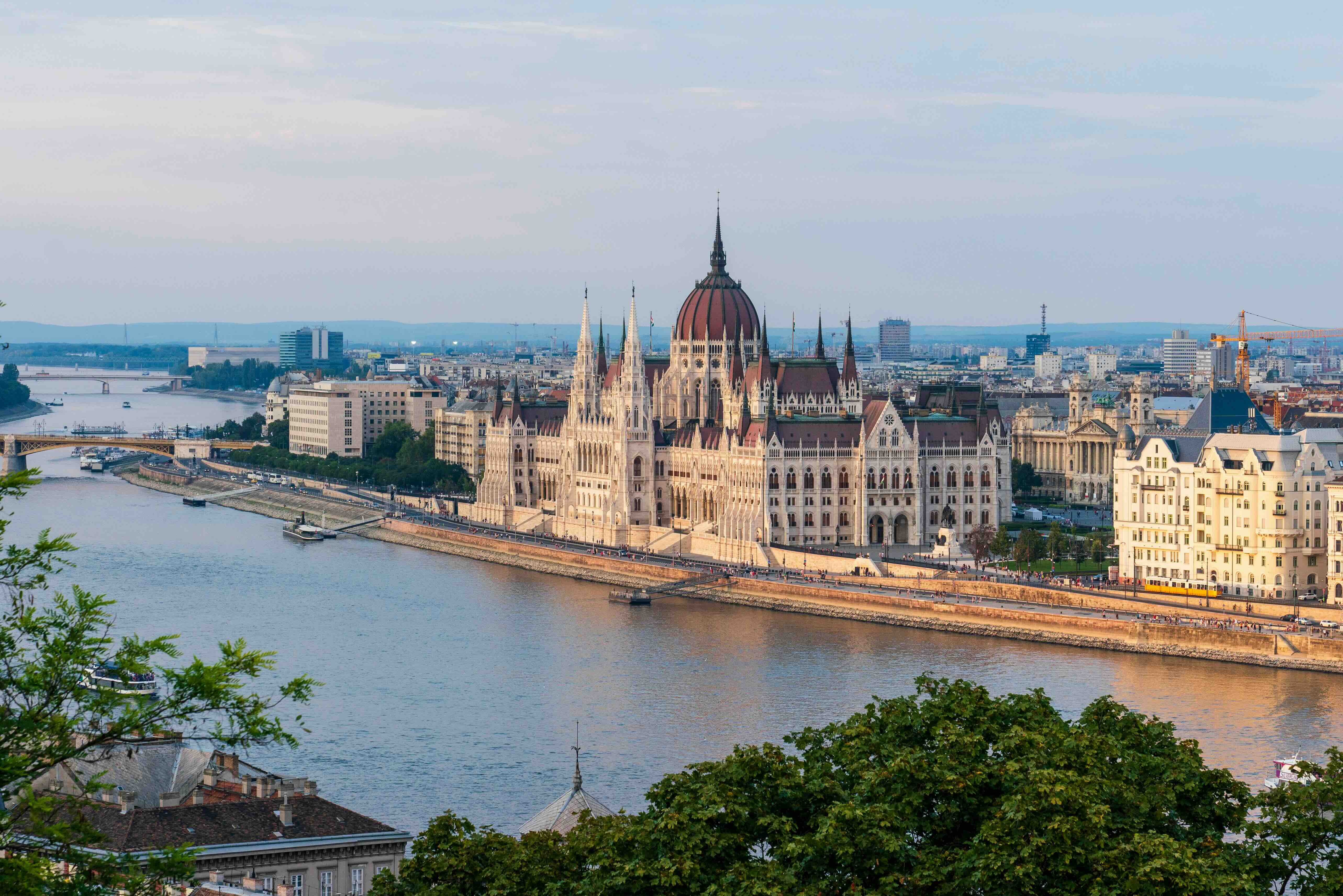
Vienna → Budapest
~2h 20m · ÖBB Railjet / RegioJet
Continue east to the next Danube capital: Vienna to Budapest
View Route
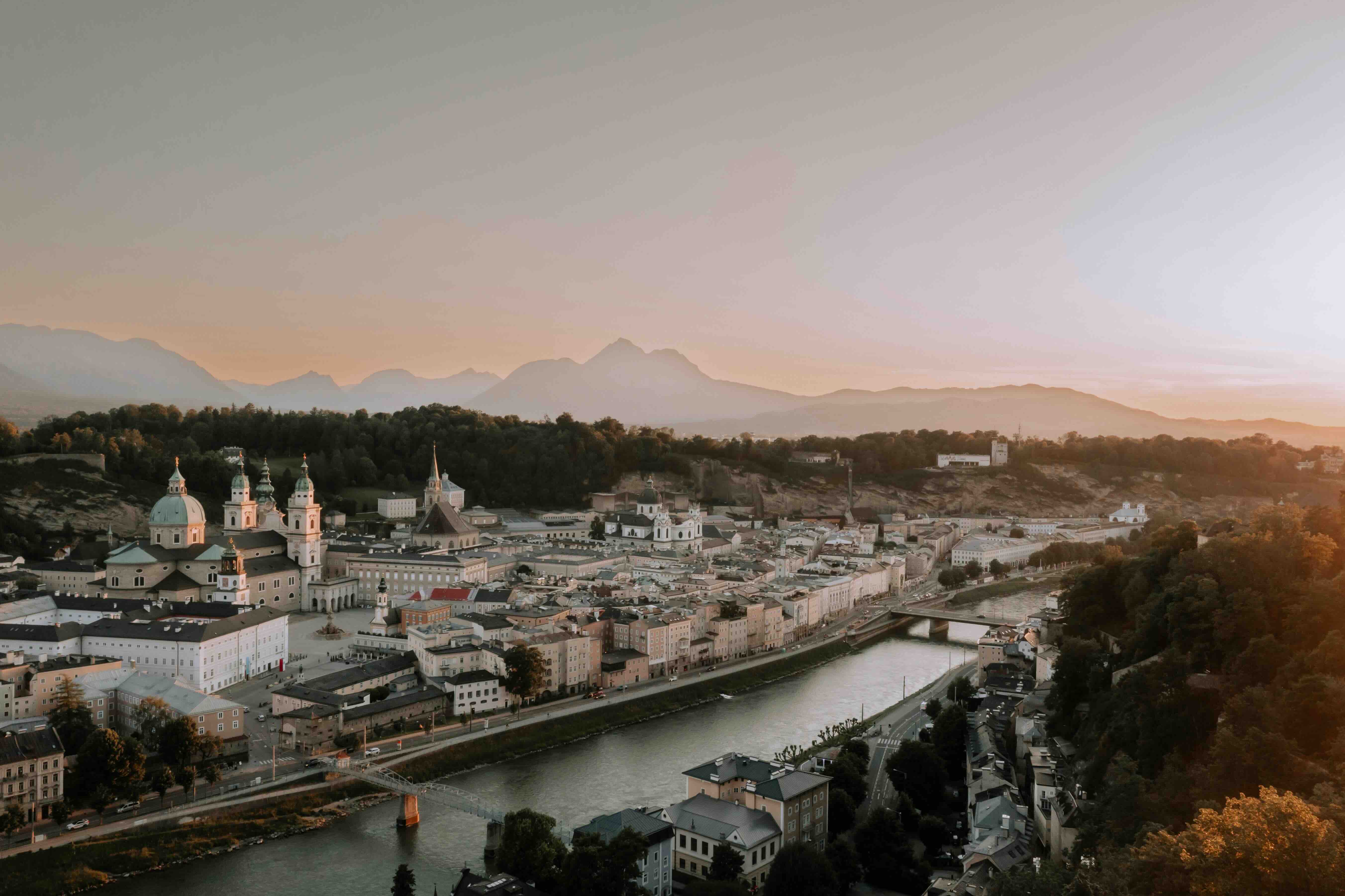
Vienna → Salzburg
~2h 25m · ÖBB Railjet / WESTbahn
The other way from Vienna: west to Salzburg
View RouteWhen reservation is mandatory, which side of the train has the views, and how to choose your class.
Interrail and the Swiss Travel Pass — when a pass beats point-to-point tickets and when it does not.
Vienna to Bratislava is the easiest international train journey in central Europe: about an hour, city to city, on flexible regional trains you never need to book. Take the Marchegg route to Bratislava hlavná stanica for the Old Town, consider ÖBB's Bratislava-Ticket for the return and the city's trams, and enjoy one of the continent's great day trips - two capitals in a single, effortless hour.
Back to all routes