Prague to Budapest by Train
The Direct Central Europe Link
Prague to Budapest is a direct rail journey across the heart of Central Europe: around 7 hours south-east from the Czech capital through Moravia and Slovakia to the banks of the Danube in Budapest, with no change of train. Fast intercity trains run roughly every two hours, city centre to city centre, and the route fits naturally into the classic Prague, Vienna and Budapest triangle.
This is a practical, destination-focused run rather than a scenic epic. The direct trains are operated jointly by the Czech, Slovak and Hungarian railways as railjet and EuroCity services, run with modern ComfortJet or Railjet trainsets, calling at Brno and Bratislava on the way. A private operator, RegioJet, also runs the city pair but by a different route via Vienna. This guide covers what matters: which trains run and which stations they use, reservations and passes, the night train, and how to reach the centre of Budapest when you arrive.
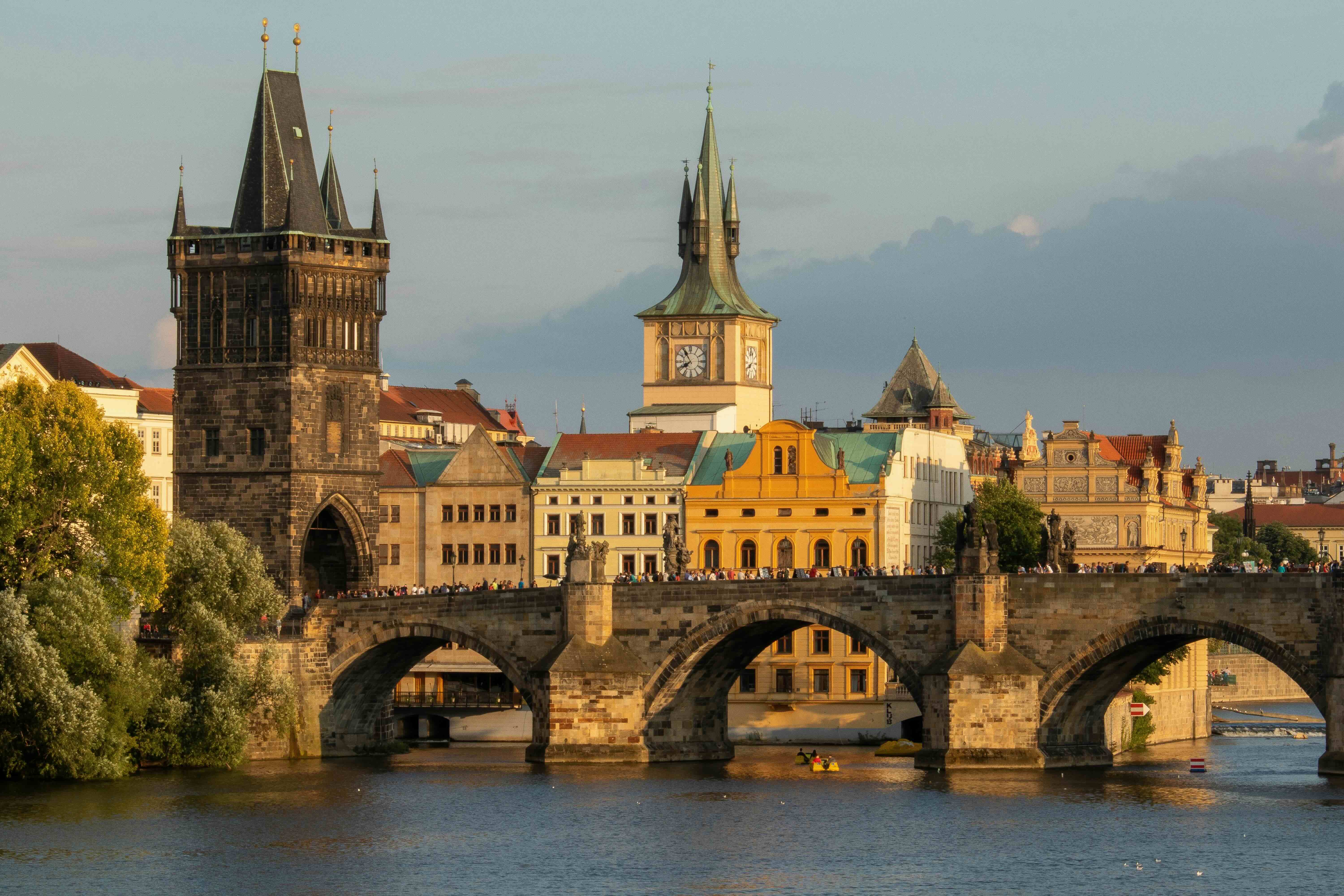
Part of the Prague - Vienna - Budapest triangle: This direct train is the third side of Central Europe's most popular rail triangle. Combine it with Prague to Vienna and Vienna to Budapest for an easy multi-city trip, all by train and all city centre to city centre.
Ready to book Prague to Budapest?
The direct daytime trains run roughly every two hours from Praha hlavní nádraží to Budapest in around 7 hours, operated jointly by ČD, ZSSK and MÁV as railjet and EuroCity services via Bratislava, run with modern ComfortJet or Railjet trainsets. Book early for the cheapest advance fares; a seat reservation is optional but worth adding on busy departures. RegioJet runs a couple of direct trains a day by a different route via Vienna, with a compulsory seat reservation included. Interrail is accepted on the ČD/ZSSK/MÁV trains with no compulsory reservation.
Railero may earn a small commission if you book via the link above, at no extra cost to you.
Departing Praha hlavní nádraží
Praha hlavní nádraží, Czechia · 50.083°N, 14.435°E
The journey begins at Praha hlavní nádraží, Prague's main station and the hub of Czech international travel, an Art Nouveau building whose grand original hall sits above a busy modern concourse. It is right in the centre, on metro line C (red) and a short walk or tram ride from the Old Town and Wenceslas Square, so it is easy to reach from anywhere in the city. A few trains also call at Praha-Holešovice on the northern edge of the centre, so glance at your ticket.
Boarding is relaxed, as it is across the region: there is no airport-style check-in, so arrive 10 to 15 minutes ahead, check the departure boards for your platform and coach, and step aboard. On the direct ČD, ZSSK and MÁV trains a seat reservation is optional, so with a flexible ticket or a rail pass you can simply take the next departure. The trains pull out south and settle quickly into the Bohemian countryside.
Prague–Budapest - Journey Facts
- RoutePraha hlavní nádraží → Budapest Nyugati, via Brno and Bratislava
- OperatorsČD, ZSSK and MÁV railjet and EuroCity; RegioJet via Vienna
- Journey timeAround 7 hours direct - check current schedules
- FrequencyRoughly every two hours by day; around seven direct trains
- DistanceAbout 610 km across Czechia, Slovakia and Hungary
- ReservationsOptional on the ČD/ZSSK/MÁV trains; compulsory on RegioJet
Through Bohemia and Moravia to Brno
Brno hlavní nádraží · 49.191°N, 16.613°E
Out of Prague the line runs south-east across Bohemia, calling at Pardubice, a handsome town on the Elbe, before crossing the low, rolling watershed into Moravia. This is quiet, productive country: wheat and sunflower fields, wooded hills, red-roofed villages and the occasional castle on a ridge. It is pleasant, unhurried travelling rather than dramatic scenery, and the train makes steady progress across the Czech heartland.
The main stop is Brno, the capital of Moravia and the country's second city, a lively university town with a cathedral and a hilltop fortress. Almost every fast train calls here. Beyond Brno the line runs on south through the vineyards of southern Moravia toward Břeclav, the last Czech town, where it meets the border and the routes toward Vienna and Bratislava divide.
This is the old road between Prague and the Danube, linking the Czech lands to Slovakia and Hungary in a single unhurried run across Central Europe.
Across the Border to Bratislava and the Danube
Bratislava hlavná stanica · 48.159°N, 17.107°E
At Břeclav the train crosses from Czechia into Slovakia. There is no drama to the border, since both countries are in the Schengen area, so there is normally no passport control and the train barely pauses. Soon it reaches Bratislava, the Slovak capital on the Danube, where the direct trains call at Bratislava hlavná stanica, the main station a little north of the old town. It is a useful interchange, and the point where the journey meets the great river that runs on to Budapest.
From Bratislava the line heads east into the Danube lowlands, crossing into Hungary and running across the flat, fertile country of the Little Hungarian Plain. The main Hungarian stop is Győr, a baroque city between Vienna and Budapest, before the train presses on toward the capital. It is level, open farmland most of the way, with the Danube never far to the south.
Worth Knowing
Arriving at Budapest Nyugati
Budapest Nyugati, Hungary · 47.511°N, 19.057°E
Most direct trains arrive at Budapest Nyugati, the grand western station on the Pest side, a soaring 1877 hall of iron and glass built by the Eiffel company whose train shed opens straight onto the Grand Boulevard. It is right in the city, so you step off into the heart of Pest. Some services use Budapest Déli on the Buda side instead, and RegioJet's via-Vienna trains use a Buda-side station too, so check which Budapest station is on your ticket.
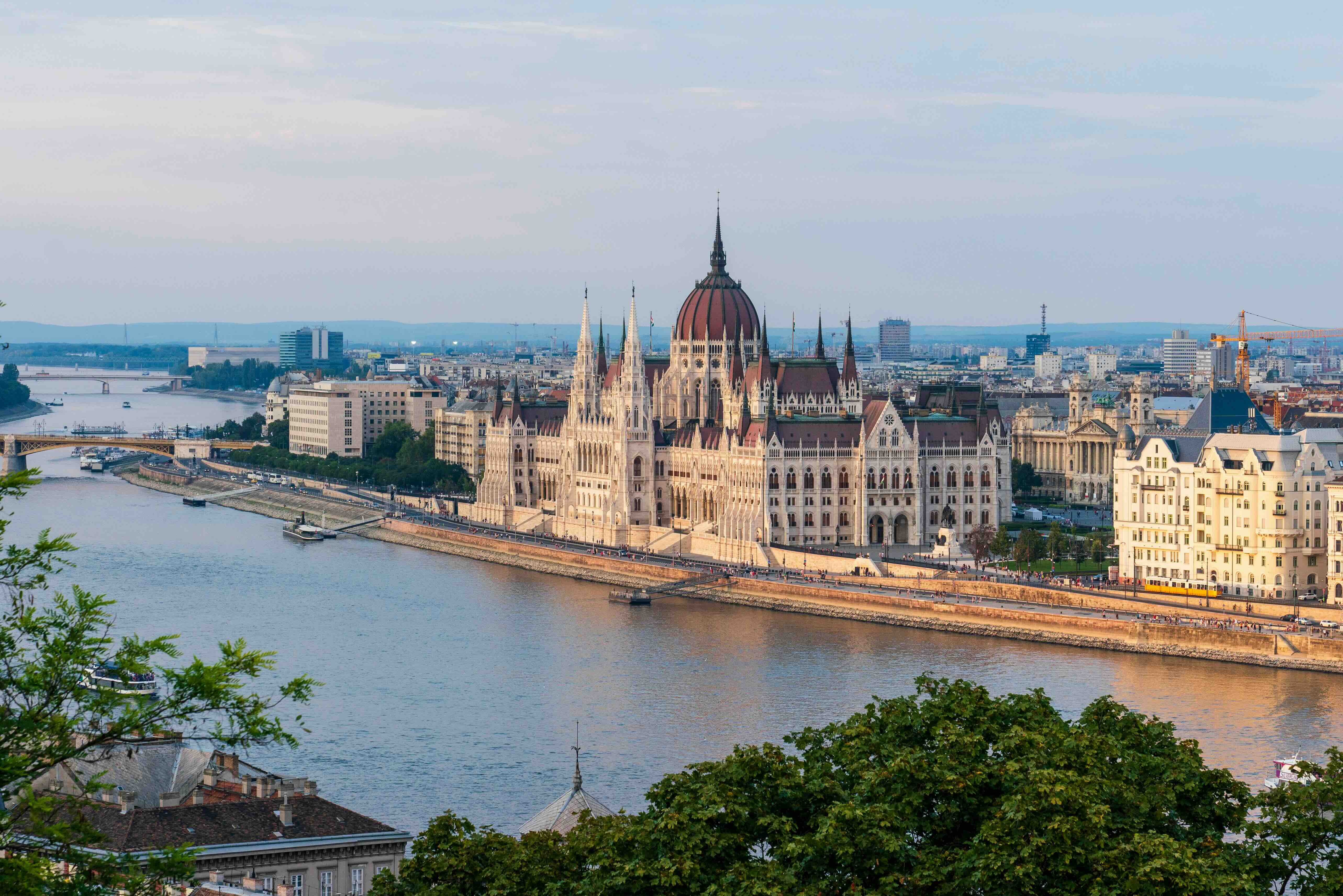
Getting around from Nyugati is easy. The station is on metro line M3 (blue) and served by trams and buses along the boulevard, and the centre is walkable. The great sights line up along the river a short ride or walk away: the Parliament and the Danube promenade on the Pest bank, the Chain Bridge across to Buda, and above it Buda Castle and the Fisherman's Bastion. Thermal baths, the Great Market Hall and the ruin bars are all within easy reach.
From Budapest Nyugati
The Trains: ČD, ZSSK and MÁV, or RegioJet
Who runs the route, and how they differ
The direct daytime trains are run jointly by the Czech, Slovak and Hungarian railways (ČD, ZSSK and MÁV) mostly as railjet services, run with the new ComfortJet or Railjet trainsets that ČD has introduced on the corridor, with a couple of EuroCity trains a day still operated by the Slovak railways. Which trainset runs on a given departure can vary, so it is best not to count on a specific one, but all are comfortable air-conditioned trains with first and second class and a cafe-bar or restaurant car. They run via Bratislava to Budapest Nyugati, roughly every two hours, and a seat reservation is optional.
RegioJet is the private alternative, and it works differently. It runs a couple of direct Prague to Budapest trains a day, but the other way, via Vienna rather than Bratislava, arriving at a different Budapest station on the Buda side. It is known for its tiered classes from low-cost to Business, included refreshments and at-seat service, and every RegioJet ticket includes a specific reserved seat, so a reservation is compulsory. Neither is universally better: the ČD/ZSSK/MÁV trains are more frequent and reservation-optional, while RegioJet can be keenly priced and takes a different route.
ČD/ZSSK/MÁV vs RegioJet
- RouteČD/ZSSK/MÁV via Bratislava · RegioJet via Vienna
- Budapest stationČD/ZSSK/MÁV: Nyugati (some Déli) · RegioJet: Buda side
- FrequencyČD/ZSSK/MÁV: roughly every 2 hours · RegioJet: a couple a day
- TrainsRailjet and EuroCity (ComfortJet or Railjet trainsets) · RegioJet own fleet
- ReservationsOptional on ČD/ZSSK/MÁV · compulsory on RegioJet
- Rail passesInterrail on ČD/ZSSK/MÁV, no reservation needed
The Night Train: EuroNight Metropol
Sleeping across Central Europe
There is also a direct night train. The EuroNight Metropol links Prague with Bratislava and Budapest overnight in both directions, run by Czech Railways, so you can travel while you sleep and save a hotel night. It carries sleeping cars with private cabins, couchette cars with simple berths, and ordinary seated coaches, so you can choose your level of comfort.
A reservation is compulsory on the night train, and you book your sleeper berth, couchette or seat together with your ticket, so it is worth booking ahead, especially for a bed in the sleeping car in summer. It is a genuinely useful option for linking the two cities without losing a day, and a comfortable, old-fashioned way to arrive in Budapest in time for breakfast.
Reservations, Passes, Tickets and the Border
The practical rules for the journey
Reservations are the key thing to understand, because they differ by operator. On the direct ČD, ZSSK and MÁV railjet and EuroCity trains a seat reservation is optional: you can board with any valid ticket and take an unreserved seat, though it is worth adding one on busy summer and weekend departures. Interrail is accepted on these trains with no compulsory reservation, which makes this an easy pass journey. RegioJet is the exception: its tickets always include an assigned seat, so a reservation is compulsory, and pass holders pay a separate RegioJet reservation. For the wider picture, see the rail passes and seat reservations guides linked below.
On tickets, the cheapest fares are the advance, train-specific ones sold by the railways (ČD, ZSSK, MÁV) and by RegioJet, so booking ahead saves money on a journey this long; flexible fares cost more but let you take any train. There is no need to split the journey into separate national tickets - a single international ticket covers the whole run. Luggage is easy: there is no strict weight limit, you carry your bags aboard and use the racks, so bring what you can manage and keep valuables with you.
On the border, Czechia, Slovakia and Hungary are all in the Schengen area, so there is normally no routine passport control and the train runs straight through. Occasional checks do happen, so carry a valid passport or national ID card and keep it reachable. On accessibility, Praha hlavní nádraží and Budapest Nyugati are large, staffed stations with lifts and step-free routes to the platforms, and boarding assistance is best booked in advance with the railway; access can vary by train and station, so arranging help ahead is the reliable approach.
Quick Tips
Travel flexibly: with a flexible ticket or a pass you can take any ČD/ZSSK/MÁV train - reservations are optional.
Book early for the fare: the cheapest advance fares are tied to a specific train and sell out, so book ahead for a long run like this.
Check your Budapest station: the direct trains use Nyugati (some Déli), while RegioJet via Vienna uses a Buda-side station - confirm before you travel.
Hotels in Budapest
Budapest rewards staying in central Pest near the Danube - close to the Parliament, the river promenade and the Chain Bridge across to Buda, a short tram or metro ride from Budapest Nyugati.
Budapest - on the Danube by the Chain Bridge
The restored Art Nouveau Gresham Palace on the Pest embankment, directly facing the Chain Bridge and Buda Castle across the river - Budapest's most celebrated address, in the heart of everything.
Budapest - central Pest, by Váci utca
A stylish, well-run boutique hotel in the middle of Pest near Váci utca and the Great Market Hall, with a rooftop bar - walkable to the river and a short ride from the station.
Budapest - central Pest
A dependable, fairly priced classic hotel with a grand old cafe, at the Astoria junction in central Pest - walkable to the river and old town and an easy ride from Nyugati.
Hotel links open Booking.com in a new tab.
Frequently Asked Questions
- Is there a direct train from Prague to Budapest?
- Yes. Direct daytime trains run roughly every two hours from Praha hlavní nádraží to Budapest, with no change needed. They are run by the Czech, Slovak and Hungarian railways (ČD, ZSSK and MÁV) as railjet or EuroCity services via Bratislava, using modern ComfortJet or Railjet trainsets. The private operator RegioJet also runs a couple of direct trains a day, but by a different route via Vienna.
- How long does the train from Prague to Budapest take?
- Around 7 hours on the direct daytime trains via Bratislava, with the fastest a little under 7 hours. It is about 610 km across three countries. Exact times vary by service, so check the current timetable when you book.
- Which stations do the trains use in Prague and Budapest?
- The direct trains leave from Praha hlavní nádraží, Prague's main station (a few also call at Praha-Holešovice). The ČD, ZSSK and MÁV trains arrive at Budapest Nyugati, the grand station on the Pest side built by the Eiffel company, with some using Budapest Déli. RegioJet's via-Vienna trains use a different Budapest station on the Buda side.
- Do I need a seat reservation from Prague to Budapest?
- On the direct ČD, ZSSK and MÁV railjet and EuroCity trains a seat reservation is optional. You can board with a valid ticket and take any unreserved seat, though a reservation is worth adding on busy summer and weekend departures. RegioJet is different: its tickets always include an assigned seat, so a reservation is compulsory there.
- Can I use an Interrail pass?
- Yes. Interrail passes are accepted on the direct ČD, ZSSK and MÁV trains between Prague, Bratislava and Budapest, with no compulsory reservation, so you can hop on and take an unreserved seat. Adding an optional reservation is sensible at busy times. On RegioJet a compulsory paid seat reservation applies even with a pass.
- Is there a night train from Prague to Budapest?
- Yes. The EuroNight Metropol links Prague with Bratislava and Budapest overnight in both directions, with sleeper cabins, couchettes and seats. A reservation is compulsory and you book your berth or seat with the ticket, so it is worth booking ahead, especially for a sleeper.
- Is the Prague to Budapest train scenic?
- It is a pleasant journey rather than a spectacular one. The line runs across the rolling farmland of Bohemia and Moravia, past Brno, then over the border into Slovakia and along the Danube lowlands through Bratislava and Győr to Budapest. The appeal is the ease of a direct city-centre to city-centre run across three countries rather than dramatic mountain scenery, and there is no strongly preferred side of the train.
- Do I need my passport or ID?
- Czechia, Slovakia and Hungary are all in the Schengen area, so there is normally no routine passport control on the train. Border checks can still happen from time to time, so carry a valid passport or national ID card and keep it reachable.
- Is flying faster than the train?
- A flight is quicker in the air, but the train wins on convenience: it runs city centre to city centre with no airport transfers, no check-in and no security queues, and you can walk around, work or sleep on board. For a journey that fits naturally into a Prague, Vienna and Budapest trip, the direct train is usually the easier choice overall.
Not sure if you need to reserve a seat?
Check this journey in Railero’s Seat Reservation Checker.
Continue Your Journey
Routes that pair naturally with this one — for building your European itinerary.
Vienna → Budapest
~2h 20m · ÖBB Railjet / RegioJet
The via-Vienna alternative: Vienna to Budapest
View Route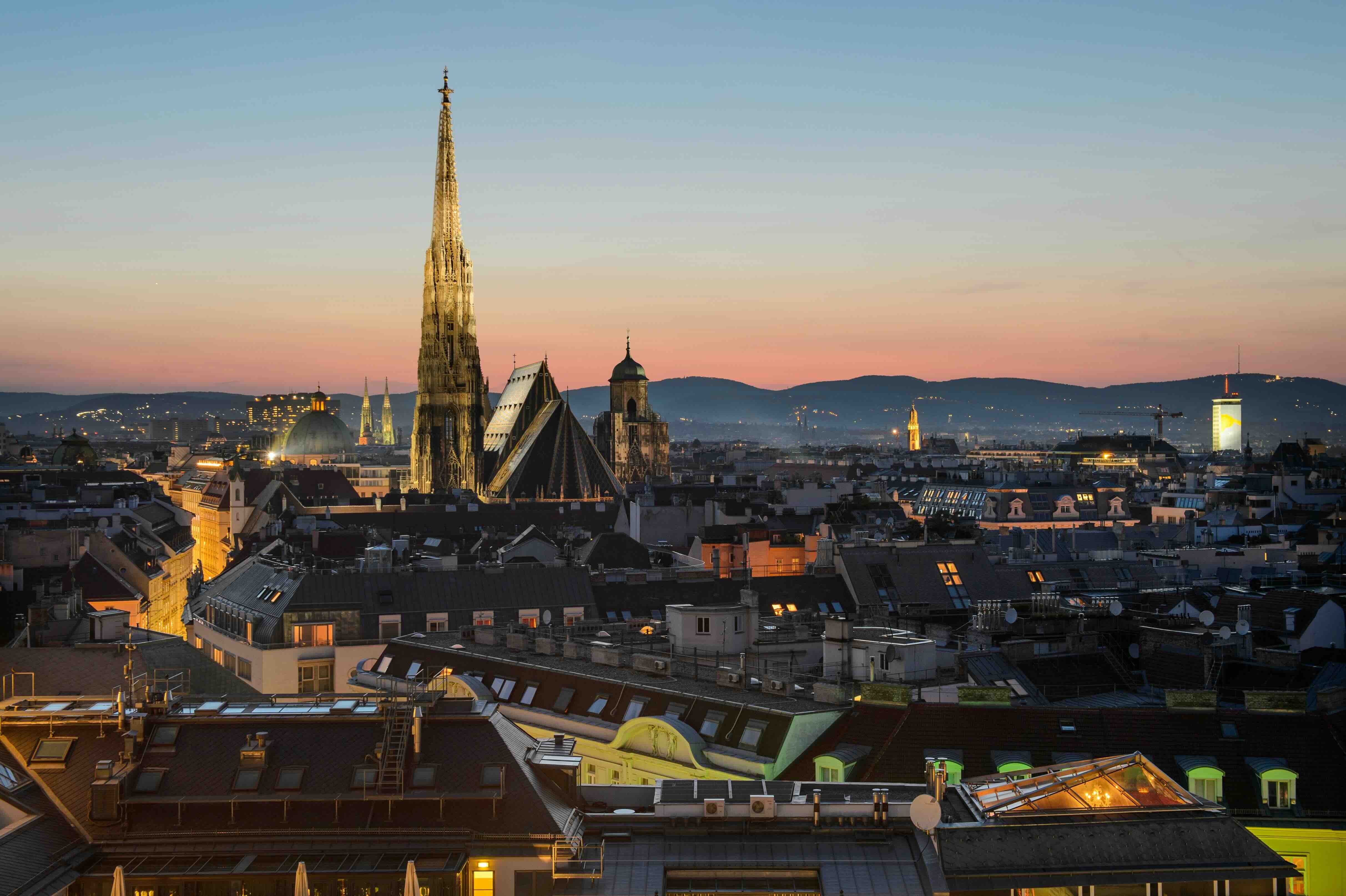
When reservation is mandatory, which side of the train has the views, and how to choose your class.
Interrail and the Swiss Travel Pass — when a pass beats point-to-point tickets and when it does not.
Prague to Budapest is the easy, essential Central European journey: around seven hours south-east on a direct train from one great capital to another, across Moravia, Slovakia and the Danube lowlands, city centre to city centre. Take a reservation-optional ČD, ZSSK or MÁV train by day, or the Metropol night train to save a hotel night, and treat it as the third side of the Prague, Vienna and Budapest triangle.
Back to all routes