Berlin to Prague
The EuroCity Valley Route
Four and a half hours on the EuroCity connects two of Europe's great capitals. The route follows the River Elbe through Germany's Saxony - past Baroque Dresden, through the dramatic sandstone gorges of Saxon Switzerland - before crossing into Bohemia and descending to Prague.
This is a journey shaped by water. The Elbe originates in the Czech mountains and flows north through Germany to the North Sea - and the Berlin–Prague railway follows it in reverse, upstream from Dresden into Bohemia. The result is one of the most scenically consistent rail routes in Central Europe: a continuous thread of river, sandstone, forest and medieval town woven through the landscape for the entire journey.
The time parity advantage: Berlin BER airport security, the 45-minute flight, and Prague airport transfers add up to roughly the same door-to-door time as the train - but the train arrives at a magnificent Art Nouveau station ten minutes from Old Town Square.
Ready to book Berlin → Prague?
Check live EC and railjet fares - direct services run throughout the day with no changes required. Seat reservation included on most cross-border services.
Railero may earn a small commission if you book via the link above, at no extra cost to you.
Train vs Plane — The Real Numbers
Both options take roughly the same door-to-door time. Adjust the fares below to see where the money goes.
Train costs
Flight costs
The EuroCity deposits you at Prague Hlavní nádraží — a 10-minute walk from Old Town Square. No airport queue, no security theatre, no €12 airport bus.
Berlin Hauptbahnhof - Europe's Largest Through-Station
Berlin, Germany · 52.525°N, 13.369°E
Berlin Hauptbahnhof opened in 2006 and is the largest through-station in Europe - a five-storey glass cathedral of movement where 300,000 passengers pass each day. The architecture is deliberately transparent: you can see every level from the atrium, and natural light fills the concourse from the curved glass roof above. It sits at the bend of the River Spree, equidistant from the Reichstag and the government quarter.
The Prague-bound EuroCity departs from the lower-level platforms, heading south through the former East Germany. The train picks up speed through the Brandenburg flatlands - an open, sandy landscape of birch forest and small lakes - before the first hints of Saxony begin to appear: red-brick industrial towns, denser agriculture, the land rising almost imperceptibly towards the south.
Berlin Hauptbahnhof is the most dramatic station in Europe - five storeys of glass above the River Spree.
Practical tips for Berlin Hbf
- PlatformsEC trains to Prague depart from the lower-level (U-Bahn level)
- ReservationSeat reservation recommended but not always required
- Wi-FiOnboard Wi-Fi on most EC services - variable quality
- Dining carBistro car available; Czech beer served after the border crossing
Dresden & the Elbe Sandstone Mountains
Dresden, Germany · 51.040°N, 13.732°E
Two hours south of Berlin, the train crosses into Saxony and arrives at Dresden Hauptbahnhof - the station for one of Europe's most beautiful Baroque cities. Dresden was famously firebombed in 1945 and subsequently rebuilt, and the result is a city that contains both a meticulously restored 18th-century skyline and a distinct layer of post-war architecture. The Frauenkirche, rebuilt from the rubble and reopened in 2005, dominates the view from the Elbe bridges.
South of Dresden, the landscape transforms. The Elbe enters its sandstone gorge - the Saxon Switzerland National Park - and the railway follows the river exactly. The rock formations here are genuinely extraordinary: pillars of sandstone rising 100 to 300 metres from the valley floor, eroded into overhangs, arches, and stacked plates. The light on the stone in late afternoon turns it the colour of dark honey.
Through the Elbe Sandstone gorge, the landscape achieves something close to the sublime - and your window seat is the best view in the valley.
The railway passes through Bad Schandau, the last German town before the Czech border, where the Elbe narrows and the cliffs press closer to the water. Then the border crossing into Bohemia - no passport control for EU and Schengen citizens, barely noticeable - and the town names begin to change. Děčín, on the Czech side, sits in a tight gorge below a castle. The valley widens north of Ústí nad Labem, and the approach to Prague begins across the Bohemian plain.
Prague Hlavní Nádraží - The Art Nouveau Gateway
Prague, Czech Republic · 50.083°N, 14.435°E
Prague Hlavní nádraží - "Main Station" - is one of the great railway terminals of Central Europe. The original Art Nouveau building, opened in 1909, is preserved as the station's formal entrance hall: a domed vault of tile, ironwork, and coloured glass that could pass for a Viennese Secessionist exhibition space. The functional platform areas are a later addition, but the original hall rewards the detour.
From the station, Wenceslas Square is a five-minute walk. The Old Town and Charles Bridge are 15 minutes on foot through the New Town - down Wenceslas Square and along Na Příkopě into the historic centre. The metro runs directly from the station (Line C, Hlavní nádraží stop) if the weather is poor. There is no airport transfer, no €12 bus, no 45-minute taxi queue.
From Praha Hlavní nádraží
Prague is among the most intact medieval cities in Europe - it escaped the aerial bombing that levelled Dresden, Warsaw, and Frankfurt, and the communist era preserved it from speculative redevelopment. The result is a city that still looks, in places, as it did in 1400: narrow lanes, Gothic churches, Renaissance arcades, and the Charles Bridge's thirty Baroque saints watching over the Vltava.
Hotels near Prague's Old Town
Prague Hlavní nádraží sits a ten-minute walk from Wenceslas Square and the Old Town. The stays below are all within easy reach of the station, between the platforms and the medieval centre.
Old Town - by the Municipal House
A landmark Art Nouveau hotel beside the Municipal House and Powder Tower, an easy walk from Hlavní nádraží into the Old Town.
Old Town - near the Powder Tower
An Old Town hotel steps from the Powder Tower and Náměstí Republiky, a short walk from the main station.
Senovážné náměstí - near Hlavní nádraží
A design hotel a couple of minutes' walk from Hlavní nádraží, between the station and the Old Town.
Hotel links open Booking.com. Railero may earn a commission on bookings at no extra cost to you.
Frequently Asked Questions
- Do I need to reserve a seat on the Berlin to Prague EuroCity?
- Seat reservations are optional on the direct EuroCity trains, but strongly recommended in summer, at weekends and around holidays, when the cross-border services fill up. Off-peak you can usually travel comfortably without one.
- Is the Berlin to Prague train covered by Interrail?
- Yes. The direct EuroCity services are covered by Interrail with no compulsory reservation, so pass holders can simply board. Adding an optional seat reservation is still wise for busy departures.
- When does the scenic Elbe valley appear, and where should I sit?
- The highlight is the Elbe Sandstone gorge south of Dresden, in roughly the last hour before the Czech border. The line hugs the river and crosses it more than once, so a window seat on either side works - just be seated and watching after Dresden.
- Is there a dining car on the Berlin to Prague EuroCity?
- Yes, the EuroCity trains carry a restaurant or bistro car serving hot meals, snacks and drinks for the full journey. Czech beer and cuisine typically appear on the menu once the train crosses the border.
- Are the Berlin to Prague trains direct?
- Yes. Direct EuroCity trains run right through from Berlin to Prague with no change of train, following the Elbe via Dresden. Several services operate through the day, so you can pick a departure to suit your plans.
- Which Prague station does the train arrive at?
- Trains terminate at Praha hlavní nádraží (Prague Main Station), a landmark Art Nouveau terminus a short walk from Wenceslas Square and the Old Town, with a metro station on site. There is no airport transfer to factor in.
- Is the train better than flying from Berlin to Prague?
- For most travellers, yes. Once you add airport transfers, security and waiting time, the direct train is competitive on total door-to-door time while dropping you in the centre of both cities - and it delivers the Elbe gorge and Dresden along the way.
Continue Your Journey
Routes that pair naturally with this one — for building your European itinerary.
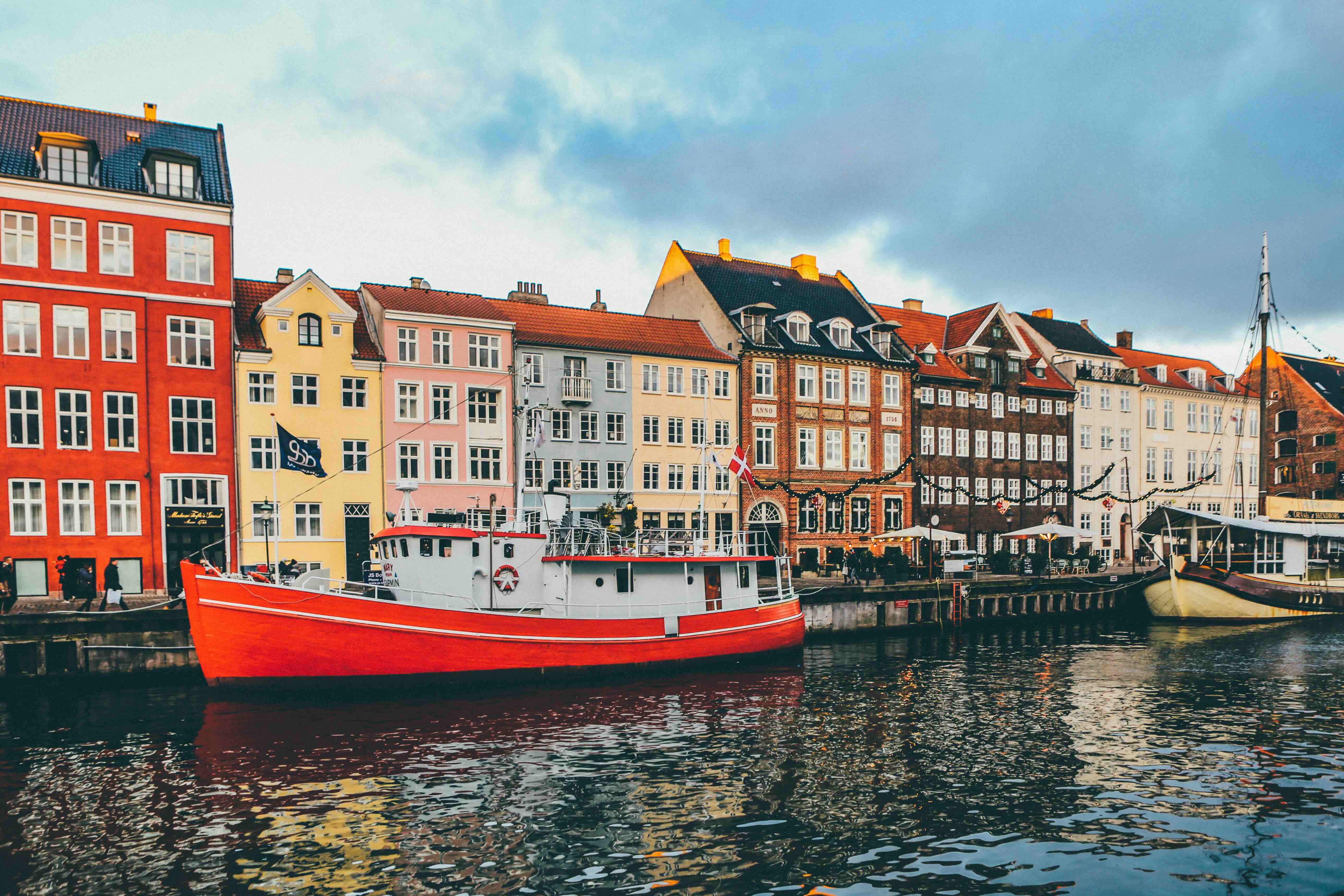
Prague → Copenhagen
around 11h · ComfortJet (ČD · DB · DSB)
The full corridor north: Prague to Copenhagen by ComfortJet
View Route
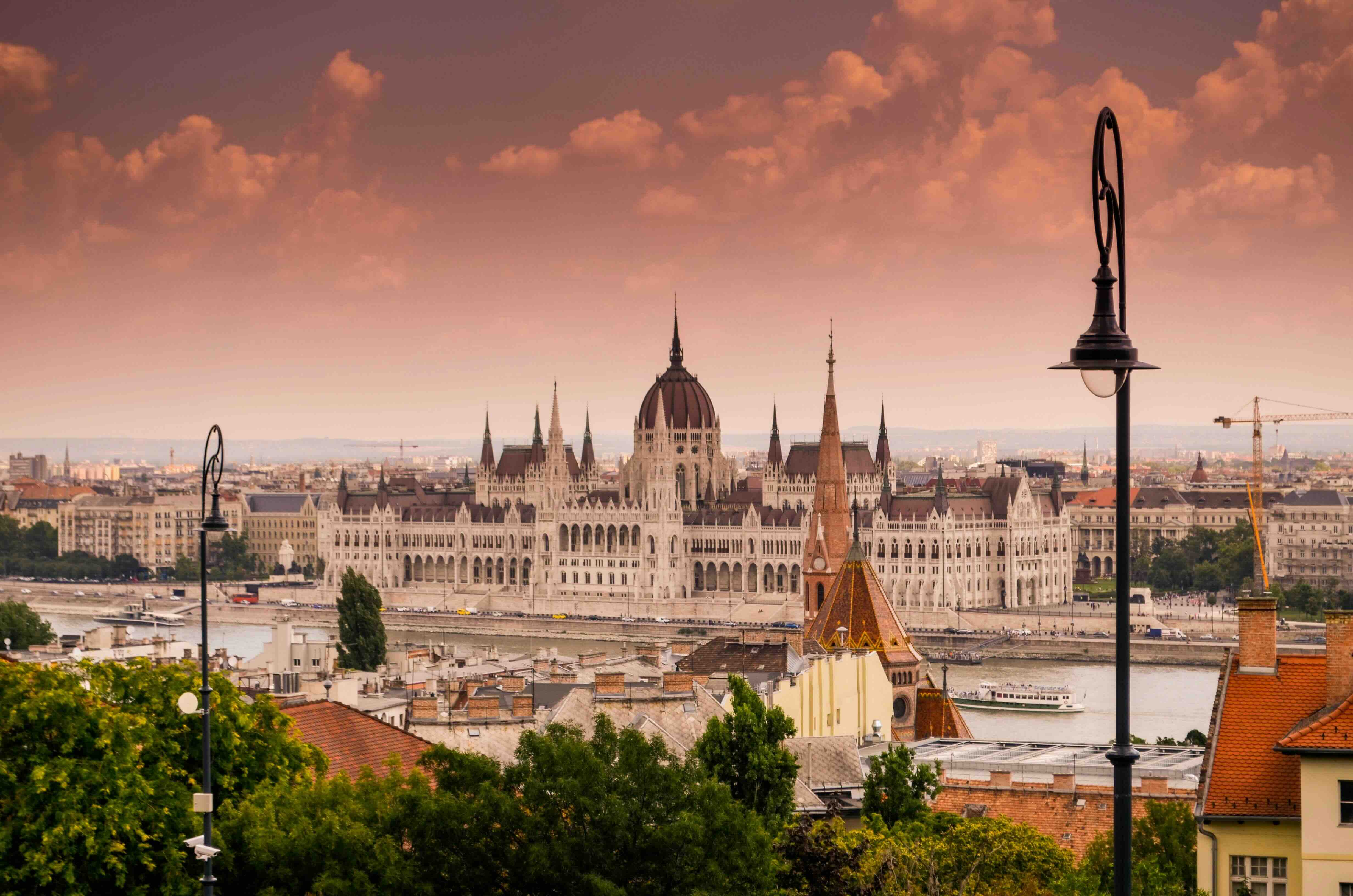
Prague → Budapest
~7h · ČD Railjet / EuroCity
Continue all the way to Budapest by direct train
View RouteBerlin to Prague by EuroCity takes the same time as flying when you factor in airport transfers - and delivers the Elbe Sandstone gorge, Dresden, and an Art Nouveau station in the heart of the old city.