Prague to Copenhagen by Train
The Direct Daytime ComfortJet
Prague to Copenhagen is now a single daytime train: around eleven hours north from the Czech capital, down the Elbe to Dresden, across Germany through Berlin and Hamburg, then overland into Denmark via Odense and the Great Belt to Copenhagen, with no change of train. It is the direct ComfortJet, launched in 2026, and it links Railero's Central European network straight into Scandinavia.
This is one of the most significant new rail journeys in Europe. Launched in 2026, the direct ComfortJet restores a Prague to Copenhagen link that had been missing for over a decade, and it is run jointly by three national railways: ČD in the Czech Republic, DB in Germany and DSB in Denmark. This guide covers the corridor city by city, the ComfortJet trains, reservations and Interrail, booking, and the practical points of a full-day journey across three countries. Because the service is new, treat times and frequencies as approximate and check current schedules.
One direct daytime train across three countries: The ComfortJet runs right through from Prague to Copenhagen via Dresden, Berlin and Hamburg in around eleven hours, with no change. It is a full-day journey rather than a quick hop, so plan around the departure time and check the current timetable.
Ready to book Prague to Copenhagen?
The direct train is the ComfortJet, run jointly by ČD, DB and DSB, leaving Praha hlavní nádraží and running via Dresden, Berlin and Hamburg into Denmark and on to København H in around eleven hours. Deutsche Bahn (bahn.com) is usually the most reliable channel for the whole international run and for passholder seat reservations; ČD and DSB sell it too, and comparison sites such as Omio and Trainline show fares in one place. Booking opens a few months ahead, so book early for the cheapest advance fares. For most of the year a seat reservation is optional but recommended, becoming compulsory on the Danish legs in the peak summer window, and Interrail is accepted.
Railero may earn a small commission if you book via the link above, at no extra cost to you.
Departing Praha hlavní nádraží
Praha hlavní nádraží, Czech Republic · 50.083°N, 14.435°E
The journey begins at Praha hlavní nádraží, Prague's main station, a grand Art Nouveau building right in the centre of the city and the hub of the Czech network. It is easy to reach on the metro line C and on foot from the old town, and it has the usual ticket office, shops, left luggage and services. The direct ComfortJet to Copenhagen is a limited daily departure, so the thing to get right is the time; check the boards and your ticket, because on a full-day journey a missed departure is a long wait.
Boarding is relaxed, as it is across the region: there is no airport-style check-in, so arrive 10 to 15 minutes ahead, check the boards for your platform and coach, and step aboard. For most of the year a seat reservation is optional, so with a valid ticket or a rail pass you can take a seat, though on such a long, popular train it is worth reserving. The train pulls out north, and within the hour it is following the Elbe down toward the German border.
Prague–Copenhagen - Journey Facts
- Direct routePraha hlavní nádraží → København H, via Dresden, Berlin and Hamburg
- TrainComfortJet, direct daytime service, no change
- OperatorsJoint ČD, DB and DSB service
- Journey timeAround 11 hours direct - check current schedules
- FrequencyTypically two direct trains each way per day, with an extra in summer
- ReservationsOptional most of the year, compulsory on the Danish legs in peak summer
Down the Elbe to Dresden, Berlin and Hamburg
Dresden, Berlin and Hamburg · 52.525°N, 13.369°E
The first highlight comes early. North of Prague the line follows the Elbe through Ústí nad Labem and into the Elbe sandstone country, crossing the German-Czech border near Bad Schandau in the heart of what is known as Saxon Switzerland, a gorge of wooded crags and river bends that is the scenic best of the German leg. Beyond it the train reaches Dresden, the Baroque capital of Saxony, rebuilt around the Frauenkirche above the river, and a stop on the way rather than a change.
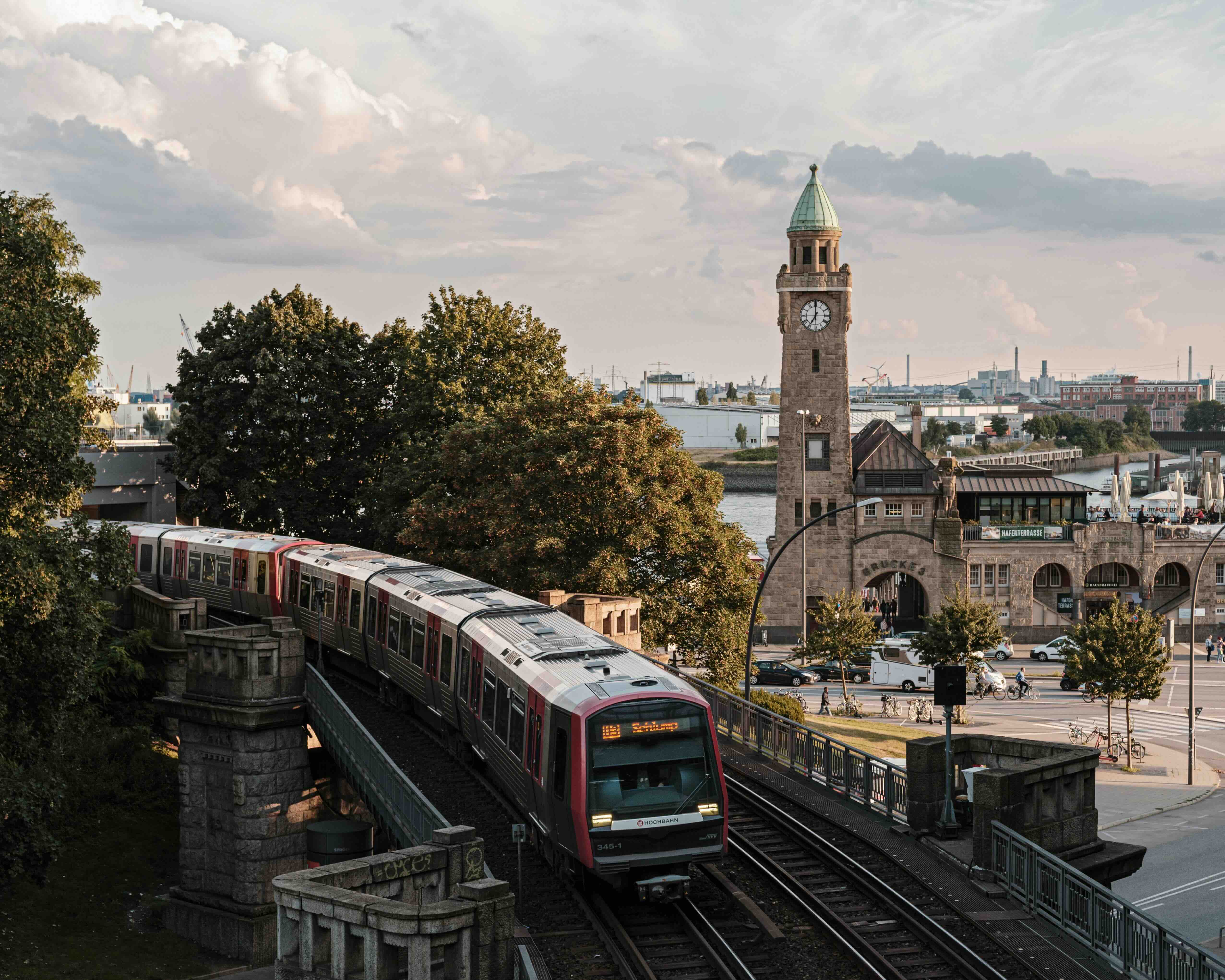
From Dresden the ComfortJet runs north across the plain to Berlin, calling at Berlin Hauptbahnhof, the vast glass hub in the centre of the German capital and the natural break point of the whole journey. It then turns north-west on the fast, level Berlin to Hamburg line, one of the busiest in Germany, to Hamburg Hauptbahnhof, the great port city on the Elbe. Both Berlin and Hamburg are full stops on the route, which makes the corridor useful for shorter city-to-city hops as well as the full run north.
The run down the Elbe through Saxon Switzerland, from Bohemia into Saxony, is the scenic highlight of the German half: a river gorge of sandstone crags best seen by day.
Overland into Denmark, via Odense and the Great Belt
Jutland, Odense and the Great Belt · 55.404°N, 10.387°E
North of Hamburg the train crosses into Denmark the overland way, up through Schleswig-Holstein and across the German-Danish land border near Padborg. There is no ferry: through trains stopped using the old Puttgarden to Rødby train ferry in 2019, so the route now runs the long way round up the Jutland peninsula. Both countries are in the Schengen area, so the border is normally open, though occasional identity checks are possible, so keep your travel documents to hand.
In Denmark the line runs up Jutland and crosses onto the island of Funen to Odense, Hans Christian Andersen's city and the main Danish stop on the way. From there it crosses the Great Belt Fixed Link, the long rail bridge and tunnel over the strait between Funen and Zealand, which is the distinctive moment of the Danish leg, before running in across Zealand to Copenhagen. It is a steady, quietly scenic finish, water and low green country rather than mountains.
Worth Knowing
Arriving at København H
København H (Copenhagen Central), Denmark · 55.673°N, 12.564°E
The train arrives at København H, Copenhagen Central, the main station right in the heart of the Danish capital beside the Tivoli Gardens and a short walk or one metro stop from the old town. It is a handsome, busy station with the full range of services, and it is the hub of the Danish network and the gateway on into Sweden. After a full day on the train, it is an easy arrival: you step out into the centre of the city.
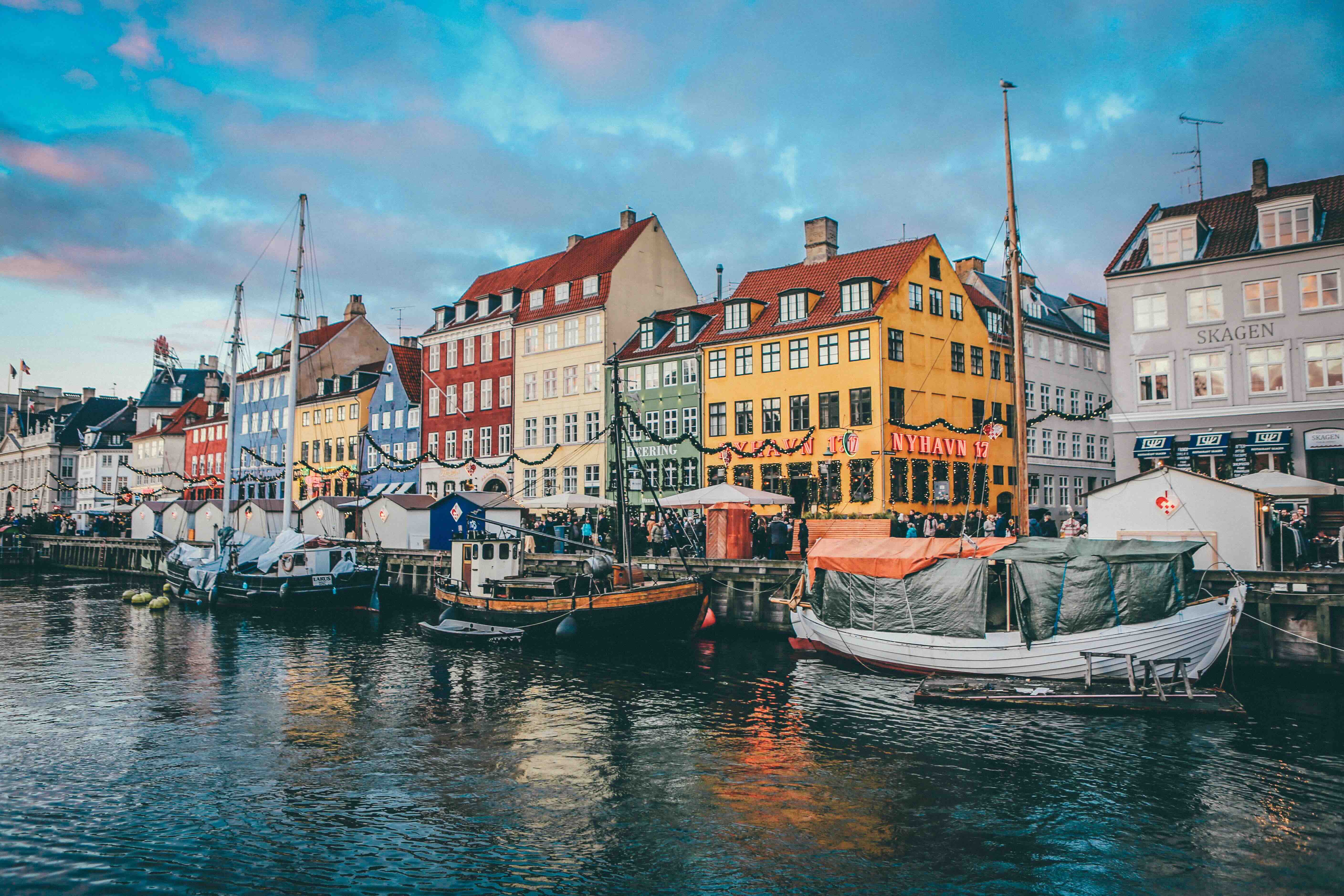
Copenhagen rewards arriving centrally. A short walk brings you to the pedestrian Strøget, the colourful Nyhavn waterfront and the harbour, with the metro, harbour buses and the city's famous cycling for getting further afield. The station is also where the Scandinavian network opens up: onward trains cross the Øresund to Malmö and run on to Stockholm, so Prague to Copenhagen makes a natural first leg of a longer journey north.
From København H
The Train: ČD's ComfortJet
Who runs it, and what it is like
The direct train is run with ČD's ComfortJet, the Czech railway's modern long-distance trainset, on a service operated jointly with DB in Germany and DSB in Denmark; staff change with the country, while the dining crew stays with the train. It is a comfortable, conventional long-distance train rather than a very high-speed one, with first and second class, air conditioning and a restaurant car serving hot and cold food along the way. On a journey of around eleven hours, the comfort of the train is a real part of the appeal.
The ComfortJet is well equipped for a long day: there is Wi-Fi and an onboard entertainment portal, power and USB sockets at the seats, step-free access with wheelchair spaces and accessible toilets, spaces for bicycles, and dedicated family areas for travelling with children. Because it is a new service run across three networks, small details and timings can still be adjusted, so it is best to check the current schedule and onboard information for your date rather than trusting a fixed pattern.
The ComfortJet at a glance
- TrainČD ComfortJet, direct daytime service via Berlin and Hamburg
- OperatorsJoint ČD (Czech), DB (Germany) and DSB (Denmark)
- RoutePrague, Ústí nad Labem, Dresden, Berlin, Hamburg, Odense, Copenhagen
- FrequencyTypically two direct trains each way per day, with an extra in summer
- On boardFirst and second class, restaurant car, Wi-Fi, power sockets, bike and family spaces
- AccessibilityStep-free access with wheelchair spaces and accessible toilets
Reservations, Passes, Tickets and Borders
The practical rules for the run into Scandinavia
Reservations follow a seasonal pattern worth understanding. For most of the year a seat reservation is optional but strongly recommended, because these trains are popular and a full day standing is no fun. On the cross-border legs into Denmark a reservation becomes compulsory during the peak summer window, roughly from late June to the middle of August. Because this is a new service and the exact dates can change, check the current reservation requirement when you book. Interrail passes are accepted; outside the compulsory window a reservation is optional, but on such a long international journey it is well worth reserving ahead, and passholder seats come from a limited quota. For the wider picture, see the rail passes and seat reservations guides linked below.
On tickets, the simplest approach is to book the whole run on one international ticket rather than splitting it by country. Deutsche Bahn (bahn.com) is generally the most reliable channel for the full Prague to Copenhagen itinerary and for passholder seat-only reservations, and ČD and DSB sell it too; comparison sites such as Omio and Trainline are a convenient way to see fares and book in one place. Booking opens a few months ahead, and the cheapest advance fares are limited and sell out, so book early for the best price. Luggage is easy: there is no airline-style check-in, so you carry your bags aboard and use the racks.
On borders, the Czech Republic, Germany and Denmark are all in the Schengen area and the European Union, so ordinary internal border controls are generally absent and the train is not routinely checked. Temporary internal checks are possible, so carry the valid travel documents your nationality or status requires and keep them reachable. Denmark uses the Danish krone rather than the euro, so it is worth having a card that works there or a little local cash for the Copenhagen end. On accessibility, both main stations are large and staffed with step-free access, and boarding assistance is best booked in advance with the railway.
Quick Tips
Plan around the departure time: there are only a couple of direct trains a day, so note the time and check the current schedule before you travel.
Reserve ahead in summer: a reservation becomes compulsory on the Danish legs in the peak summer window, and is worth having year-round on this long train.
Think of it as a day out: around eleven hours across three countries, so bring something to read, use the restaurant car and enjoy the Elbe and the Great Belt by day.
Hotels in Copenhagen
Copenhagen rewards staying central, near København H, Tivoli and the old town, all within easy reach of the station on foot or by metro.
Copenhagen - opposite København H
A landmark hotel in the grand former central post office directly across from the main station, with a courtyard and rooftop pool, ideal for arriving off the train and stepping straight into the centre.
Copenhagen - Tivoli Gardens
A small, romantic luxury hotel in the Moorish-style Nimb building inside Tivoli Gardens, a short walk from the station and right at the heart of the city.
Copenhagen - near the station
A smart, well-priced modern hotel a short walk from København H and the waterfront, a practical, good-value base for the trains and the centre.
Hotel links open Booking.com. Railero may earn a commission on bookings at no extra cost to you.
Frequently Asked Questions
- Is there a direct train from Prague to Copenhagen?
- Yes. A direct daytime ComfortJet runs right through from Prague to Copenhagen via Dresden, Berlin and Hamburg, with no change of train. The service was launched in 2026 and is run jointly by the Czech, German and Danish railways. It restores a direct Prague to Copenhagen rail link that had been missing for over a decade.
- How long does the train from Prague to Copenhagen take?
- Around eleven hours end to end for the roughly 1,000 km via Germany. It is a full-day journey rather than a quick hop, so it suits travellers who want a scenic, no-fly day across three countries. Treat the time as approximate and check the current timetable for your date.
- How often does it run?
- Typically two direct trains each way per day through the year, with an additional daytime departure added in the summer season. Because the frequency is limited, it is worth planning around the departure times and checking current schedules, especially as this is a new service whose timetable may still be adjusted.
- Does it stop in Berlin and Hamburg?
- Yes. The direct train runs via Dresden, Berlin and Hamburg, and also calls at Ústí nad Labem in the Czech Republic and Odense in Denmark. Berlin Hauptbahnhof and Hamburg Hauptbahnhof are both served, which makes the route useful for city-to-city hops along the corridor as well as the full Prague to Copenhagen run.
- Do I need a seat reservation?
- For most of the year a seat reservation is optional but strongly recommended, because these trains get busy. On the cross-border legs into Denmark a reservation becomes compulsory during the peak summer window, roughly from late June to mid-August. Because the exact dates and rules can change, check the current reservation requirement when you book.
- Can I use an Interrail pass?
- Yes. Interrail passes are accepted on the service. Outside the summer peak a reservation is optional, so you can board and take an unreserved seat, but it is worth reserving ahead on such a long, popular international journey. During the compulsory summer window passholders also need a reservation. Passholder seats come from a limited quota, so book early. See the rail passes and seat reservations guides linked below.
- Where can I book the journey?
- The through journey can be booked with the operating railways, and Deutsche Bahn (bahn.com) is usually the most reliable planner for the full Prague to Copenhagen itinerary and for passholder seat-only reservations; Czech Railways (ČD) and Danish Railways (DSB) sell it too. Comparison sites such as Omio and Trainline are a convenient way to see fares and book in one place. Booking generally opens a few months ahead, so book early for the cheapest advance fares.
- Which stations does the train use in Prague and Copenhagen?
- The train leaves from Praha hlavní nádraží, Prague's main station in the centre of the city, and arrives at København H (Copenhagen Central), right by Tivoli and a short walk or metro ride from the old town. Both are central main stations, so there is no awkward out-of-town airport-style transfer at either end.
- Is there food, Wi-Fi and power onboard?
- Yes. The service uses ČD's modern ComfortJet trainsets, with first and second class, a restaurant car serving hot and cold food, Wi-Fi and power and USB sockets at the seats. There are also step-free access with wheelchair spaces, bicycle spaces and dedicated family areas, which makes the long day more comfortable.
- How does the train reach Denmark, and is there a ferry?
- There is no ferry. From Hamburg the train runs overland up Jutland, crossing the German-Danish land border near Padborg, then continues via Odense and across the Great Belt Fixed Link onto the island of Zealand and into Copenhagen. Both Germany and Denmark are in the Schengen area, so borders are normally open, though occasional identity checks are possible, so carry valid travel documents.
Not sure if you need to reserve a seat?
Check this journey in Railero’s Seat Reservation Checker.
Continue Your Journey
Routes that pair naturally with this one — for building your European itinerary.
Hamburg → Copenhagen
~4h 40m · EuroCity (DSB · ČD)
The final leg into Scandinavia: Hamburg to Copenhagen
View Route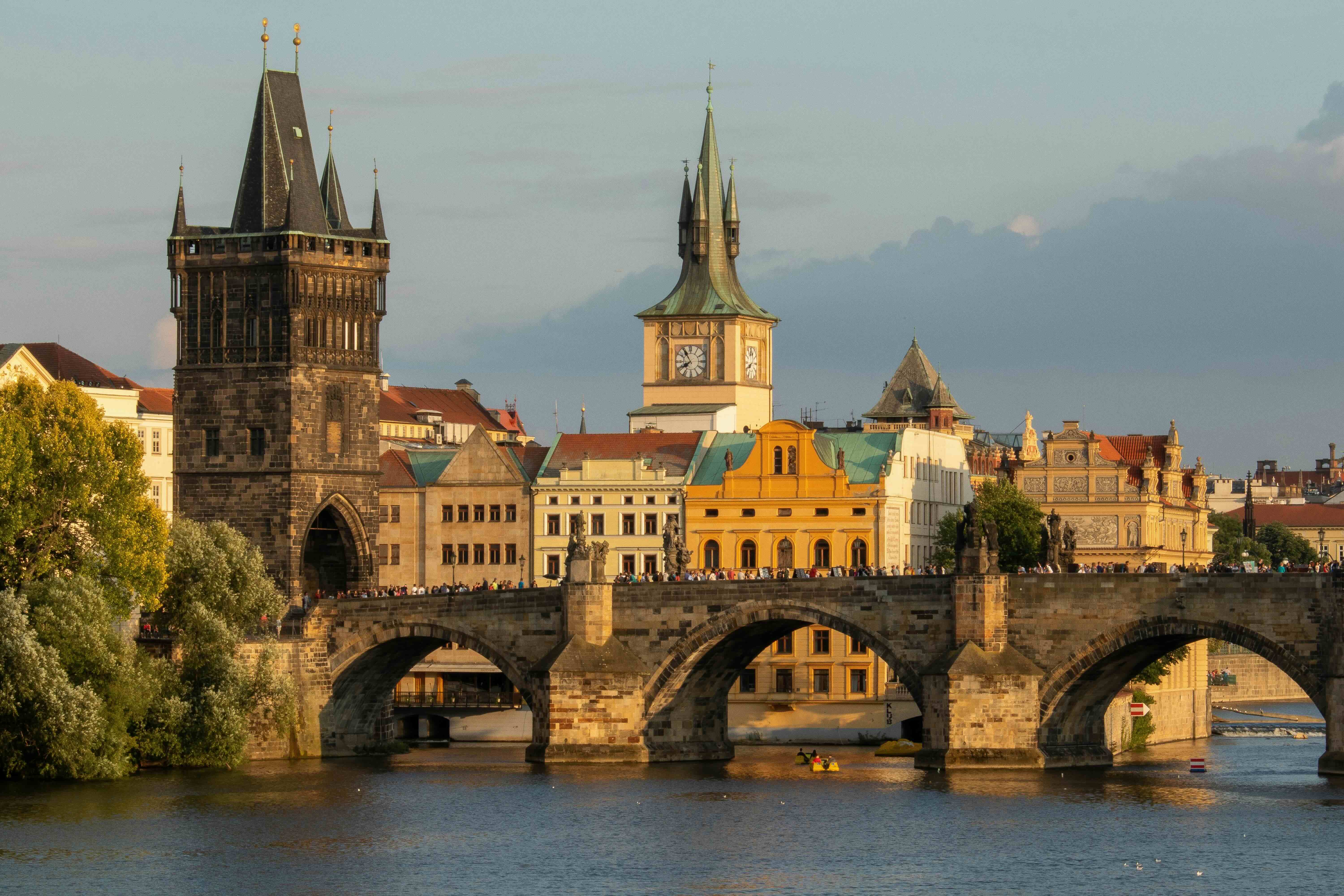
Prague to Copenhagen is the new way straight into Scandinavia: around eleven hours on the direct daytime ComfortJet, down the Elbe through Saxon Switzerland to Dresden, across Germany through Berlin and Hamburg, then overland into Denmark via Odense and the Great Belt to the heart of Copenhagen. Travel by day for the river and the crossing, reserve a seat for the long run, and treat it as the northern arm of Railero's Central European network, with Stockholm an easy onward step across the Øresund.