Hamburg to Copenhagen by Train
Germany to Scandinavia by Rail
Hamburg to Copenhagen is the direct rail link from Germany into Scandinavia: a comfortable EuroCity in around 4 hours 40 minutes, north across Schleswig-Holstein, over the border into Denmark, and across the great bridges of the Belts to the Danish capital. It is the easy, flying-free way to reach the north - and, coming from Berlin, the natural continuation of the journey that carries you from the heart of Germany all the way to the gateway of Scandinavia.
This is a route that has changed. Until December 2019 the through trains famously rolled aboard a ferry across the Fehmarn Belt; today they run entirely overland, up through Jutland and across the islands of Denmark on two of Europe's most impressive bridge-and-tunnel crossings. It is a calm, spacious journey rather than a dramatic one, but the Great Belt crossing is a genuine highlight, and Copenhagen at the end is not just a destination but a hub - the doorway on to Malmö, Gothenburg and Stockholm. This guide covers the current route in full: the trains, the reservations, the border, the crossings and the onward connections into Sweden.
From Berlin, this is the second leg north: Berlin to Hamburg in around 1h 45m, then Hamburg to Copenhagen in around 4h 40m - a comfortable day's travel from the German capital into Scandinavia, city centre to city centre, with no airport and no flight.
Ready to book Hamburg to Copenhagen?
Direct EuroCity trains run from Hamburg Hauptbahnhof to København H around eight times a day in about 4h 40m. As of 2026 they use modern DSB Talgo trains, with Czech Railways ComfortJet trains on some services - both with first and standard class, wifi, power and catering. A seat reservation is usually optional but strongly recommended, and compulsory in peak summer, so booking ahead is wise. Interrail is accepted, with a reservation booked separately through DSB or Deutsche Bahn.
Railero may earn a small commission if you book via the link above, at no extra cost to you.
Departing Hamburg Hauptbahnhof
Hamburg Hauptbahnhof, Germany · 53.553°N, 10.007°E
The journey north begins at Hamburg Hauptbahnhof, the busiest station in Germany and the hub of the country's northern network - a grand 1906 hall of iron and glass in the heart of the city, fully equipped and largely step-free. The direct trains for Copenhagen leave from here (a few also call at Hamburg-Altona), so it is a simple place to start: U-Bahn and S-Bahn lines run from beneath and beside the station, and the harbour and centre are close.
Boarding is relaxed - there is no airport-style check-in, so arrive 15 to 20 minutes ahead, check the departure boards for your platform and coach, and step aboard. It is worth having a reserved seat for this international service, especially in summer, and worth checking the platform carefully: the Copenhagen train is a proper long-distance EuroCity, not a regional service, and it fills up. Then it pulls out north, and Germany's far north begins to slide past.
Hamburg–Copenhagen - Journey Facts
- RouteHamburg Hbf → København H, overland via Jutland and the Great Belt
- OperatorsDSB (Danish Railways) Talgo and ČD ComfortJet - EuroCity trains
- Journey timeAround 4h 40m to 5h direct
- FrequencyAround eight direct trains a day each way - timetable-dependent
- StationsHamburg Hbf to København H (Copenhagen Central), both central
- ReservationsUsually optional but recommended; compulsory in peak summer
Across Schleswig-Holstein to the Border
Rendsburg and the Kiel Canal · 54.305°N, 9.665°E
The first stage runs north through Schleswig-Holstein, Germany's northernmost state - flat, green, watery country of fields, farms and big skies between the North Sea and the Baltic. The one genuine set-piece here is Rendsburg, where the line crosses the Kiel Canal on the great Rendsburg high bridge, a soaring iron viaduct from 1913: to gain enough height for ships to pass beneath, the railway spirals down in a huge loop, and for a few minutes the train is high above the busy canal with the town below.
Beyond Rendsburg the line runs on through Schleswig and Flensburg, the last German towns, and crosses the frontier into Denmark at Padborg. There is no drama to the crossing - both countries are in the Schengen area, so there is normally no passport control and the train barely pauses - but the signs, the language and the look of the land change, and you are in Scandinavia.
This is the old road to the north, the land bridge between the German plains and the Danish islands; the railway has carried travellers this way for a century and a half.
Through Jutland and Funen
Odense, Funen · 55.404°N, 10.387°E
Into Denmark the train runs up through Jutland, the Danish mainland, calling at Kolding before reaching the first of the great crossings: the Little Belt bridge, which carries the line off the mainland and onto the island of Funen. Funen is the green, gently rolling garden island in the middle of Denmark, and its capital is Odense - the birthplace of Hans Christian Andersen, and the main Danish stop on the route.
This is calm, pastoral country: neat farmland, red-roofed villages, wind turbines turning on the horizon, and the sea never far away. Denmark is a nation of islands stitched together by bridges and tunnels, and the pleasure of this stretch is the sense of hopping from one to the next. Beyond Odense the train heads for the biggest crossing of all, the Great Belt, and the run onto Zealand and Copenhagen.
Crossing the Great Belt to Zealand
The Great Belt Fixed Link · 55.336°N, 10.968°E
The Great Belt crossing is the highlight of the journey. The Storebælt, the wide strait between Funen and Zealand, is spanned by one of the great engineering works of Europe, opened in 1997-98: the train runs low over the water on a box-girder bridge, out past the little islet of Sprogø in the middle of the strait, with the sea stretching away on both sides and, to the north, the vast suspension bridge that carries the road. Then, for the eastern channel, the railway dives into a tunnel beneath the sea bed and emerges on Zealand.
It is worth being honest about the scenery overall: this is not an Alpine route, and much of it is flat farmland. But the Belt crossings - the Little Belt, and above all the Great Belt - are real moments, and on a bright day the run low over the water is memorable. There is no single best side of the train: on the bridges the sea is on both sides. From Zealand it is a fast run through Ringsted and Roskilde into Copenhagen.
Worth Knowing
Arriving at København H
København H, Denmark · 55.673°N, 12.564°E
The train arrives at København H - Copenhagen Central - a handsome 1911 station of brick and timber right in the heart of the city, beside the Tivoli Gardens and a short walk from the town hall square and the start of the Strøget shopping street. It is fully equipped and largely step-free, and it is the hub of Denmark's rail network, so the whole country and the region beyond are within easy reach the moment you step off.
Getting around from here is simple. The S-train (S-tog) network runs from the station across the city and suburbs, the Metro is a few minutes away and reaches much of central Copenhagen, and buses and taxis wait outside. The centre, the harbour and the colourful quays of Nyhavn are all walkable or a short ride away. Crucially, direct trains run from the same station to Copenhagen Airport in around 15 minutes, and on across the Øresund Bridge to Malmö in Sweden - so København H is not just where you arrive, but where the journey into Scandinavia continues.
From København H
The Trains: DSB Talgo and ComfortJet
Who runs the route, and what it is like onboard
The direct Hamburg to Copenhagen trains are run jointly by the Danish and German railways, and - importantly - they are not German ICE high-speed trains but modern international EuroCity stock. As of 2026 there are two types: DSB (Danish Railways) Talgo trains, the mainstay of the route, and Czech Railways ComfortJet trains on some services. Both are comfortable, air-conditioned trains with first and standard class, power sockets at the seats and free wifi. The ComfortJet has a full restaurant car with at-seat service in first class; the DSB Talgo has self-service tea and coffee in first class and vending machines. A separate operator, Snälltåget, also runs a through daytime service linking Hamburg and Copenhagen with Stockholm.
For a journey of nearly five hours, both classes are comfortable. Standard class is roomy and perfectly pleasant; first class buys more space, a quieter carriage and the catering touches above. Whichever you choose, this is relaxed, civilised travel - a proper long-distance train with room to spread out, work or watch Denmark go by, rather than a cramped budget hop. The single most important thing to sort before you travel is the seat reservation.
DSB Talgo vs ČD ComfortJet
- Train typeModern EuroCity stock - not German ICE high-speed trains
- ClassesFirst and standard class on both
- ConnectivityPower sockets at the seats and free wifi on both
- CateringComfortJet: restaurant car, first-class steward · Talgo: self-service and vending
- ReservationsUsually optional but recommended; compulsory in peak summer
- BikesCarried on both, with a compulsory bike reservation and limited spaces
The Train Ferry, and the Tunnel to Come
How the route has changed, and will change again
This route has a famous past. For decades, the through Hamburg to Copenhagen trains took the direct line to the Fehmarn Belt and were then driven, whole carriages and all, onto a ferry that sailed between Puttgarden in Germany and Rødby in Denmark - passengers could get out and stand on deck mid-crossing while their train rode the ship. It was one of the last great train ferries in Europe, and a genuinely unusual experience. That ended on 15 December 2019, when through trains were rerouted overland via Jutland. Today's train stays firmly on the rails the whole way; the ferry is history.
The future will change things again. A vast Fehmarnbelt Fixed Link - an immersed rail and road tunnel between Rødby and Puttgarden - is under construction beneath the Belt. Once the Fehmarnbelt rail corridor opens, the fast Hamburg to Copenhagen trains are expected to return to the shorter Fehmarn alignment, which is expected to significantly shorten Hamburg to Copenhagen journey times. Dates for a project on this scale are forecasts rather than promises, and have moved before: current planning points to an opening in the late 2020s, with through trains using it some time after that. For now, the Jutland route described here is the one you will travel.
Copenhagen: the Gateway to Scandinavia
The doorway to Sweden and the north
Arriving in Copenhagen, it is worth thinking of the city as a hub rather than an end point - it is the gateway from continental Europe into Scandinavia. The great enabler is the Øresund Bridge, the combined rail and road crossing that links Copenhagen directly to Malmö in Sweden: frequent Øresundstag trains run from København H across the water to Malmö in around 40 minutes, calling at Copenhagen Airport on the way. That single crossing turns Copenhagen into the natural pivot for a journey deeper north.
Onward from Copenhagen
- Copenhagen AirportDirect trains from København H, around 15 min
- Malmö (Sweden)Øresundstag across the bridge, around 40 min - frequent
- HelsingørLocal trains up the Zealand coast, around 45 min
- AarhusFast trains across Denmark, around 3 hours
- GothenburgOnward from Malmö or Copenhagen, around 3h 30m to 4h
- StockholmBy fast train via Sweden, around 5 hours - or the direct through service
Reach Copenhagen and Scandinavia opens up: Malmö and Sweden a short hop across the Øresund, and Gothenburg and Stockholm beyond.
Reservations, Passes, the Border, Luggage and Bikes
The practical rules for the crossing to Denmark
Reservations deserve attention on this route because the rule changes with the season. On these cross-border trains a seat reservation is usually optional but strongly recommended, and it becomes compulsory during a defined peak-summer period - so it is worth checking the current rule for your specific travel date. Because the trains are popular and run only around eight times a day, booking a reserved seat is sensible year-round. For pass holders, Interrail cover the whole route with no fare supplement, but you will want (and in peak summer must have) a seat reservation, which is booked separately through the Danish railways (DSB) or Deutsche Bahn rather than being included with the pass. See the rail passes and seat reservations guides linked below.
On the border, both countries are in the Schengen area, so there is normally no systematic passport control and the train does not stop at the frontier for checks. That said, Denmark has run temporary border controls at its German border for some years, so spot ID checks near Padborg are possible - carry a valid passport or national ID card and keep it reachable. Luggage is easy: no strict weight limit, carried aboard and stowed on the overhead shelves and end racks, so keep valuables with you and board in good time on these busy international services.
Bicycles need planning: full bikes are carried on both the DSB Talgo and the ComfortJet trains, but spaces are limited and a bike reservation is compulsory, booked together with your ticket - so do not turn up with a bike expecting a space. A folded or bagged bike travels as luggage. On accessibility, both Hamburg Hauptbahnhof and København H are large, staffed stations with lifts and step-free routes to the platforms, and the trains have accessible spaces; but for guaranteed boarding help on an international service, assistance should be booked in advance with DB (Mobilitätsservice) and DSB. Access depends on the specific train and station, so arranging help ahead is the reliable approach.
Quick Tips
Reserve a seat: optional most of the year but compulsory in peak summer, and always wise - the trains are popular and infrequent.
Carry your ID: the border is normally seamless, but Denmark runs occasional checks near Padborg - keep a passport or ID reachable.
Think of Copenhagen as a hub: Malmö and Sweden are a short hop across the Øresund, so this can be the first leg of a longer journey north.
Hotels in Copenhagen
Copenhagen rewards staying near the centre or the harbour - within reach of Nyhavn, the Tivoli Gardens and the Strøget, and a short walk or Metro ride from København H.
Copenhagen - by Kongens Nytorv and Nyhavn
Copenhagen's grand historic hotel on the elegant Kongens Nytorv square, steps from Nyhavn and the harbour - the city's classic luxury address, in the heart of the old town.
Copenhagen - opposite the station
A stylish design hotel in the restored former central post office directly opposite København H, with a rooftop pool - the easiest, most characterful base for the trains and Tivoli.
Copenhagen - central, near the harbour
A dependable, well-designed, fairly priced hotel in the centre near the harbour and Nyhavn - good value in an expensive city, walkable to the sights and a short ride from the station.
Hotel links open Booking.com. Railero may earn a commission on bookings at no extra cost to you.
Frequently Asked Questions
- Is there a direct train from Hamburg to Copenhagen?
- Yes - there are direct trains most of the day, with no change needed. They run from Hamburg Hauptbahnhof to København H (Copenhagen Central), currently around eight times a day each way. A few connections at quieter times may involve a change, so check the specific service when you book.
- How long does the Hamburg to Copenhagen train take?
- The direct trains take around 4 hours 40 minutes to 5 hours. Since the route was moved overland via Jutland in December 2019, it is longer than the old ferry crossing, but it is a comfortable, scenic run across Denmark. Exact times vary by service, so check the current schedule when you book.
- Which operators and trains run the route?
- The direct trains are run by the Danish and German railways, and as of 2026 they use two modern train types: DSB (Danish Railways) Talgo trains, and Czech Railways ComfortJet trains on some services. Both have first and standard class, power sockets, free wifi and catering (a restaurant car on the ComfortJet, self-service and vending on the Talgo). A separate operator, Snälltåget, also runs a through Hamburg-Copenhagen-Stockholm service.
- Does the train still go on a ferry?
- No - not any more. Through Hamburg to Copenhagen trains used the famous Puttgarden to Rødby train ferry, where whole carriages were driven aboard a ship, until 15 December 2019. Since then the trains have run entirely overland via Jutland and the Great Belt. The ferry crossing is history; today's train stays on the rails the whole way.
- Do I need a seat reservation?
- It depends on the season. On these cross-border trains a reservation is usually optional but strongly recommended, and it becomes compulsory during a defined peak-summer period, so it is worth checking the current rule for your specific travel date. Because demand is high and the trains are popular, booking a reserved seat is wise year-round. See the seat reservations guide for how it works.
- Can I use an Interrail pass?
- Yes - the route is covered by Interrail on both the German and Danish legs. You will usually want, and in peak summer will need, a seat reservation, which pass holders book separately through the Danish railways (DSB) or Deutsche Bahn. No fare supplement applies beyond that reservation. See the rail passes guide for the wider picture.
- Is there passport control between Germany and Denmark?
- Both countries are in the Schengen area, so there is normally no systematic passport control and the train does not stop at the border for checks. However, Denmark has operated temporary border controls at its German frontier for some years, so spot ID checks can occur near Padborg. Carry a valid passport or national ID card and keep it reachable, just in case.
- Is the journey scenic?
- Pleasantly so, rather than dramatically. It is not an Alpine route, but the run across the flat farmland of Schleswig-Holstein and Denmark is calm and open, with two real highlights: the Rendsburg high bridge over the Kiel Canal in Germany, and above all the crossing of the Great Belt, where the train runs low over the sea between Funen and Zealand before diving into a tunnel. There is no single best side of the train - the bridges give water on both sides.
- Can I take luggage or a bicycle?
- Luggage is easy: there is no strict weight limit, you carry your bags aboard and use the overhead shelves and the racks at the carriage ends, so keep valuables close and board in good time on busy international services. Bicycles are carried on both the Talgo and ComfortJet trains, but spaces are limited and a bike reservation is required, booked with your ticket - so plan ahead if you are travelling with a bike. A folded bike travels as luggage.
- Which Copenhagen station does the train use, and how do I reach the city?
- The train arrives at København H (Copenhagen Central), right in the heart of the city beside the Tivoli Gardens and a short walk from the centre. It is a hub of the S-train and regional network and a few minutes from the Metro, and direct trains run from the same station to Copenhagen Airport in around 15 minutes and across the Øresund Bridge to Malmö in Sweden.
- Can I continue from Copenhagen into Sweden?
- Easily - this is why Copenhagen is the gateway to Scandinavia. Frequent Øresundstag trains run from København H across the Øresund Bridge to Malmö in Sweden in around 40 minutes, calling at Copenhagen Airport on the way. From Malmö and Copenhagen, onward trains reach Gothenburg and Stockholm, so Hamburg to Copenhagen is really the first leg of a much longer journey north.
Continue Your Journey
Routes that pair naturally with this one — for building your European itinerary.
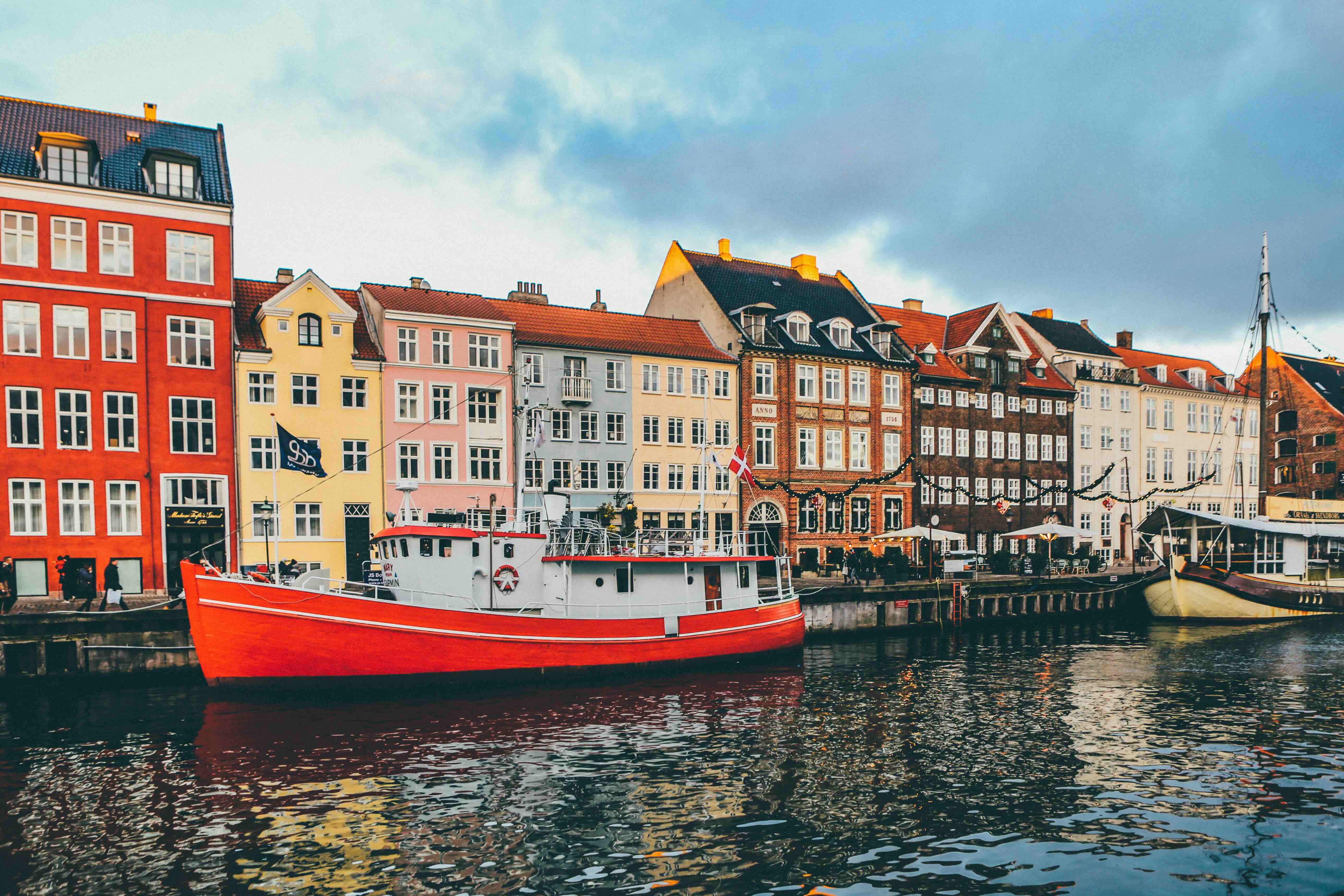
Prague → Copenhagen
around 11h · ComfortJet (ČD · DB · DSB)
The through train south: Prague to Copenhagen by ComfortJet
View Route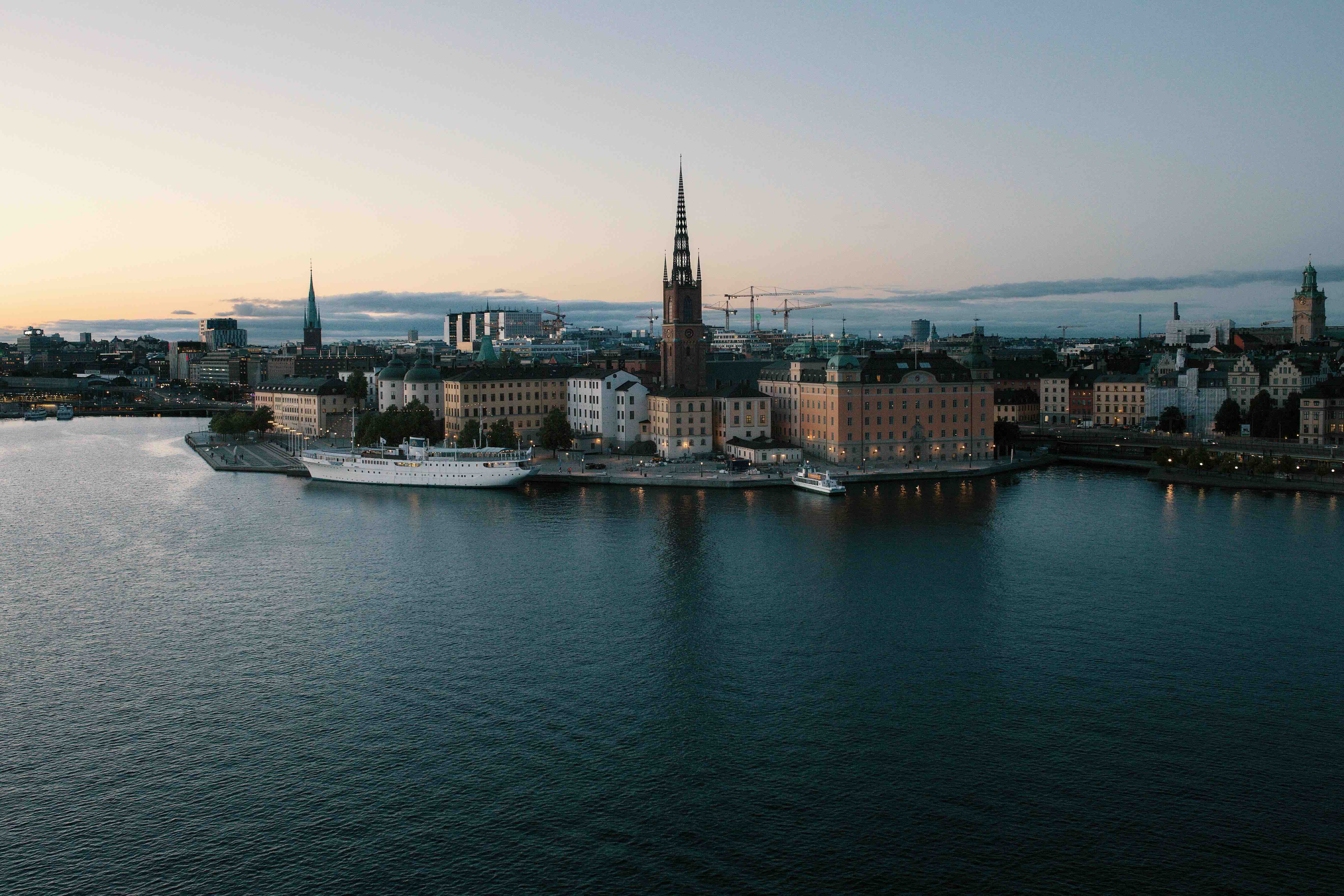
Copenhagen → Stockholm
~6h · Snälltåget · SJ (via Malmö)
Continue north into Sweden: Copenhagen to Stockholm
View Route
Hamburg to Copenhagen is the direct rail bridge from Germany into Scandinavia: around four and a half hours north across Schleswig-Holstein, over the border into Denmark, and across the great crossings of the Belts to the Danish capital. Reserve a seat, carry your ID for the border, and enjoy the run low over the Great Belt - then remember that Copenhagen is a beginning, with Malmö, Sweden and the whole of the north a short hop further on.