Copenhagen to Stockholm by Train
Across the Øresund into Sweden
Copenhagen to Stockholm is the direct rail link between two of Scandinavia's capitals: around six hours north from the Danish capital, across the Øresund Bridge into Sweden at Malmö and up through the southern Swedish countryside to Stockholm, city centre to city centre with no airport at either end. It is the northern extension of the Berlin, Hamburg and Copenhagen corridor, carrying Railero's network into Sweden.
Short answer: yes, there is a direct train. Snälltåget runs one daily direct daytime train from Copenhagen Syd (København Syd), not Copenhagen Central, to Stockholm Central in a little over six hours, booked at snalltaget.se. SJ's direct high-speed trains have been suspended since 2024 because of a shortage of trainsets, so the SJ option is currently a regional Øresundståg from København H to Malmö, then an SJ high-speed train to Stockholm, in roughly five and a half to six hours depending on the connection, booked at sj.se. SJ plans to restore direct trains, but no restart date is confirmed, so check sj.se for your travel date. Interrail is valid on both, but Snälltåget and SJ high-speed trains need a paid seat reservation; the Øresundståg to Malmö needs none.
The northern end of the Berlin to Scandinavia corridor: Combine this with Hamburg to Copenhagen and Berlin to Hamburg for a flying-free run from Germany deep into Sweden, all by train and all city centre to city centre.
Ready to book Copenhagen to Stockholm?
Direct train: Snälltåget, one daily train from Copenhagen Syd to Stockholm Central. Official booking site: snalltaget.se. With one change: a regional Øresundståg from København H to Malmö, then an SJ high-speed train to Stockholm. Official booking site: sj.se. A seat is included with a normal ticket on Snälltåget and SJ; Interrail holders need a paid reservation on both, but not on the Øresundståg. Use the button below to compare fares, and check both official sites for your date.
Railero may earn a small commission if you book via the link above, at no extra cost to you.
Departing Copenhagen
Copenhagen Syd for the direct train · København H via Malmö
Which Copenhagen station you leave from depends on the train. The direct Snälltåget train leaves from Copenhagen Syd (København Syd) in the south of the city, not from Copenhagen Central. The alternative, a regional Øresundståg to Malmö and then an SJ high-speed train, can start at København H, Copenhagen Central. Here is the difference at a glance.
Snälltåget - the direct train
SJ - currently via Malmö
For the direct train, go to Copenhagen Syd (København Syd). It is a local S-train and Metro hub with connections into central Copenhagen, so allow time to get there from your hotel, and check your ticket to confirm the station before you set off.
For the Øresundståg and SJ via Malmö, you can start at København H, Copenhagen Central, the handsome brick and timber station in the heart of the city beside the Tivoli Gardens and a short walk from the town hall square. It is the hub of the Danish network, fully equipped and largely step-free, and it is easy to reach from anywhere in the city on the S-train or the Metro. Øresundståg trains also call at Copenhagen Airport on the way to the bridge.
Boarding is relaxed: there is no airport-style check-in, so arrive 10 to 15 minutes ahead, check the departure boards for your platform, and step aboard. The Snälltåget train and the SJ high-speed trains are reservation-only, so your seat is already assigned. Then the train pulls out east across the city, past the airport and onto the great crossing of the Øresund.
Copenhagen–Stockholm - Journey Facts
- RouteSnälltåget: Copenhagen Syd → Stockholm C; SJ: via a change at Malmö
- OperatorsSnälltåget (current direct, via Copenhagen Syd); SJ via a change at Malmö
- Journey timeSnälltåget direct a little over 6h; SJ via Malmö roughly 5½ to 6h, depending on the connection
- FrequencySnälltåget daily; SJ direct suspended, currently via a change at Malmö
- DistanceAbout 600 to 650 km across Denmark and Sweden
- ReservationsReservation-only on Snälltåget and SJ high-speed; a seat is included
Across the Øresund Bridge to Malmö
The Øresund Bridge and Malmö · 55.609°N, 13.001°E
The set-piece of the journey comes early. Beyond Copenhagen Airport the line runs onto the Øresund Bridge, the combined rail and road crossing that links Denmark and Sweden across the strait, opened in 2000. The train runs low over the water, the sea stretching away on both sides, before the bridge dips into the Drogden tunnel for the final stretch and surfaces in Sweden. It is a brief crossing but a genuine highlight, and the clearest marker that you have left Denmark behind.
The first Swedish stop is Malmö Central, the city at the Swedish end of the bridge and an important junction. Malmö matters practically as well as geographically: it is where SJ passengers change today, taking a frequent regional Øresundståg from Copenhagen this far and then an SJ high-speed train onward to Stockholm, while the direct Snälltåget train runs straight through. From Malmö the line turns north and settles in for the long run up through Sweden.
Worth Knowing
North Through Southern Sweden
The Southern Main Line · 56.899°N, 14.556°E
From Malmö the train heads north up the Southern Main Line, the Södra stambanan, the country's busiest long-distance route. It runs through Lund, the old university city, then out into the interior of southern Sweden: the farmland of Skåne giving way to the forests, lakes and red-painted cottages of Småland around Alvesta, and on across the lowlands toward the capital. Some trains call at towns such as Hässleholm, Nässjö, Linköping and Norrköping; the fastest run to a shorter list of stops.
It is honest to say this is not a spectacular mountain railway. It is pleasant, restful country: pine and birch forest, glinting lakes, small towns and big skies, the kind of calm landscape that Sweden does well. The pleasure is the ease of it, an unbroken run across a whole country, before the outskirts of Stockholm gather and the train draws in beside the water.
This is the spine of Sweden, the main line that carries the country north and south, from the bridge at Malmö all the way to the capital.
Arriving at Stockholm Central
Stockholm Central, Sweden · 59.330°N, 18.059°E
The train arrives at Stockholm Central, Stockholm C, the grand 1871 station in the heart of the city and the hub of the Swedish network. It is large, fully equipped and largely step-free, and it sits right in the centre, so you step off into the middle of the capital rather than an airport on the edge of it. The Stockholm metro, the Tunnelbana, is at the connected T-Centralen station, and much of the city is within walking distance.
Stockholm rewards arriving in the centre. Gamla Stan, the medieval old town on its island, is a short walk or one metro stop south; the waterfront, the Royal Palace and the ferries out into the archipelago are close by; and the whole city, famously built across fourteen islands where the lake meets the Baltic, opens up from here. Direct trains and the Arlanda Express also run from the station out to Stockholm Arlanda Airport if you are connecting onward.
From Stockholm Central
SJ, Snälltåget, and the 2026 Service
Who runs the route, and the changing picture
Two operators serve this corridor, and they are booked separately. The current direct train is Snälltåget, a private operator whose daily daytime service runs via Copenhagen Syd (København Syd) rather than the central København H, part of its year-round Stockholm, Malmö, Copenhagen and Hamburg route; it is a comfortable, relaxed train, booked at snalltaget.se. SJ, the Swedish national railway, runs the corridor with its high-speed trains, which SJ markets as SJ Snabbtåg and which are run with its X2000 tilting trains; SJ tickets are booked at sj.se.
The important current detail is that SJ's direct Copenhagen to Stockholm high-speed trains have been suspended since 2024, because of a shortage of trainsets. SJ plans to restore them, but no restart date is confirmed. While it is suspended, SJ passengers travel by taking a frequent regional Øresundståg from Copenhagen to Malmö and changing there onto an SJ high-speed train to Stockholm. Because service patterns are shifting, it is worth checking sj.se and snalltaget.se for your specific date rather than trusting a fixed timetable, as SJ's direct service pattern may change.
SJ vs Snälltåget
- SJNational railway, high-speed (SJ Snabbtåg, X2000); direct suspended since 2024, currently via a Malmö change
- SnälltågetThe current direct service, daily via Copenhagen Syd
- ØresundstågRegional train for the Copenhagen to Malmö leg when changing at Malmö
- BookingSJ at sj.se; Snälltåget at snalltaget.se - separate tickets
- ReservationsReservation-only on Snälltåget and SJ high-speed; regional Øresundståg needs none
One thing that sets the direct Snälltåget train apart is what is on board. It carries a restaurant carriage, Krogen, serving breakfast, hot meals and drinks, alongside a separate self-service area for coffee, sandwiches, pastries and snacks. A table in the restaurant is optional and can be reserved when you book or later through Snälltåget's My Journey portal. It makes the roughly six-hour run feel more like a relaxed journey than a commute.
Tickets and Prices
What it costs, and how to find the lower fares
Snälltåget advertises Copenhagen to Stockholm fares from SEK 299 one way when you book ahead. That is a lowest starting fare on the cheapest departures, not a typical or guaranteed price: fares rise as seats sell and as the day approaches, and busy departures cost more. Snälltåget's own advice for the lower fares is to book roughly two to three weeks ahead and to choose travel days other than Friday or Sunday.
Snälltåget and SJ are separate operators with separate tickets, booked at snalltaget.se and sj.se, and their prices vary by departure and date, so it is worth comparing both for your travel day. There is no single fixed fare for the route; what you pay depends on the operator, how far ahead you book and which departure you choose.
Finding a lower fare
Reservations, Passes and the Border
The practical rules for the crossing to Sweden
Reservations are simple to understand here: the direct Snälltåget train and the SJ high-speed trains are reservation-only, so a normal ticket already includes an assigned seat and there is nothing separate to buy. For pass holders it is different. Interrail is accepted, but a compulsory paid seat reservation is required on the Snälltåget train and on SJ high-speed trains, booked with the operator before you travel. The regional Øresundståg between Copenhagen and Malmö is the exception: it takes passes with no reservation at all, which is one reason some pass holders choose to change at Malmö. For the wider picture, see the rail passes and seat reservations guides linked below.
On the border, Denmark and Sweden are both in the Schengen area, so ordinary internal border controls are generally absent and the train is not routinely checked. Sweden can, however, run temporary internal border checks, including on arrivals by train from Denmark, so carry the valid travel documents your nationality or status requires and keep them reachable. Luggage is easy: there is no airline-style check-in, you carry your bags aboard and use the racks, so bring what you can manage and keep valuables with you.
On accessibility, København H and Stockholm Central are both large, staffed, largely step-free stations, and the trains have accessible spaces; assistance is best booked in advance with the operator, and access can vary by train and platform, so arranging help ahead is the reliable approach. If you are combining this with the trains up from Germany, remember it is the last leg of the Berlin, Hamburg and Copenhagen corridor, so a rail pass or a set of advance tickets can carry you the whole way north.
Quick Tips
Check the date: the direct-service picture is shifting in 2026, so check sj.se and snalltaget.se for your specific travel date.
Snälltåget is the direct train: its daily daytime service via Copenhagen Syd is the current through train, while SJ is reached with a change at Malmö.
Pass holders, reserve: the direct trains need a compulsory reservation with a pass; the regional route via Malmö does not.
Hotels in Stockholm
Stockholm rewards staying central, near Gamla Stan and the water, a short walk or metro ride from Stockholm Central and the middle of the city.
Stockholm - on the waterfront by the palace
Stockholm's grand historic hotel on the Blasieholmen waterfront, facing the Royal Palace and the old town across the water - the classic luxury address, a short ride from the central station.
Stockholm - beside the central station
A large, well-run design hotel directly beside Stockholm Central - the easy, practical base for the trains, walkable to the centre and the old town.
Stockholm - central Östermalm
A characterful, fairly priced boutique hotel in the smart Östermalm district, walkable to the centre and a short metro ride from the station - good value in an expensive city.
Hotel links open Booking.com in a new tab.
Frequently Asked Questions
- Is there a direct train from Copenhagen to Stockholm?
- Yes. The current direct service is Snälltåget, whose daily daytime train runs from Copenhagen Syd via Malmö to Stockholm, part of its year-round Stockholm, Malmö, Copenhagen and Hamburg route. SJ's direct Copenhagen to Stockholm high-speed service has been suspended since 2024 because of a shortage of trainsets. SJ plans to restart it, but no date is confirmed, so check sj.se; while it is suspended the SJ journey is made by taking a regional Øresundståg from Copenhagen to Malmö and changing there onto an SJ high-speed train. The SJ pattern may change, so check current schedules when you book.
- How long does the train from Copenhagen to Stockholm take?
- The direct Snälltåget train takes a little over six hours. The SJ journey, currently with a change at Malmö, is broadly similar at around five and a half to six hours depending on the connection. It is roughly 600 to 650 km across the Øresund and up through southern Sweden, so check the current timetable when you book.
- Which operators run the route?
- Two operators serve the route. Snälltåget runs the current direct train, via Copenhagen Syd. SJ, the Swedish national railway, runs high-speed trains, but its direct Copenhagen to Stockholm service is currently suspended, so the SJ journey is made by taking a regional Øresundståg from Copenhagen to Malmö and changing there onto an SJ high-speed train to Stockholm. They are booked separately, through snalltaget.se and sj.se.
- Which station does the train use in Copenhagen and Stockholm?
- The current direct train, Snälltåget, leaves from Copenhagen Syd (København Syd) in the south of the city, a local S-train and Metro hub with connections into central Copenhagen, so allow time to get there. SJ services use København H (Copenhagen Central) and Copenhagen Airport. Both routes arrive at Stockholm Central (Stockholm C), in the heart of the city and on the metro, so there is no airport transfer at either end.
- Does the train cross the Øresund Bridge?
- Yes. The line runs from Copenhagen out past the airport and across the Øresund Bridge, the combined rail and road crossing between Denmark and Sweden, into Malmö. It is a brief but memorable part of the journey, low over the water with the strait on both sides.
- Do I need a seat reservation?
- Yes in effect on the through trains. The Snälltåget train and SJ high-speed trains are reservation-only, so a normal ticket already includes an assigned seat and there is no separate reservation to buy. If you change at Malmö, the regional Øresundståg between Copenhagen and Malmö needs no reservation.
- Can I use an Interrail pass?
- Yes, the pass is accepted, but on the direct trains a compulsory paid seat reservation is required, on both SJ high-speed and Snälltåget, so book that before you travel. On Snälltåget, book the reservation at snalltaget.se by ticking 'I have an Interrail Pass'; pass reservations are one-way only. The regional Øresundståg between Copenhagen and Malmö takes passes with no reservation, which is one reason some pass holders change at Malmö.
- Is Copenhagen to Stockholm scenic?
- It is a pleasant journey rather than a dramatic one. The highlight is the Øresund crossing at the start; after Malmö the line runs north through the farmland, forests and lakes of southern Sweden. It is comfortable, easy travelling and city centre to city centre, but the reason to take it is convenience rather than mountain scenery, and there is no strongly preferred side of the train.
- Is it faster to fly than take the train?
- A flight is quicker in the air, but the train runs city centre to city centre with no airport transfers, no check-in and no security queues, and you can walk around, work or sleep on board. Once the airport journeys at both ends are counted, the train is competitive and far less hassle for a trip between the two city centres.
- Do I need my passport or ID?
- Denmark and Sweden are both in the Schengen area, so ordinary internal border controls are generally absent and the train is not routinely checked. Sweden can run temporary internal border checks, including on arrivals by train from Denmark, so carry the valid travel documents your nationality or status requires and keep them reachable.
Not sure if you need to reserve a seat?
Check this journey in Railero’s Seat Reservation Checker.
Continue Your Journey
Routes that pair naturally with this one — for building your European itinerary.
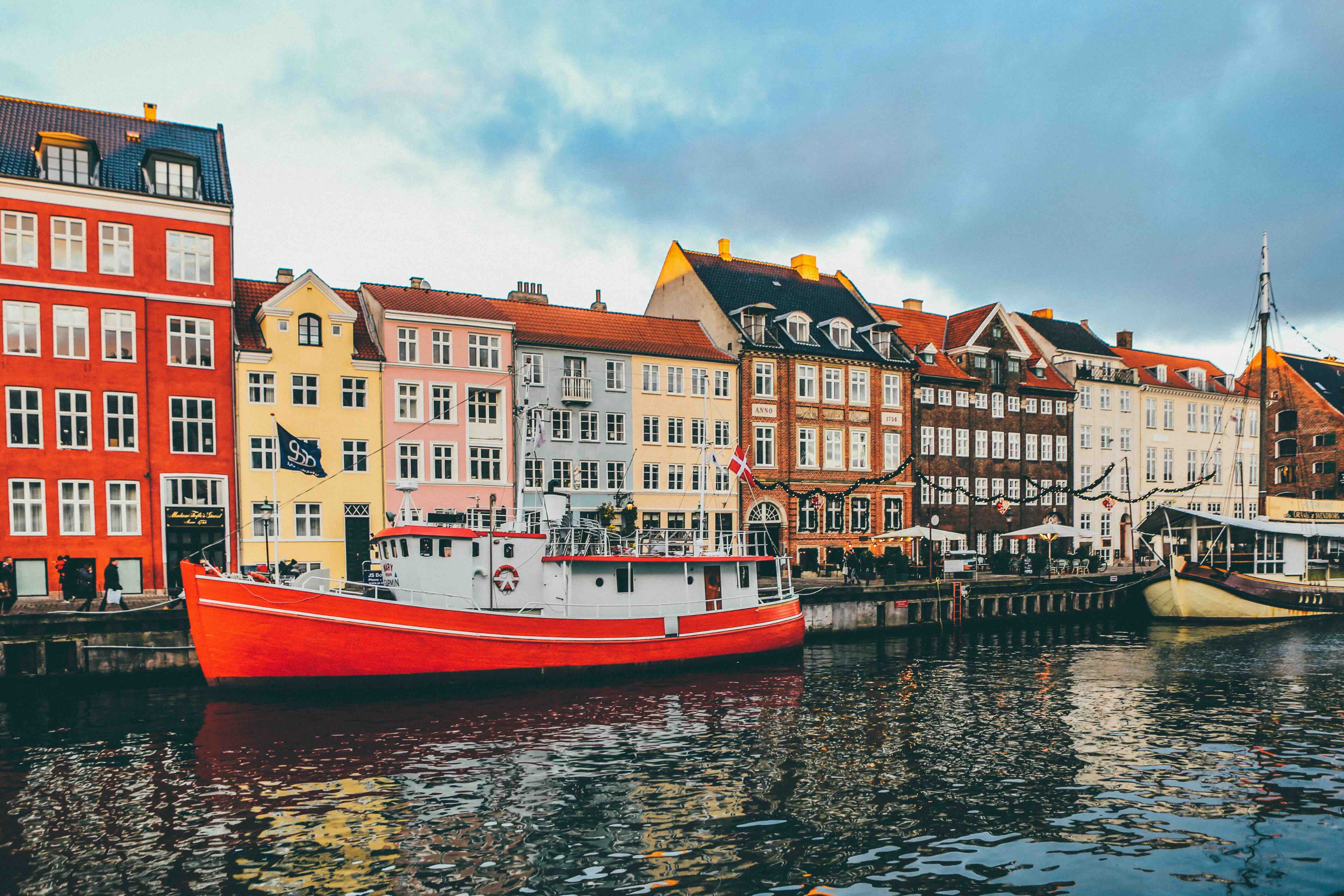
Prague → Copenhagen
just under 12h · ComfortJet (ČD · DB · DSB)
Arriving from the south: the direct Prague to Copenhagen ComfortJet
View Route
Copenhagen to Stockholm is the easy way between two Scandinavian capitals: around six hours north across the Øresund Bridge and up through southern Sweden, city centre to city centre with no airport at either end. Take the direct Snälltåget train via Copenhagen Syd, or SJ high-speed with a change at Malmö, reserve your seat, and treat it as the northern end of the rail corridor that runs all the way back to Berlin.
Back to all routes