Berlin to Munich by Train
The Direct ICE in Around Four Hours
Berlin to Munich is Germany's headline intercity journey: a direct ICE from Berlin Hauptbahnhof to München Hauptbahnhof, city centre to city centre, with no change of train. The fastest limited-stop ICEs normally take around 4 hours 6 minutes to 4 hours 15 minutes on the high-speed line through Erfurt and Nuremberg, and regular ICEs with more stops often take around 4 hours 25 minutes to 4 hours 50 minutes.
The main decision is which direct train to take. This guide explains the difference between the fastest ICEs and the regular ones, which Berlin station to use, the stops along the way at Leipzig or Halle, Erfurt, Bamberg and Nuremberg, the high-speed line through the Thuringian Forest, and arriving in Munich. It also covers reservations, rail passes, tickets, luggage and bikes, and the engineering works on the Nuremberg to Ingolstadt line in autumn 2026.
Yes - there is a direct train from Berlin to Munich: Direct ICE trains run through the day, normally in around 4 to 4 hours 50 minutes depending on the train. From 30 October to 12 December 2026 the Nuremberg to Ingolstadt high-speed line is closed and DB expects affected trains to take about 45 minutes longer, though direct trains still run. Seat reservations are optional.
Ready to book Berlin to Munich?
Omio sells Berlin to Munich train tickets; check that the train you choose is shown as a direct ICE, as journeys with changes and the slower direct trains via Frankfurt may also be listed. You can also book directly with Deutsche Bahn on bahn.de or in the DB Navigator app. The cheaper Sparpreis and Super Sparpreis fares are tied to the train you book and usually cost less the earlier you buy, while the Flexpreis lets you take any train on your travel day. Seat reservations are optional and can be added when you book. Journey times depend on the train and date, and from 30 October to 12 December 2026 engineering works add about 45 minutes to affected trains, so check the times shown for your departure.
Railero may earn a small commission if you book via the link above, at no extra cost to you.
Leaving Berlin: Gesundbrunnen, Hauptbahnhof or Südkreuz
Berlin Hauptbahnhof, Germany · 52.525°N, 13.369°E
Direct trains to Munich leave from the lower level of Berlin Hauptbahnhof, the city's great glass crossing station, where the north-south lines run below ground. Berlin Hauptbahnhof is the stop most travellers use: it sits in the centre near the government quarter, with S-Bahn, the U5 underground line and trams on the doorstep.
It is not the only option. Many Munich trains start a few minutes earlier at Berlin Gesundbrunnen in the north of the city, which suits travellers from Prenzlauer Berg, Wedding or Pankow, and regular ICEs usually also call at Berlin Südkreuz on the southern Ringbahn, handy for Schöneberg, Tempelhof and the south. The fastest limited-stop trains may skip Südkreuz. Stopping patterns vary by train, so check which Berlin stations your departure serves before you set off.
Berlin–Munich - At a Glance
- Direct trainYes, direct ICE trains through the day, no change
- Fastest ICEsNormally around 4h 6m to 4h 15m, with few stops
- Regular ICEsOften around 4h 25m to 4h 50m, with more stops
- Slow direct trainsA few run via Frankfurt and Stuttgart and take nearly 8 hours
- Berlin stationsHauptbahnhof; many trains also Gesundbrunnen, some Südkreuz
- Munich stationMünchen Hauptbahnhof
- ReservationOptional on domestic ICE trains
Engineering Works: 30 October to 12 December 2026
What: Deutsche Bahn is modernising the Nuremberg to Ingolstadt high-speed line, which is fully closed from late on 30 October until 12 December 2026 inclusive.
Effect: DB says affected Berlin to Munich trains take about 45 minutes longer while they are diverted, and at least hourly direct connections remain. Some trains call at Ingolstadt during this period.
Before you travel: the journey times quoted elsewhere in this guide are the normal ones; during the closure, check the times and stops shown for your specific departure.
South via Wittenberg to Leipzig or Halle
Lutherstadt Wittenberg, Bitterfeld, Leipzig and Halle (Saale)
Out of Berlin the line runs south across the flat, wooded country of Brandenburg into Saxony-Anhalt. Regular ICEs call at Lutherstadt Wittenberg, the town where Martin Luther set the Reformation in motion, and at Bitterfeld, before reaching Leipzig Hauptbahnhof, one of the largest station buildings in Europe and a lively city well worth a stopover.
Not every train goes through Leipzig. Some of the fastest limited-stop ICEs call at Halle (Saale) instead, on a parallel branch that joins the high-speed line towards Erfurt, and pass Wittenberg and Bitterfeld without stopping. If you want Leipzig or Halle specifically, check the stops shown for your train when you book.
Fastest ICE or regular ICE?
- Fastest ICEsFew stops, for example Halle (Saale), Erfurt and Nuremberg
- Regular ICEsAlso Südkreuz, Wittenberg, Bitterfeld, Leipzig, Bamberg and Erlangen
- Time savedTypically around 20 to 40 minutes on the fastest trains
- TicketsThe same tickets, classes and reservation rules on both
- Avoid by mistakeThe few direct trains via Frankfurt and Stuttgart, which take nearly 8 hours
Erfurt and the Thuringian Forest
Erfurt Hauptbahnhof, Germany · 50.972°N, 11.038°E
From Leipzig or Halle the train joins the high-speed line west to Erfurt, the capital of Thuringia and the hub of this route. The direct Berlin to Munich ICEs normally call here, and the station is a short tram ride from one of Germany's best-preserved medieval centres, with the cathedral and St Severus church above the Domplatz and the inhabited Krämerbrücke bridge, which makes Erfurt an easy break in the journey.
South of Erfurt comes the most striking part of the trip. The high-speed line, completed in 2017, cuts through the Thuringian Forest on a long sequence of tunnels and viaducts, so views come in short bursts of wooded valleys between stretches underground. It is this line that brought the fastest journeys down to around four hours, and it emerges in Upper Franconia on the way to Bamberg.
This is a fast, practical trip rather than a scenic railway, but the run through the Thuringian Forest, all tunnels and high viaducts over wooded valleys, is worth looking up from your screen for.
Bamberg, Erlangen and Nuremberg
Nürnberg Hauptbahnhof, Germany · 49.446°N, 11.083°E
Out of the forest the line drops into Franconia. Regular ICEs call at Bamberg, whose old town is a UNESCO World Heritage Site, and at Erlangen, while the fastest trains pass through without stopping. All the direct high-speed ICEs between Berlin and Munich normally call at Nürnberg Hauptbahnhof, which stands just outside the medieval city walls, a walk from the old town and the Kaiserburg castle.
From Nuremberg the trains normally run on the high-speed line via Ingolstadt to Munich, and most Berlin trains do not stop at Ingolstadt. From 30 October to 12 December 2026 that line is closed, so trains are diverted and some call at Ingolstadt; check the stops shown for your train. If you want to break the journey here, Railero's Nuremberg to Munich guide covers the final leg in detail.
Breaking the Journey
Arriving at München Hauptbahnhof
München Hauptbahnhof, Germany · 48.140°N, 11.558°E
Direct trains from Berlin arrive at München Hauptbahnhof, Munich's main station on the western edge of the old town. The station is being extensively rebuilt, so expect construction work and changing walkways around the main hall, and allow a few extra minutes to find your way.
The centre is close. Marienplatz is two S-Bahn stops away, or a walk of around 15 to 20 minutes through Karlsplatz and the pedestrian streets, and the U-Bahn, trams and S-Bahn lines from the station reach the whole city. Munich is also the gateway to Bavaria and the Alps, with trains on to Salzburg, Innsbruck and beyond.
From München Hauptbahnhof
Reservations, Passes, Tickets, Luggage and Bikes
The practical rules for the ICE to Munich
Seat reservations are optional on ICE trains within Germany, and Deutsche Bahn sells tickets with or without one. On a journey of four hours or more on one of the country's busiest routes, a reservation is worth considering, especially on Fridays, Sundays and around holidays. Interrail says you can travel around Germany by train with an Interrail Pass, and it lists reservations on Germany's high-speed ICE trains as optional, though recommended at busy times; the reservation is not included with the pass, so book it separately if you want a guaranteed seat, and check the conditions of your specific pass.
For tickets, the cheaper Sparpreis and Super Sparpreis fares are tied to a specific train and usually cost less the earlier you book, while the Flexpreis costs more but lets you travel on any train on your chosen day, which matters if you might stop off on the way. Fares change with demand, so compare a few departures.
Luggage is not weighed or measured, but Deutsche Bahn allows usual hand luggage plus one larger piece you can carry yourself, which must fit through the doors; store it on the racks, between seat backs or under the seat. Full-size bikes need a long-distance bike ticket and a reserved bike space booked in advance, and only some ICE trains carry bikes, so filter for bike-friendly connections when you search. Folded bikes travel free as hand luggage.
Quick Tips
Pick the right direct train: compare journey times when you search; the few direct trains via Frankfurt and Stuttgart take nearly twice as long.
Check your Berlin station: many trains start at Gesundbrunnen and some call at Südkreuz, as well as Berlin Hauptbahnhof.
Autumn 2026 works: from 30 October to 12 December 2026, allow for about 45 minutes extra and check the stops for your train.
Hotels in Munich
Munich rewards staying central, around Marienplatz and the old town, an easy S-Bahn hop or short walk from München Hauptbahnhof.
Munich - central, near Marienplatz
Munich's grand historic hotel in the heart of the old town, moments from Marienplatz and the Frauenkirche, for a special stay at the end of the trip.
Munich - old town by the Hofbräuhaus
A characterful, well-run hotel in the old town beside the Hofbräuhaus, a few minutes' walk from Marienplatz and central for everything in the middle of Munich.
Munich - opposite München Hbf
A comfortable, fairly priced hotel directly across from the main station, a practical base for an evening arrival, with the centre a short walk or one S-Bahn stop away.
Hotel links open Booking.com. Railero may earn a commission on bookings at no extra cost to you.
Frequently Asked Questions
- Is there a direct train from Berlin to Munich?
- Yes. Deutsche Bahn runs direct ICE trains from Berlin Hauptbahnhof to München Hauptbahnhof throughout the day, with no change needed. In October 2026 DB's own route page listed up to 23 direct connections a day. The number varies by date, so check the timetable for your day.
- How long does the train from Berlin to Munich take?
- The fastest direct ICEs normally take around 4 hours 6 minutes to 4 hours 15 minutes, and regular direct ICEs with more stops often take around 4 hours 25 minutes to 4 hours 50 minutes. A few direct trains run a much longer route via Frankfurt and Stuttgart and take nearly 8 hours. From 30 October to 12 December 2026 the Nuremberg to Ingolstadt high-speed line is closed, and DB says affected Berlin to Munich trains take about 45 minutes longer. Times depend on the date and train, so check your departure.
- What is the difference between the fastest ICE and a regular ICE?
- Both are direct ICE trains with the same tickets and classes. The fastest trains make only a few stops, such as Halle (Saale), Erfurt and Nuremberg, and save roughly 20 to 40 minutes. Regular ICEs call at more stations, typically Berlin Südkreuz, Lutherstadt Wittenberg, Bitterfeld, Leipzig, Erfurt, Bamberg, Erlangen and Nuremberg. Stopping patterns vary by train, so check the stops shown for your departure.
- Which Berlin station should I use for Munich?
- Berlin Hauptbahnhof is the main stop: direct Munich trains use its lower level. Many of these trains start a few minutes earlier at Berlin Gesundbrunnen in the north of the city, and regular ICEs usually also call at Berlin Südkreuz in the south, which can be handier for southern districts. Not every train calls at all three, so pick the station shown for your train.
- Do I need a seat reservation on the ICE from Berlin to Munich?
- No. Seat reservations are optional on ICE trains within Germany, and Deutsche Bahn sells tickets with or without one. On a journey of four hours or more on a busy route, a reservation is worth considering, especially on Fridays, Sundays and around holidays. You can add one when you book.
- Can I use an Interrail pass between Berlin and Munich?
- Interrail says you can travel around Germany by train with an Interrail Pass, and it lists seat reservations on Germany's high-speed ICE trains as optional, though recommended at busy times. A reservation is not included with the pass, so book one separately if you want a guaranteed seat. Check the conditions of your specific pass, including Eurail passes, before travelling.
- Does the Berlin to Munich train stop in Nuremberg and Erfurt?
- The direct high-speed ICEs between Berlin and Munich normally call at both Erfurt and Nuremberg, which makes either city an easy stopover. Regular ICEs also stop at Leipzig and Bamberg, while some of the fastest trains call at Halle (Saale) instead of Leipzig. The few direct trains routed via Frankfurt and Stuttgart do not call at Nuremberg. Check the stops for your specific train.
- Should I buy a flexible ticket or a train-specific fare?
- Deutsche Bahn's cheaper Sparpreis and Super Sparpreis fares are tied to the train you book, while the more expensive Flexpreis lets you take any train on your travel day. Fares change with demand, so booking early usually gives the best price. If your plans might change, or you want to stop off in Erfurt or Nuremberg, a flexible ticket gives you more freedom.
- Can I take luggage and a bicycle on the ICE?
- Luggage is not weighed or measured. Deutsche Bahn allows usual hand luggage plus one larger piece you can carry yourself, stored on the racks or between seats. Full-size bikes need a long-distance bike ticket and a reserved bike space booked in advance, and only some ICE trains carry bikes. Folded bikes can travel free as luggage.
- Is the train better than flying from Berlin to Munich?
- For many travellers, yes. The fastest trains take around four hours from city centre to city centre, with no airport transfers or security queues, and you can work or eat on board. Flying can be quicker in the air, but once airport time is added the gap narrows. It depends on where you start and finish and how you value your time.
Continue Your Journey
Routes that pair naturally with this one — for building your European itinerary.
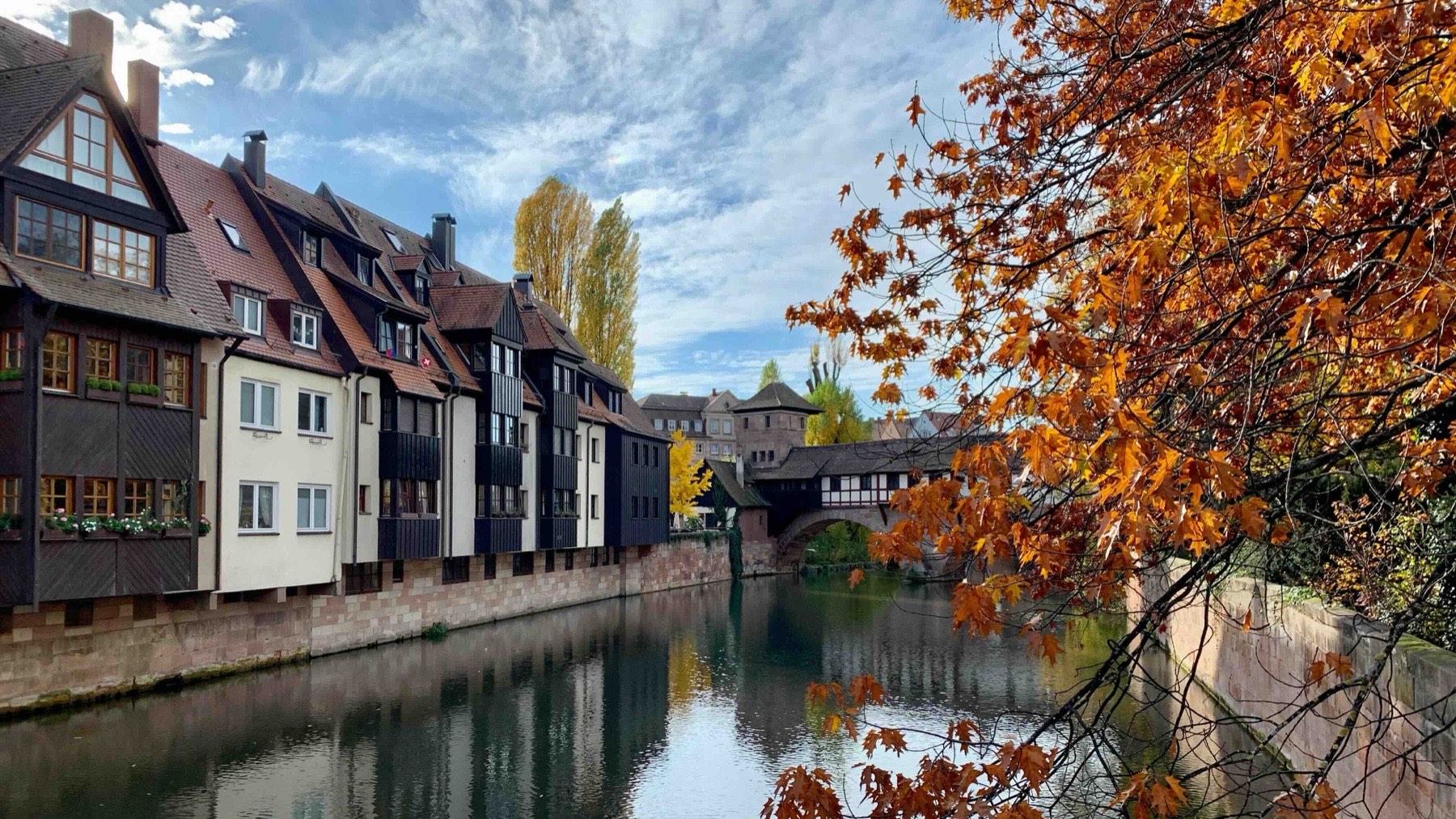
Nuremberg → Munich
around 1h 10m · ICE (Deutsche Bahn)
Stop off on the way: Nuremberg to Munich by ICE
View Route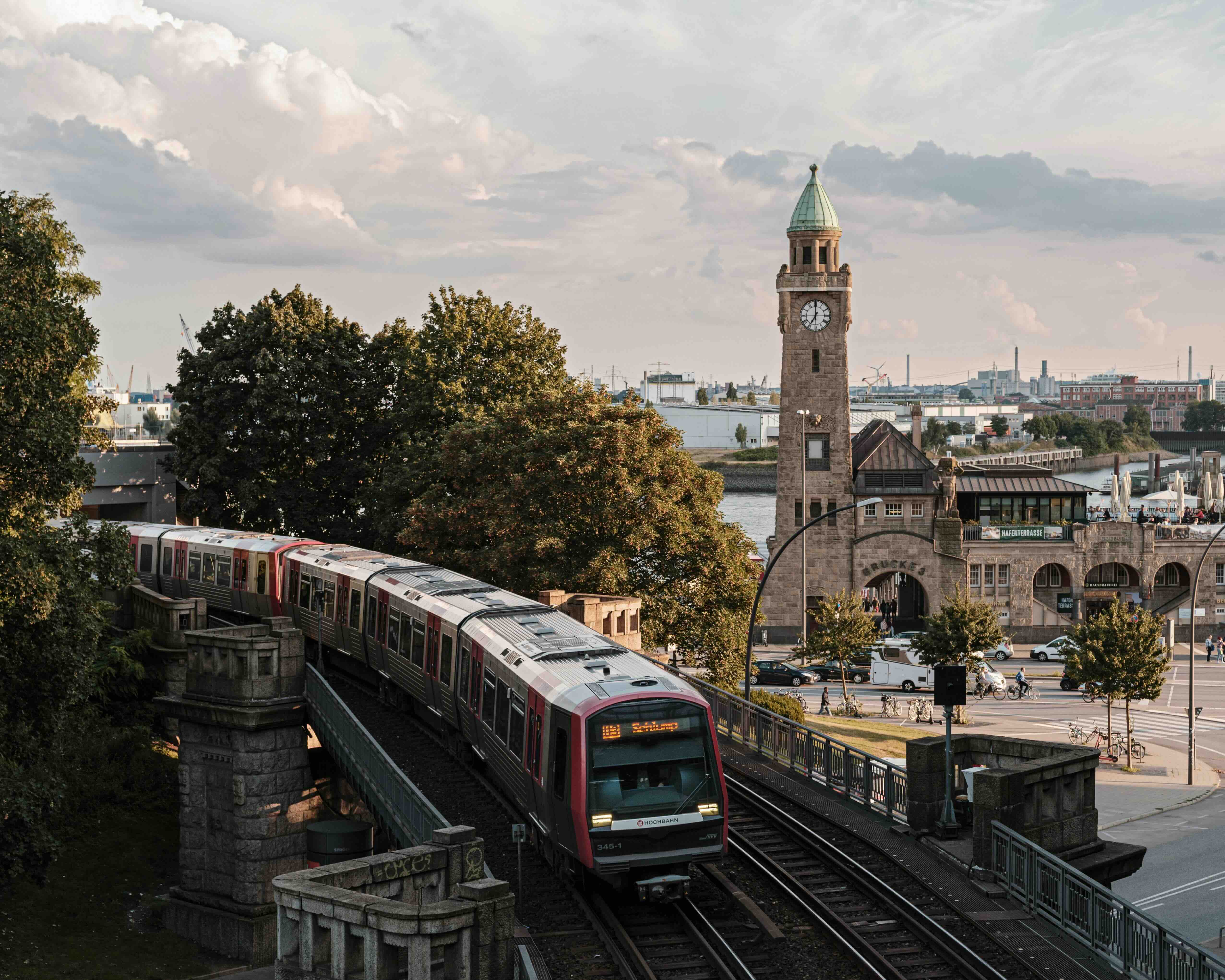
Berlin → Hamburg
~1h 45m · Deutsche Bahn ICE
North from Berlin instead: Berlin to Hamburg by ICE
View Route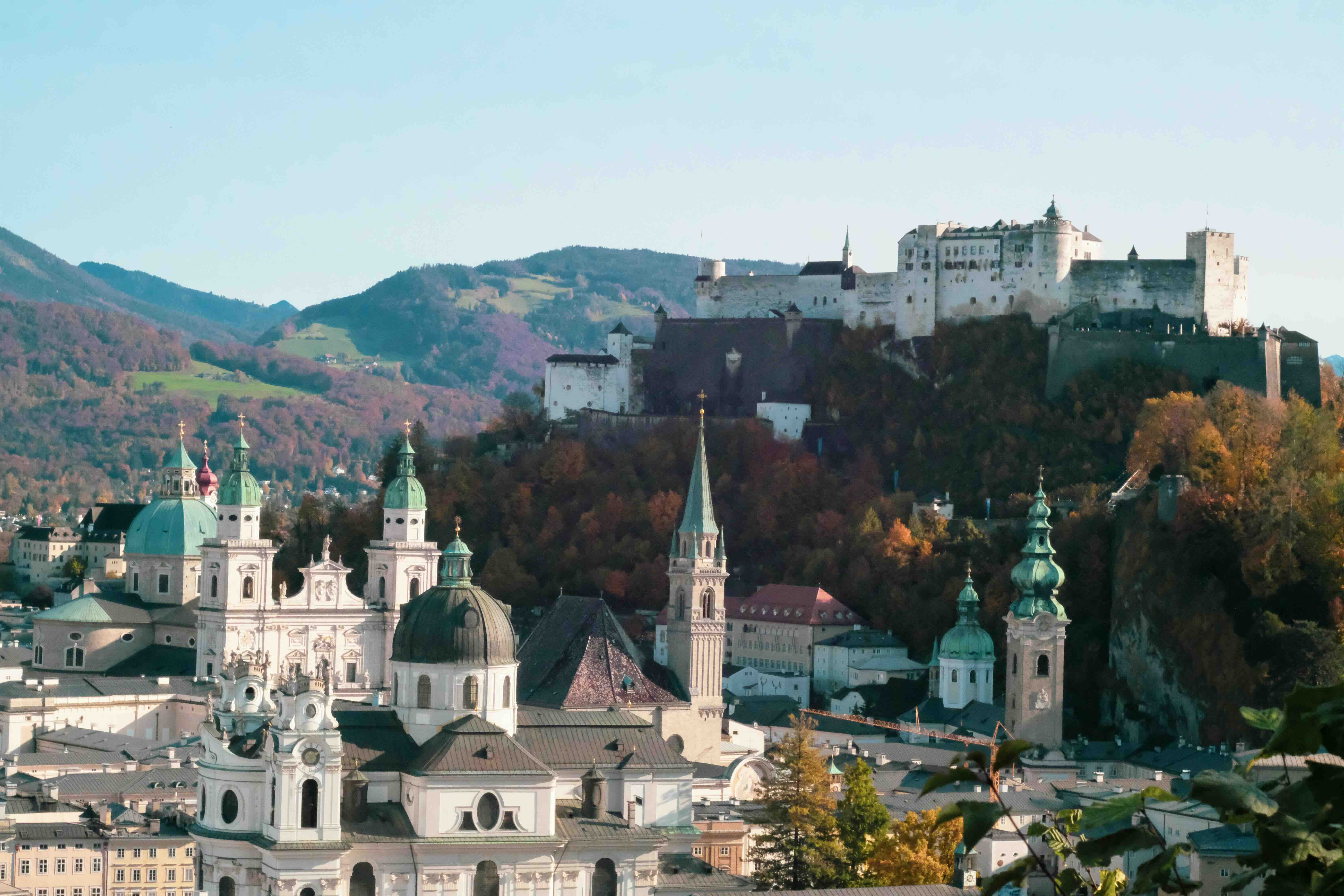
Munich → Salzburg
~1h 30m · Railjet / EuroCity (ÖBB · DB)
Continue into Austria: Munich to Salzburg
View RouteInterrail and the Swiss Travel Pass — when a pass beats point-to-point tickets and when it does not.
When reservation is mandatory, which side of the train has the views, and how to choose your class.
Berlin to Munich is the clearest case for the train within Germany: a direct ICE between the two biggest cities, city centre to city centre, normally in around four hours on the fastest trains and a little longer on the regular ones. Pick a fast direct train, check which Berlin station it serves, allow extra time during the autumn 2026 works, and use Erfurt, Leipzig, Bamberg or Nuremberg for a stopover if you have the time. From Munich, Salzburg, Innsbruck and the Alps are close at hand.