Nuremberg to Munich by Train
The Fast Bavarian ICE Corridor
Nuremberg to Munich is one of Germany's busiest and easiest intercity journeys: a frequent direct ICE of around 1 hour 10 minutes, south down the high-speed line through Ingolstadt from Nürnberg Hbf to München Hbf, city centre to city centre. It links two great Bavarian cities, and it carries Railero's German network south from the Frankfurt corridor into Munich and the Alps.
There is very little to plan here beyond one choice: the fast ICE or a cheaper regional train. Fast ICE services leave right through the day and take about an hour and ten minutes; direct regional trains take longer but are covered by a Deutschlandticket or Bayern-Ticket. This guide keeps it practical: which train to pick, how the tickets and passes work, whether you need a reservation, reaching central Munich from the station, and how the two cities pair up, including their Christmas markets.
One quick decision, then go: Take the ICE for speed (around 1h10, reservation optional), or the slower regional train if you already hold a Deutschlandticket or Bayern-Ticket and the journey is covered by your existing ticket. Either way it is a frequent, direct, turn-up-and-go corridor.
Ready to travel Nuremberg to Munich?
The fast option is the direct ICE, around 1 hour 10 minutes from Nürnberg Hbf to München Hbf, with seat reservation optional. Fares are cheapest on advance Sparpreis tickets, which are tied to a specific train, while a Flexpreis ticket costs more but works on any ICE that day; you can check current fares and times at bahn.com. If you already hold a Deutschlandticket or a Bayern-Ticket, you can instead take the slower direct regional train, which those tickets cover, though it is not valid on the ICE. If you prefer to compare and book in one place, Omio and Trainline sell the same tickets.
Railero may earn a small commission if you book via the link above, at no extra cost to you.
Departing Nuremberg
Nürnberg Hauptbahnhof, Germany · 49.446°N, 11.083°E
Nuremberg–Munich - At a Glance
- Direct trainYes, frequent direct ICE, no change
- Journey timeAround 1h 10m on a fast ICE
- ICE or regionalICE for speed; regional if you hold a pass
- ReservationOptional on ICE; none on regional
- DeutschlandticketRegional trains only, not the ICE
- Bayern-TicketRegional trains only, not the ICE
- Munich Hbf to MarienplatzTwo S-Bahn stops, a few minutes
The journey begins at Nürnberg Hauptbahnhof, the large, fully equipped main station that sits right at the edge of Nuremberg's walled old town, a short walk from the medieval centre and the Hauptmarkt. It is a straightforward departure: check the boards for the next train to München Hbf and its platform, and step aboard. On the fast ICE there is no reservation required, so a valid ticket is enough, and the trains run often enough that you rarely wait long.
The one thing to decide before you buy is which train. The ICE is the fast choice, around an hour and ten minutes down the high-speed line. A direct regional train, the München-Nürnberg-Express, takes longer but is worth it if you already hold a Deutschlandticket or a Bayern-Ticket, because the journey is then covered by your existing ticket. The next section and the tickets panel below lay out that choice.
South Down the High-Speed Line
Via Ingolstadt · 48.746°N, 11.437°E
The fast trains take the VDE 8 high-speed line, purpose-built for 300 km/h running, which strikes south from Nuremberg across rolling Bavarian farmland toward Ingolstadt and on to Munich. It is a smooth, quiet, efficient ride rather than a scenic mountain line; the appeal is the speed and the ease of it, with the whole journey done in about an hour and ten minutes. Many ICE services call at Ingolstadt on the way, while the fastest run straight through, so stopping patterns vary; check the specific train if Ingolstadt matters to you.
If you are travelling on the regional München-Nürnberg-Express instead, it uses much of the same corridor but calls at more towns along the way, which is why it takes longer. Either way the route is direct with no change, so the difference is simply time against cost: the ICE for speed, the regional train if a pass already covers it.
Arriving in Munich
München Hauptbahnhof · 48.140°N, 11.558°E
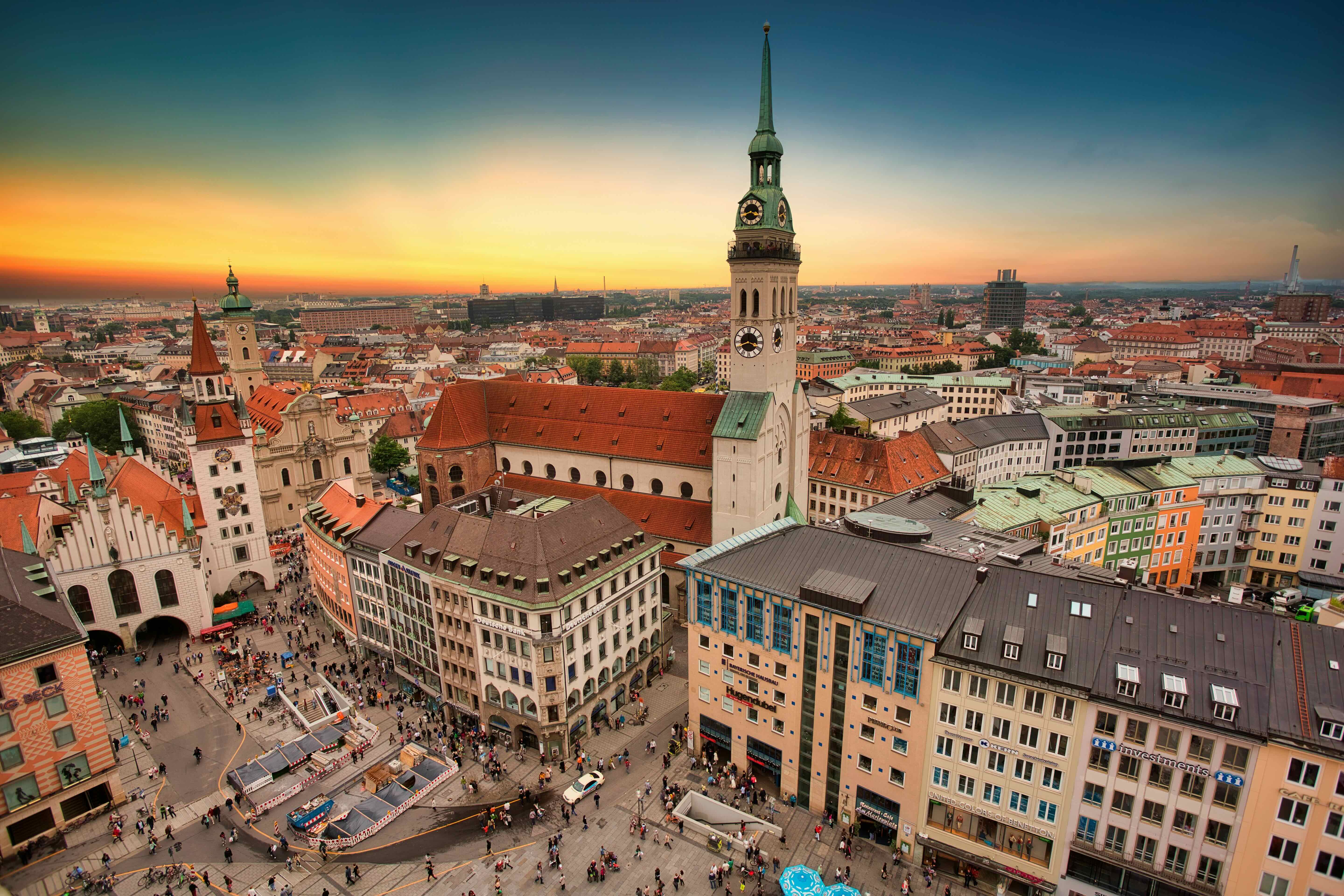
Trains arrive at München Hauptbahnhof, the vast main station on the western edge of the city centre and a major hub of the Bavarian and long-distance network. It is fully equipped and largely step-free, and it is well connected to the rest of the city: the central square, Marienplatz, is just two stops away on the S-Bahn, only a few minutes, with trains every few minutes, and it is also about a 15-minute walk into the middle of town.
From Marienplatz the heart of Munich opens up: the Neues Rathaus and its glockenspiel, the Viktualienmarkt food market, the Frauenkirche and the pedestrian streets of the old town, with the English Garden and the museums a short way beyond. München Hbf is also the springboard for the rest of Railero's southern network, with onward trains to Salzburg, into the Alps and south toward Italy.
From München Hbf
ICE or Regional, and the Passes
The one choice worth getting right
The decision is simple once the trade-off is clear. The ICE is the fast option at around 1 hour 10 minutes, and seat reservations on it are optional, so a valid ticket lets you board any free seat, with a reservation worth adding on busy departures. ICE fares are cheapest on advance Sparpreis and Super Sparpreis tickets, which are limited and tied to a specific train; a Flexpreis ticket costs more but lets you take any ICE that day. So for the ICE, book early if you can commit to a train, or pay more for full flexibility.
The alternative is the direct regional train, which is slower but covered by two popular passes. A Deutschlandticket generally covers regional and local trains and city transport but not ICE, IC or EC services; a Bayern-Ticket covers eligible regional and local trains within Bavaria, plus city transport in Munich and Nuremberg, and again is not valid on the ICE. So if you already hold either pass, the regional train between Nuremberg and Munich is covered by your existing ticket, and you simply accept the longer journey. Because the German fare range and pass conditions change over time, check bahn.com for the current details, or compare and book the same tickets through Omio or Trainline.
Which ticket?
A Day Trip, or Everyday Intercity
Why the hour-long hop works both ways
This is as much an everyday city-to-city journey as a day trip, and it serves both well. At around 1 hour 10 minutes each way with frequent trains, you can travel over for the day in either direction, spend a full day in Nuremberg's old town or Munich's centre, and be back by evening, and both city centres are right by their main stations. It is equally the natural intercity link for anyone travelling between the two for work or a longer trip.
It also slots into a wider itinerary. Munich is a hub for Railero's southern routes, so Nuremberg to Munich pairs naturally with the onward journeys to Salzburg, into the Alps and toward Italy, or back up the high-speed corridor toward Frankfurt. Treat it as a fast, reliable spine of central-southern German rail travel.
Two Christmas Markets by Train
A festive pairing in season
In winter these two cities make one of the best festive rail pairings in Germany. Nuremberg's Christkindlesmarkt is among the most famous in the world, and Munich's fills Marienplatz in the heart of the city; both are a short step from their main station, so the hour-long train makes it easy to see both.
Christmas markets (2026)
Nuremberg Christkindlesmarkt: 27 November to 24 December 2026, on the Hauptmarkt, a short walk from Nürnberg Hbf.
Munich Christkindlmarkt: 20 November to 24 December 2026, on Marienplatz, two S-Bahn stops from München Hbf.
By train: the roughly hour-long ICE between the two makes it easy to base yourself in one city and visit the other. Reserve a seat on busy market weekends, and check the official city sites for the latest each year.
Passes, Access and Practicalities
A few useful notes
On rail passes, an Interrail or Eurail pass is accepted on ICE trains in Germany with no compulsory reservation, so you can board with a valid pass and take any free seat, adding an optional reservation for busy departures. Passes are also valid on the regional trains. Note that a Deutschlandticket or Bayern-Ticket is a separate, Germany-specific product rather than an Interrail pass, and covers only regional and local services, not the ICE. For the wider picture, see the rail passes and booking guides linked below.
There is no border to think about, as this is a journey within Germany, and no airport-style security or check-in, so you carry your bags aboard and use the racks. Nürnberg Hbf and München Hbf are both large, staffed and largely step-free, and if you need boarding assistance it is best arranged in advance with Deutsche Bahn. Beyond the choice of train, there is little to plan: this is fast, frequent, everyday German rail travel.
Quick Tips
Pick your train first: the fast ICE, or the slower regional train if a Deutschlandticket or Bayern-Ticket already covers it.
Reserve on busy days: ICE reservations are optional, but worth it on Friday evenings and the Christmas-market weekends.
Book ICE early for the fare: advance Sparpreis tickets are cheapest but tied to a specific train.
Hotels in Munich
Munich rewards staying central, around Marienplatz and the old town, an easy S-Bahn hop or short walk from München Hbf.
Munich - central, near Marienplatz
Munich's grand historic hotel in the heart of the old town, moments from Marienplatz and the Frauenkirche, a short S-Bahn hop from the main station for a special stay.
Munich - old town by the Hofbräuhaus
A characterful, well-run hotel right in the old town beside the Hofbräuhaus, a few minutes' walk from Marienplatz and central for everything in the middle of Munich.
Munich - opposite München Hbf
A comfortable, fairly priced hotel directly across from the main station, a practical base for the trains with the centre a short walk or one S-Bahn stop away.
Hotel links open Booking.com. Railero may earn a commission on bookings at no extra cost to you.
Frequently Asked Questions
- Is there a direct train from Nuremberg to Munich?
- Yes. Frequent direct ICE trains run from Nürnberg Hbf to München Hbf with no change, taking around 1 hour 10 minutes on the fast services. It is one of Germany's busiest intercity corridors, so there is almost always a train soon.
- How long does the train from Nuremberg to Munich take?
- About 1 hour 10 minutes on a fast direct ICE along the high-speed line through Ingolstadt, give or take depending on the service. Direct regional trains take longer, roughly an hour and three-quarters, because they call at more stops.
- Should I take an ICE or a regional train?
- Take the ICE if speed matters: it is the fast, frequent option at around 1h10. The direct regional service (the München-Nürnberg-Express) is useful mainly if you already hold a Deutschlandticket or a Bayern-Ticket, because the journey is then covered by your existing ticket; you just accept a longer ride of roughly an hour and three-quarters. If you are buying a ticket specially for this trip, the ICE is usually the better choice.
- Is my Deutschlandticket valid?
- The Deutschlandticket generally covers regional and local trains and city transport, but not ICE, IC or EC long-distance trains. So you can use it on the regional service between Nuremberg and Munich, but not on the fast ICE. Check current Deutschlandticket conditions when you plan.
- Is the Bayern-Ticket valid?
- The Bayern-Ticket covers eligible regional and local trains within Bavaria, plus city transport in Munich and Nuremberg, but not ICE or IC trains. Both cities are in Bavaria, so it works on the regional service between them, and it can be good value for a day trip that also uses local transport. It is not valid on the ICE.
- Do I need a seat reservation?
- No. Seat reservations are optional on domestic ICE trains in Germany, so a valid ticket is enough to board and take any free seat. A reservation is worth adding on busy departures, such as Friday evenings or the Christmas-market weekends, if you want a guaranteed seat. Regional trains have no reservations at all.
- Should I book in advance?
- For the cheapest ICE fares, yes: advance Sparpreis and Super Sparpreis tickets are limited and tied to a specific train, so they sell out and change if you travel differently. A flexible Flexpreis ticket costs more but lets you take any ICE that day. If you are travelling on a Deutschlandticket or Bayern-Ticket on the regional train, there is nothing to book. Check bahn.com for current fares.
- Can I do Nuremberg to Munich as a day trip?
- Yes, very easily, in either direction. At around 1h10 each way with frequent trains, a day trip works well, and both city centres are right by their main stations. It is equally a straightforward everyday city-to-city journey for work or leisure.
- How do I reach central Munich and Marienplatz from München Hbf?
- München Hbf is on the edge of the centre, and Marienplatz, the central square, is two stops away on the S-Bahn, only a few minutes, with trains every few minutes; it is also about a 15-minute walk. In Nuremberg, the Hauptbahnhof sits right at the edge of the old town, a short walk from the centre.
- Can I visit both cities' Christmas markets by train?
- Yes, and it is one of the best festive rail pairings in Germany. For the 2026 season, Nuremberg's Christkindlesmarkt runs 27 November to 24 December 2026 and Munich's Christkindlmarkt at Marienplatz runs 20 November to 24 December 2026. Both are a short walk from their main station, and the roughly hour-long train between the two makes it easy to base yourself in one city and visit the other. Check the official city sites for the latest each year.
Continue Your Journey
Routes that pair naturally with this one — for building your European itinerary.
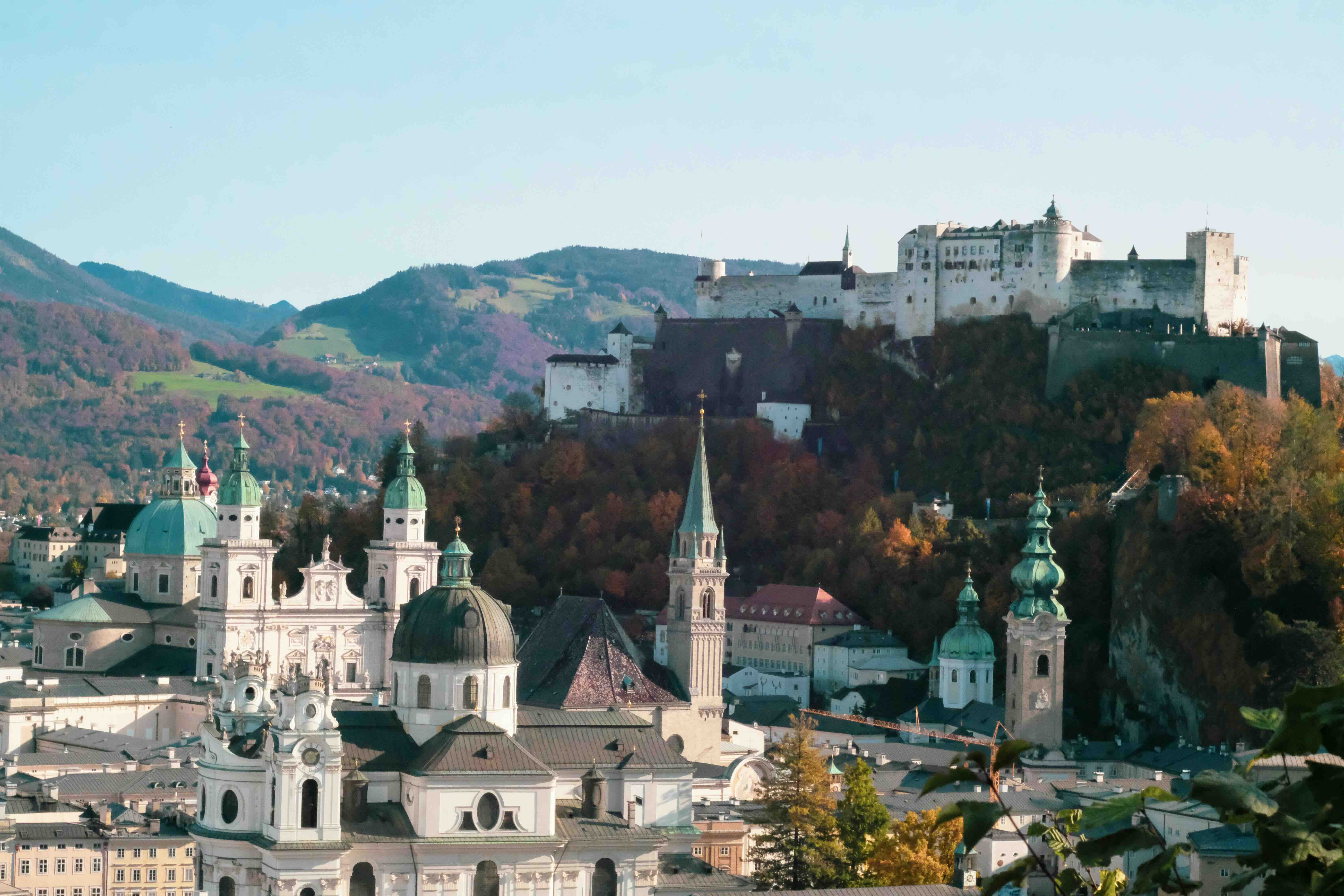
Munich → Salzburg
~1h 30m · Railjet / EuroCity (ÖBB · DB)
Continue into Austria: Munich to Salzburg
View Route
Nuremberg to Munich is fast, frequent German rail at its most useful: around 1 hour 10 minutes on a direct ICE down the high-speed line, city centre to city centre between two great Bavarian cities. Take the ICE for speed, or the slower regional train if a Deutschlandticket or Bayern-Ticket already covers it, and treat it as the spine that links the Frankfurt corridor to Munich, Salzburg and the Alps beyond.