The Dovre Line
Oslo to Trondheim
Norway's great south–north mainline. The Dovre Line leaves Oslo along the shore of Lake Mjøsa, climbs the length of the Gudbrandsdalen valley, and crosses the Dovrefjell plateau at over a thousand metres - musk-ox country, framed by the peaks of Dovrefjell–Sunndalsfjella National Park - before descending to the medieval city of Trondheim on the fjord. Around 550 kilometres, typically six and a half to seven hours, and a complete cross-section of inland Norway.
The line is called the Dovrebanen after its summit crossing, and the mountain has real weight in Norwegian identity - "united and loyal until Dovre falls" is written into the country's constitutional history. This is also the practical backbone of Norwegian rail: the direct link between the capital and the third-largest city, and the junction (at Dombås) for the Rauma Railway down to the fjords.
Pair it with the Rauma Railway: Break the journey at Dombås and take the branch line down the Romsdal valley to Åndalsnes - beneath Trollveggen, Europe's tallest vertical rock face - then return to continue north. Two of Norway's finest lines in one itinerary.
Ready to book Oslo to Trondheim?
Direct SJ Norge day trains link Oslo S and Trondheim S, with seats allocated at booking. The cheapest advance fares open well before departure and the popular summer services fill early - book ahead for a window seat on the Dovrefjell stretch. Interrail passes are accepted on domestic services; a seat reservation is still recommended in high season.
Railero may earn a small commission if you book via the link above, at no extra cost to you.
Oslo - North from the Capital
Oslo Sentralstasjon (Oslo S), Norway · 59.911°N, 10.752°E
The Dovre Line departs from Oslo S, Norway's national rail hub, and runs north out of the capital's suburbs into farmland. Within the first hour the railway reaches the southern tip of Lake Mjøsa - Norway's largest lake - and stays close to its eastern shore for the better part of a hundred kilometres, through Hamar with its Viking-ship-shaped Olympic hall, the water widening and narrowing beside the train.
This opening stretch is easy, settled country: grain fields, timber farmhouses, the lake catching the light. It is the calm before the long climb, and a good argument for a window seat from the start.
Dovre Line - Journey Facts
- OperatorSJ Norge
- RouteOslo S → Trondheim S (Dovrebanen)
- Distance~553 km
- Journey timeTypically 6h 30m – 7h, varying by service
- SummitDovrefjell, 1,024 m near Hjerkinn
- JunctionDombås - for the Rauma Railway to Åndalsnes
- Rail passesInterrail accepted; reservation recommended in summer
- Best seatLeft side northbound for Mjøsa; either side works on the plateau
Lillehammer - Head of the Lake
Lillehammer, Innlandet, Norway · 61.115°N, 10.466°E
At the head of Lake Mjøsa the train calls at Lillehammer, the town that hosted the 1994 Winter Olympics and still trades happily on that fortnight. The ski jumps stand on the hillside above the station, and the open-air Maihaugen museum - one of northern Europe's largest collections of historic timber buildings - is a short bus ride up the hill for anyone breaking the journey.
Beyond Lillehammer the character of the line changes. The lake is gone, and the railway enters Gudbrandsdalen - one of Norway's great farming valleys, long and deep, walled with pine forest and dotted with some of the country's oldest farms. The train climbs steadily for more than an hour, the river Lågen for company, the valley narrowing as the mountains gather.
Lake, then valley, then plateau: the Dovre Line ascends through Norway's landscapes in order, like chapters.
Dombås - Where the Rauma Railway Branches
Dombås, Innlandet, Norway · 62.075°N, 9.129°E · 659 m
Near the top of Gudbrandsdalen, the train reaches Dombås - a small mountain town with an outsized place on the rail map. This is the junction where the Rauma Railway (Raumabanen) branches west, dropping down the Romsdal valley past the Kylling Bridge and beneath Trollveggen to the fjord at Åndalsnes. If you have ever seen a photograph of a Norwegian train dwarfed by a vertical rock wall, it was probably taken on that branch.
For through passengers, Dombås marks the shift from valley to mountain. The forest thins, the air sharpens, and the line begins its final climb toward the plateau. For itinerary-builders, it is the natural place to split the journey: Dovre Line to Dombås, Rauma Railway to the fjord, then back up to continue north. Connections are not frequent, so plan the timings before you travel.
From Dombås
Dovrefjell - The Roof of the Line
Dovrefjell, Innlandet & Trøndelag, Norway · 62.216°N, 9.546°E · 1,024 m
North of Dombås the Dovre Line does the thing it is named for: it crosses the Dovrefjell. Near Hjerkinn the railway tops out at 1,024 metres on open, treeless upland - a landscape of stone, lichen and enormous sky. This is one of the last places in Europe with wild musk oxen; sightings from the train are a matter of luck, but the herds live on these slopes, and the peaks of Dovrefjell–Sunndalsfjella National Park, Snøhetta among them, stand along the western horizon.
The plateau crossing is why this journey deserves daylight. In summer the upland is green-gold and dotted with tarns; in winter it is a white expanse that makes the warm carriage feel like a privilege. Then the long descent begins - down through Oppdal, a ski and hiking town, as the line follows the Driva valley toward the coast, forest closing back in around the train.
When to Go
June–August: the plateau at its most accessible - long daylight, green uplands, every connection running. Book ahead; these are the busiest months.
September–October: autumn colour the length of Gudbrandsdalen and first snow on the tops - arguably the line at its most beautiful, with quieter trains.
Winter: the Dovrefjell becomes an Arctic-white expanse. Short days mean planning around the light, but the crossing is extraordinary in snow.
Trondheim - Arrival at the Medieval Capital
Trondheim Central Station (Trondheim S), Trøndelag, Norway · 63.430°N, 10.395°E
The Dovre Line ends at Trondheim S, beside the Trondheimsfjord and a short walk across the water from the city centre. Founded in 997 as Nidaros, Trondheim was Norway's medieval capital and remains its third-largest city - compact and walkable, wrapped in a loop of the river Nidelva, with rows of timber warehouses on stilts and the great Nidaros Cathedral, the northernmost Gothic cathedral in Europe and Norway's coronation church.
Give it an evening at least. The old town bridge at dusk, the cathedral's west front, fresh fish at the market - Trondheim rewards the traveller who does not treat it as a terminus. For the ambitious, the rail line continues north from here toward Bodø and the Arctic Circle; for most, this is the satisfying end of Norway's classic mainline.
From Trondheim S
Hotels near Trondheim Station
Trondheim S sits on the harbour side of the centre, with the old town a ten-minute walk over the bridge. These are reliable, well-located options for a night (or two) at the end of the Dovre Line.
Trondheim - riverside, a few minutes from the station
A modern riverside hotel famous in Norway for its breakfast, which has repeatedly been voted the country's best. Rooms overlook the Nidelva; the station and the old town are both an easy walk.
Trondheim - city centre, short walk from the station
Trondheim's grande dame, open since 1870 and comprehensively restored - palm-court dining room, spa, and the city's most polished address, two streets from the cathedral quarter.
Trondheim - central, near the old town
A straightforward, well-run modern hotel a few minutes from both the station and Bakklandet - a sensible base if you are spending the money on train tickets instead.
Hotel links open Booking.com. Railero may earn a commission on bookings at no extra cost to you.
Frequently Asked Questions
- Is there a direct train from Oslo to Trondheim?
- Yes. SJ Norge runs direct day trains between Oslo S and Trondheim S on the Dovre Line (Dovrebanen), with several departures spread across the day. Services vary by timetable and season, so check the operator's current schedule when you plan.
- How long does the Oslo to Trondheim train take?
- Typically around six and a half to seven hours for the roughly 550 km journey. Exact timings vary by service - some trains make more intermediate stops than others - so treat published times as approximate until you book.
- Is the Oslo to Trondheim train scenic?
- Genuinely, yes - and it builds as it goes. The first hours run along Lake Mjøsa, Norway's largest lake, then up the long Gudbrandsdalen valley. The highlight is the crossing of the Dovrefjell plateau at 1,024 m near Hjerkinn: open, treeless upland that is home to wild musk oxen, with the peaks of Dovrefjell–Sunndalsfjella National Park on the horizon. It is a journey worth doing in daylight.
- Do I need to reserve a seat on the Dovre Line?
- Long-distance SJ Norge trains use reserved seating, and a seat is normally allocated when you buy a ticket. In summer and around holidays the popular departures fill early, so book ahead for the best choice of seats - especially if you want a window on the scenic stretches.
- Can I connect to the Rauma Railway at Dombås?
- Yes - Dombås, about two-thirds of the way to Trondheim, is the junction for the Rauma Railway down the Romsdal valley to Åndalsnes. It is one of Norway's most scenic branch lines and pairs naturally with the Dovre Line; allow comfortable connection time, as services are not frequent.
- Is there a night train from Oslo to Trondheim?
- An overnight service with sleeping compartments has traditionally run on this route alongside the day trains. Availability and formats change with the timetable, so check the operator's current schedule if you are planning to travel overnight - though the daytime crossing of the Dovrefjell is the reason most travellers choose this line.
Continue Your Journey
Routes that pair naturally with this one — for building your European itinerary.
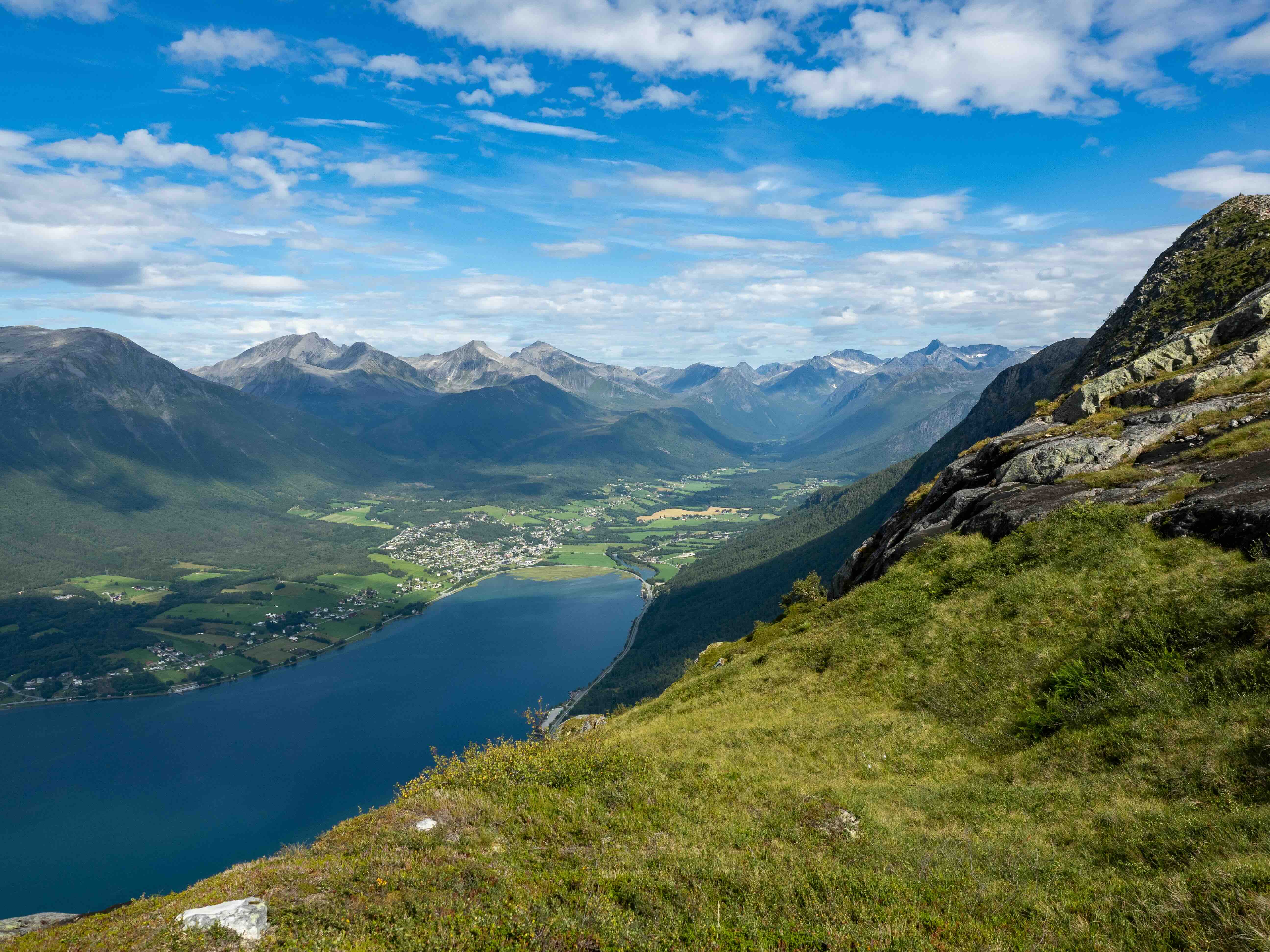
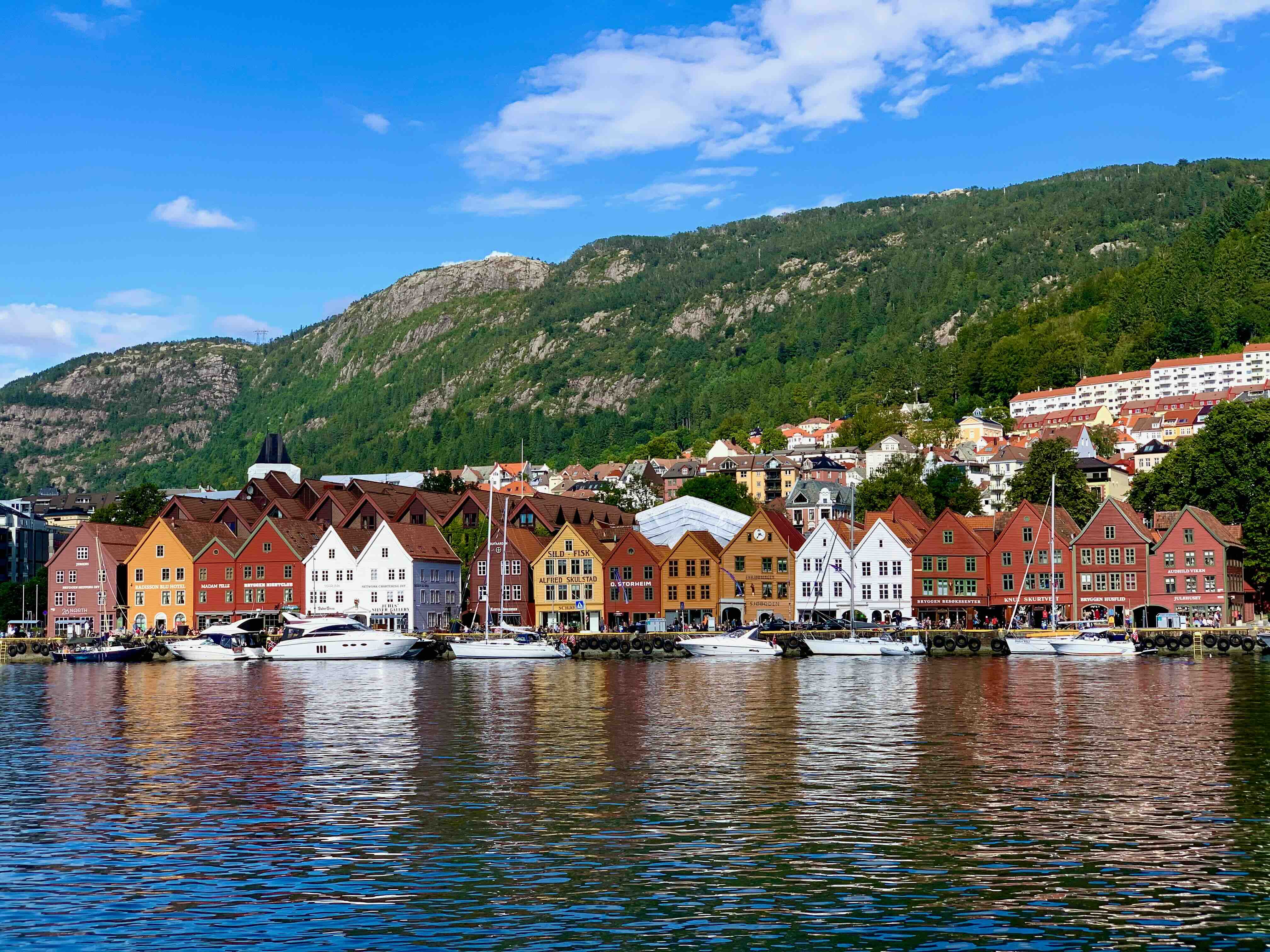
Oslo → Bergen
~7h 00m · Vy (Bergensbanen)
Ride Norway's other great crossing: Oslo to Bergen
View Route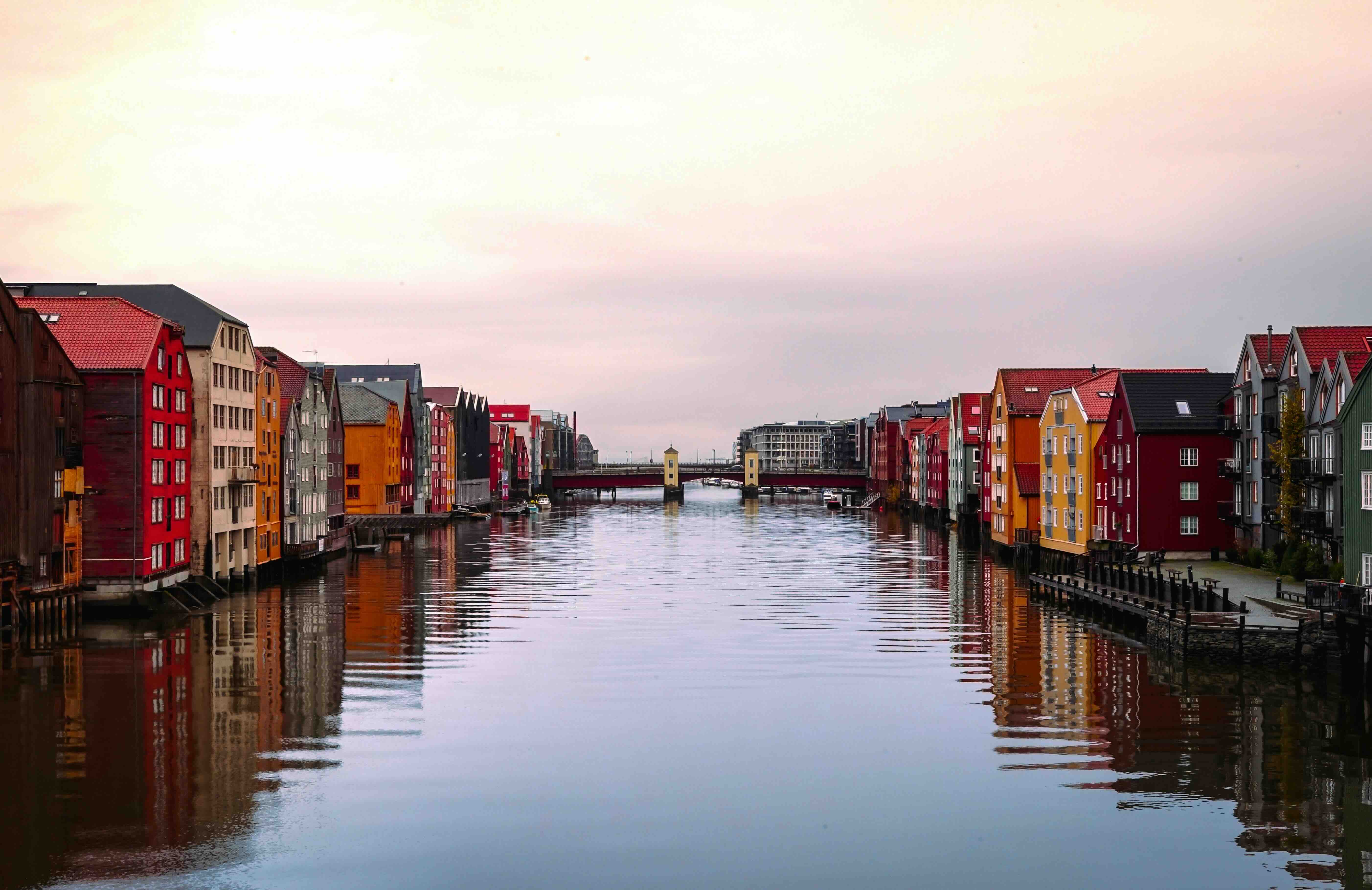
Bergen → Trondheim
~13–15h · Vy + SJ (via Oslo)
Combine both lines: Bergen to Trondheim via Oslo
View RouteWhen reservation is mandatory, which side of the train has the views, and how to choose your class.
Interrail and the Swiss Travel Pass — when a pass beats point-to-point tickets and when it does not.
The Dovre Line is Norway's workhorse mainline that happens to be a great scenic journey: a lake, a valley and a mountain plateau in six and a half hours, ending in the country's most atmospheric city. Ride it in daylight, sit by the window for the Dovrefjell, and - if you can spare the day - take the Rauma branch at Dombås on the way.