Bergen to Trondheim
The Cross-Country Rail Journey
There is no direct line between Norway's second and third cities - and that is the point. To go from Bergen to Trondheim by train is to ride two of the country's great railways back to back: the Bergen Line east across the Hardangervidda, and, after a change at Oslo, the Dovre Line north over the Dovrefjell. Around 1,000 kilometres, some thirteen to fifteen hours, and a cross-section of mountain Norway few journeys can match.
Because the two lines meet only at Oslo, this is a journey most travellers shape to suit themselves. Ride it in a single long day if you want the full sweep in one go; more often, people break it with a night in Oslo, or take the Oslo–Trondheim night train for the second leg and wake up near the Trondheimsfjord. Either way it is the natural continuation of a Bergen Line trip - turning an Oslo–Bergen visit into a grand loop through the heart of the country. It runs on the national network (Vy on the Bergen Line, SJ on the Dovre Line) under one shared ticketing system.
A grand loop: Pair this with the Bergen Line to build a full circuit - Oslo → Bergen along the Hardangervidda, then Bergen → Trondheim back over the Dovrefjell - seeing two different mountain crossings and three of Norway's biggest cities without repeating a mile.
Ready to book Bergen to Trondheim?
Both legs are ordinary national services, open to Interrail pass holders. Because you change at Oslo, book each leg - Bergen-Oslo and Oslo-Trondheim - separately, and reserve a seat on each; trains are popular and a window seat makes the journey. In summer, book well ahead. Schedules, fares and reservation rules can change, so confirm the current details when you book.
Railero may earn a small commission if you book via the link above, at no extra cost to you.
Example costs are based on typical advance bookings and city-centre transfers. Actual prices vary by date, operator and travel demand.
Bergen - Departure on the Bergen Line
Bergen Station, Vestland, Norway · 60.390°N, 5.333°E
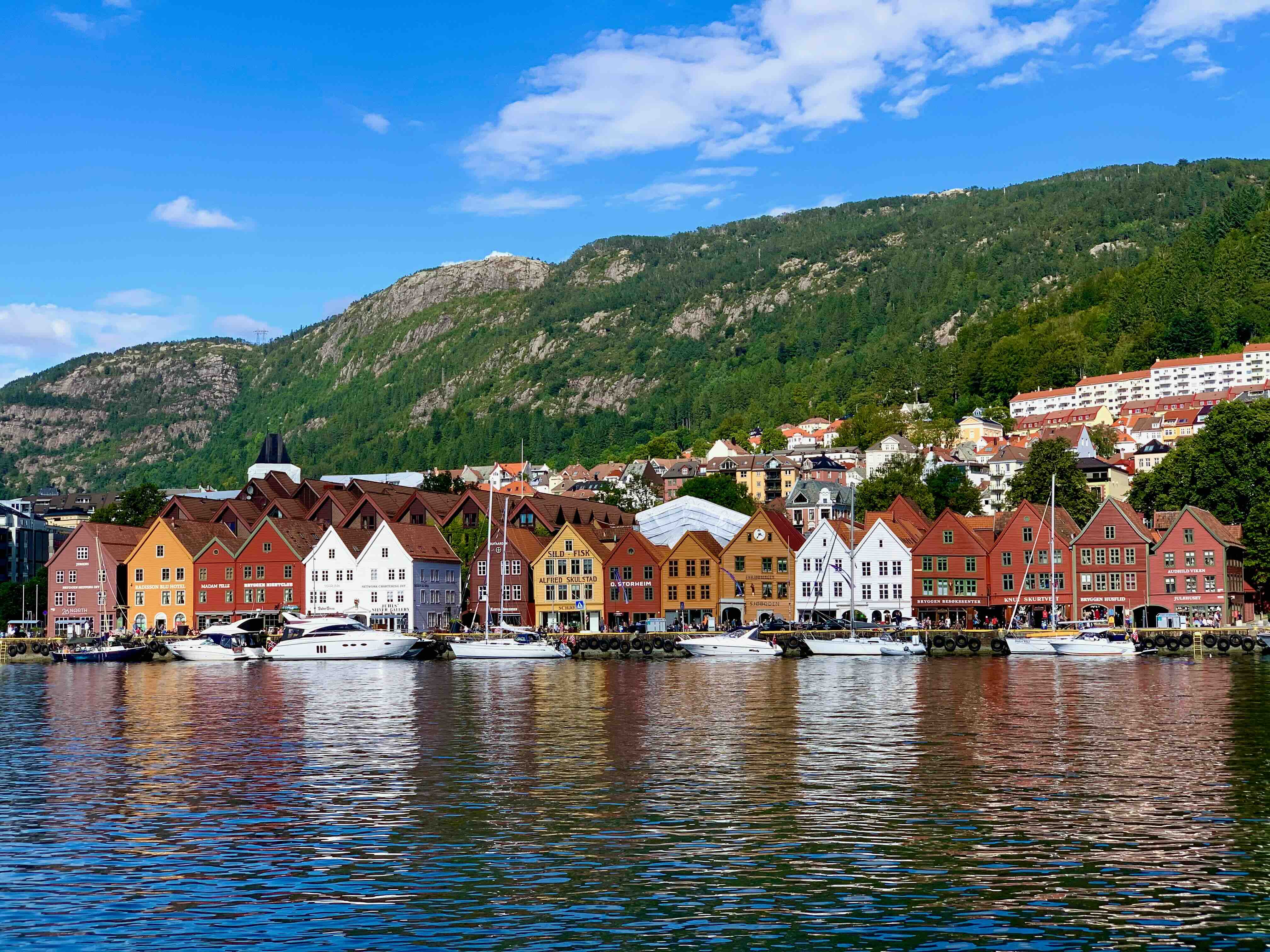
The journey starts at Bergen Station, on the edge of the compact, rain-washed city centre a short walk from the UNESCO-listed Bryggen wharf. From here the first leg is the Bergen Line - the flagship Oslo–Bergen route ridden in reverse - climbing out of the fjord country through the valley town of Voss, past Myrdal (the junction for the Flåm Railway) and up onto the Hardangervidda, the largest high-mountain plateau in northern Europe.
This first stretch is a highlight in its own right: green fjord-side valleys give way to bare, lake-strewn tundra above the treeline, the line cresting past Finse - at 1,222 metres the highest station in northern Europe - before descending through forest and farmland toward Oslo. It is roughly seven hours to the capital, where the route changes trains and character.
There is no single train from Bergen to Trondheim - which is why the journey crosses two mountain ranges and the whole width of southern Norway to get there.
Bergen → Trondheim - Journey Facts
- RoutingBergen Line to Oslo, then Dovre Line to Trondheim
- ChangeAt Oslo S - book each leg separately
- OperatorsVy (Bergen Line) · SJ (Dovre Line)
- Distance~1,040 km via Oslo
- Journey time~13–15 hours incl. connection; night-train option for leg 2
- Highest pointHardangervidda 1,237 m · Dovrefjell 1,024 m
- Rail passesInterrail valid on both legs - reserve seats
- Best forA grand loop continuing an Oslo–Bergen trip
Over the Dovrefjell - The Second Great Line
Dovrefjell, Innlandet & Trøndelag, Norway · 62.216°N, 9.546°E · 1,024 m
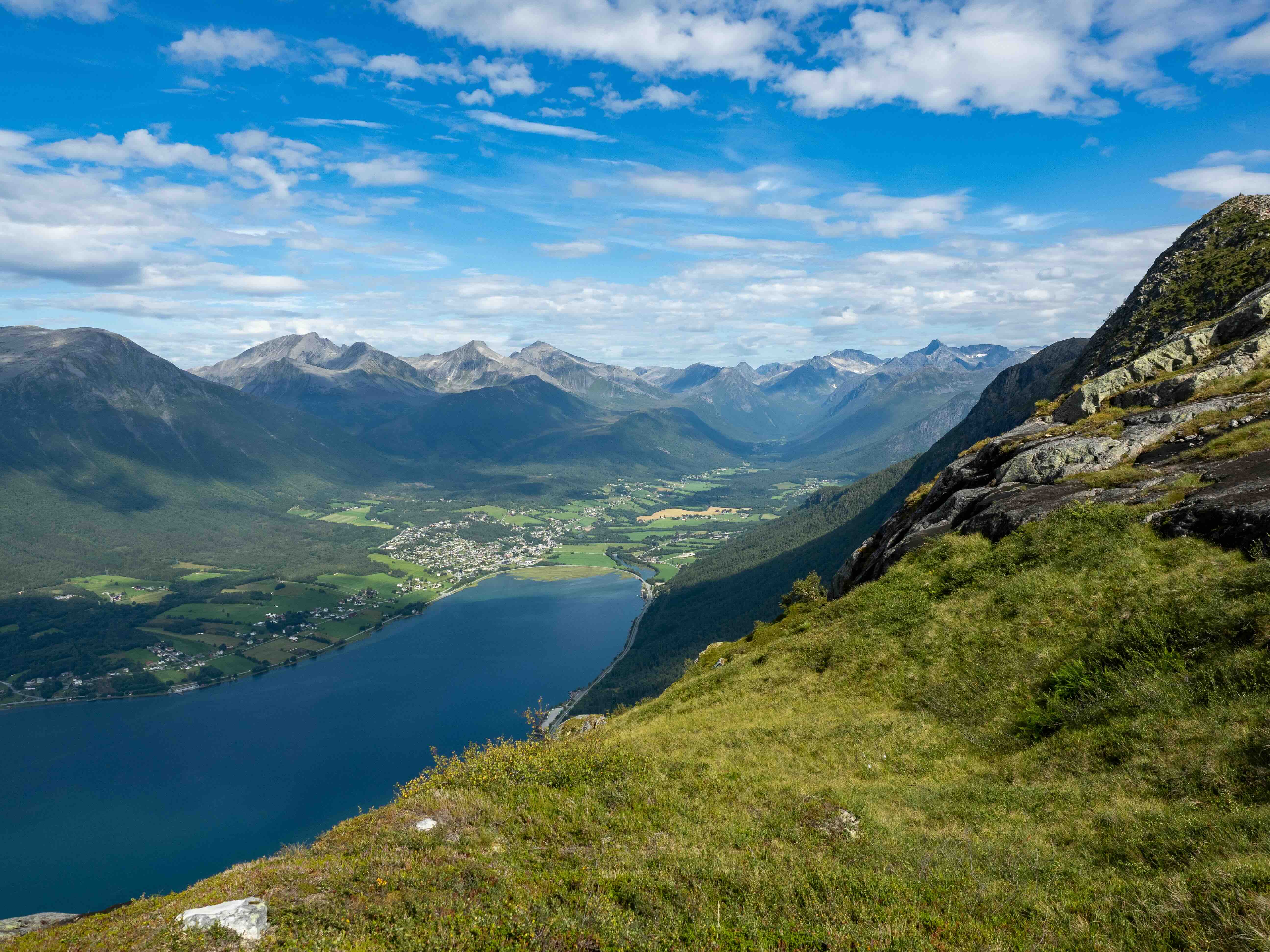
From Oslo the Dovre Line strikes north. It follows Lake Mjøsa - Norway's largest lake - past Hamar and the Olympic town of Lillehammer, then threads the long Gudbrandsdalen valley, one of the country's great farming dales, climbing steadily toward the mountains. At Dombås the Rauma Line branches west toward the fjords at Åndalsnes; the Dovre Line presses on and up.
The climax is the crossing of the Dovrefjell, the high mountain plateau that gives the line its name. At its summit near Hjerkinn the railway reaches 1,024 metres, running across open, treeless upland that is home to Norway's wild musk oxen and framed by the peaks of Dovrefjell–Sunndalsfjella National Park, including Snøhetta. The Dovrefjell has such symbolic weight in Norway that the phrase "united and loyal until Dovre falls" is written into the country's constitutional history. Then the line begins its long descent through Oppdal toward the coast.
Two plateaus in one journey: the Hardangervidda on the Bergen Line, the Dovrefjell on the Dovre Line - the roofs of southern Norway, crossed back to back.
Onboard & Practical
- Reservations are optional but recommended on both legs; book each separately as you change at Oslo. Interrail is valid on the whole route.
- Both legs have an onboard café/bistro for drinks, snacks and simple meals - though many still bring their own provisions for a full-day crossing.
- Wi-Fi and at-seat power are generally available; coverage drops in long tunnels and on the high plateaus, so download what you need before you set off.
- Standard class is comfortable throughout; the quieter Komfort (Plus) class adds space to work or rest on the longer stretches.
- No airline-style baggage limits - overhead shelves and end-of-carriage racks take larger cases, skis and bikes.
- Family-friendly throughout, with room for prams and a family carriage on many services; breaking the trip overnight in Oslo keeps each leg manageable.
The Journey in Season
Trondheim - Arrival at the Historic North
Trondheim Central Station (Trondheim S), Trøndelag, Norway · 63.430°N, 10.395°E
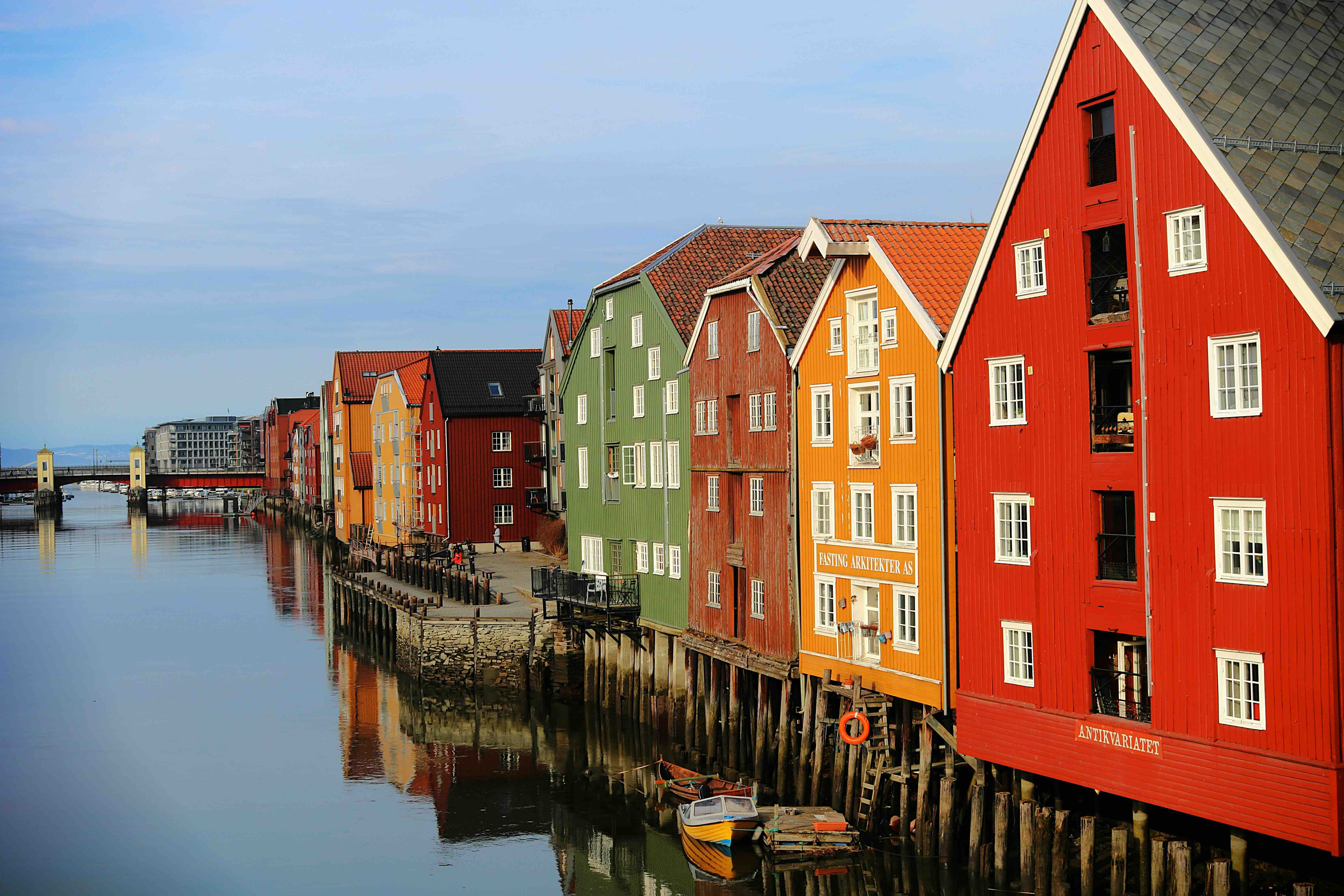
The Dovre Line comes down to the Trondheimsfjord and into Trondheim Central Station (Trondheim S), on an island just across the water from the city centre. Founded in 997, Trondheim was Norway's medieval capital, and it remains the country's third-largest city - compact, walkable, and defined by the river Nidelva looping around its old town of timber warehouses and the great Nidaros Cathedral.
The station is also a junction, not just a terminus. This is where the rail map of Norway hands over to its northern reaches: the Nordland Line runs on from here toward Bodø, crossing the Arctic Circle, while the Rauma Line (branching back at Dombås) and the line east to Sweden also meet the network here. For many travellers, arriving in Trondheim is less an ending than the start of the north.
From Trondheim Station
When to Go
June–August: long northern daylight, green valleys and full connections onward to Bodø and the fjords - the classic season, and the busiest. Reserve seats well ahead.
September–October & May: quieter and often more atmospheric - autumn colour in Gudbrandsdalen or spring snowmelt, with the plateaus still dramatic and trains easier to book.
Winter is spectacular but some connecting services run reduced - check what is operating before relying on a tight connection.
It is worth staying a night. Trondheim rewards a slow evening - the light on the Nidelva, the lanes of Bakklandet, the cathedral at dusk. After a full day crossing the mountains from the west coast, arriving here feels like reaching a different Norway entirely.
Hotels near Trondheim Station
After a long day across the mountains you will not want to go far. All four properties below are within a short walk of Trondheim Central Station and the old town, so you can step off the train and be settled in minutes.
Trondheim - riverside, a few minutes from the station
A modern hotel on the Nidelva waterfront, repeatedly rated for one of the best breakfasts in Norway. A short, flat walk from the station across to the river - an easy, comfortable arrival.
Trondheim - Brattøra, beside the station
A landmark waterfront hotel on Brattøra, effectively next to the station and the fjord, with harbour views from the upper floors. The closest full-service base to the platforms.
Trondheim - city centre, short walk from the station
The city's grand historic hotel, open since 1870 and beautifully restored, in the centre a few minutes from the cathedral. Choose it for a special stay at the end of the line.
Trondheim - central, near the old town
A straightforward, well-located central option a short walk from both the station and the Bakklandet riverside - a dependable, good-value base for exploring on foot.
Hotel links open Booking.com. Railero may earn a commission on bookings at no extra cost to you.
Frequently Asked Questions
- How long does the Bergen to Trondheim train take?
- There is no direct line, so the journey runs east on the Bergen Line to Oslo and then north on the Dovre Line to Trondheim, with a change at Oslo. End to end it is roughly 13 to 15 hours of rail plus the connection - around 1,000 km in total. Many travellers deliberately break the trip with an overnight in Oslo, or use the Oslo–Trondheim night train for the second leg. Exact timings vary by service and season, so check current schedules when you plan.
- Is the Bergen to Trondheim train scenic?
- Very. It strings together two of Norway's great railways: the Bergen Line across the Hardangervidda plateau (Europe's largest high-mountain plateau, at over 1,200 m) and the Dovre Line over the Dovrefjell mountains at 1,024 m, through the long Gudbrandsdalen valley and down to the Trondheimsfjord. Few single itineraries in Europe pack in this much mountain, plateau and valley scenery.
- Can I use Interrail from Bergen to Trondheim?
- Yes. Both legs - the Bergen Line (run by Vy) and the Dovre Line (run by SJ) - are part of the national network covered by Interrail passes. Seat reservations are optional but recommended on these busy long-distance trains, especially in summer, and any reservation fee is separate from the pass. Pass conditions can change, so confirm the current terms before you travel.
- Do I need a seat reservation on the Bergen to Trondheim train?
- A reservation is not compulsory on most Norwegian long-distance trains, but it is strongly recommended on both legs of this route - these are popular services and a guaranteed window seat is worth having on a journey this long. If you are breaking the trip in Oslo, reserve each leg separately. In peak summer, book well ahead.
- Is there food onboard?
- Yes. The long-distance trains on both the Bergen Line and the Dovre Line carry an onboard café/bistro serving hot and cold drinks, snacks and simple meals, with at-seat power. On a full-day crossing many travellers still bring their own provisions and a water bottle as a backup. Catering ranges can change from time to time.
- Which season is best for the Bergen to Trondheim train?
- Every season looks completely different. Summer brings long daylight and green valleys but the busiest trains; late spring and early autumn are quieter, with snowmelt waterfalls or autumn colour; winter turns the Hardangervidda and Dovrefjell into vast white expanses that are extraordinary from a warm carriage, though some connections run reduced. There is no bad season - only different ones.
- Can I work onboard the train?
- Yes. Norwegian long-distance trains have at-seat power sockets and generally offer onboard Wi-Fi, and the quieter Komfort (Plus) class gives you extra space to work. Mobile coverage is good in the valleys but can drop in the long mountain tunnels and on the high plateaus, so download anything essential before you set off.
- Is the Bergen to Trondheim train suitable for families?
- Yes. There is no airport-style security or check-in, children can move around freely, and long-distance trains have space for prams and luggage - many also have a family carriage with a small play area. Breaking the journey with an overnight in Oslo keeps each leg manageable for younger children, and reduced or free child fares are common. Pack layers and snacks for the mountain sections.
Continue Your Journey
Routes that pair naturally with this one — for building your European itinerary.
Interrail and the Swiss Travel Pass — when a pass beats point-to-point tickets and when it does not.
How to find the best fares, which operators to book with, and when advance booking makes the difference.
Bergen to Trondheim is not a route you take to get somewhere quickly - it is one you take for the sweep of it: two flagship railways, two mountain plateaus, and the whole breadth of southern Norway between the fjord coast and the historic north. Ride it as the second half of a grand loop, break it in Oslo if you like, and let the country unfold the long way round.