London to Cologne by Train
Eurostar to Brussels, then ICE to the Rhine
London to Cologne by train is a straightforward one-change journey of around five hours: the Eurostar from St Pancras to Brussels-Midi, a change onto a DB or SNCB ICE, and on across Belgium to Köln Hbf beside the cathedral. There is no direct train, but the connection is easy and the arrival could hardly be better placed. It is the natural rail way from London to the Rhine, and it joins two guides Railero already covers into one journey.
The thing to understand before you book is that this is a connection, not a through train: you change at Brussels-Midi from the Eurostar onto an onward ICE, in the same station. This guide focuses on that London-origin journey as a whole, how to book it, how the connection and any delays are handled, and how to reach Cologne and its Christmas markets. For the two legs in detail, see the London to Brussels and Brussels to Cologne guides linked throughout.
One easy change, then the Rhine: Eurostar to Brussels-Midi in about two hours, change onto an ICE, and reach Köln Hbf in around five hours in total, arriving right beside Cologne Cathedral. Allow a comfortable connection at Brussels.
Ready to travel London to Cologne?
This is a one-change journey: the Eurostar from London St Pancras to Brussels-Midi, then a DB or SNCB ICE on to Köln Hbf, around five hours in total. The simplest approach is to book the whole journey in a single transaction through Deutsche Bahn (bahn.com), Eurostar or SNCB International, which sets up the connection for you; Omio and Trainline let you compare and book in one place. The Eurostar leg is cheapest booked well ahead, as advance fares are limited, so book early for the best price. A seat is included on the Eurostar; on the onward ICE a reservation is optional but worth adding on busy dates.
Railero may earn a small commission if you book via the link above, at no extra cost to you.
Departing London
London St Pancras International · 51.531°N, 0.124°W
London–Cologne - At a Glance
- Direct trainNo - one change at Brussels-Midi
- Total timeAround 5 hours for a good connection
- The legsEurostar ~2h to Brussels, then ICE ~1h50 to Cologne
- ReservationIncluded on Eurostar; optional on the ICE
- BookingBook as one transaction for the simplest connection
- Köln Hbf to the marketsA few minutes on foot, beside the cathedral
The journey begins at London St Pancras International, the Eurostar terminal in central London, where you clear the UK exit checks and French and Belgian entry checks before boarding, so arrive around 60 to 90 minutes ahead as Eurostar advises. From here the Eurostar runs south-east across Kent on HS1, dips under the Channel and speeds across northern France and Belgium to Brussels-Midi in about two hours. It is the same first leg as the London to Brussels journey, covered in full in that guide.
The one thing to understand before you book is that London to Cologne is a connection rather than a single train: you change at Brussels-Midi onto an onward ICE. That change is easy, in the same station, but it shapes how you book and what happens if a train runs late, which the next sections explain. Think of the trip as two comfortable legs joined by a short, well-trodden change.
Changing at Brussels-Midi
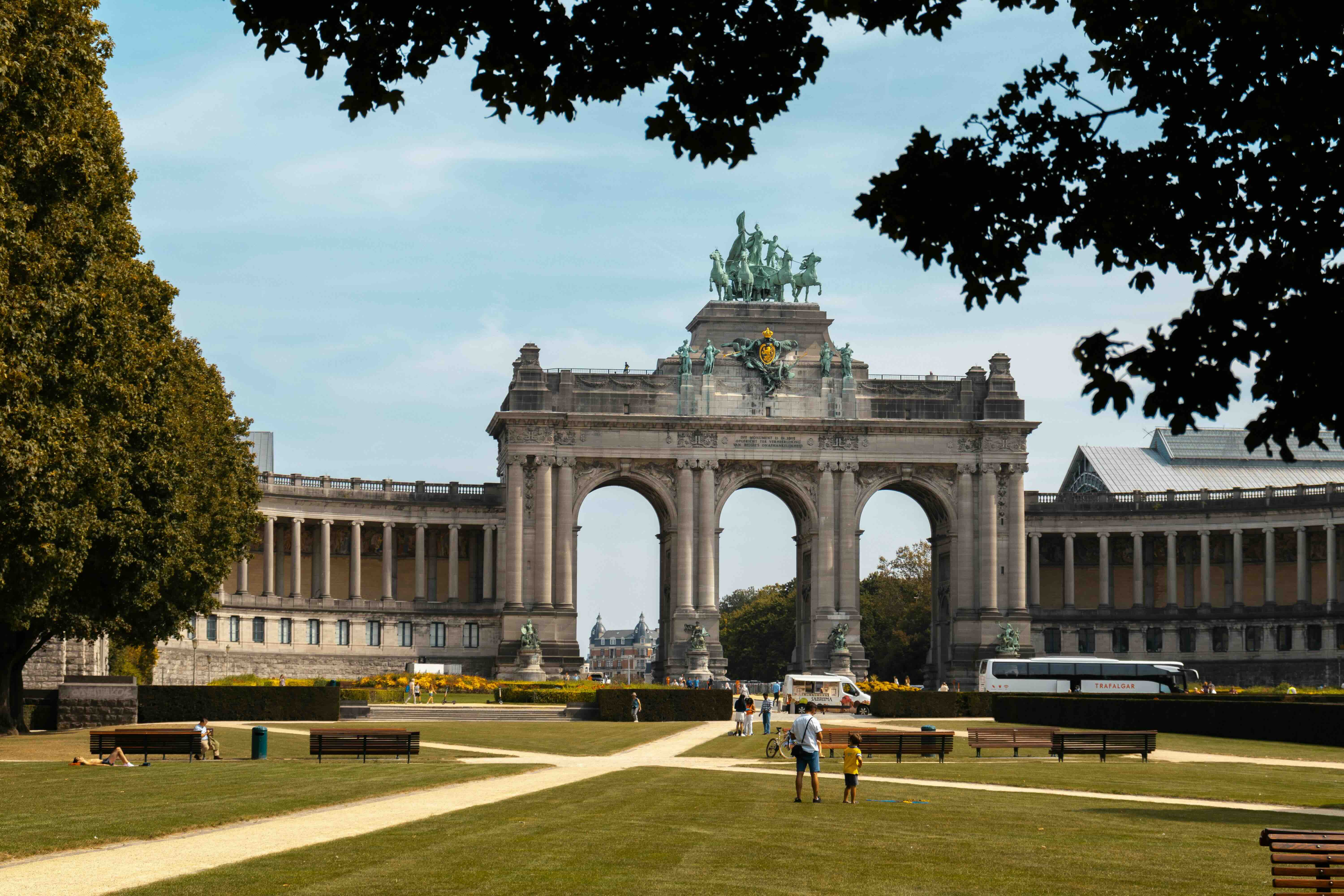
Brussels-Midi / Brussel-Zuid · 50.836°N, 4.336°E
The change happens at Brussels-Midi (Brussel-Zuid), where the Eurostar arrives and the onward ICE to Cologne departs from the same station, so there is no cross-city transfer. You simply follow the signs to the main-line platforms and find your ICE to Köln. It is worth allowing a comfortable connection rather than the tightest one on paper, particularly at busy times and in the Christmas-market weeks, so a missed train does not derail the day.
If the Eurostar does run late and you miss the onward train, you are not simply stranded. Because DB and SNCB belong to the Railteam alliance, a missed connection caused by a delayed or cancelled train may be covered by HOTNAT ("Hop On The Next Available Train"), which lets you board the next available train at no extra cost. It comes with conditions: it depends on seat availability and does not guarantee an immediate departure, a reserved seat, or accommodation if the next service is the following day. Ask staff at the station for the delay confirmation you need, and check the current Eurostar and Railteam rules for exactly how it applies to a London to Cologne connection.
The connection at a glance
Across Belgium and Into Cologne
Köln Hauptbahnhof · 50.943°N, 6.958°E
From Brussels the ICE runs east across Belgium, through Leuven and Liège and over the border past Aachen, then down the Rhine into Köln Hauptbahnhof in about an hour and fifty minutes. This second leg is the Brussels to Cologne journey in its own right, covered in detail in that guide; on the London to Cologne trip it is simply the onward half, a fast, comfortable run into Germany.
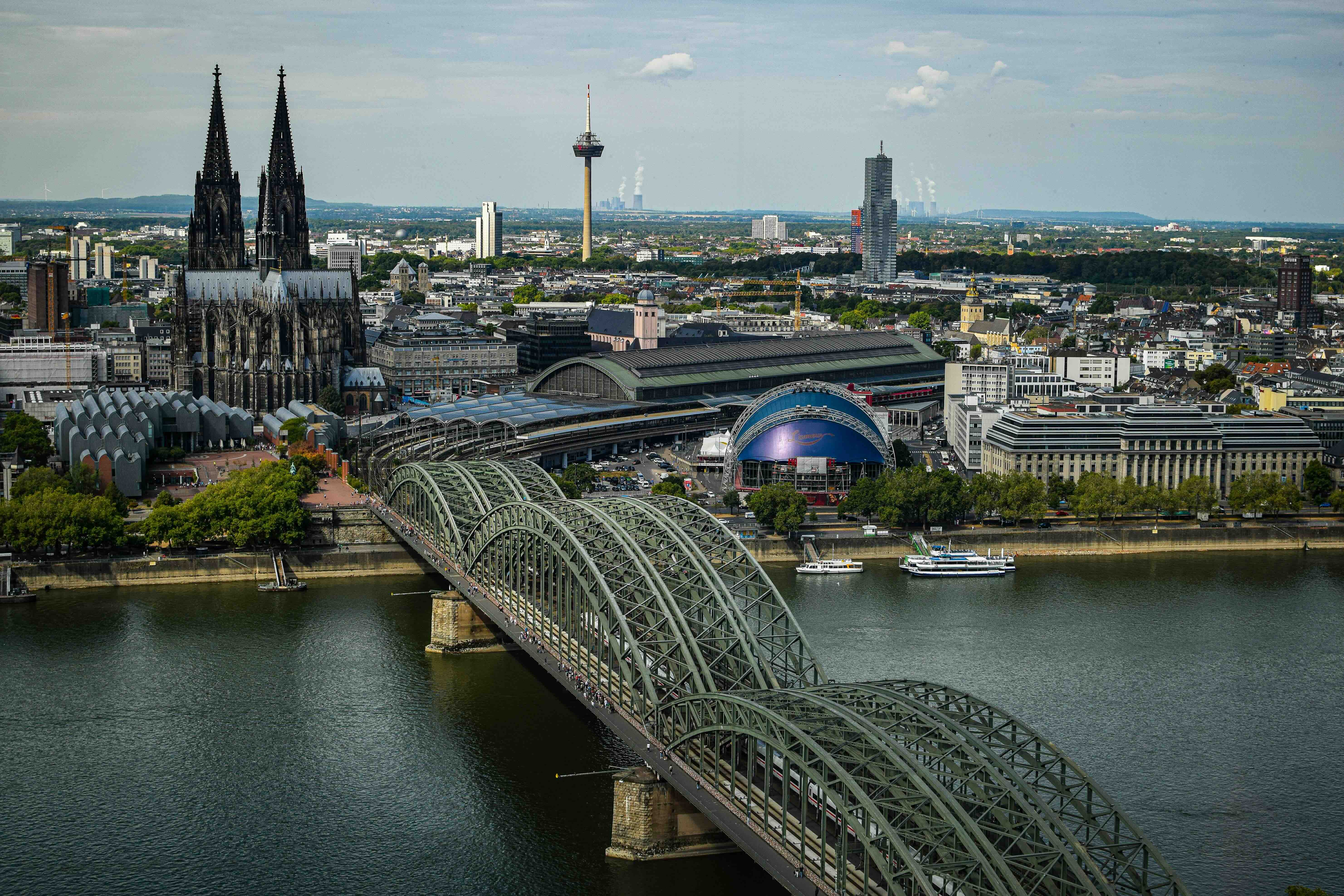
The arrival is the best part. Köln Hbf sits directly beside Cologne Cathedral, so you step off the train almost underneath the twin spires, in the heart of the old town and on the bank of the Rhine. The cathedral, the old town, the Rhine promenade and the museums are all within a short walk, and the whole city network runs from beneath the station, so there is no transfer to think about once you arrive.
From Köln Hbf
Booking, Connections and Compensation
How the two legs fit together
The simplest way to book is the whole journey in a single transaction, through Deutsche Bahn, Eurostar or SNCB International, which sets up a sensible connection at Brussels for you; Omio and Trainline sell the same journey and let you compare it in one place. The Eurostar leg is where booking ahead matters most: its cheapest advance fares are limited and sell out, so book early for the best price, while the onward ICE can be added to the same booking. A seat is included and compulsory on the Eurostar, and a reservation on the ICE is optional but worth having on busy departures.
One thing is worth knowing even when you book everything together: the Eurostar leg and the onward ICE are separate transport contracts. In practice that means delay compensation is generally assessed on the affected leg rather than the whole journey, and you claim from the relevant operator. Missed-connection help through HOTNAT, described above, is a separate matter from compensation, and both come with their own conditions. None of this makes the journey difficult; it just means that booking, missed-connection assistance and any compensation are three different things, and it is worth checking each operator's current terms if a delay affects you. For the fuller picture, see the rail passes, booking and seat-reservations guides linked below.
Three separate things
Cologne's Christmas Markets by Train
A festive arrival beside the cathedral
Cologne is one of Germany's great Christmas-market cities, and the London to Cologne train lands you right in the middle of it: the main Cathedral Market is beside Köln Hbf, so you arrive almost within it. Because the trip takes around five hours with a change, it works best as an overnight or a short break rather than a day trip.
Cologne Christmas market (2026)
Cathedral Christmas Market: provisionally 16 November to 23 December 2026, closed on 22 November, on Roncalliplatz beside the cathedral, with more markets across the old town.
From the station: the Cathedral Market is only a few minutes' walk from Köln Hbf, essentially beside the platforms.
Before you travel: dates are provisional until the organiser confirms them; check koelnerweihnachtsmarkt.com nearer the time, and reserve the ICE on busy market weekends.
Passes, Borders and Practicalities
A few useful notes for the through-journey
On rail passes, an Interrail or Eurail pass covers the ICE across Belgium and Germany, but Eurostar is not freely included: pass holders need a separate paid Eurostar passholder ticket for the London to Brussels leg, and those come from a limited quota, so book that part early. On the ICE, an optional reservation is worth adding on busy days. If you are travelling on ordinary tickets rather than a pass, the booking advice above applies.
On borders and documents, you clear UK exit and Schengen entry checks at London St Pancras before boarding the Eurostar, so allow around 60 to 90 minutes there; after that the journey is within the Schengen area with no further routine checks, though carry the valid travel documents your nationality or status requires. Luggage is simple beyond the Eurostar security check: you carry your bags aboard and use the racks. All three stations, St Pancras, Brussels-Midi and Köln Hbf, are large, staffed and largely step-free, and assistance is best arranged in advance with each operator.
Quick Tips
Book as one journey: the simplest way to set up the Brussels connection, though the legs remain separate contracts.
Allow a comfortable change: a relaxed connection at Brussels-Midi is worth more than saving a few minutes on paper.
Stay over: at around five hours each way, Cologne rewards a night or two rather than a day trip.
Hotels in Cologne
Cologne rewards staying central, near the cathedral and the old town by Köln Hbf, so the markets, the Rhine and the station are all a short walk away.
Cologne - opposite the cathedral
Cologne's grand historic hotel directly facing the cathedral and steps from Köln Hbf, the classic luxury address for arriving by train into the heart of the city.
Cologne - by the cathedral
A comfortable modern hotel a moment from the cathedral and the old town, central for the markets and the Rhine and an easy walk from the main station.
Cologne - old town, near the cathedral
A well-priced, well-placed hotel in the old town within easy walking distance of the cathedral, the station and the Rhine - a practical base in the centre.
Hotel links open Booking.com. Railero may earn a commission on bookings at no extra cost to you.
Frequently Asked Questions
- Is there a direct train from London to Cologne?
- No. There is no direct London to Cologne train. The journey is made by taking the Eurostar from London St Pancras to Brussels-Midi, then changing onto a DB or SNCB ICE for the run to Köln Hbf. It is a straightforward one-change journey on a well-used international corridor.
- How long does London to Cologne take by train?
- Around five hours in total for a good connection: roughly two hours on the Eurostar to Brussels, a short wait to change, and about an hour and fifty minutes on the ICE to Cologne. The exact total depends on your connection time at Brussels, so check the current timetable for your date.
- Where do I change trains?
- At Brussels-Midi (Brussel-Zuid). You arrive there on the Eurostar and change onto the onward ICE to Cologne in the same station, so there is no cross-city transfer. Allow a comfortable connection time rather than the tightest possible, especially at busy periods.
- Do I book it as one ticket or two?
- You can book the whole journey in a single transaction through a seller such as Deutsche Bahn, Eurostar or SNCB International, which is the simplest approach. Note that even when booked together, the Eurostar leg and the onward ICE are separate transport contracts, which matters for how delays and compensation are handled (see below). You can also book the two legs separately if you prefer.
- What happens if my Eurostar is delayed and I miss the connection?
- Because DB and SNCB are part of the Railteam alliance, a missed connection caused by a delayed or cancelled train may be covered by HOTNAT ("Hop On The Next Available Train"), which lets you take the next available train at no extra cost. It is subject to conditions and seat availability, so it does not guarantee an immediate train, a reserved seat, or accommodation if the next service is the following day. Ask staff at the station for the delay confirmation you need. Check the current Eurostar and Railteam rules for the details.
- How does delay compensation work on this journey?
- Each operator handles its own leg. Because the Eurostar and the ICE are separate transport contracts even when booked together, compensation is generally assessed on the delay to the affected part of the journey rather than the whole trip, and you claim from the relevant operator. See the operators' current passenger-rights terms for exact thresholds.
- Do I need a seat reservation?
- A reservation is included and compulsory on the Eurostar, so your seat to Brussels is assigned when you book. On the onward ICE within Germany a seat reservation is optional, though it is worth adding on busy departures such as the Christmas-market weekends. If you book the whole journey together, any reservations are handled in that booking.
- Where should I book, and should I book ahead?
- Deutsche Bahn (bahn.com) is a reliable place to book the full London to Cologne itinerary, and Eurostar and SNCB International sell it too; Omio and Trainline let you compare and book in one place. The Eurostar leg is cheapest booked well ahead, as advance fares are limited and sell out, so booking early is worth it for the price.
- Which stations does the journey use?
- It starts at London St Pancras International, changes at Brussels-Midi (Brussel-Zuid), and arrives at Köln Hauptbahnhof, which sits right beside Cologne Cathedral in the centre of the city. All three are central main stations, so there is no airport-style transfer at any point.
- Can I do London to Cologne as a day trip?
- Not comfortably. At around five hours each way with a change, it is really an overnight or longer trip rather than a day out; you would spend most of a day trip travelling. It is far better to stay a night or two, which also lets you enjoy Cologne in the evening, especially during the Christmas-market season.
- When are Cologne's Christmas markets, and how do I reach them?
- For the 2026 season, the Cologne Cathedral Christmas Market is provisionally scheduled for 16 November to 23 December 2026 (closed on 22 November), with several other markets across the city centre. The Cathedral Market on Roncalliplatz is only a few minutes' walk from Köln Hbf, essentially beside the station, so arriving by train could hardly be easier. Dates are provisional until the organiser confirms them, so check closer to the time.
Continue Your Journey
Routes that pair naturally with this one — for building your European itinerary.
Brussels → Cologne
~1h 47m · ICE International (DB/SNCB)
The onward leg in detail: Brussels to Cologne by ICE
View Route
How to find the best fares, which operators to book with, and when advance booking makes the difference.
Interrail and the Swiss Travel Pass — when a pass beats point-to-point tickets and when it does not.
London to Cologne is an easy one-change journey rather than a direct train: the Eurostar to Brussels-Midi, a straightforward change onto an ICE, and around five hours in total to Köln Hbf beside the cathedral. Book it as one journey, allow a comfortable connection at Brussels, and treat Cologne as an overnight rather than a day trip, especially in the Christmas-market season. For each half in detail, follow the London to Brussels and Brussels to Cologne guides.
Back to all routes