London to Brussels by Train
Britain's Gateway to Continental Europe
London to Brussels is one of the easiest international journeys in Europe: a direct Eurostar from London St Pancras to Brussels-Midi in around 2 hours, city centre to city centre, with no flight and no airport transfer. It is a short, fast crossing under the Channel, and it is the first leg of the wider network that carries you on from Brussels to Amsterdam, Cologne and Paris.
The one thing that sets it apart from an ordinary European train is the start: Eurostar has airport-style check-in, security and passport control at St Pancras, all completed before you board, so you cannot simply turn up at the last minute. Get that right and the rest is genuinely simple - a reserved seat, a run under the sea, and arrival in the middle of Brussels. This guide covers the practical parts: check-in and the border, tickets and passes, luggage, and how to continue deeper into Europe from Brussels-Midi.
The key difference from an ordinary train: Eurostar is reservation-only with check-in, security and passport control at St Pancras. Eurostar recommends arriving 75 minutes before departure, and the gates close 30 minutes before, so you cannot turn up at the last minute.
Ready to book London to Brussels?
Eurostar runs direct from London St Pancras to Brussels-Midi several times a day in around 2 hours. Fares are dynamic, so the cheapest seats go to those who book early and prices climb closer to departure. Every ticket includes a specific train and an assigned seat. Interrail passes are accepted, but you must add a compulsory passholder reservation from a limited quota, so book that as early as possible.
Railero may earn a small commission if you book via the link above, at no extra cost to you.
Departing London St Pancras International
London St Pancras International, UK · 51.531°N, 0.124°W
The journey begins at London St Pancras International, the Eurostar terminal in central London and, by common consent, one of the finest railway stations anywhere. William Barlow's vast 1868 train shed arches over the platforms, the restored Gothic frontage of the old Midland Grand Hotel rises above the concourse, and beneath it all the Eurostar departures sit alongside domestic high-speed trains to Kent. It is easy to reach: King's Cross St Pancras is one of the busiest interchanges on the Underground, with six lines meeting there, and mainline trains arrive from across Britain.
What makes the departure different from an ordinary European train is that everything happens before you board. You check in through ticket gates, pass through light airport-style security, and clear both UK exit and Schengen entry passport control, all inside the terminal. Because of that, you cannot arrive at the last minute: Eurostar recommends arriving 75 minutes before departure, and the gates close 30 minutes before, so follow the recommended arrival time on your ticket.
London–Brussels - Journey Facts
- RouteLondon St Pancras International → Brussels-Midi / Brussel-Zuid
- OperatorEurostar (direct); some services also call at Lille
- Journey timeAround 2 hours; the fastest a little under - check current schedules
- FrequencySeveral direct trains a day, roughly every one to two hours
- ReservationsReservation-only; a seat is included with every ticket
- Check-inEurostar recommends arriving 75 min ahead; gates close 30 min before departure
Check-in, Security and the Border
Why Eurostar is not quite like an ordinary train
This is the part worth understanding before you travel. Eurostar works more like a short-haul flight than a regional train at the station, but without the airport. You check in at the ticket gates with your e-ticket, pass a light security screening of your bags, and then clear passport control. Uniquely, both the British and the Belgian (Schengen) checks are carried out at St Pancras before departure, so once you are through you simply wait in the lounge and board, and there are no checks on the train or when you step off in Brussels.
The single most important rule is timing. Check-in and the gates close 30 minutes before departure, and if you miss that cut-off you miss the train, because there is no time left to clear security and two sets of passport control. Eurostar recommends arriving 75 minutes before departure in Standard and Plus, and allowing extra at busy times such as Friday evenings, weekends and holidays. Carry a valid passport, not just an ID card, and note that the EU Entry/Exit System (EES) now registers non-EU travellers at the Schengen border and can add time, which is another reason to follow the arrival time printed on your ticket. Security is lighter and quicker than an airport, and there is no strict cabin-liquids rule of the airline kind, though it is worth checking the current security guidance before you pack.
Eurostar is a train, but you cannot treat it like one at the station: the gates close 30 minutes before departure, and a missed check-in is a missed train.
Under the Channel and Across to Belgium
The Channel Tunnel and northern France · 51.060°N, 1.350°E
Out of St Pancras the Eurostar runs onto HS1, Britain's high-speed line, and accelerates across Kent at up to 300 km/h, the North Downs and the orchards of the Garden of England slipping past before the land drops away toward the coast. Then comes the crossing itself: the train enters the Channel Tunnel near Folkestone and runs under the sea bed for about 20 minutes, 50 km of darkness, before surfacing into the flat farmland of the Pas-de-Calais near Coquelles.
On the continental side the line runs fast and level across northern France and into Belgium. Some services call at Lille, the big junction of the French north where the lines toward Paris and Brussels divide, and a genuinely worthwhile city in its own right. Beyond it the train crosses the Franco-Belgian border without ceremony and runs north-east across the plain into Brussels. It is honest to say this is not a scenic route: the appeal is speed, ease and the sheer novelty of travelling under the sea, not the view from the window.
Worth Knowing
Arriving at Brussels-Midi
Brussels-Midi / Brussel-Zuid, Belgium · 50.836°N, 4.336°E
Eurostar arrives at Brussels-Midi, known as Brussel-Zuid in Dutch and Brussels-South in English, the city's international hub where the Eurostars from London and Paris share the station with high-speed trains across the continent. It is a busy, functional station rather than a beautiful one, but it is well equipped and puts the whole Belgian and European network at your feet the moment you step off.
One thing to know: Brussels-Midi is not the same as Brussels-Central, and it is not in the historic heart of the city. It sits about 2 km south of the centre and the Grand-Place. The connection is easy, though: frequent local trains run from Midi to Brussels-Central in a few minutes, metro lines 2 and 6 stop directly beneath the station, and trams and taxis wait outside. For the old town and the Grand-Place, a short hop to Brussels-Central is usually the simplest final step.
From Brussels-Midi
Brussels as a Gateway into Europe
Why Brussels-Midi is the useful first stop
The real strategic value of this journey is what Brussels opens up. Brussels-Midi is one of the best-connected stations in Europe, and it turns a London to Brussels ticket into the front door of the continental network. From the same station you arrive at, direct high-speed trains run north to Amsterdam, east into Germany toward Cologne and Frankfurt, and south back to Paris, while Belgian domestic trains reach Bruges, Ghent and Antwerp in well under an hour.
That makes London to Brussels a natural building block rather than just a destination. London to Brussels to Amsterdam is an easy day by rail; London to Brussels to Cologne carries you into the heart of Germany; and because the Paris and Brussels Eurostars use the same London terminal, the two routes are close cousins. Treat Brussels as the hinge of a wider trip and the whole of north-west Europe opens up from a single change of train.
Onward from Brussels-Midi
- AmsterdamDirect high-speed trains north, around 1h 50m
- CologneDirect ICE east into Germany, around 1h 50m
- ParisDirect Eurostar south, around 1h 25m
- BrugesFrequent Belgian trains, around 1 hour
- GhentFrequent Belgian trains, around 30 minutes
- AntwerpFrequent Belgian trains, around 45 minutes
Reach Brussels and the continent opens up: Amsterdam and Cologne within a couple of hours, Paris to the south, and the whole Belgian network on the doorstep.
Tickets, Reservations, Passes and Luggage
The practical rules for the Eurostar
Eurostar fares are dynamic, like an airline's: prices start low and rise as seats sell and the date approaches, so the single best way to save money is to book early. There are three classes - Eurostar Standard, the roomier Eurostar Plus, and Eurostar Premier with a meal served at your seat - and the cheaper Standard fares are the ones that reward planning ahead. Every ticket, in every class, includes a specific train and an assigned seat, so there is no separate reservation to arrange; the trade-off is that the ticket is tied to that train unless you buy a more flexible fare.
For pass holders the rule is different and important: Interrail Global Passes are valid on Eurostar, but a pass alone does not let you board. You must buy a compulsory paid passholder reservation, which comes from a small quota set aside for pass holders and is subject to availability. Because that quota is limited and sells out, especially in summer and at weekends, book the reservation as far ahead as you can, and check the current fee when you book. For the wider picture, see the rail passes guide linked below.
Luggage is one of the real advantages over flying. Eurostar Standard and Plus allow two pieces of luggage plus one piece of hand luggage, and Premier allows three plus hand luggage; on routes to and from London a bag can be up to 85 cm long. There is no strict weight limit as long as you can carry your bags yourself, and there is no checked-baggage process at all - you keep everything with you and walk straight off at the other end. On accessibility, both St Pancras and Brussels-Midi are large, staffed, step-free stations, and Eurostar offers assistance that is best booked in advance; access can vary by station and train, so arranging help ahead is the reliable approach.
Quick Tips
Book early: fares are dynamic, so the cheapest Standard seats go to those who plan ahead.
Arrive in good time: Eurostar recommends arriving 75 minutes ahead and the gates close 30 minutes before departure, so allow more at busy times.
Pass holders, reserve first: the passholder quota is small and sells out, so book the compulsory reservation as early as you can.
Hotels in Brussels
Brussels rewards staying near the Grand-Place and the old town, a short hop from Brussels-Central and about 2 km from the Eurostar arrival at Brussels-Midi.
Brussels - beside the Grand-Place
A polished luxury hotel on a quiet street steps from the Grand-Place, in the very heart of the old town - the classic central address, a short ride from Brussels-Midi.
Brussels - Louise district
A stylish, characterful hotel in a converted 1970s office block in the Louise quarter, walkable to the centre and an easy connection from Brussels-Midi.
Brussels - near the centre
A dependable, well-priced design hotel close to the centre and the transport network - a practical base for a city stop or an onward connection.
Hotel links open Booking.com in a new tab.
Frequently Asked Questions
- Is there a direct train from London to Brussels?
- Yes. Eurostar runs direct from London St Pancras International to Brussels-Midi / Brussel-Zuid with no change of train, several times a day. Some services also call at Lille, and some London to Amsterdam trains stop at Brussels-Midi on the way, so the corridor is well served through the day.
- How long does the train from London to Brussels take?
- Around 2 hours city centre to city centre, with the fastest services a little under 2 hours. Exact times vary by service, so check the current timetable when you book.
- Which London station does the Brussels train leave from?
- London St Pancras International, the dedicated Eurostar terminal in central London. It is on the Underground (six lines at King's Cross St Pancras) and has direct trains to much of the country, so it is easy to reach from anywhere in London or beyond.
- Which Brussels station does Eurostar arrive at, and is it the same as Brussels-Central?
- Eurostar arrives at Brussels-Midi (Brussel-Zuid in Dutch, Brussels-South in English), not Brussels-Central. Brussels-Midi is the city's international hub, about 2 km south of the historic centre and the Grand-Place. Frequent local trains link it to Brussels-Central in a few minutes, and metro lines 2 and 6 stop beneath it.
- How early should I arrive for Eurostar at St Pancras?
- Eurostar recommends arriving 75 minutes before departure in Standard and Plus. Check-in and the ticket gates close 30 minutes before departure, and if you miss that you miss the train, because there is no time to complete security and border checks. Follow the recommended arrival time on your ticket and allow extra at busy times.
- Do you go through passport control between London and Brussels?
- Yes, but it is all done at St Pancras before you board. You pass through light airport-style security and then both UK exit and Schengen entry passport control, so there are no checks on the train or on arrival in Brussels. Carry a valid passport. The EU Entry/Exit System (EES) now registers non-EU travellers at the Schengen border and can add time, which is one reason to follow the recommended arrival time.
- Do I need a seat reservation from London to Brussels?
- Every Eurostar ticket includes a specific train and an assigned seat, so a normal ticket already covers your reservation. Eurostar is reservation-only, which is why you cannot simply turn up minutes before departure as you might for an ordinary regional train.
- Can I use an Interrail pass on London to Brussels?
- Yes, Global Passes are valid on the UK to Belgium Eurostar, but a pass alone does not let you board. You must buy a compulsory paid seat reservation, which comes from a small quota and is subject to availability, so book it as early as you can because passholder spaces sell out. Check the current fee and availability when you book.
- How much luggage can I take on Eurostar?
- Eurostar Standard and Plus allow two pieces of luggage plus one piece of hand luggage; Eurostar Premier allows three plus hand luggage. On routes to and from London a bag can be up to 85 cm long. There is no strict weight limit as long as you can carry it yourself, and unlike flying there is no checked-baggage process: you keep your bags with you throughout.
- Can I continue from Brussels to Amsterdam, Cologne or Paris by train?
- Yes. Brussels-Midi is one of Europe's best-connected stations. From the same station you can continue north to Amsterdam, east into Germany toward Cologne, or south back to Paris, as well as to Belgian cities like Bruges, Ghent and Antwerp. It makes London to Brussels the natural first leg into the wider European network.
Not sure if you need to reserve a seat?
Check this journey in Railero’s Seat Reservation Checker.
Continue Your Journey
Routes that pair naturally with this one — for building your European itinerary.
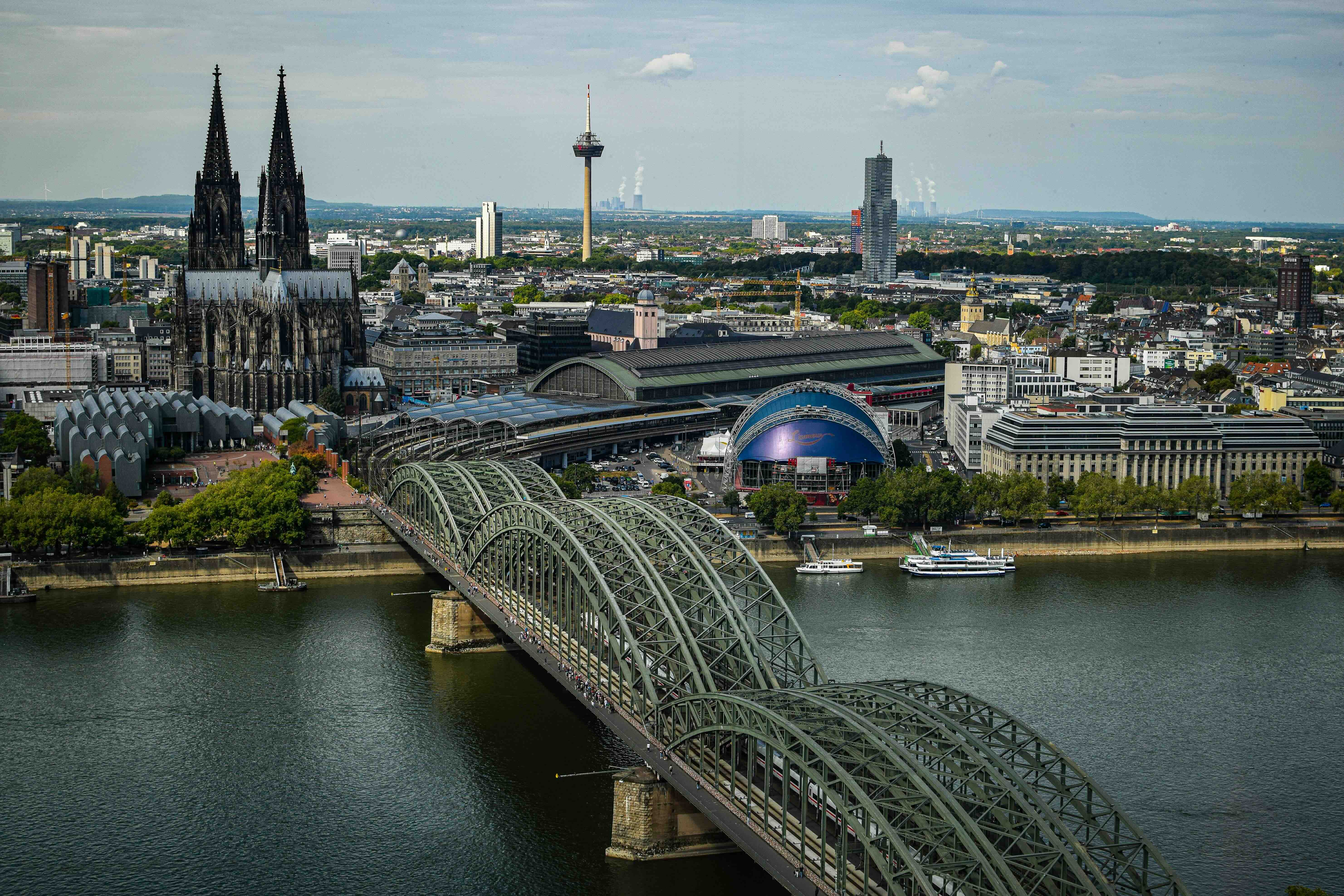
London → Cologne
around 5h · Eurostar + ICE (via Brussels)
Straight on to Cologne: the full London to Cologne journey
View Route
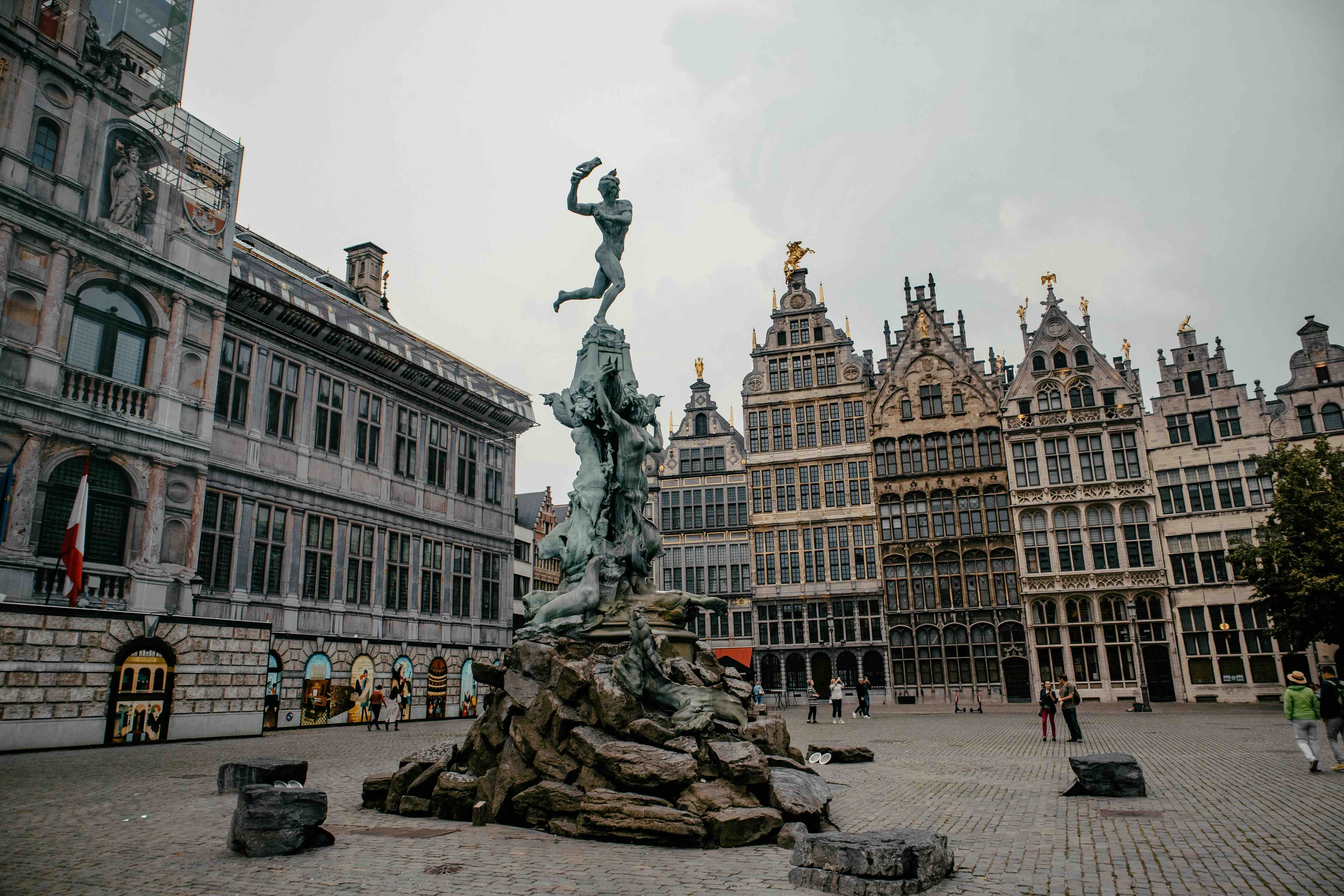
London → Antwerp
~2h 41m · Eurostar (direct from Dec 2026)
Continue past Brussels: direct to Antwerp from Dec 2026
View RouteHow to find the best fares, which operators to book with, and when advance booking makes the difference.
Interrail and the Swiss Travel Pass — when a pass beats point-to-point tickets and when it does not.
London to Brussels is the easy way from Britain into continental Europe: a direct Eurostar under the Channel in around 2 hours, city centre to city centre, with the border done in London before you board. Arrive in good time for check-in, keep your passport handy, and treat Brussels-Midi as a beginning - Amsterdam, Cologne and Paris all lead onward from the platform you arrive at.