Amsterdam to Berlin by Train
The Direct ICE Between Two Capitals
Amsterdam to Berlin without flying is not only possible but genuinely easy: a direct ICE from Amsterdam Centraal to Berlin Hauptbahnhof in around 5 hours 45 minutes, city centre to city centre, with no airport and no change of train. The regular direct service now runs on Germany's newest high-speed trains, the ICE 3neo, which have cut the journey time and done away with the old locomotive change at the German border. Turn up at the platform, step aboard, and cross two countries in an afternoon.
This is a practical international intercity route rather than a scenic railway, and its appeal is convenience and connectivity. Both ends drop you in the middle of the city, on the metro and tram networks; the modern ICE has wifi, power, a restaurant car and room to move around; and the direct train stitches Amsterdam straight into Railero's growing German network - Berlin to Hamburg, Berlin to Prague and beyond. This guide covers the current service in full: the ICE 3neo, the route east across the Netherlands and northern Germany, the border, reservations and passes, and stepping off in the German capital.
Yes - you can travel Amsterdam to Berlin directly by train: A direct ICE runs roughly every two hours, around six times a day, from Amsterdam Centraal to Berlin Hauptbahnhof in around 5h 45m. Reservations are usually optional but recommended (and compulsory in peak summer). Interrail is accepted.
Ready to book Amsterdam to Berlin?
Direct ICE trains run from Amsterdam Centraal to Berlin Hauptbahnhof around six times a day, roughly every two hours, in about 5h 45m. As of 2026 the regular direct service uses modern ICE 3neo (class 408) trains, operated jointly by NS International and Deutsche Bahn, with first and second class, wifi, power and a restaurant car. A seat reservation is usually optional but recommended, and can become compulsory during the peak-summer period, so book ahead and check the reservation rule for your travel date. Book early for the cheapest advance fares (tied to a specific train). Interrail is accepted, with a reservation booked separately.
Railero may earn a small commission if you book via the link above, at no extra cost to you.
Departing Amsterdam Centraal
Amsterdam Centraal, Netherlands · 52.379°N, 4.900°E
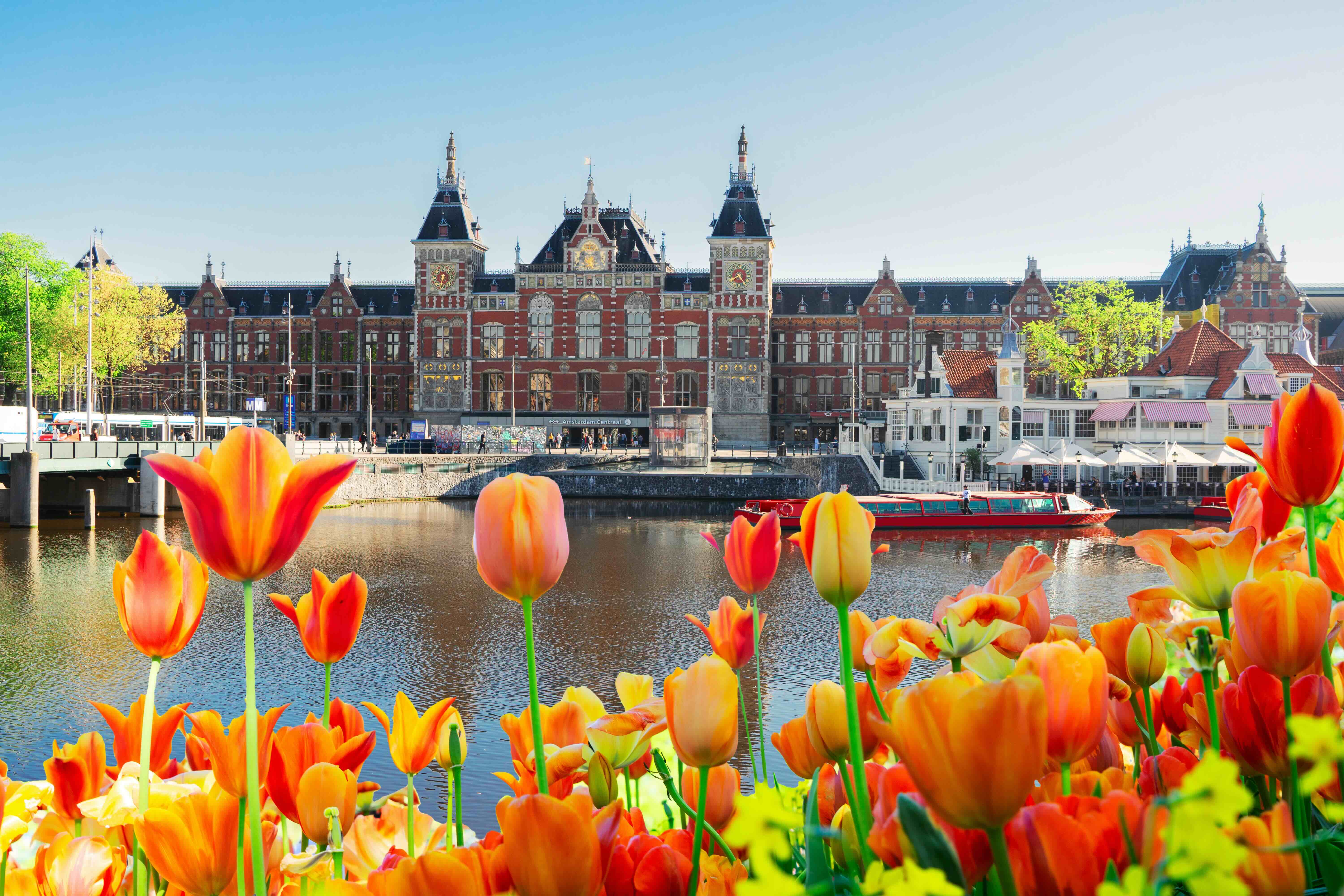
The journey begins at Amsterdam Centraal, the grand 1889 station of red brick and gilded detail that stands at the head of the city, its back to the IJ waterfront and its face to the canals. It is the hub of the Netherlands' rail network and one of the busiest stations in the country, fully equipped and largely step-free, with lifts and escalators to the platforms, shops and services throughout, and the international departures clearly signed. The direct ICE trains for Berlin leave from here, so it is a simple place to start.
Reaching the station is easy from anywhere in Amsterdam: it is the centre of the city's transport, with the Noord/Zuidlijn metro running beneath it, trams and buses fanning out from the front, and frequent trains from Schiphol Airport in around 15 to 20 minutes. Boarding a long-distance train here is refreshingly simple - there is no airport-style check-in, so arrive 15 to 20 minutes ahead, check the departure boards for your platform and coach, and step aboard. It is worth having a reserved seat on this busy international service, especially in summer.
Amsterdam–Berlin - Journey Facts
- RouteAmsterdam Centraal → Berlin Hauptbahnhof, across the Netherlands and northern Germany
- OperatorICE International - NS International and Deutsche Bahn jointly
- TrainsICE 3neo (class 408) - Germany's newest high-speed fleet, multi-system
- Journey timeAround 5h 45m direct, city centre to city centre
- FrequencyAround six direct trains a day, roughly every two hours
- ReservationsUsually optional but recommended; can be compulsory in peak summer
East Across the Netherlands
Deventer and the IJssel · 52.257°N, 6.161°E
The ICE pulls out east across the flat, ordered Dutch landscape, calling first at Amersfoort - an old fortified town and a major rail junction at the geographic heart of the country - before running on through Apeldoorn and across the IJssel river at Deventer, a handsome Hanseatic town of medieval churches and merchant houses. This is the quintessential Netherlands seen from the train: polder fields drained dead flat, dykes and canals, church towers on the horizon, cyclists on the paths beside the line, and the occasional windmill turning over the water meadows.
Beyond Deventer the country changes subtly as the line reaches Twente, the region against the German border, calling at Hengelo - the last major Dutch stop - amid a greener, gently wooded landscape of small towns and farmland. It is calm, unhurried country to watch slide past, and it marks the approach to the frontier, where the Netherlands gives way to Germany at Bad Bentheim.
This is not a route you take for the scenery, but there is a quiet pleasure in watching the Netherlands unroll flat and green outside the window before the land tilts gently into Germany.
Crossing the Border at Bad Bentheim
Bad Bentheim · 52.301°N, 7.160°E
The Dutch-German frontier comes at Bad Bentheim, a small German spa town just over the line, its hilltop sandstone castle visible from the train. For decades this was an operational pause as well as a border: the old locomotive-hauled Intercity trains had to swap engines here, because the Dutch and German railways use different power systems, and the change took several minutes. That is now history. The ICE 3neo trains that now run the service are multi-system, so they run straight through Bad Bentheim without stopping to change locomotives - one of the main reasons the journey is faster than it used to be.
The crossing itself is undramatic. Both countries are in the Schengen area, so there is normally no passport control and the train barely pauses, but the language on the signs, the look of the stations and the style of the towns shift, and you are in Germany. From here the line runs on through Lower Saxony toward the first great German rail hub of the journey, Osnabrück, and then Hannover.
Worth Knowing
Hannover: the Great German Junction
Hannover Hauptbahnhof · 52.377°N, 9.741°E
Through Osnabrück the line reaches Hannover, and Hannover Hauptbahnhof is the most important intermediate stop of the whole journey. It is one of Germany's great rail crossroads, where the east-west line from the Ruhr and the Netherlands meets the north-south spine from Hamburg down to Frankfurt and Munich, and ICE trains fan out in every direction. If you ever wanted to break the journey and branch off - north to Hamburg, south to Frankfurt, west into the Ruhr cities - Hannover is the place the network makes it easy.
A word of caution on breaking the journey: the cheapest advance ICE fares are tied to a specific train, so only step off and take a later one if your ticket allows it. A flexible ticket or a rail pass gives you that freedom; a fixed advance fare does not. Beyond Hannover the ICE settles into the final, fastest stretch, striking east across the north German plain toward Berlin.
Why Hannover matters
- The junctionWhere the east-west and north-south ICE lines cross
- NorthFast ICE to Hamburg, around 1h 15m
- SouthICE down the spine to Frankfurt, Stuttgart and Munich
- WestInto the Ruhr - Dortmund, Essen, Düsseldorf, Cologne
- Break of journeyEasy here - but only if your ticket or pass allows it
Arriving at Berlin Hauptbahnhof
Berlin Hauptbahnhof, Germany · 52.525°N, 13.369°E
The final run across the plain brings the ICE to Berlin-Spandau, on the western edge of the city and a handy stop for the western districts, before it arrives at Berlin Hauptbahnhof - the vast glass-and-steel station opened in 2006 that is the largest crossing station in Europe. It is a cathedral of a building where the east-west and north-south lines cross on different levels, trains gliding through on multiple decks; it is modern, bright and fully step-free, with lifts and escalators between the levels.
The city opens up quickly from here. Berlin Hauptbahnhof sits right in the centre, a short walk from the Reichstag and the government quarter, with the S-Bahn stopping in the station (the elevated east-west lines), the U-Bahn line U5 running beneath it to Alexanderplatz and Unter den Linden, and trams and buses at the entrances. Regional and airport trains connect to Berlin Brandenburg Airport in around 30 minutes. Whether you are staying in Mitte, heading for the Brandenburg Gate or carrying on across the city, the whole of Berlin is within an easy ride.
From Berlin Hauptbahnhof
The ICE 3neo, and Which Class
What travelling by the new ICE is like
The trains on this route are ICE 3neo units (class 408), the newest generation of Germany's InterCity Express fleet, now used for the regular direct service on the Amsterdam to Berlin corridor. They are modern, quiet, air-conditioned trains with free wifi, power sockets and tablet holders at the seats, mobile-signal-friendly windows, an onboard restaurant and bistro serving hot meals, snacks and drinks, expanded luggage racks and bicycle spaces. There is a quiet coach for those who want silence and a family area with room for prams. Being multi-system, they run seamlessly across the Dutch and German networks, which is what made the faster, change-free journey possible.
On the class question, for a journey of nearly six hours the choice matters a little more than on a short hop. Second Class is genuinely comfortable, with 2+2 seating, tables and all the same onboard features. First Class buys wider 2+1 seating, more space and legroom, a quieter carriage, at-seat dining on the restaurant service and access to the DB Lounge at major German stations - a pleasant upgrade for a long run, often for a modest premium when booked early. Whichever you choose, the single most important thing to sort before you travel is the seat reservation.
ICE 3neo onboard
- Train typeICE 3neo (class 408) - the newest German high-speed fleet, multi-system
- ClassesFirst (2+1, more space, DB Lounge) and Second (2+2, comfortable)
- ConnectivityFree wifi, power sockets and tablet holders at the seats
- CateringOnboard restaurant and bistro - hot meals, snacks and drinks
- Quiet & familyQuiet coach and a family area with space for prams
- BikesBicycle spaces - bike ticket and advance reservation required
Is the Journey Scenic?
An honest look at the window
It is honest to say that Amsterdam to Berlin is not one of Europe's great scenic routes - it is a fast, practical corridor across largely flat country. The line runs level for most of its length: the drained polder fields and canals of the Netherlands, the gentle wooded country of Twente and the Dutch-German border, and the farmland of Lower Saxony and the north German plain on the long run in to Berlin. There are pleasant moments - the IJssel at Deventer, the castle hill at Bad Bentheim, the church towers and windmills of the Dutch countryside - but this is open, restful country rather than mountains, gorges or coastline.
Because the landscape is so level and much the same on both sides, there is no strongly preferred side of the train for views, so choose your seat for comfort rather than scenery. The real reasons to take this train are its directness, its city-centre-to-city-centre convenience and the way it links Amsterdam straight into the German network - the view is a calm bonus, not the point.
Onward Travel from Berlin
Germany's capital as a rail hub
Arriving in Berlin, it is worth thinking of the city as a hub rather than an end point. From Berlin Hauptbahnhof, where you arrive, fast ICE and EuroCity trains fan out across Germany and central Europe, which makes Amsterdam to Berlin the natural first leg of a longer journey. This route slots straight into Railero's German and central-European network: north to Hamburg and on to Copenhagen and Scandinavia, or south-east to Prague and Vienna. Continuing around Germany? See our Germany by Train guide for ICE, IC, regional trains, reservations and the Deutschlandticket.
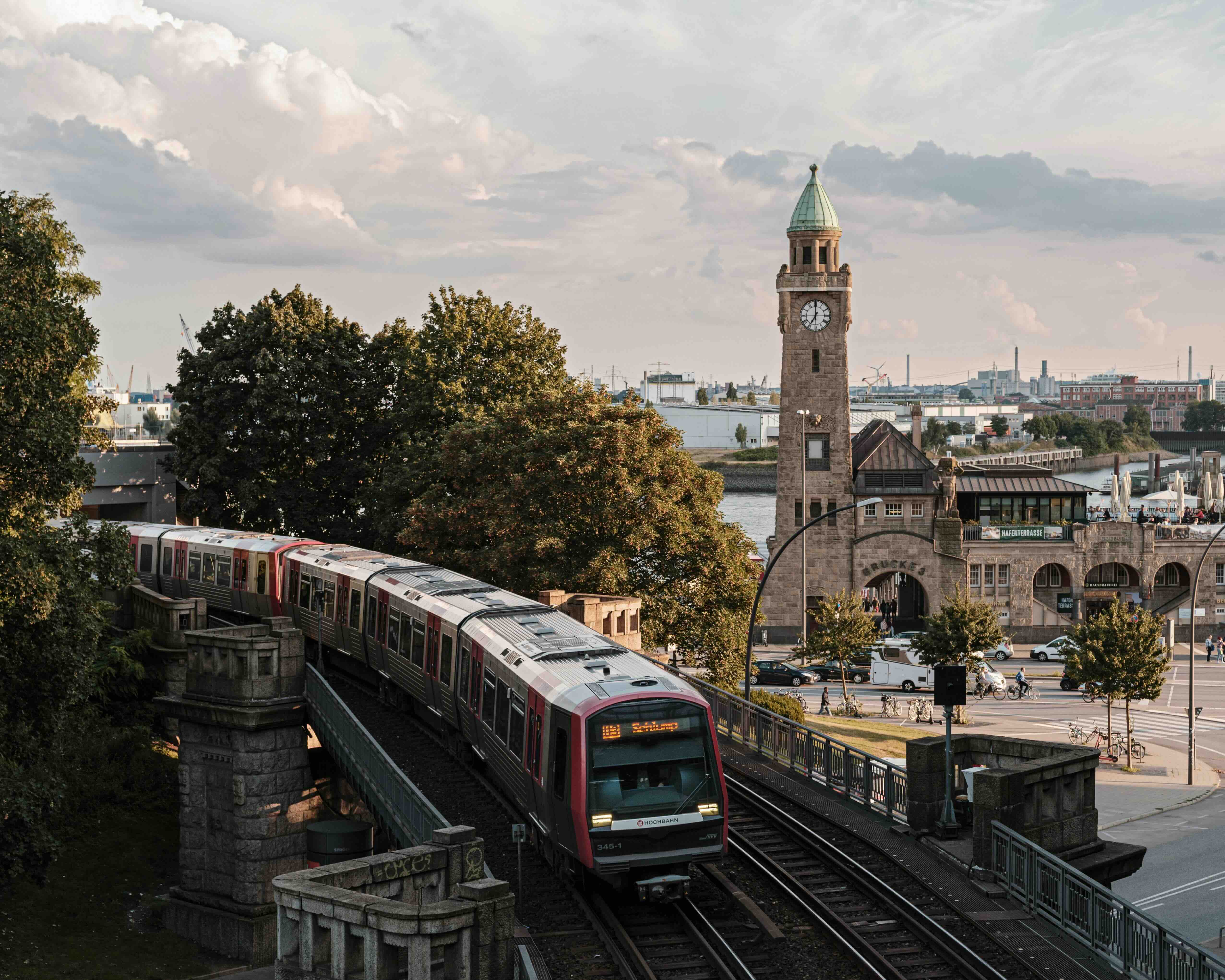
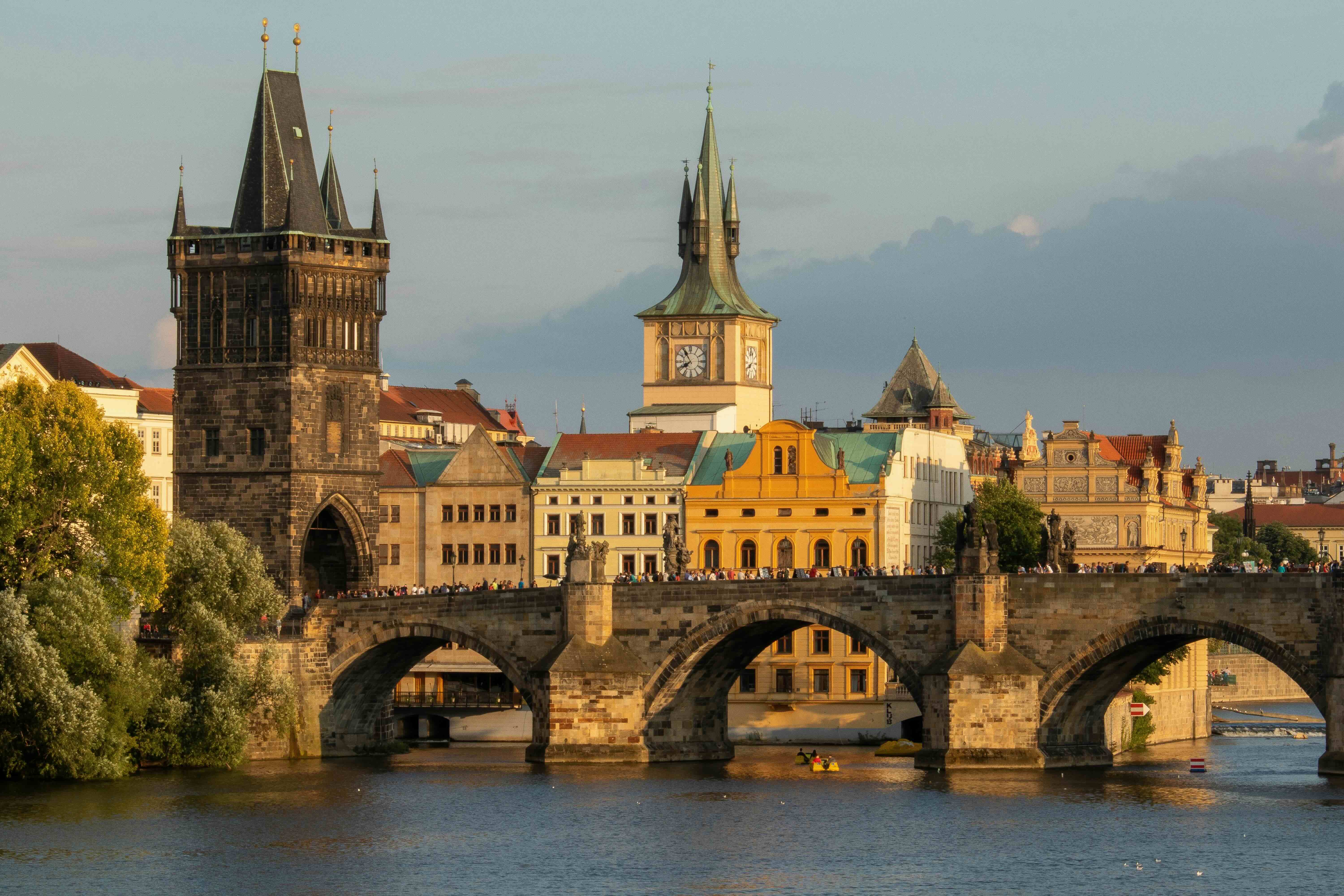
Two chains in particular open up from here. Berlin to Hamburg is a frequent ICE in around 1h 45m, and from Hamburg the EuroCity carries on into Scandinavia at Copenhagen - so Amsterdam, Berlin, Hamburg and Copenhagen link up as one flying-free run north. Equally, the EuroCity from Berlin to Prague, and on to Vienna, turns this into the western gateway of a journey deep into central Europe.
Onward from Berlin
- HamburgFrequent ICE north, around 1h 45m - and on to Copenhagen
- PragueDirect EuroCity south-east, around 4h 30m - and on to Vienna
- DresdenFast trains south down the Elbe, around 2 hours
- MunichICE the length of Germany, around 4 hours
- CologneICE west across the country, around 4h 15m
- FrankfurtICE south-west, around 4 hours
Reach Berlin and Europe opens up: Hamburg and Scandinavia to the north, Prague and Vienna to the south-east, and the whole German ICE network in between.
Reservations, Passes, the Border, Luggage and Bikes
The practical rules for the ICE to Berlin
Reservations deserve attention on this route because the rule changes with the season. On the ICE within Germany a seat reservation is normally optional, but this is a busy international service, so a reserved seat is worth having - and it can become compulsory during the peak-summer period on these cross-border ICE trains, so check the reservation rule for your specific travel date. For pass holders, Interrail is accepted on the direct ICE with no fare supplement, but you will want (and in peak summer may be required to have) a seat reservation, which is booked separately through NS International or Deutsche Bahn rather than being included with the pass. For the wider picture, see the rail passes and seat reservations guides linked below.
On the border, both countries are in the Schengen area, so there is normally no systematic passport control and the train does not stop at Bad Bentheim for checks. That said, spot ID checks can happen, so carry a valid passport or national ID card and keep it reachable. Luggage is easy: there is no strict weight limit, you carry your bags aboard and stow them on the overhead shelves and the larger racks by the doors and carriage ends, so bring what you can manage, keep valuables with you and board in good time on this busy international train.
Bikes need planning: the ICE 3neo trains have bicycle spaces, but on an international service full bikes typically require a separate bike ticket and an advance bike reservation, and the number of spaces is limited, so book ahead rather than turning up with a bike expecting room; a folded or bagged bike travels as luggage. Rules for international trains can differ from domestic ones, so check the bike policy for your specific departure. On accessibility, both Amsterdam Centraal and Berlin Hauptbahnhof are large, staffed stations with lifts and step-free routes to the platforms, and the ICE 3neo has accessible spaces and boarding areas; but access can vary by train and platform, so for guaranteed help book assistance in advance - NS in the Netherlands and Deutsche Bahn's Mobilitätsservice in Germany. Do not assume every train and platform is equally straightforward; arranging help ahead is the reliable approach.
Quick Tips
Reserve a seat: optional most of the year but recommended, and it can become compulsory in peak summer - the direct trains are popular and infrequent.
Book early for the fare: the cheapest advance fares are tied to a specific train and sell out, so book weeks ahead for the best price.
Carry your ID: the Schengen border at Bad Bentheim is normally seamless, but keep a passport or national ID card reachable for occasional checks.
Hotels in Berlin
Berlin rewards staying in the central Mitte district or nearby - within reach of the Brandenburg Gate, Museum Island and Unter den Linden, and a short S-Bahn or U-Bahn ride from the Hauptbahnhof.
Berlin - by the Brandenburg Gate
Berlin's grand historic hotel beside the Brandenburg Gate on Pariser Platz, steps from Unter den Linden - the city's classic luxury address, in the heart of the government quarter and a short ride from the Hauptbahnhof.
Berlin - in Charlottenburg
A stylish, characterful design hotel in leafy Charlottenburg in the west of the city, near the Ku'damm - a comfortable base with an easy S-Bahn connection to the Hauptbahnhof and the centre.
Berlin - by the main station
A dependable, stylish, fairly priced hotel right by Berlin Hauptbahnhof - the easy central base for the trains, with the government quarter and Mitte a short walk or ride away.
Hotel links open Booking.com. Railero may earn a commission on bookings at no extra cost to you.
Frequently Asked Questions
- Is there a direct train from Amsterdam to Berlin?
- Yes. A direct ICE runs from Amsterdam Centraal to Berlin Hauptbahnhof with no change needed, typically around six times a day roughly every two hours through the day. The regular direct service is now operated with modern ICE 3neo (class 408) high-speed trains, run jointly by NS International and Deutsche Bahn. There are also a few weekly Nightjet sleeper services on the corridor. Timetables change, so check the current schedule when you book.
- How long does Amsterdam to Berlin take by train?
- The fastest direct ICE takes around 5 hours 45 minutes city centre to city centre, over roughly 650 km. The move to ICE 3neo trains cut the journey time, partly by ending the old locomotive change at the border. Exact times vary by service, and engineering works can occasionally add time, so check the current schedule for your date.
- Which train runs from Amsterdam to Berlin?
- It is an ICE International service, run jointly by NS International (Dutch Railways' international arm) and Deutsche Bahn. As of 2026 the trains are ICE 3neo units (class 408), the newest generation of Germany's high-speed fleet, which are multi-system trains able to run on both the Dutch and German networks without a locomotive change. They have first and second class, free wifi, power sockets, a restaurant and bistro car, bicycle spaces and expanded luggage racks.
- Do I need to reserve a seat from Amsterdam to Berlin?
- Usually a reservation is optional but recommended. On the ICE within Germany reservations are normally optional, but this is a busy international service, so a reserved seat is worth having - and during the peak-summer period a seat reservation can become compulsory on these cross-border ICE trains. Rules can change by date and season, so check the reservation rule for your specific train when you book. See our seat reservations guide for the full picture.
- Can I use an Interrail pass?
- Yes. Interrail passes are accepted on the direct Amsterdam to Berlin ICE. Outside the peak-summer period you can usually travel with just an optional seat reservation, but because the trains are popular it is sensible to reserve a seat, which is booked separately from the pass through NS International or Deutsche Bahn. In peak summer a reservation can be compulsory. See our rail passes guide for how passes work on this route.
- Does the train stop at Hannover?
- Yes. The direct ICE calls at Hannover Hauptbahnhof, one of Germany's major rail junctions, along with stops such as Amersfoort, Deventer and Hengelo in the Netherlands and Osnabrück and Berlin-Spandau in Germany. Stopping patterns vary slightly by service. Hannover is a useful interchange for ICE trains north, south and west - though only break your journey there if your ticket allows it, since the cheapest advance fares are tied to a specific train.
- Is the Amsterdam to Berlin train scenic?
- Honestly, not especially - this is a fast, practical intercity corridor rather than one of Europe's great scenic routes. The line runs largely level across the flat Dutch landscape, the wooded country of the eastern Netherlands, and the farmland of Lower Saxony and the north German plain. It is pleasant, open country, but there is no strongly preferred side of the train, so choose your seat for comfort. The appeal of this route is convenience and connectivity, not the views.
- Is there passport control between the Netherlands and Germany?
- Normally no. Both countries are in the Schengen area, so the train does not stop for systematic passport checks at Bad Bentheim on the border, and today's ICE runs straight through. That said, spot ID checks can happen, so carry a valid passport or national ID card and keep it reachable. There is no routine border formality, but travel identification is required.
- How much luggage can I take, and can I bring a bicycle?
- Luggage is easy: there is no strict weight limit, you carry your bags aboard and use the overhead shelves and the larger racks by the doors and carriage ends, so bring what you can manage and keep valuables close. The ICE 3neo trains have bicycle spaces, but on an international service full bikes typically need a separate bike ticket and an advance bike reservation, and spaces are limited, so book ahead; a folded or bagged bike travels as luggage. Because rules for international trains can differ from domestic ones, check the current bike policy for your specific departure before travelling.
- Which Berlin station does the train arrive at?
- The direct ICE serves Berlin Hauptbahnhof, the city's vast central station, calling first at Berlin-Spandau on the western edge of the city. Berlin Hauptbahnhof sits right in the centre with S-Bahn and U-Bahn connections across the whole city, so it is the stop most travellers want.
- Is the train better than flying from Amsterdam to Berlin?
- It depends on what you value. The flight itself is short, but the train wins on convenience: it runs city centre to city centre with no airport transfer, no check-in and no security queue, and you can move around, work or eat throughout the roughly six-hour journey. Flying can be quicker door to door for some, but once airport time is added the gap narrows, and the train drops you in the heart of Berlin. It comes down to your priorities rather than a universal winner.
Continue Your Journey
Routes that pair naturally with this one — for building your European itinerary.
ICE, IC and regional trains, reservations, the Deutschlandticket and the German network - the flagship planning guide.
When reservation is mandatory, which side of the train has the views, and how to choose your class.
Amsterdam to Berlin is the direct rail link between two of northern Europe's great capitals, and one of the clearest cases for the train over the plane: around 5 hours 45 minutes on a modern ICE, city centre to city centre, with no airport, no change and now no locomotive swap at the border. Take whichever direct train suits, enjoy the calm run east across the Netherlands and northern Germany, and step off in the heart of Berlin - where Hamburg and Scandinavia, Prague and Vienna, and the whole German network are an easy connection away.