
Paris to Madrid
The Grand Iberian Arc
Ten hours across two countries, three mountain ranges, and a continent of contrast. Paris to Madrid by rail is not a journey you take to save time - you take it because it is one of the great train rides in Europe, and because arriving in the Castilian capital without passing through a single airport feels like a minor act of civilisation.
The route involves a seamless connection at Barcelona Sants: first the TGV INOUI from Paris Gare de Lyon to Barcelona (6h 50m), then Renfe's AVE high-speed service to Madrid Atocha (2h 30m). Through-tickets linking both legs are available via Omio and Renfe, with connection times typically running 30–45 minutes. The landscapes you pass through - the Rhône valley, the Languedoc plains, the Pyrenean foothills, the Aragonese meseta - are reward enough for choosing not to fly.
Train vs. Flight: the carbon case
Paris–Madrid return · per passenger, economy class
The train emits roughly 7× less CO₂ than an equivalent flight. France and Spain run their high-speed networks on nuclear and renewable electricity — the carbon footprint per passenger kilometre is among the lowest of any transport mode in the world.
Book your Paris–Madrid through-ticket
Omio searches both TGV and AVE legs simultaneously, linking them into a single booking with guaranteed connection protection. Book as far in advance as possible - the best TGV fares sell out 3–4 months before travel.
Railero may earn a small commission if you book via the link above, at no extra cost to you.
Leaving Paris Gare de Lyon
Paris, France · 48.844°N, 2.373°E
Gare de Lyon is the most theatrical of Paris's seven mainline termini. Its Belle Époque clock tower has watched trains depart for the south since 1900, and the station's famous restaurant Le Train Bleu - all gilded ceilings and oil paintings of the Riviera - has been the send-off venue of choice for everything from royal tours to honeymoons. The TGV INOUI to Barcelona departs from the upper-level platforms, Hall 1.
The departure southbound is one of the great urban exits. The train threads through the Gare de Lyon banlieue, past the vast Valenton marshalling yards, and then breaks free into the Burgundy countryside. Within 40 minutes you are at 300 km/h on the LGV Sud-Est - France's original high-speed line, opened in 1981 - and the flat Île-de-France gives way to the rolling hills of the Beaujolais.
Three countries, one ticket, and the knowledge that you didn't board a single aircraft.
Practical tips
- TGV INOUI offers free Wi-Fi; have your Renfe reservation number ready for the connection
- A bistro car operates on both services - Catalan cuisine begins around Perpignan
- Book the TGV at least 3 months ahead for the best Prems fares (from €29)
- Passport or national ID required - the France-Spain border crossed at Figueres
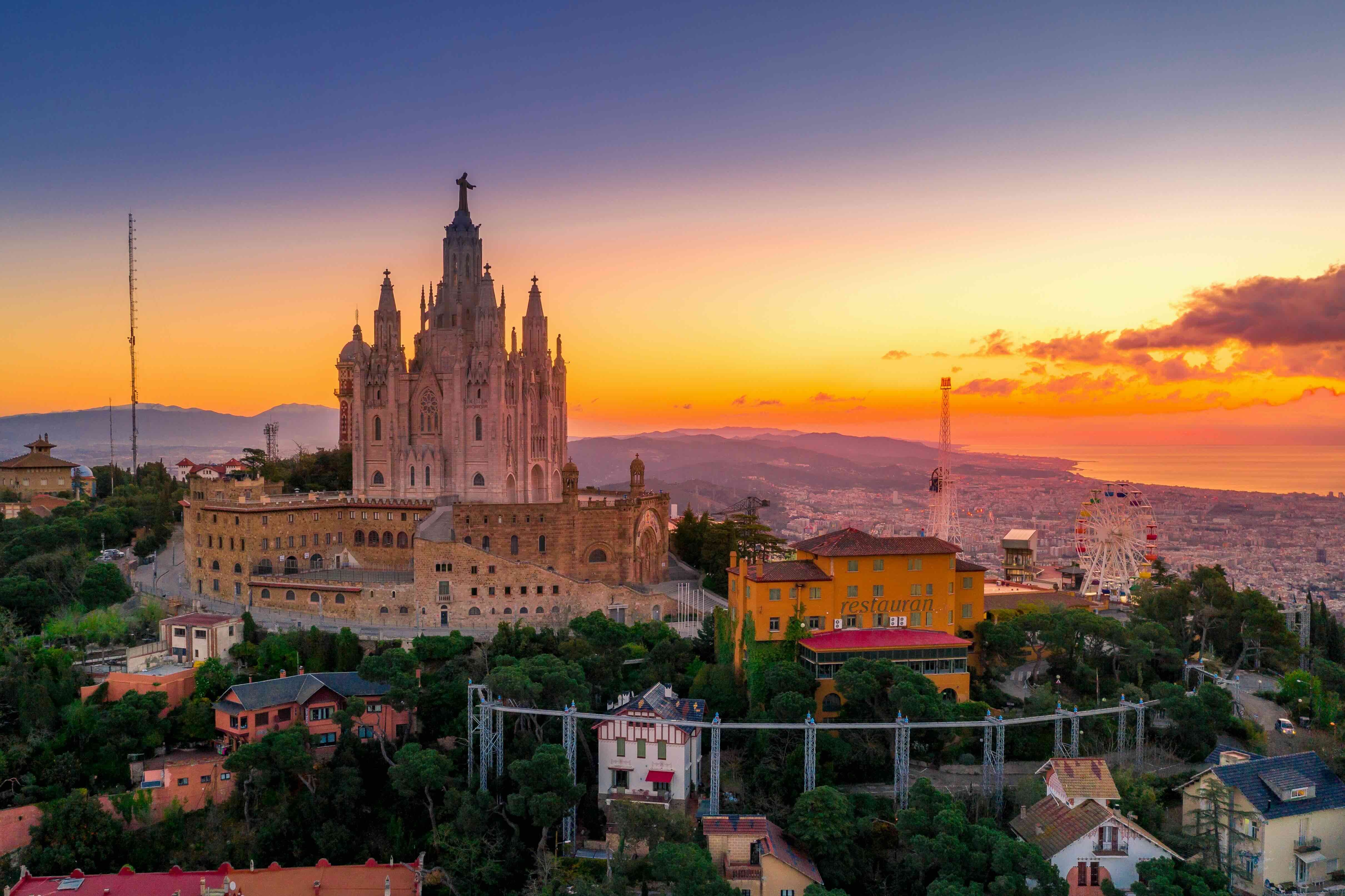
Barcelona Sants - the Pyrenean Pivot
Barcelona, Spain · 41.379°N, 2.140°E
South of Perpignan, the TGV enters the 8.3 km Perthus Tunnel beneath the Pyrenees - the longest rail tunnel in Spain when it opened in 2010 - and emerges into Catalonia at Figueres Vilafant. The frontier between France and Spain has been crossed; you barely notice. The train stops at Girona (where you can still see the medieval city walls from the platform) before pulling into Barcelona Sants after 6h 50m of travel.
The connection to Madrid is seamless. Renfe's AVE high-speed service departs from the same station, typically on a platform directly below the TGV arrival. Connection times of 30–45 minutes are standard. The AVE to Madrid is a completely different beast from the TGV: a sleek, quiet Talgo or Velaro trainset, its onboard café serving Iberian ham bocadillos and Estrella Damm, the screen at the end of the carriage showing speed touching 310 km/h.
Barcelona connection essentials
- Perthus Tunnel8.3 km beneath the Pyrenees
- Connection time30–45 min (book same platform)
- AVE speedUp to 310 km/h (Madrid in 2h 30m)
- AVE operatorRenfe (Velaro or Talgo 350)
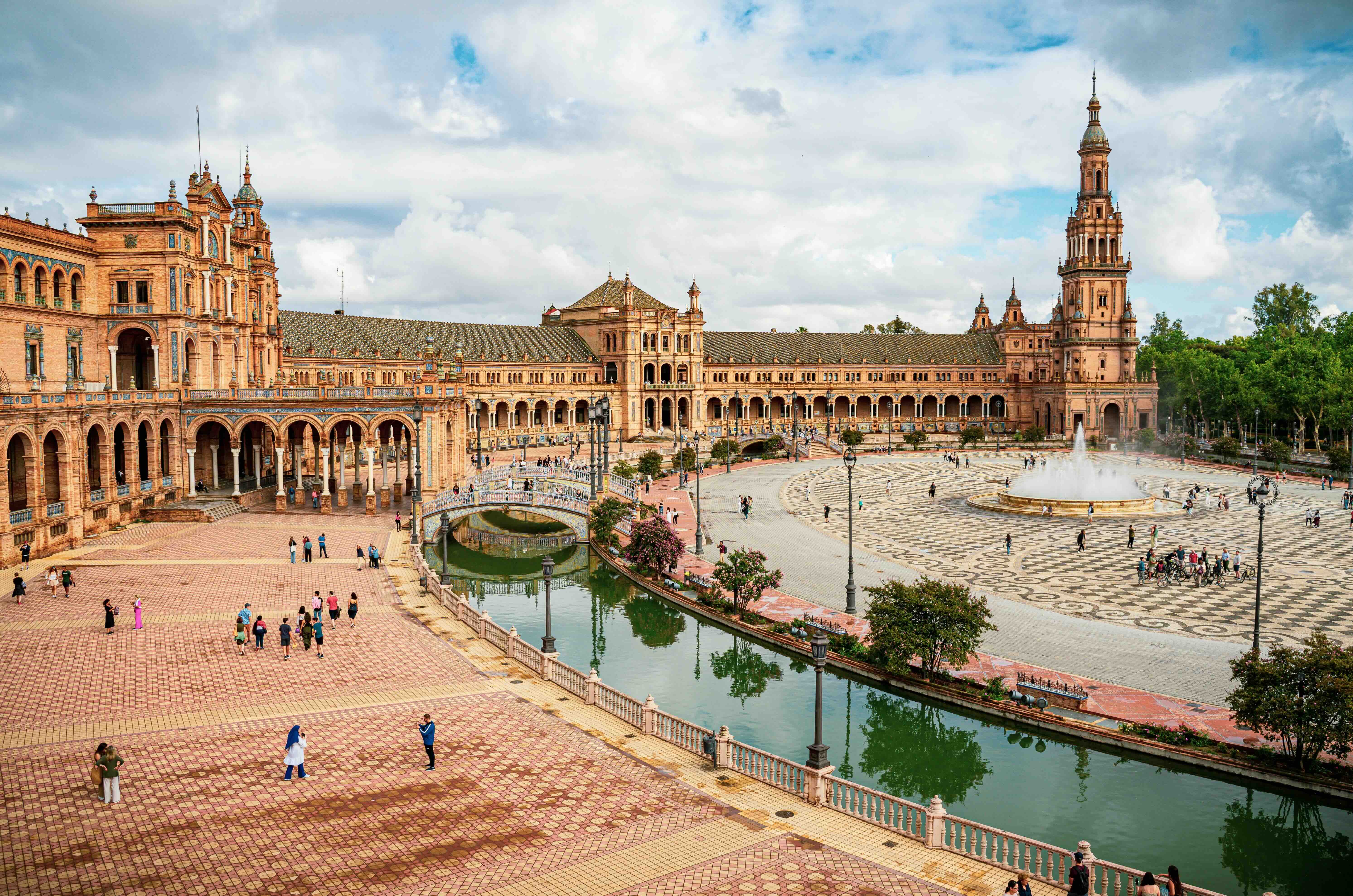
Arriving in Madrid Atocha
Madrid, Spain · 40.406°N, 3.689°W
The AVE descends from the Aragonese plateau into the Castilian meseta, the landscape flattening to an immensity of golden plain dotted with wind turbines and ancient hilltop villages. Madrid announces itself with no particular fanfare - apartment blocks, ring roads - and then the train eases into the glass-roofed cavern of Puerta de Atocha with that particular satisfaction of having arrived at a distance that felt genuinely far.
Atocha is the nerve centre of Spain's rail network. The upper floors of the old 19th-century station have been converted into a tropical garden - 7,000 plants, a small tortoise population - while the new terminal below handles over 50 million passengers a year. From Atocha, the Cercanías suburban rail and Metro lines reach every corner of Madrid within minutes. The Prado is a 15-minute walk. The Retiro park is closer still.
From Madrid Atocha
Hotels near Madrid Atocha
The final AVE leg sets you down at Madrid Atocha, a short walk from the Prado and the Paseo del Prado. The stays below are all close to the station and the museum quarter.
opposite Atocha station
Directly across from Atocha - about the closest base to the platforms after the AVE from Barcelona.
Paseo del Prado - near the Prado
On the Paseo del Prado between Atocha and the Prado Museum, a short walk from the station.
near Puerta del Sol
A hotel between the Prado and Puerta del Sol, a short walk or metro ride from Atocha.
Hotel links open Booking.com. Railero may earn a commission on bookings at no extra cost to you.
Frequently Asked Questions
- Is there a direct train from Paris to Madrid?
- No. There is currently no single direct train; the fastest rail route runs Paris to Barcelona by TGV, then Barcelona to Madrid by Renfe AVE, changing at Barcelona Sants. Through-tickets combine both legs into one booking.
- Should I book Paris to Madrid as one through-ticket or two separate tickets?
- A through-ticket links the TGV and AVE legs and usually includes protection if a delay makes you miss the connection. Booking the two legs separately can occasionally be cheaper, but you carry the missed-connection risk yourself - the through-ticket is the safer choice.
- How much time do I need to connect at Barcelona Sants?
- Both trains use Barcelona Sants, and typical connections allow around 30 to 45 minutes to change between the TGV arrival and the AVE departure. If you are booking the legs separately, leave a generous buffer rather than the tightest possible link.
- Do I need seat reservations for Paris to Madrid?
- Yes. Both the TGV and the AVE are fully reserved high-speed trains, so every passenger has an assigned seat on each leg. Reservations are built into the ticket and popular departures sell out well in advance.
- Can I use Interrail from Paris to Madrid?
- A pass covers the trains, but both high-speed legs require paid seat reservations, and pass-holder reservation quotas on the TGV in particular are limited and sell out early. Book those reservations as far ahead as possible.
- Is it worth taking the train from Paris to Madrid instead of flying?
- Take the train for the journey rather than to save time - it is a full day across the south of France and the Spanish meseta, not a shortcut. If you value city-centre arrivals, big landscapes and skipping airports over raw speed, it is a rewarding way to travel.
- Should I break the Paris to Madrid journey in Barcelona?
- Many travellers do. With around ten hours of rail in total, splitting the trip with a night in Barcelona turns a long transit into two comfortable half-days and lets you see a third great city along the way.
- Is there a direct or overnight train from Paris to Madrid?
- There is currently no direct daytime train and no through overnight service between Paris and Madrid - the former Paris–Madrid sleeper was withdrawn some years ago. The fastest option remains the daytime combination of a TGV to Barcelona and a Renfe AVE on to Madrid, changing at Barcelona Sants. High-speed rail on this corridor keeps developing, so it is worth checking for new services when you book.
Continue Your Journey
Routes that pair naturally with this one — for building your European itinerary.

Paris to Madrid by rail is a journey that recalibrates your sense of European distance. Ten hours sounds long until you weigh it against the airport ritual - and the view from the window across the high plateaux of Castile makes the entire question irrelevant.
Back to all routes