Madrid to Valencia
High-Speed to the Mediterranean
Capital to coast in well under two hours: the Madrid–Valencia high-speed line, opened in 2010, crosses the empty plateau of Castilla–La Mancha at 300 km/h, threads the wine country around Requena, and drops through the coastal hills to the Mediterranean. It has become one of the busiest - and most competitive - rail corridors in Spain, which for travellers mostly means plenty of departures and sharp fares.
The journey runs from Madrid Puerta de Atocha to Valencia Joaquín Sorolla, typically in around 1 hour 45 minutes, with some services calling at Cuenca and Requena-Utiel on the way. Paella by the sea for lunch and back in Madrid for dinner is a genuine, unremarkable Tuesday plan here.
No flight needed: City centre to city centre in under two hours makes flying pointless on this corridor - by the time an aircraft is boarding, the train is descending to the coast.
Ready to book Madrid to Valencia?
Advance fares are the cheapest and open months ahead; with several operators competing on this corridor it pays to compare - journey times are similar, but luggage allowances and flexibility differ, and tickets are operator-specific. Interrail pass holders travel on Renfe AVE services with a compulsory paid seat reservation.
Railero may earn a small commission if you book via the link above, at no extra cost to you.
Madrid - Departure from Puerta de Atocha
Madrid Puerta de Atocha, Spain · 40.407°N, 3.689°W
Valencia trains leave from Madrid Puerta de Atocha, the capital's grand southern terminus with the tropical garden in its 19th-century trainshed. As on all Spanish high-speed departures, bags pass through an airport-style scanner before the platform and boarding typically closes a couple of minutes before departure - arrive around 20–30 minutes early and treat the boarding time, not the departure time, as your deadline.
The escape from Madrid is quick. Within fifteen minutes the train is clear of the suburbs and accelerating onto the Levante high-speed line, aimed southeast across some of the emptiest country in western Europe.
Madrid–Valencia - Journey Facts
- RouteMadrid Puerta de Atocha → Valencia Joaquín Sorolla
- LineLAV Madrid–Levante, opened 2010
- Distance~303 km
- Journey timeTypically 1h 40m – 1h 50m, varying by stops
- OperatorsRenfe AVE and competing high-speed operators - tickets are operator-specific
- StopsCuenca and Requena-Utiel, varying by service
- BoardingLuggage screening before the platform; arrive ~20–30 min early
- Rail passesInterrail on Renfe AVE with paid seat reservation
Across La Mancha - and Past Cuenca
Castilla–La Mancha · Cuenca (Fernando Zóbel) · 40.048°N, 2.144°W
The first hour is high plateau: wheat, vines, wind turbines on the ridgelines and an enormous sky, streaming past at close to 300 km/h. Some services pause at Cuenca - the station sits outside town, but the medieval city with its casas colgadas, the hanging houses cantilevered over a gorge, is one of Spain's most dramatic and makes a genuinely worthwhile stopover less than an hour from Madrid.
This line was part of the great expansion that gave Spain the longest high-speed network in Europe - over 3,900 km of dedicated track. Riding it, you understand why the country committed: distances that once meant a half-day drive across the meseta now fit inside a lunch decision.
An hour of empty plateau at three hundred kilometres an hour - then vineyards, a river gorge, and suddenly the Mediterranean light.
Requena - The Descent Begins
Requena-Utiel, Valencia province · 39.485°N, 1.115°W
Past the Cabriel valley the land begins to soften: the Requena-Utiel plateau is wine country, source of the Bobal grape, and its vineyards signal the border into Valencia province. From here the line drops steadily through the coastal ranges - tunnels and viaducts in quick succession - losing the meseta's altitude in its final twenty minutes.
Watch the light change. The plateau's hard glare gives way to the softer, brighter coastal light the Valencian painter Joaquín Sorolla - after whom the arrival station is named - built a career on. Orange groves and market gardens replace the vines, and the city arrives all at once.
The Final Stretch
Valencia - Arrival at Joaquín Sorolla
Valencia Joaquín Sorolla, Spain · 39.458°N, 0.381°W
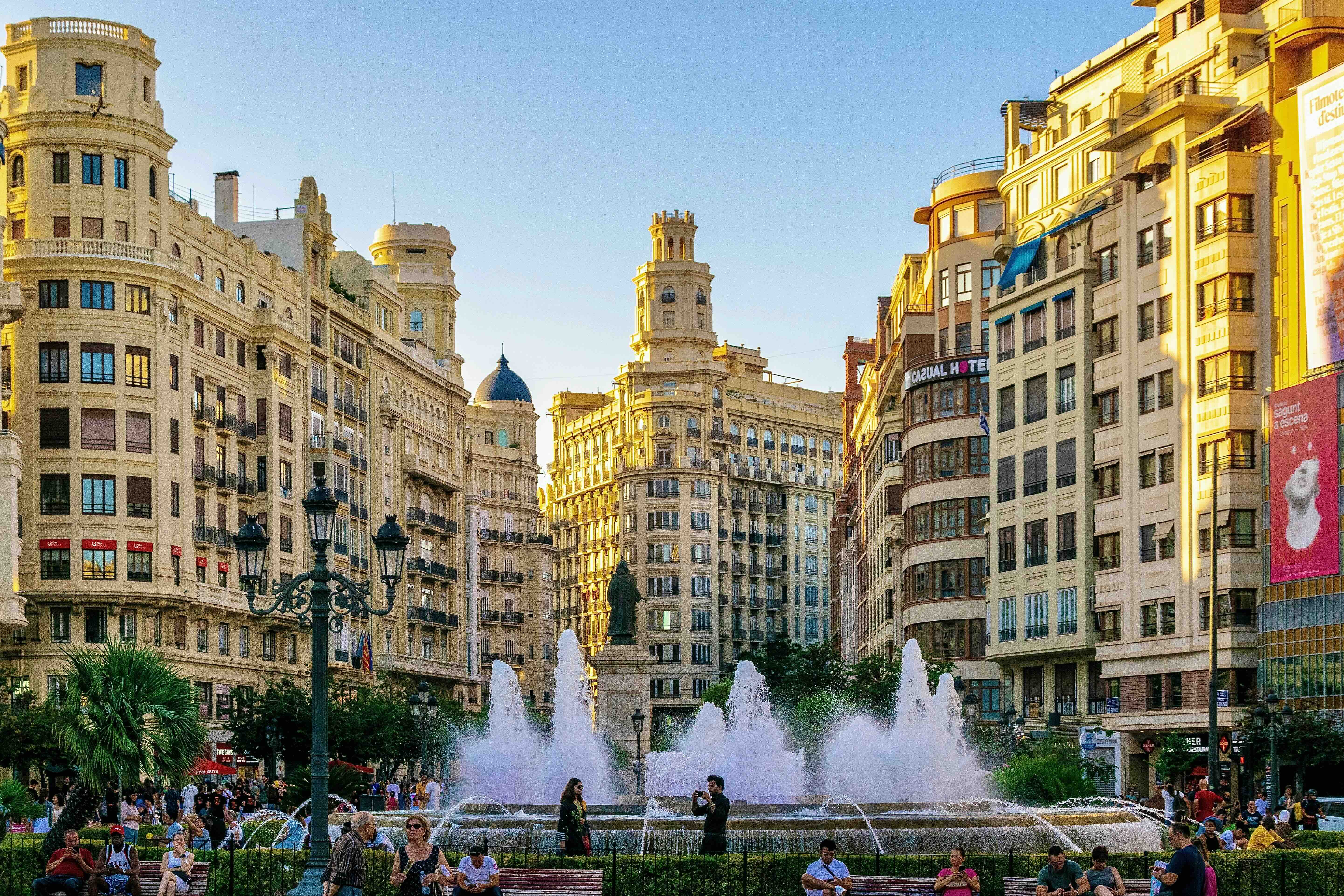
High-speed trains terminate at Valencia Joaquín Sorolla, a short distance south of the centre. The old town - the Lonja silk exchange, the cathedral with its blue-domed skyline, the covered Mercado Central - is around a 20–25 minute walk, a quick taxi, or a couple of metro stops; a free shuttle bus has traditionally linked Sorolla with the classic Estación del Norte a few blocks north. However you cover the gap, this is an easy city to arrive in.
Valencia rewards more than a day trip: the Turia gardens - a riverbed turned five-mile park - lead from the old town down to the City of Arts and Sciences, and beyond it the Malvarrosa beach. Paella was invented in this huerta, and eating it by the sea, two hours after leaving Madrid, remains the corridor's best argument.
From Joaquín Sorolla
Operators, Passes and Boarding
How to book on Spain's most competitive corridor
Madrid–Valencia is served by more competing high-speed operators than almost any route in Europe: Renfe's flagship AVE and its low-cost brand run alongside the newer open-access entrants, and the exact mix shifts with each timetable. For travellers the rules are constant: every ticket includes an assigned seat, tickets are operator-specific - one company's ticket is not valid on another's train - and the cheapest fares are advance, non-flexible ones.
Compare more than the price. Full-service AVE fares include generous luggage and flexibility options; low-cost fares typically include a smaller allowance with extras sold separately. Journey times barely differ, so the choice is really about what is bundled - and about which departure time suits the paella schedule.
Booking Checklist
Book ahead: advance fares open months out; the corridor is busy year-round, and Las Fallas (March) sells out early.
Pass holders: Interrail travel on Renfe AVE with a compulsory paid seat reservation; private operators generally sit outside the pass system.
At the station: allow 20–30 minutes for luggage screening at Atocha; boarding closes shortly before departure.
Hotels in Valencia
Joaquín Sorolla is a short hop from the centre, and Valencia splits its charms between the old town and the seafront - pick your base by whether mornings should start with coffee in a plaza or a swim.
Valencia - old town, by the cathedral quarter
A boutique conversion of a Gothic palace built against the city's medieval wall - layers of Valencia's history exposed in the rooms, steps from the Lonja and the Mercado Central.
Valencia - Malvarrosa seafront
The grand dame of the beach: a colonnaded former bathing house turned five-star resort directly on the sand, with the paella houses of the promenade on the doorstep.
Valencia - between the stations and the centre
A straightforward, well-kept modern hotel minutes from both Joaquín Sorolla and the old town - the sensible pick for a one-night city break by rail.
Hotel links open Booking.com. Railero may earn a commission on bookings at no extra cost to you.
Frequently Asked Questions
- How long does the Madrid to Valencia train take?
- The fastest high-speed services take around 1 hour 40 minutes to 1 hour 50 minutes for the roughly 300 km journey, with some departures a little longer depending on stops at Cuenca and Requena-Utiel. It is one of the quickest big-city hops in Spain - check exact timings when you book.
- Is there a direct train from Madrid to Valencia?
- Yes - direct high-speed trains run many times a day between Madrid Puerta de Atocha and Valencia Joaquín Sorolla on the dedicated high-speed line opened in 2010. The corridor is one of the most competitive in Spain, with Renfe's AVE and low-cost brands alongside newer open-access operators, so departures are spread across the whole day.
- Do I need a seat reservation?
- Spanish high-speed tickets always include an assigned seat, so there is no separate reservation to make when you buy a normal ticket. Interrail pass holders are the exception: passes are accepted on Renfe AVE trains with a compulsory paid seat reservation, best booked ahead in busy periods; the private operators generally sit outside the pass system.
- How early should I arrive at Atocha?
- Spanish high-speed departures pass through airport-style luggage screening before the platform, and boarding typically closes a couple of minutes before departure. Around 20–30 minutes is usually a comfortable margin at Atocha; allow more at peak times. Procedures can differ slightly between operators.
- Is luggage included on the train?
- Full-service AVE tickets include generous luggage with no weigh-ins, carried in racks by the doors and overhead. Low-cost operators on this corridor typically include a smaller allowance and sell extras separately, so check what your fare includes before choosing on price alone.
- Is Valencia Joaquín Sorolla in the city centre?
- Nearly - Joaquín Sorolla, the high-speed station, sits a short distance south of the historic centre. It is around a 20–25 minute walk to the old town, a quick taxi or metro ride, and a free shuttle bus has traditionally linked it with the classic Estación del Norte terminus a few blocks away. The beach and the City of Arts and Sciences are an easy onward hop by taxi, bus or metro.
Continue Your Journey
Routes that pair naturally with this one — for building your European itinerary.
Interrail and the Swiss Travel Pass — when a pass beats point-to-point tickets and when it does not.
When reservation is mandatory, which side of the train has the views, and how to choose your class.
Madrid to Valencia is Spanish high-speed rail at its most persuasive: under two hours from the capital's heart to the Mediterranean's, on a corridor so competitive the fares argue among themselves. Book ahead, compare what each fare bundles, and keep the afternoon free for the beach.